


News / Middle East

Egyptian Officer Says Police Used Weapons to Kill Protesters

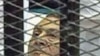
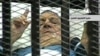
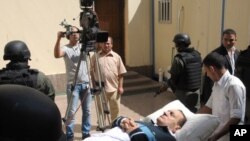
Former Egyptian president Hosni Mubarak being taken to the courtroom for another session of his trial in Cairo, Egypt, September 7, 2011.
TEXT SIZE - +

An Egyptian security officer has testified that police and security forces used their weapons to wound and kill protesters in Cairo's Tahrir Square.

The state-run MENA news agency says Interior Ministry officer Isam Husni Abbas made the comments on Thursday during the trial of former President Hosni Mubarak.  He told the court many people were killed or injured as officers used weapons to keep protesters from storming police stations.

He said about 59 police stations were destroyed during the protests that led to Mr. Mubarak's resignation in February.

Prosecutors say Mr. Mubarak ordered the killing of 850 protesters during the uprising that begin in late Janaury.  He has pleaded not guilty to charges.  He is also accused of corruption and abuse of power.

Also Thursday, activists and relatives of victims reacted positively to news that a judge had ordered Field Marshal Mohamed Hussein Tantawi to testify in a closed session on Sunday.

The judge has summoned Tantawi, who heads the ruling military council, and several other high-ranking officials to testify next week.  The officials include former Vice President Omar Suleiman and Lieutenant General Sami Enan.

Tantawi served as Mr. Mubarak's intelligence chief.  Earlier this month, the former president's lawyers requested that Tantawi testify.  They argued that he effectively "took control" of the country after January 28, when troops were deployed to Cairo to disperse anti-government protesters.

Mr. Mubarak has entered the Cairo courtroom on a stretcher and listened to the court proceedings while lying on a bed inside the court's large metal cage.  He is being tried along with former Interior Minister Habib al-Adly and six deputies.

Some information for this report was provided by AP and Reuters.

Follow our Middle East reports on Twitter
and discuss them on our Facebook page.

You May Like

India, China Pledge to Overcome Border Tensions

Indian prime minister and Chinese premier attempt to move past tense standoff in the Himalayas during Delhi talks More

Burmese President Opens US Visit with VOA Town Hall Meeting

Ahead of his meeting with President Obama Monday, Thein Sein answered questions on human rights and economic development in his country More

Video Washington Week: Focus on Burma, US Government Scandals

President Thein Sein visits the White House on Monday, Congressional probes of multiple scandals are continuing More

This forum has been closed.
Comments
     
There are no comments in this forum. Be first and add one

Featured Videos

Your JavaScript is turned off or you have an old version of Adobe's Flash Player. Get the latest Flash player.
Video

Video Boston Bomber Spent 6 Months in Russia’s Most Violent Republic

The news of the Boston Marathon bombings circled the globe, and resonated here in Dagestan, a majority Muslim republic in Russia, on the shores of the Caspian Sea. Last year, Tamerlan Tsarnaev, the older of two brothers suspected of the bombings and a long-time Boston resident, returned to Dagestan, where he had lived for a year during his youth. Dagestan was the land of his maternal ancestors. But in the last two years, this republic of 3 million people has gained notoriety as the region with the highest level of political and religious violence in all of Russia. VOA's James Brooke reports from Makhachkala, Russia.