North Korea Gives US Delegation Rare Look at Internet Use
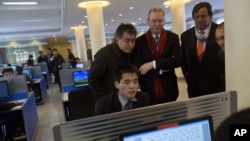
Executive Chairman of Google, Eric Schmidt (C) and former New Mexico governor Bill Richardson (2nd R) watch as a North Korean student surfs the Internet at a computer lab during a tour of Kim Il Sung University in Pyongyang, January 8, 2013.
North Korea has provided a small group of Americans with a rare look at the few people who can access the Internet in the tightly-controlled and impoverished state.
The private delegation of Google executives and former New Mexico state governor Bill Richardson were given a tour of an Internet lab Tuesday at Pyongyang's Kim Il Sung University. They spoke with several students, who could be seen using Google to look for information online.
North Korea's authoritarian government bars the vast majority of citizens from accessing the Internet to shield them from foreign influences. But in recent years, it has permitted some students of elite universities to search the Web under strict conditions and monitoring.
North Korea Gives US Delegation Rare Look at Internet Use
1/9Uskoro, nakon prvih snimaka, bilo je jasno da s Hablom nešto nije u redu. Slike su bile mutne i nisu se mogle fokusirati. Sa sledećim letom šatla greška je popravljena - ogledalo je zamenjeno novim. Zatim slike koje su usledile bile su bolje od svih do tada.
North Korea has provided a small group of Americans with a rare look at the few people who can access the Internet in the tightly-controlled and impoverished state.
Show moreShow less
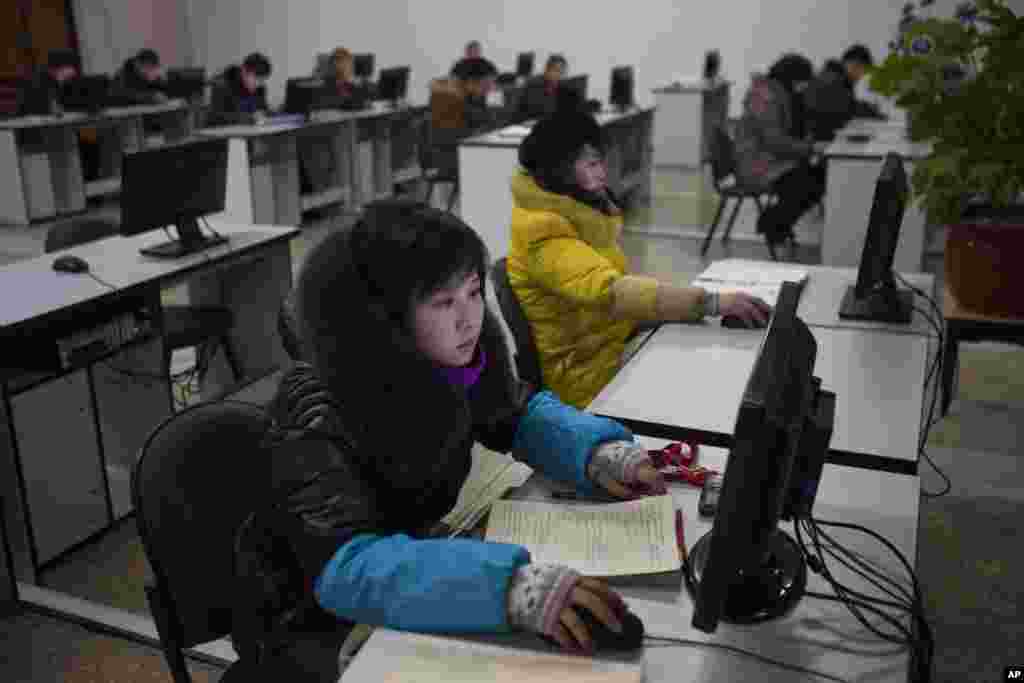
2/9North Koreans work at computer terminals inside the Grand People's Study House in Pyongyang, North Korea, January 9, 2013.
North Korea has provided a small group of Americans with a rare look at the few people who can access the Internet in the tightly-controlled and impoverished state.
Show moreShow less
3/9Executive Chairman of Google Eric Schmidt and former governor of New Mexico Bill Richardson look at soldiers working on computers at the Grand Peoples Study House, Pyongyang, North Korea, January 9, 2013.
North Korea has provided a small group of Americans with a rare look at the few people who can access the Internet in the tightly-controlled and impoverished state.
Show moreShow less
4/9Former New Mexico governor Bill Richardson tries on 3-D glasses as he looks at North Korean-developed computer technology with Executive Chairman of Google Eric Schmidt in Pyongyang, North Korea, January 9, 2013.
North Korea has provided a small group of Americans with a rare look at the few people who can access the Internet in the tightly-controlled and impoverished state.
Show moreShow less
5/9Executive Chairman of Google Eric Schmidt stands on a balcony at the Grand Peoples Study House overlooking Juche Tower in Pyongyang, North Korea, January 9, 2013.
North Korea has provided a small group of Americans with a rare look at the few people who can access the Internet in the tightly-controlled and impoverished state.
Show moreShow less
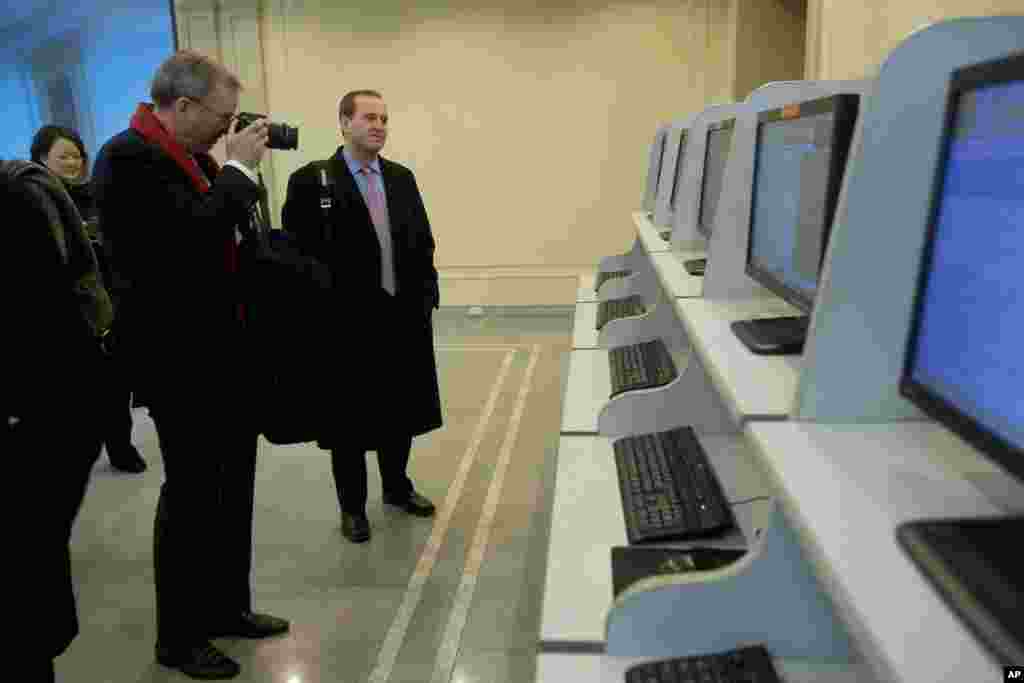
6/9Executive Chairman of Google, Eric Schmidt, takes photographs as he tours a computer lab at Kim Il Sung University in Pyongyang, North Korea, January 8, 2013.
North Korea has provided a small group of Americans with a rare look at the few people who can access the Internet in the tightly-controlled and impoverished state.
Show moreShow less
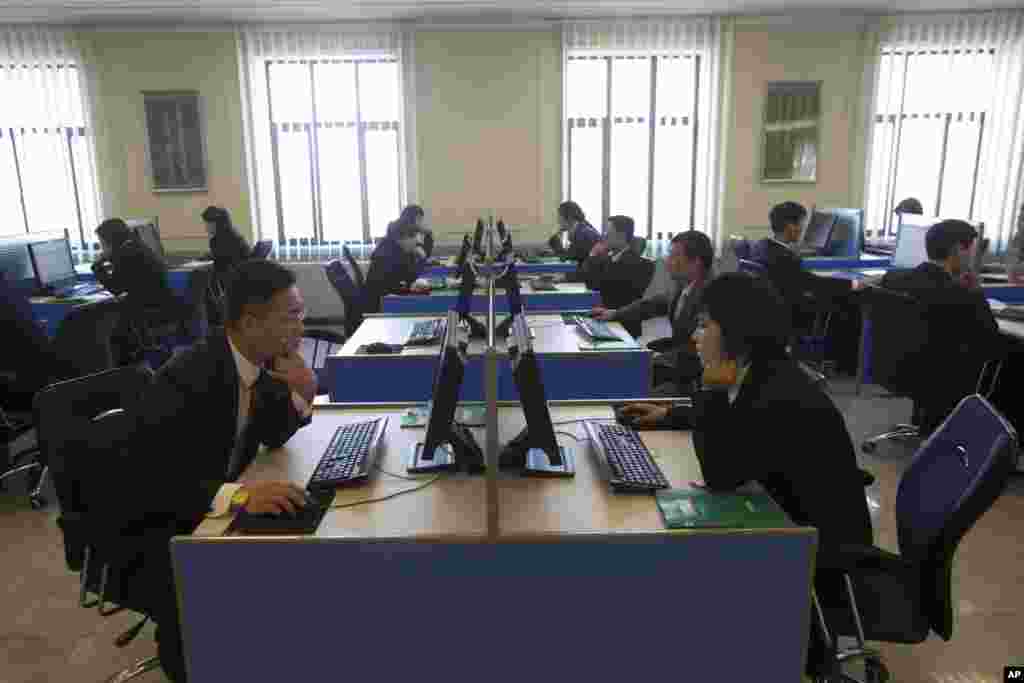
7/9Students work at terminals inside a computer lab at Kim Il Sung University in Pyongyang, North Korea, January 8, 2013.
North Korea has provided a small group of Americans with a rare look at the few people who can access the Internet in the tightly-controlled and impoverished state.
Show moreShow less
8/9Executive Chairman of Google Eric Schmidt arrives at Pyongyang International Airport in Pyongyang, North Korea on January 7, 2013.
North Korea has provided a small group of Americans with a rare look at the few people who can access the Internet in the tightly-controlled and impoverished state.
Show moreShow less
9/9Former New Mexico governor Bill Richardson is interviewed by journalists after arriving at Pyongyang International Airport, North Korea, January 7, 2013.
North Korea has provided a small group of Americans with a rare look at the few people who can access the Internet in the tightly-controlled and impoverished state.
Show moreShow less
Previous slide
Next slide
The American delegation arrived Monday in Pyongyang on a four-day visit that Richardson described as "humanitarian." The U.S. State Department has criticized the trip, calling its timing "unhelpful."
The visit follows North Korea's test-launch of a long-range rocket last month - a move denounced by Washington as a threat to regional security and a violation of U.N. Security Council resolutions.
Pyongyang said the test is part of a peaceful program to send a satellite into space. But Washington sees it as a bid to develop long-range missiles capable of striking the United States.
Richardson met with North Korean foreign ministry officials and described the talks as "good, productive, but frank." He did not elaborate.
In an article published Tuesday in the New York Daily News, former U.S. ambassador to the United Nations John Bolton said Richardson and the Google executives have "joined a long list of Americans and others used by [North Korean leader Kim Jong Un's] family dictatorship for political advantage."
Bolton said a better humanitarian approach to North Korea would be to "undercut and end" that dictatorship, rather than provide assistance that "perpetuates" it.
South Korean foreign ministry spokesman Cho Tai-young said Seoul hopes the Americans' visit will promote "peace and stability" on the Korean peninsula.