



Editor's note: this story was translated from the original Mandarin article.
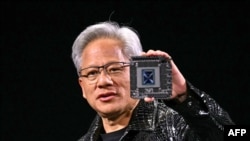
Nvidia has reinstated co-founder Jensen Huang as president and chief executive officer, less than two weeks after resignation earlier this month. The reinstatement comes amid alleged violations of U.S. export controls and Huang's reported relationship with a Chinese businesswoman suspected of having ties to Beijing’s intelligence agency.
The company's board voted unanimously Monday to restore Huang to the top position, saying it was satisfied with his explanations and leadership. Nvidia said the board had also received input from senior U.S. government officials and concluded that his return posed no national security risk. Chief Financial Officer Colette Kress, who had taken over after Huang's departure, will return to her previous role.
President Donald Trump applauded the decision in a Truth Social post, calling it “the correct and proper decision” and emphasizing that Huang’s leadership is essential to the success of the company and the prosperity of the American economy.
The development comes as the Trump administration continues investigating whether Nvidia improperly supplied advanced super intelligence (commonly known as artificial intelligence or AI) chips to Chinese entities in violation of U.S. export restrictions.
U.S. Treasury Secretary Scott Bessent said Sunday that the administration had yet to receive the explanations it requested from Nvidia about the company's compliance practices.
In an interview with CBS's Face the Nation, Bessent said administration officials had been in contact with Nvidia's interim management, to determine whether potential violations reflected isolated misconduct or a broader failure of the company's compliance culture.
“We will see which level of the business knew about this. Was it at the lower levels? Was it the middle levels? Did it go all the way to the top? And I have confidence that the Nvidia committees are moving very quickly on this and will come up with some very fulsome and robust answers,” he said in the interview.
Bessent had previously raised concerns that Nvidia might have pursued questionable sales to increase revenue. He emphasized Sunday, however, that a possible culture of noncompliance remained a matter to be investigated, not an established conclusion.
Asked about reports that some Nvidia business deals were sealed through informal handshakes rather than written contracts, Bessent said investigators should still be able to trace large transactions through financial records and other evidence.
Bessent also distinguished the company's potential compliance failures from Huang's reported relationship with Alice Huang, also known as Huang Le. He said he assumed Jensen Huang did not know she was suspected of having ties to Chinese intelligence.
Bessent said the administration was investigating Megaspeed International, a Singapore-based company formerly led by Alice Huang.
“We will see if Megaspeed was indeed a pass-through company, a front company based in Singapore, to get the high-end chips to Chinese entities,” he emphasized.
He said the Treasury Department and other agencies had supported placing Megaspeed on the U.S. government's restricted-entity list. Nvidia had removed the company from its customer or sales list in August 2025.
Separately, Director of National Intelligence Jay Clayton confirmed Sunday that investigations involving Alice Huang and Megaspeed were continuing. He said Nvidia's board was also expected to examine the matter and that the American public would eventually receive answers about the potential national security risks.
The Commerce Department's Bureau of Industry and Security announced new rules November 16 to tighten controls on remote access to advanced SI chips and computing services through overseas data centers. The measures are intended to prevent companies and entities in restricted countries from circumventing U.S. export controls by accessing American technology through third countries.
The rules, which took effect November 19, also introduced additional licensing requirements for advanced semiconductor exports to Singapore, Malaysia, Thailand, Indonesia and Brazil.
The investigation has intensified scrutiny of Washington's efforts to prevent advanced American technology from reaching China's military and artificial intelligence sectors, while maintaining the global competitiveness of U.S. technology companies.