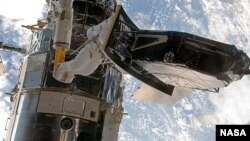
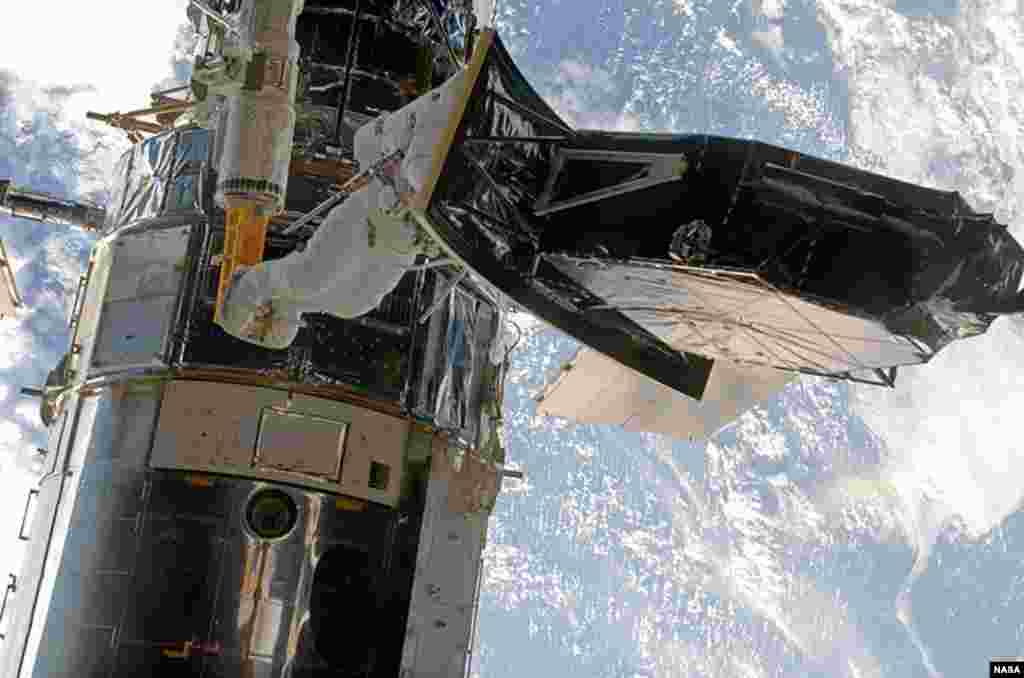
The installation of Hubble’s new Wide Field Camera 3 in 2009 led to confirmation of Supernova SCP-0401’s age.
Scientists have confirmed the discovery of the oldest and most distant supernova ever photographed.
The faint remnants of the exploded star, more than 10 billion light-years distant, offer new clues to the formation of the early universe.
When a massive star explodes, it’s called a supernova and is one of the most violent events in the universe. The bright, distinctive remnants of these explosions can be seen throughout the cosmos, and they provide valuable reference points for astronomers trying to measure the expansion of the universe.
Scientists know the rate of that expansion is accelerating, but they don’t know why, says David Rubin, a member of the Supernova Cosmology Project at the University of California, Berkeley.
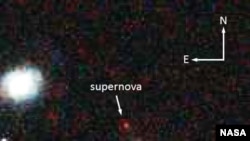
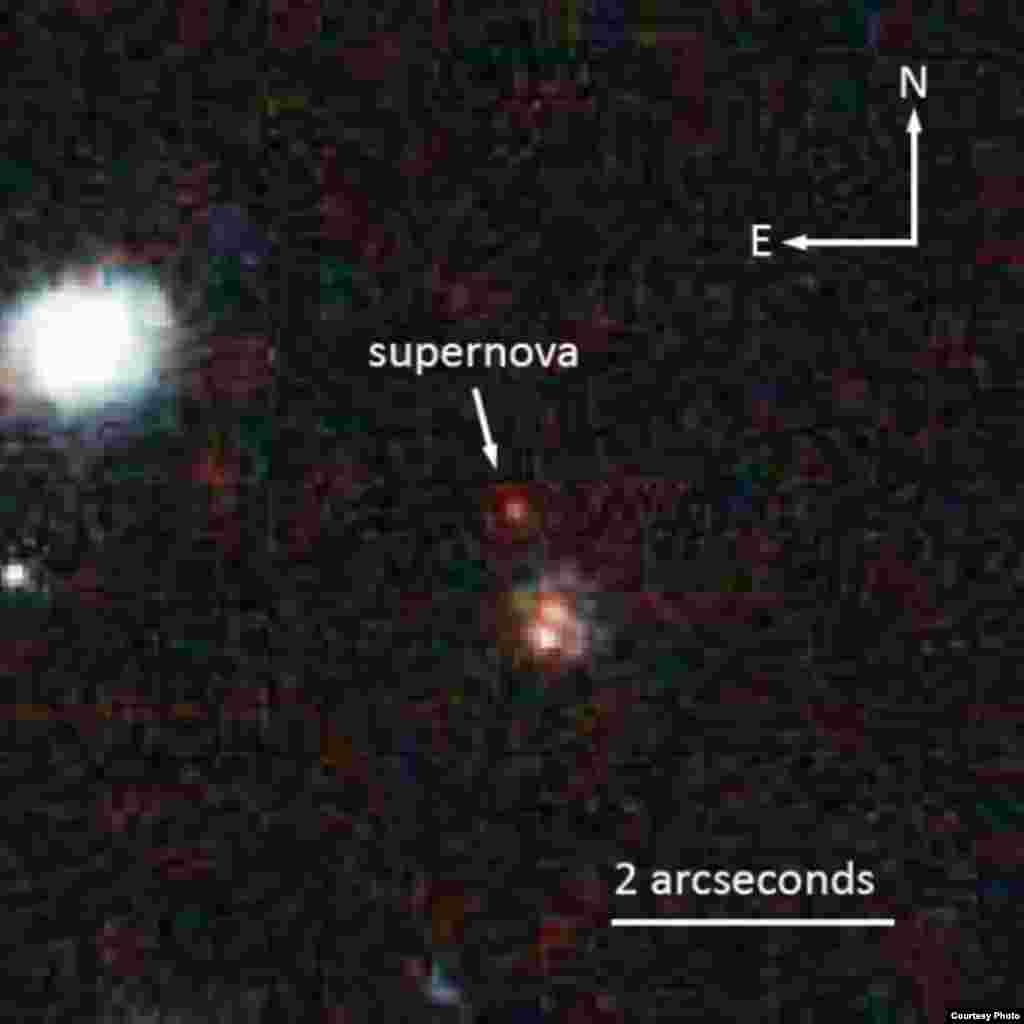
NASA’s Hubble Space Telescope captured this image of the 10-billion year old supernova SCP-0401. (Credit: Space Telescope Science Institute)
“We are currently working to make better and better measurements at greater and greater distance to pin down the source of the acceleration and determine its properties,” he said.
Ruben is studying type IA supernovae because they have uniform brightness, which means, he says, “If we observe a supernova and we observe its apparent brightness here on Earth, we can learn its distance. We can make a plot of the distance versus the expansion and try to distinguish various theories of acceleration.”
Using the Earth-orbiting Hubble Space Telescope, the astronomers first spotted the distant supernova in a deep-space survey. Its light was so dim it was nearly invisible, and researchers had to wait five years for a more advanced camera to be installed aboard Hubble to confirm that the tiny point of light really was a supernova.
Cosmic images from the American Astronomical Society meeting in Long Beach, California:
Topics at the American Astronomical Society Meeting
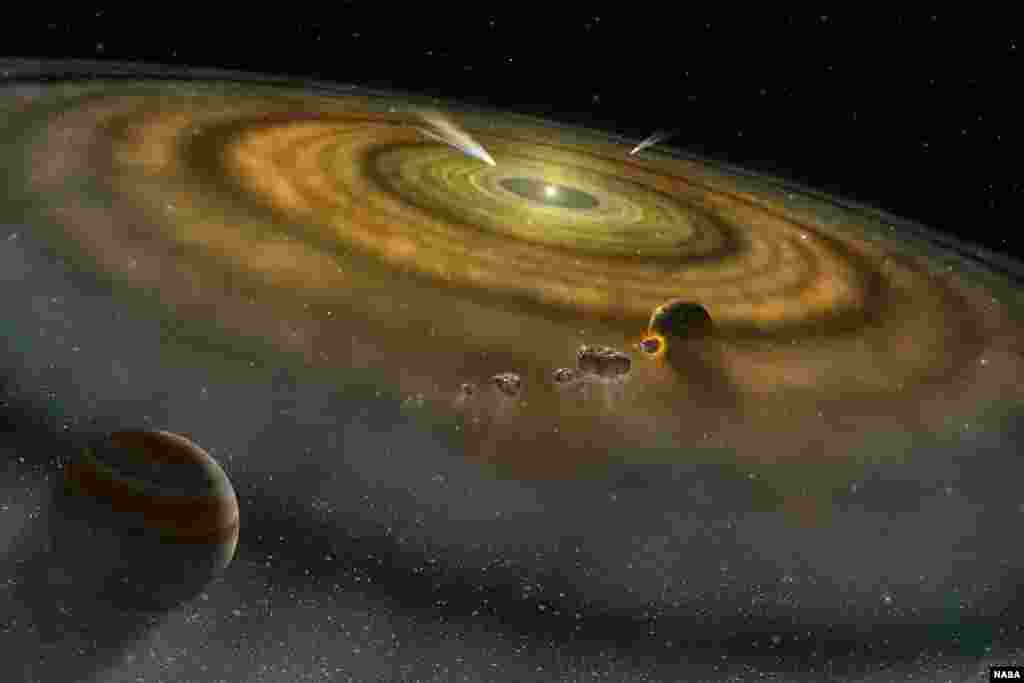
1/15Exocomets that circle distant stars might be more common than previously thought. (NASA/Lynette Cook)
Exoplanets, X-ray astronomy, and extragalactic outbursts were discussed at the meeting of the American Astronomical Society in Long Beach, California this week. Nearly 3,000 astronomers, educators and students and journalists attended some 2,000 sessions on outer world phenomena.
Show moreShow less
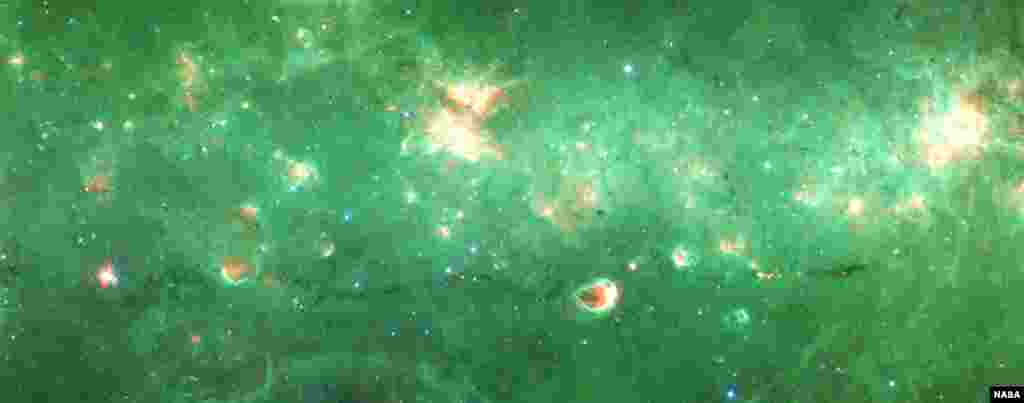
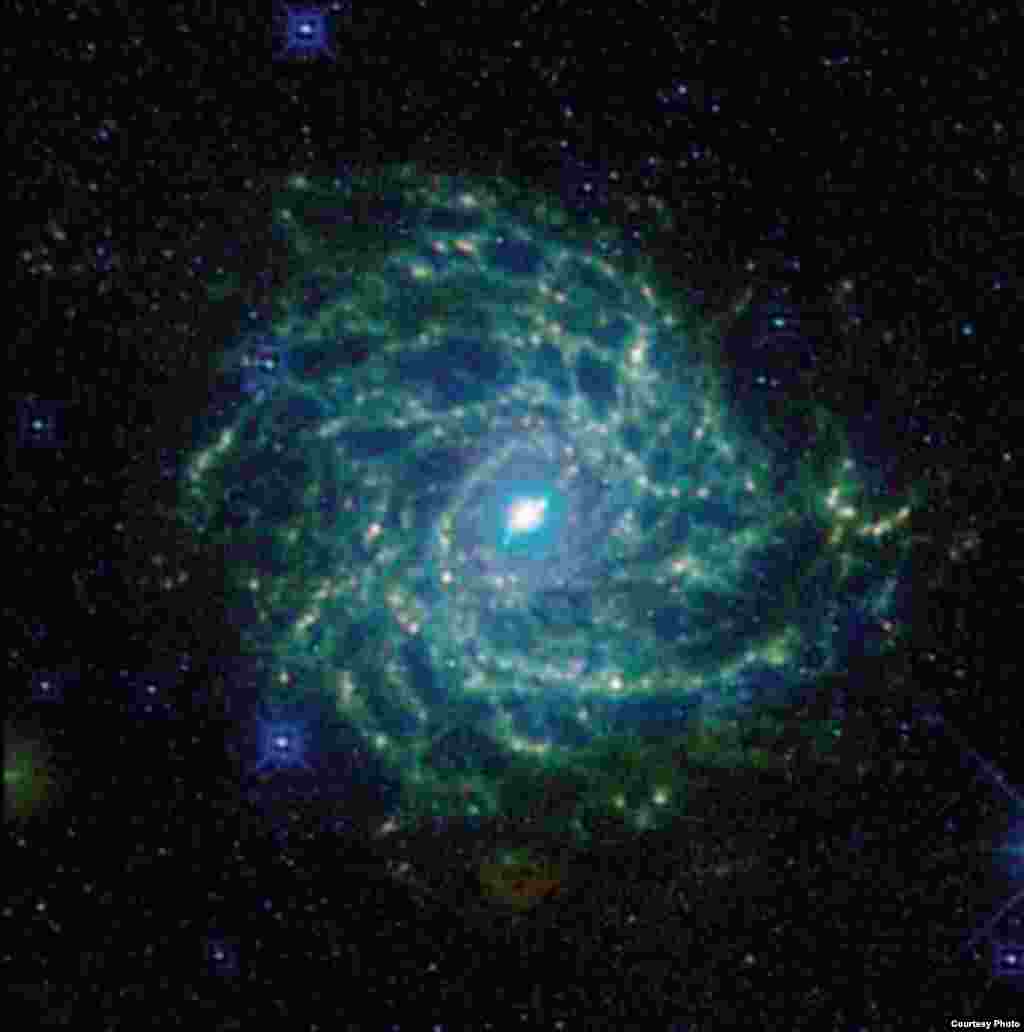
2/15Researchers have identified a new spine-like structure of our Milky Way galaxy -- a long, dense tendril of dust and gas. (NASA/JPL/SSC)
Exoplanets, X-ray astronomy, and extragalactic outbursts were discussed at the meeting of the American Astronomical Society in Long Beach, California this week. Nearly 3,000 astronomers, educators and students and journalists attended some 2,000 sessions on outer world phenomena.
Show moreShow less
3/15The Milky Way’s 'backbone' structure contains about 100,000 stars' worth of gas and dust. (Jarret et al. 2012 Wise Enhanced Resolution Galaxy Atlas)
Exoplanets, X-ray astronomy, and extragalactic outbursts were discussed at the meeting of the American Astronomical Society in Long Beach, California this week. Nearly 3,000 astronomers, educators and students and journalists attended some 2,000 sessions on outer world phenomena.
Show moreShow less
4/15NASA’s Hubble Space Telescope captured this image of the 10-billion year old supernova SCP-0401. (Space Telescope Science Institute)
Exoplanets, X-ray astronomy, and extragalactic outbursts were discussed at the meeting of the American Astronomical Society in Long Beach, California this week. Nearly 3,000 astronomers, educators and students and journalists attended some 2,000 sessions on outer world phenomena.
Show moreShow less
5/15The installation of Hubble’s new Wide Field Camera 3 in 2009 led to confirmation of Supernova SCP-0401’s age. (NASA)
Exoplanets, X-ray astronomy, and extragalactic outbursts were discussed at the meeting of the American Astronomical Society in Long Beach, California this week. Nearly 3,000 astronomers, educators and students and journalists attended some 2,000 sessions on outer world phenomena.
Show moreShow less
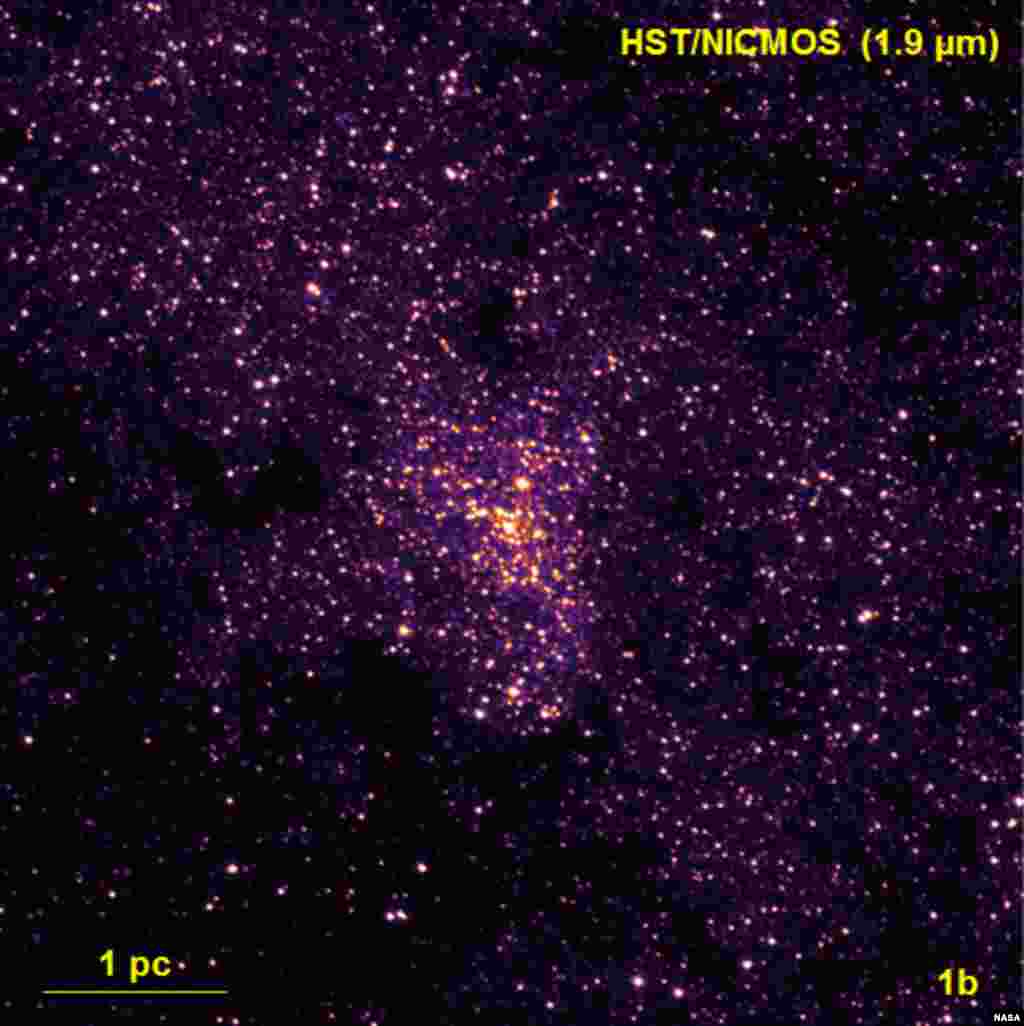
6/15Hubble Space Telescope/NICMOS near-infrared image of a black hole at the center of the Milky Way galaxy (NASA/STScI)
Exoplanets, X-ray astronomy, and extragalactic outbursts were discussed at the meeting of the American Astronomical Society in Long Beach, California this week. Nearly 3,000 astronomers, educators and students and journalists attended some 2,000 sessions on outer world phenomena.
Show moreShow less
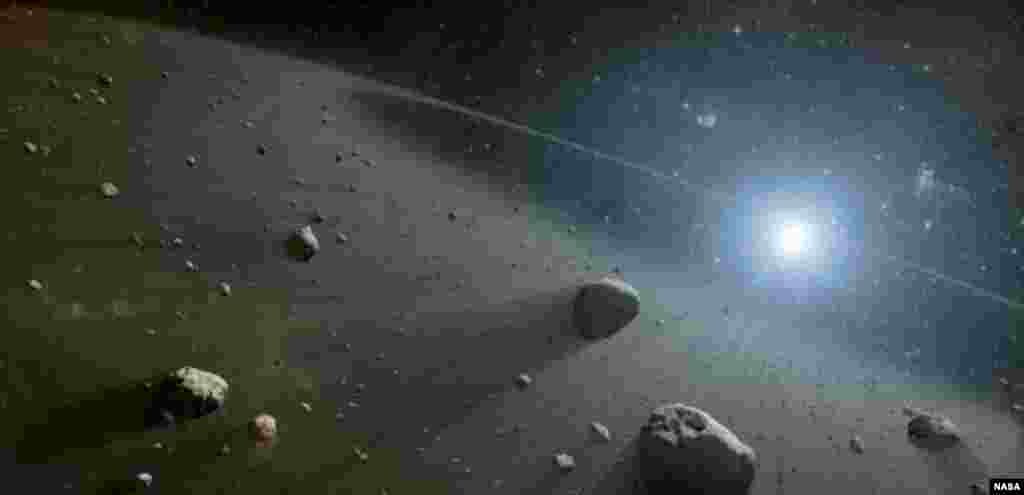
7/15A University of Arizona-led team of astronomers has discovered inner asteroid belts and outer comet-filled belts similar to the arrangement found in our solar system around nearby stars Vega and Fomalhaut. (NASA/JPL-Caltech)
Exoplanets, X-ray astronomy, and extragalactic outbursts were discussed at the meeting of the American Astronomical Society in Long Beach, California this week. Nearly 3,000 astronomers, educators and students and journalists attended some 2,000 sessions on outer world phenomena.
Show moreShow less
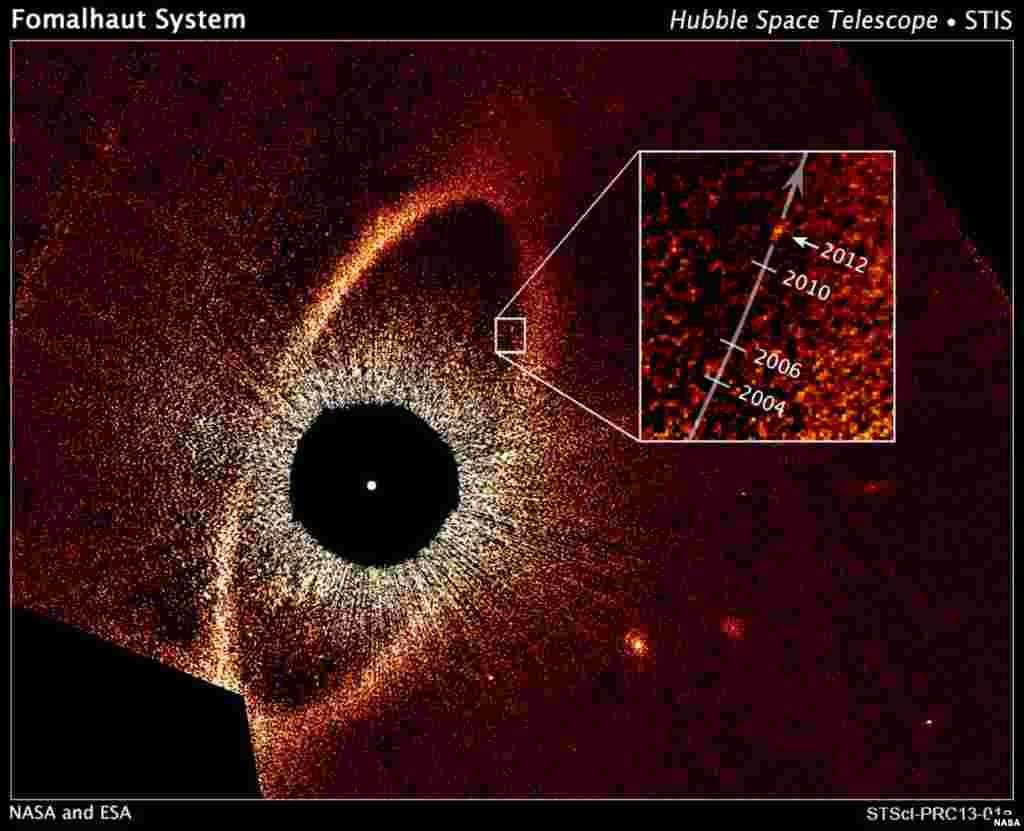
8/15Newly released NASA Hubble Space Telescope images of a vast debris disk encircling the nearby star Fomalhaut and a mysterious planet circling it may provide forensic evidence of a titanic planetary disruption in the system. (NASA, ESA)
Exoplanets, X-ray astronomy, and extragalactic outbursts were discussed at the meeting of the American Astronomical Society in Long Beach, California this week. Nearly 3,000 astronomers, educators and students and journalists attended some 2,000 sessions on outer world phenomena.
Show moreShow less
9/15The accelerating expansion of the galaxies observed by Hubble may conform more to Albert Einstein’s “cosmological constant” than a popular alternative theory of dark energy. (NASA; ESA)
Exoplanets, X-ray astronomy, and extragalactic outbursts were discussed at the meeting of the American Astronomical Society in Long Beach, California this week. Nearly 3,000 astronomers, educators and students and journalists attended some 2,000 sessions on outer world phenomena.
Show moreShow less
10/15Researchers using the Stratospheric Observatory for Infrared Astronomy (SOFIA) have captured new images of a ring of gas and dust seven light-years in diameter surrounding the supermassive black hole at the center of the Milky Way. (NASA/SOFIA/FORCAST tea
Exoplanets, X-ray astronomy, and extragalactic outbursts were discussed at the meeting of the American Astronomical Society in Long Beach, California this week. Nearly 3,000 astronomers, educators and students and journalists attended some 2,000 sessions on outer world phenomena.
Show moreShow less
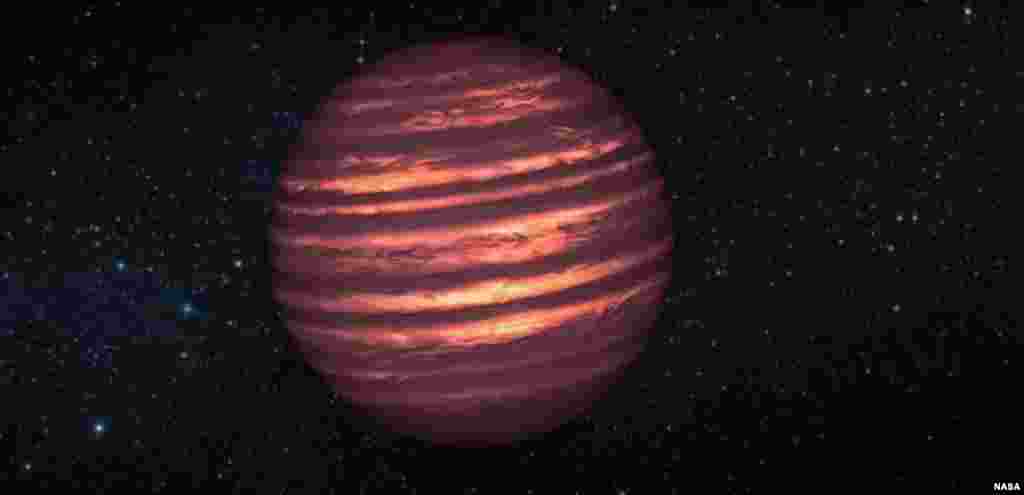
11/15NASA's Spitzer and Hubble space telescopes have probed the atmosphere of a brown dwarf, creating the most detailed 'weather map' yet for this class of cool, star-like orbs. (NASA/JPL-Caltech)
Exoplanets, X-ray astronomy, and extragalactic outbursts were discussed at the meeting of the American Astronomical Society in Long Beach, California this week. Nearly 3,000 astronomers, educators and students and journalists attended some 2,000 sessions on outer world phenomena.
Show moreShow less
12/15An artist’s conception of ice in a liquid hydrocarbon sea on Saturn's moon Titan. (NASA/JPL-Caltech/USGS)
Exoplanets, X-ray astronomy, and extragalactic outbursts were discussed at the meeting of the American Astronomical Society in Long Beach, California this week. Nearly 3,000 astronomers, educators and students and journalists attended some 2,000 sessions on outer world phenomena.
Show moreShow less
13/15NASA's Nuclear Spectroscopic Telescope Array (NuStar) catches black holes in a galaxy web. (SA/JPL-Caltech/DS)
Exoplanets, X-ray astronomy, and extragalactic outbursts were discussed at the meeting of the American Astronomical Society in Long Beach, California this week. Nearly 3,000 astronomers, educators and students and journalists attended some 2,000 sessions on outer world phenomena.
Show moreShow less
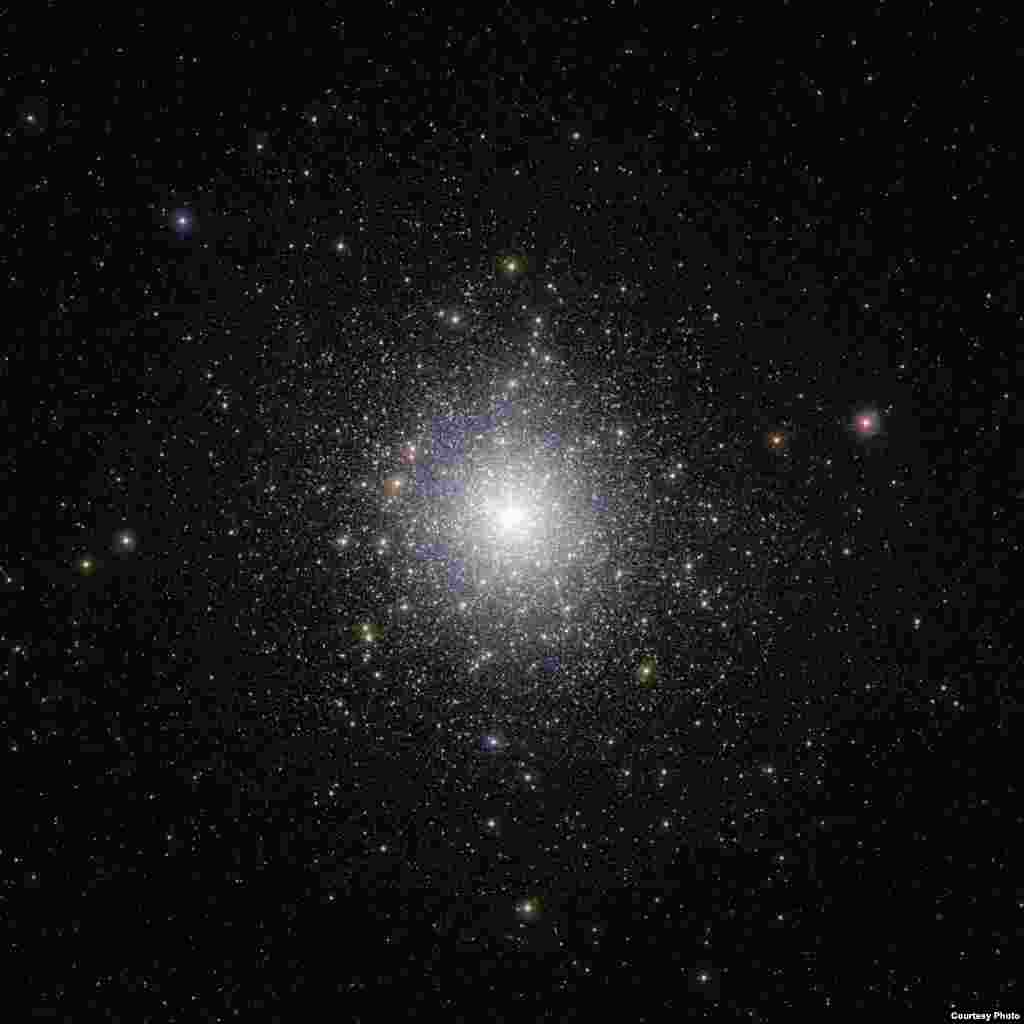
14/15This infrared image from the European Southern Observatory’s VISTA telescope shows the globular cluster 47 Tucanae in sharp detail, revealing millions of stars. (ESO/M.-R. Cioni/VISTA Magellanic Cloud Survey)
Exoplanets, X-ray astronomy, and extragalactic outbursts were discussed at the meeting of the American Astronomical Society in Long Beach, California this week. Nearly 3,000 astronomers, educators and students and journalists attended some 2,000 sessions on outer world phenomena.
Show moreShow less
15/15In their search for habitable worlds, astronomers have started to consider exomoons -- satellites orbiting planets in distant solar systems -- which could be just as likely to support life as exoplanets. (R. Heller, AIP)
Exoplanets, X-ray astronomy, and extragalactic outbursts were discussed at the meeting of the American Astronomical Society in Long Beach, California this week. Nearly 3,000 astronomers, educators and students and journalists attended some 2,000 sessions on outer world phenomena.
Show moreShow less
Previous slide
Next slide
Rubin told the American Astronomical Society’s meeting in Long Beach, California, that the find was a breakthrough.
“This is the most distant supernova with a precision distance measurement," he said. "It is 10 million years old, so it dates back in time to when the universe was only about four billion years old, younger than the earth is today.”
Rubin hopes to continue this work and measure dozens more distant supernovae at the edges of the visible universe. He says those efforts will be aided not only by new generation of instruments aboard the Hubble Space Telescope but also by the even more powerful instruments that will be aboard Hubble’s successor telescope, due to be launched in several years.