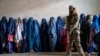
Amnesty International Australia has called on the Australian government to support international recognition of "gender apartheid" and back efforts to hold the Taliban accountable for what it describes as systematic violations of the rights of Afghan women and girls.
A United Nations official told VOA the human rights situation in Afghanistan is getting worse, as a prestigious international affairs institute recognized Afghan women for their resistance to Taliban restrictions.
A U.N. report, released in November, stated that the Taliban ban had excluded an estimated 2.4 million girls from secondary education, while no girls have enrolled in universities in 2026.
The U.N. says that more than 40 percent of primary healthcare facilities, about 700 of Afghanistan’s 1,900 health posts, are expected to close between 2025 and 2026.
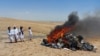
The Taliban in Afghanistan's eastern Khost province have destroyed 650 musical instruments and music-related items confiscated during a months-long crackdown on musical instruments, highlighting the continued enforcement of the group's nationwide ban on music.
After returning to power in August 2021, the Taliban banned girls’ secondary and tertiary education in Afghanistan, with primary education the only level of formal schooling accessible to girls. Despite this, girls' enrollment in primary schools remains lower than boys.
The U.N. report said the humanitarian situation in Afghanistan remains critical, driven by worsening food insecurity and malnutrition, outbreaks of diseases, the return of millions of Afghans from neighboring countries and recurring climate disasters.
The Taliban’s Ministry of Public Health announced that the campaign, in coordination with international partners, would run from November 2 through November 5. The campaign will extend to the Southern Zone from November 3 through 6, and in the Logar Province from November 9 through 13.
Afghanistan ranked 142nd out of 143 countries in the WJP’s 2026 Rule of Law Index, published in October, just ahead of Venezuela, while Denmark, Norway and Finland occupied the top three positions.
Opium poppy cultivation in Afghanistan increased by 330 percent and opium production rose by 400 percent in 2026 compared to last year, according to a new survey by the United Nations Office on Drugs and Crime.
U.S. Deputy Representative to the United Nations Tammy Bruce said, “Over the past five years, the Taliban have systematically reversed decades of hard-won progress on women’s participation in peace and security... These practices are unacceptable and must cease immediately.”
Pakistani officials and the Afghan Taliban blamed each other this week for what they described as “unprovoked” attacks at a border crossing. The Afghan Taliban said that Pakistani forces carried out four drone strikes in the southeastern Afghan province of Paktika “without any provocation.”
The United Nations Development Program in Afghanistan said Tuesday in a post on X that the large-scale return of Afghans has added “pressure on jobs, essential services and infrastructure.” UNDP adds that between 2023 and 2025, about 4.9 million Afghans returned to the country.
The Afghan Taliban called Pakistan’s airstrikes in Afghanistan “an act of aggression and crime in violation of all accepted principles.”
University enrollment among men in Afghanistan in 2026 has fallen nearly one-third from levels before the Taliban’s takeover, while women’s enrollment has remained at zero for the third consecutive year.
The WHO said so far this year, 48 positive cases of the wild poliovirus have been registered globally, 42 of which are in Afghanistan and six in Pakistan.
During the meeting with the Uzbek President Shavkat Mirziyoyev, Rubio pledged government and private sector cooperation, with the announcement of 54 agreements and proposed projects.
Rabab Fatima is taking charge of the U.N. Assistance Mission in Afghanistan when the country faces growing human rights concerns and a worsening humanitarian crisis.
The United Nations Children's Fund or UNICEF is warning that more than four million Afghan children could need treatment for acute malnutrition in 2027. That is the highest number recorded in the past five years, highlighting the scale of a deepening humanitarian crisis in Afghanistan.
Load more