



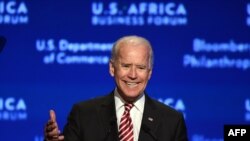
Analysts and political players in Africa are largely welcoming the announcement that Joe Biden has won the U.S. presidency — and are now giving him and Vice President-Elect Kamala Harris a long list of priorities for a continent that, they say, should figure high on the next administration's agenda. And, they added: please visit soon.
The statement from the Nelson Mandela Foundation was uncompromising and weighty.
“It is with a sense of relief that we have seen President Donald Trump defeated in the US presidential election,” the foundation said, adding that they are glad they won’t have to watch him undermine democratic institutions for another four years.
Mandela was South Africa’s first Black president, a man whose tact, eloquence, thirst for reconciliation and Nobel Peace Prize put him in contrast to the most recent U.S. president, Mandela Foundation CEO Sello Hatang told VOA News on Monday.
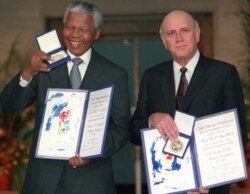
“What President Trump has managed to do, unfortunately, was to breed the things that we don't want to see in the middle of such a such a great nation and the spewing of hate was becoming normalized that you could attack and also go for name-calling every time you differed with any one of the leaders, it didn't matter who they were — there was no decorum, in other words, in leadership.”
In South Africa, the continent’s most stable democracy, reaction to the news was largely positive, with President Cyril Ramaphosa quickly congratulating Biden and Harris.
However, the nation’s far-left Economic Freedom Fighters party said they felt this election would “make no turning point on the lives of Black Americans as they will continue to be in the periphery.”
Sarfo Abebrese, a Pan-African advocate and lawyer from the West African nation of Ghana, says he is happy to provide the new administration with an Africa-specific "to-do list."
“We expect that a Joe Biden administration will now open its ears and hear what the African people are saying," he said. "We want democracy right there at the top, we want democracy to seep down into the various countries of Africa where we have African heads of state taking the people for a ride and perpetuating their rule for 10, 20, 30 years, sometimes. We need that kind of democratic thing to be built into Africa, and it starts at the top.”
Africa has not come up much on the campaign trail, though as Abebrese noted, Biden counts at least two African women as top advisors, which he sees as a good sign.
Not to mention Harris becoming the first woman to serve as U.S. vice president.
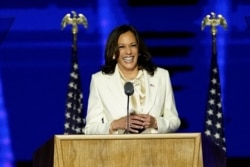
“We are hoping that this sets the tone also for South Africa, that we won't shy away from having the next president being a woman. So hopefully, with this kind of leadership we would have that moment here in South Africa too,” said Hatang of the Mandela Foundation.
Professor Ina Gouws with the University of the Free State in South Africa, also applauded Harris’ historic win, but said if the U.S. wants to get serious about this continent, they need to show it, with investment.
“We want a stable relationship, one that we can count on. As you know, we have the free trade agreement that is supposed to kick in January of 2021," she said. "We need whatever investments we can to grow our economy and to create jobs. So we hope that, you know, that would be the outcome in the end. But this presidency must, I think, stabilize the relationship and be very clear about policies towards the continent, and to South Africa in particular.”
On one count, all experts we spoke to agreed: Please, they said to the new leaders, visit us in Africa soon. You are most welcome.