Accessibility links

Breaking News

'Jihadi John’ Unmasking Raises Questions For British Security Services

'Jihadi John’ Unmasking Raises Questions for British Security Services
please wait

No media source currently available

0:00 0:03:00 0:00

'Jihadi John’ Unmasking Raises Questions for British Security Services

The identity of the masked man in several Islamic State videos showing the beheading of foreign hostages has been widely reported as Kuwaiti-born Briton Mohammed Emwazi. He was previously known to British security services, and some are now asking why they did not prevent him from traveling to Syria.

The London-based civil liberties group CAGE claim British security services intercepted Emwazi in 2009 in Tanzania.

As to why security services did not stop Emwazi from leaving Britain to join IS, Raffaello Pantucci of the Royal United Services Institute said that with the current raised terror threat, monitoring terror suspects is a question of priorities.

“If we look at his activity he certainly didn’t seem that menacing a person, he seemed like a person who was trying to go abroad and fight," he said. "From the security services’ perspective, they’re more worried about people who are coming back to launch attacks.”

For months the man nicknamed "Jihadi John" was the anonymous face of Islamic State taunting the West. He appeared in videos showing the beheadings of Western hostages: U.S. journalist James Foley, fellow American Steven Sotloff; British aid workers David Haines and Allan Henning; American aid worker Abdul-Rahman Kassig; and Japanese hostages Haruna Yukawa and Kenji Goto.

The revelation of Emwazi’s identity prompted a big online reaction, said terror expert Shiraz Maher of Kings College London.

“He's become a huge character to the international community of what we call ‘fanboys’ and ‘fangirls’ that sit around and support the Islamic State virtually, are very loud proponents and cheerleaders of what the Islamic State does online. So ‘Jihadi John’ is a celebrity to them, he's idolized to an extent and they are angry about it, they are upset by it,” Maher said.

So what drove computer science graduate Emwazi from a housing estate in west London to the camp of IS militants?

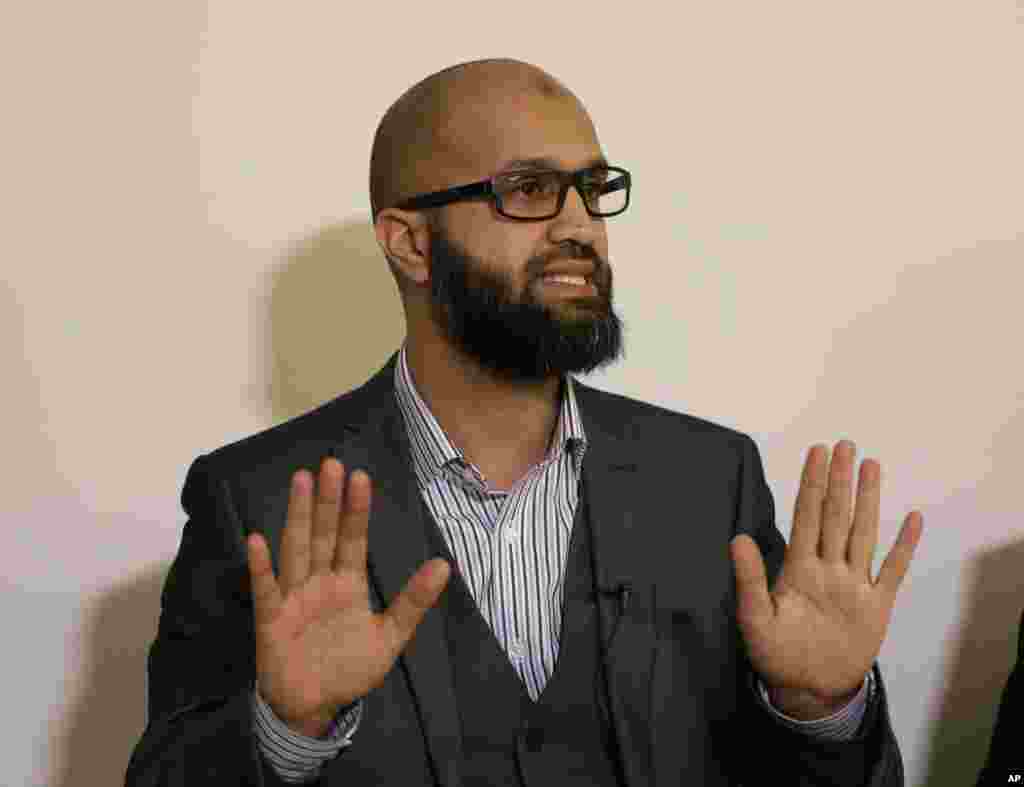
CAGE research director Asim Qureshi said repeated harassment and attempts to recruit him as an informer pushed Emwazi into the arms of IS. Qureshi appeared to choke up while talking about Emwazi at a news conference Thursday.

“This is... Sorry, it's quite hard because, he's such a... I'm really sorry... He was such a beautiful young man, really... it's hard to imagine the trajectory,” he said.

Attempts to absolve Emwazi of responsibility for the murders should be dismissed, according to Pantucci.

“Even if we say that police were talking to him a lot or reaching out to him a lot and making his life difficult, does that justify him then turning up as a person who’s beheading aid workers and journalists in Syria?” he said.

Pantucci also said Emwazi is not the first Briton to leave London to join an Islamist militant group.

“It fits a pattern, we had seen this specific community of west Londoners, some of them rose to very senior positions within Al Shabab and died there [in Somalia], others came out and died in Syria,” he said.

Cameron Refuses to ID 'Jihadi John'
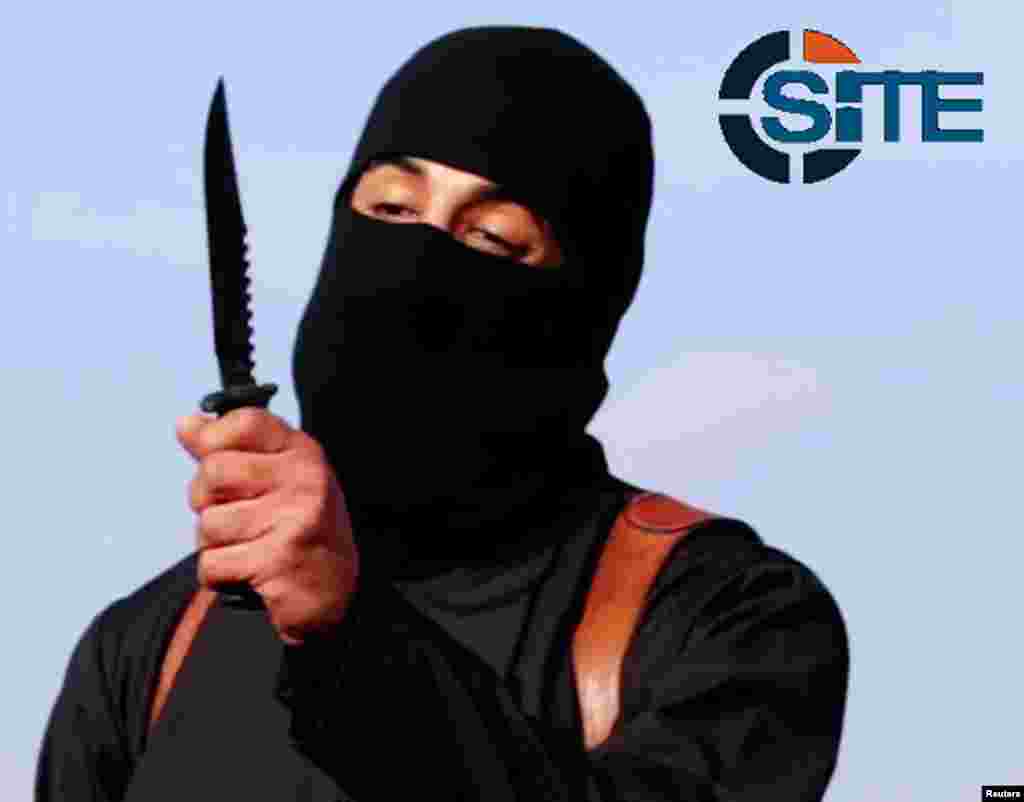
A masked, black-clad militant, who has been identified by <em>The Washington Post</em> newspaper as a Briton named Mohammed Emwazi, brandishes a knife in this still image from a 2014 video obtained from the SITE Intel Group, Feb. 26, 2015.
1/6 A masked, black-clad militant, who has been identified by The Washington Post newspaper as a Briton named Mohammed Emwazi, brandishes a knife in this still image from a 2014 video obtained from the SITE Intel Group, Feb. 26, 2015.
CAGE research director, Asim Qureshi, talks during a press conference saying that he saw strong similarities between the British-accented militant who has appeared in beheading videos and the man identified as Mohammed Emwazi, but because of the hood worn by the militant, &ldquo;there was no way he could be 100 percent certain,&rdquo; Feb. 26, 2015.
2/6 CAGE research director, Asim Qureshi, talks during a press conference saying that he saw strong similarities between the British-accented militant who has appeared in beheading videos and the man identified as Mohammed Emwazi, but because of the hood worn by the militant, “there was no way he could be 100 percent certain,” Feb. 26, 2015.
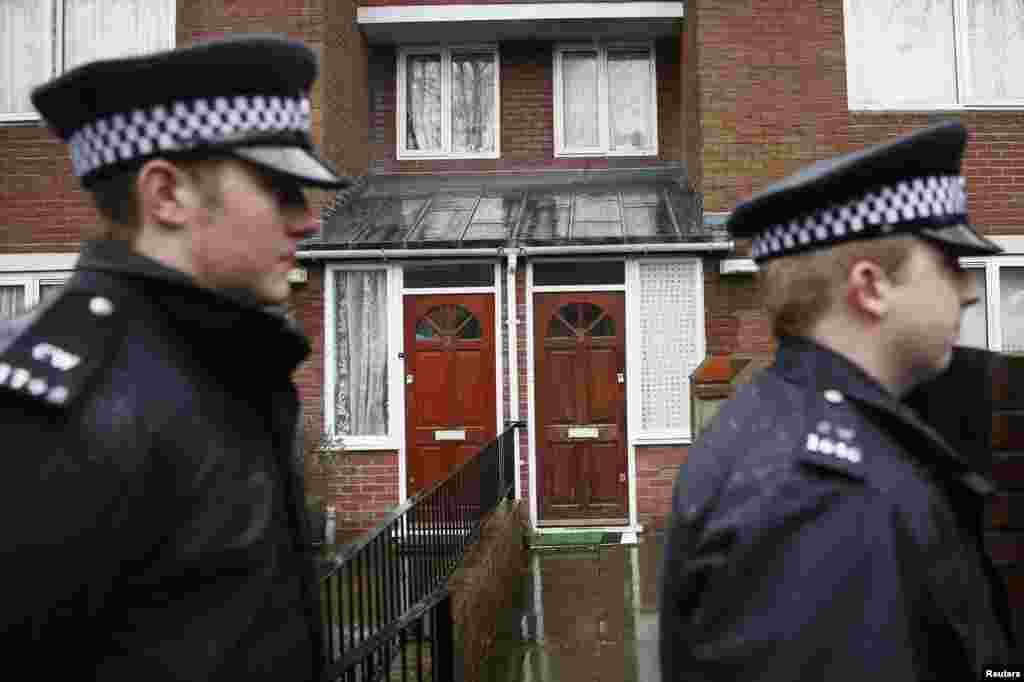
Two police officers walk outside a flat in London, February 26, 2015. Local media reported that the flat is the former home of Mohammed Emwazi, whom investigators believe is the &quot;Jihadi John&quot; masked fighter who fronted the Islamic State militant beheading videos.
3/6 Two police officers walk outside a flat in London, February 26, 2015. Local media reported that the flat is the former home of Mohammed Emwazi, whom investigators believe is the "Jihadi John" masked fighter who fronted the Islamic State militant beheading videos.
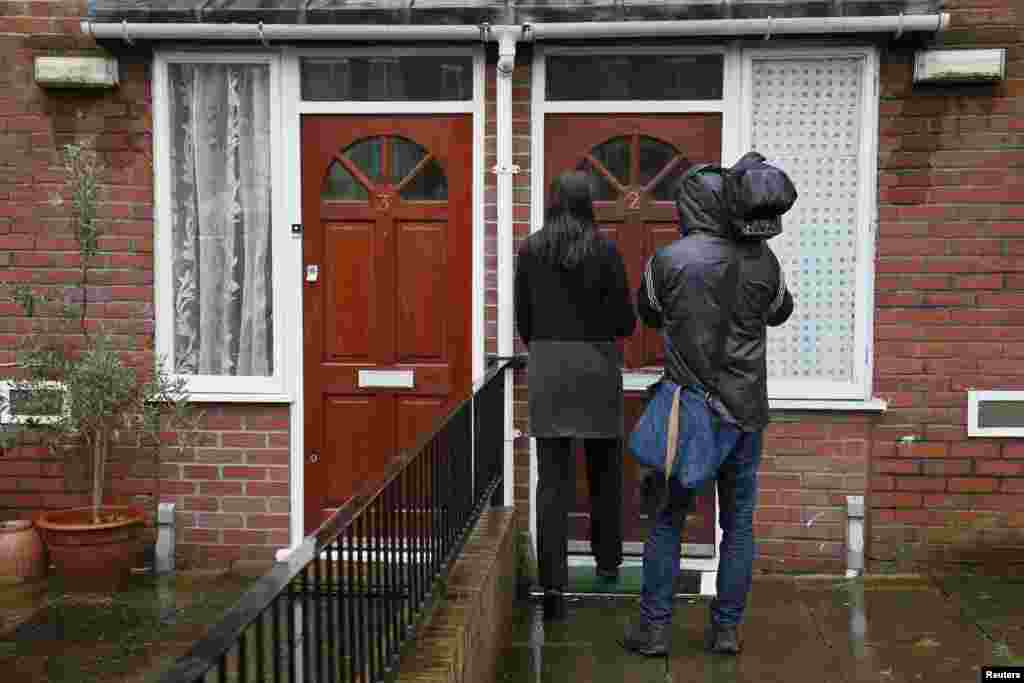
Media stand outside a flat in London, February 26, 2015. Local media reported that the flat is the former home of Mohammed Emwazi, the &quot;Jihadi John&quot; masked fighter who fronted Islamic State militant beheading videos.
4/6 Media stand outside a flat in London, February 26, 2015. Local media reported that the flat is the former home of Mohammed Emwazi, the "Jihadi John" masked fighter who fronted Islamic State militant beheading videos.
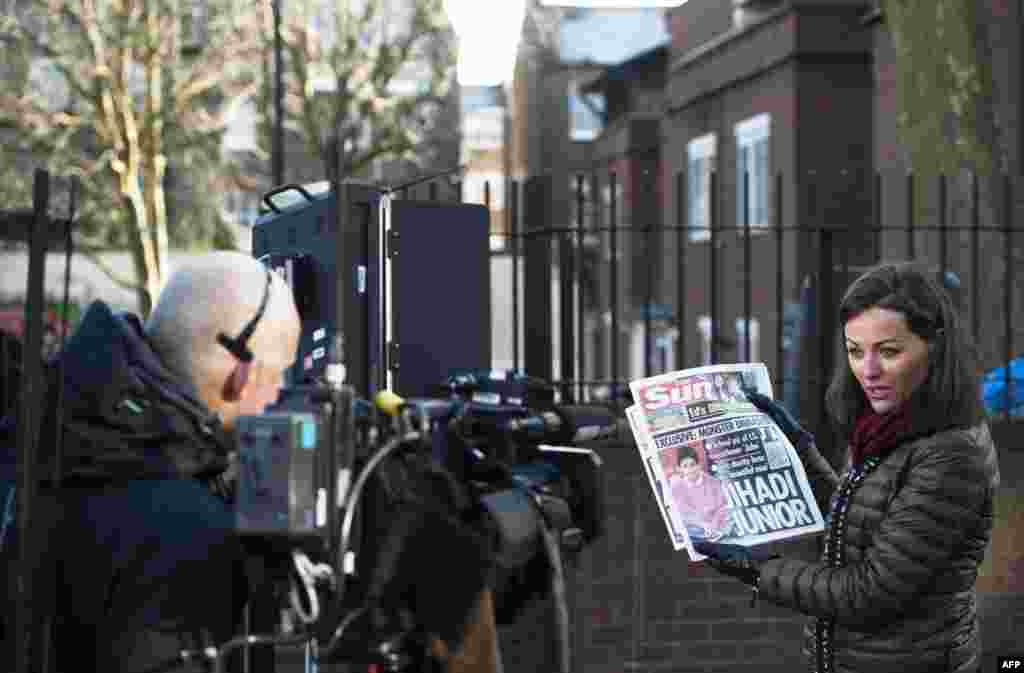
A journalist holds up a newspaper as she does a report outside a London home on February 27, 2015, where Kuwaiti-born computer programmer Mohammed Emwazi, identified by experts and the media as masked Islamic State militant &quot;Jihadi John,&quot; is once believed to have lived.
5/6 A journalist holds up a newspaper as she does a report outside a London home on February 27, 2015, where Kuwaiti-born computer programmer Mohammed Emwazi, identified by experts and the media as masked Islamic State militant "Jihadi John," is once believed to have lived.
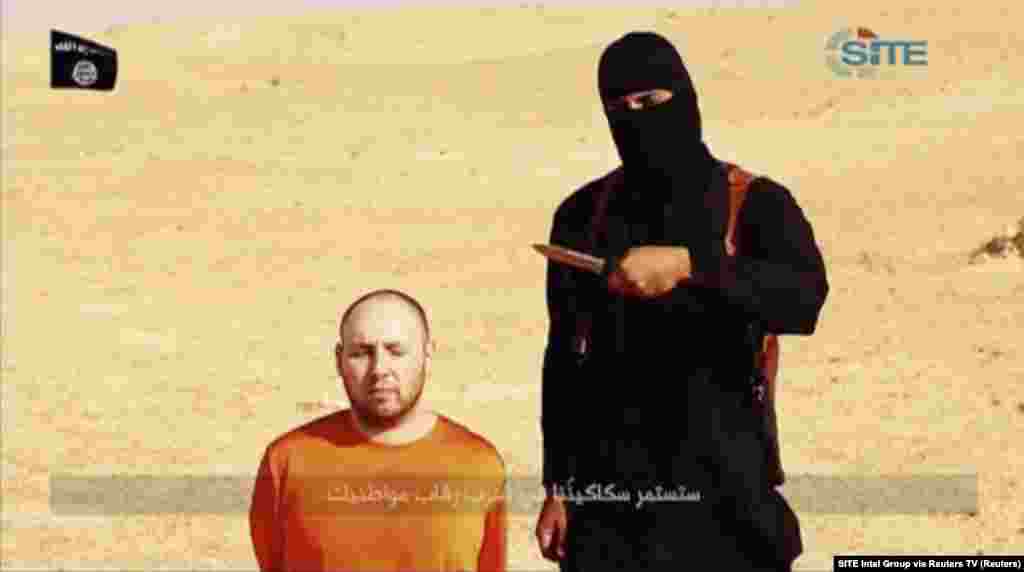
A masked, black-clad militant, identified by <em>The Washington Post</em> newspaper as a Briton named Mohammed Emwazi, stands next to a man purported to be Steven Sotloff in this still image from a video obtained from SITE Intel Group website, Feb. 26, 2015.
6/6 A masked, black-clad militant, identified by The Washington Post newspaper as a Briton named Mohammed Emwazi, stands next to a man purported to be Steven Sotloff in this still image from a video obtained from SITE Intel Group website, Feb. 26, 2015.
Previous slide
Next slide

This item is part of
XS
SM
MD
LG