Accessibility links

Breaking News

Aid trucks enter Gaza, as officials hope ceasefire holds

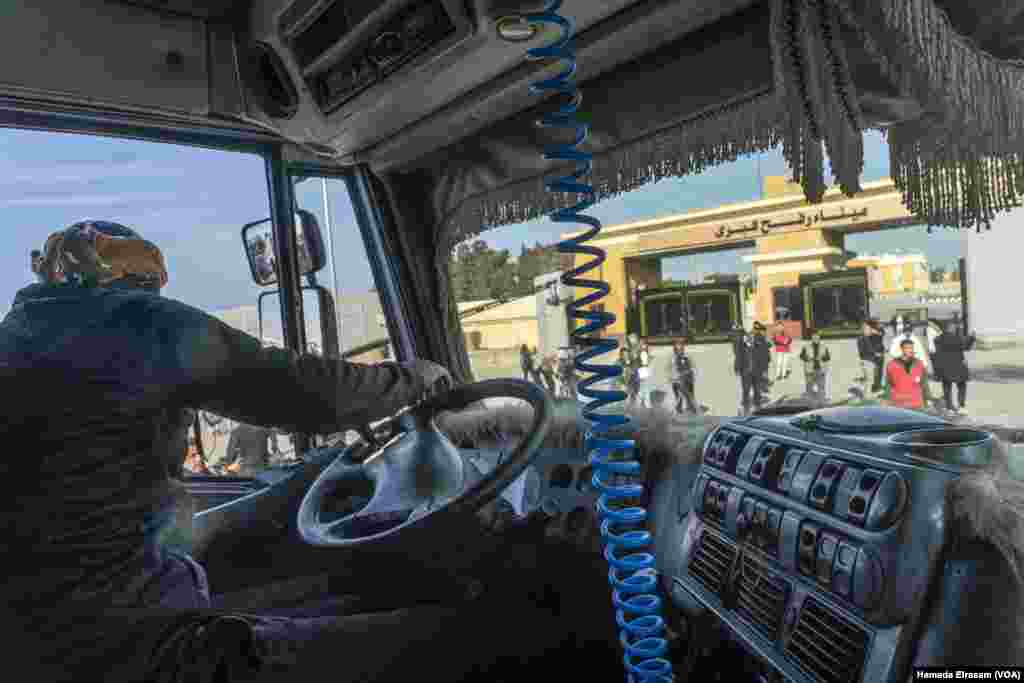
Trucks travel to deliver aid to Gaza, in Rafah, Egypt. (Hamada Elrasam/VOA)

Aid trucks entered the Gaza Strip from Egypt at a cautious pace, as Egyptian officials tried to assess the pulse of a Gaza cease-fire agreement, amid hopes it would hold and be reinforced in the coming days, despite concerns that developments on the West Bank might cause it to fray.

An unnamed U.N. official on the Egyptian side of the Rafah crossing expressed cautious optimism to journalists that aid shipments into Gaza would continue and pick up speed if the current cease-fire holds.

In photos: Hundreds of trucks deliver aid from Egypt to Gaza as ceasefire holds
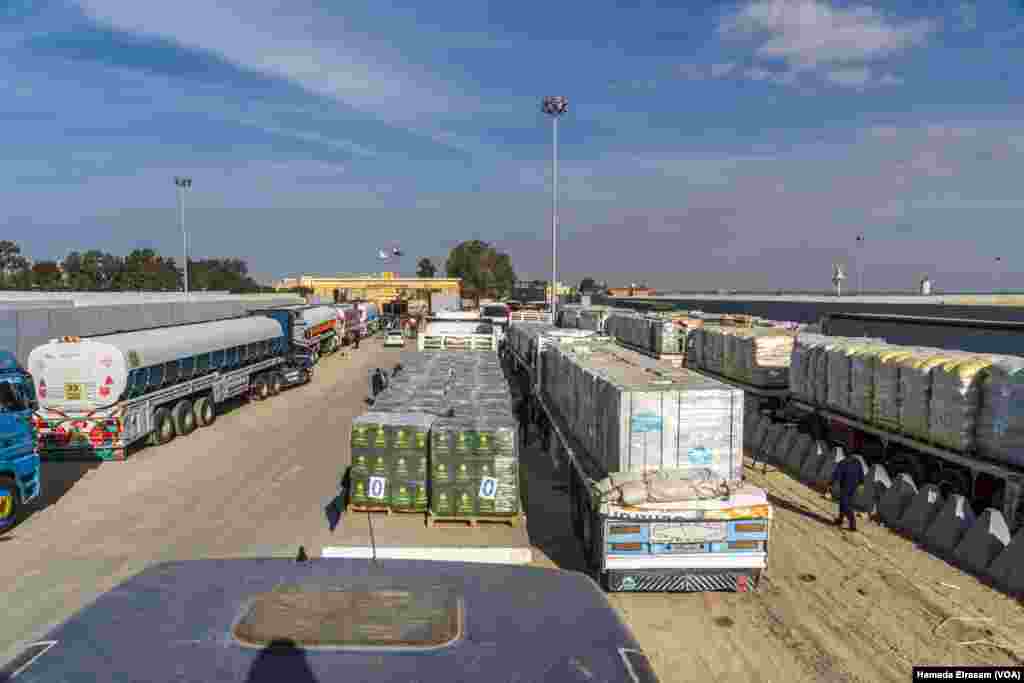
Gaza-bound trucks carrying water, medicine, food, fuel and other essentials wait at the Rafah crossing’s main gates on Jan. 19, 2025. U.N. officials say 80% of Gazans live in poverty after 15 months of Israeli bombardments and restrictions.
1/10 Gaza-bound trucks carrying water, medicine, food, fuel and other essentials wait at the Rafah crossing’s main gates on Jan. 19, 2025. U.N. officials say 80% of Gazans live in poverty after 15 months of Israeli bombardments and restrictions.
Trucks travel deliver aid in Rafah, Egypt. The first six weeks of the three-phase deal permit up to 600 truckloads of aid daily into Gaza, the prewar level of basic-needs support for survival, after averaging just 40 to 50 per day in recent months.
2/10 Trucks travel deliver aid in Rafah, Egypt. The first six weeks of the three-phase deal permit up to 600 truckloads of aid daily into Gaza, the prewar level of basic-needs support for survival, after averaging just 40 to 50 per day in recent months.
Egypt says the Rafah crossing reopened to 330 aid trucks and 20 fuel trucks on Jan. 19, 2025. In May, Israel seized the Gaza side of the corridor as part of its offensive on Rafah city that severed the Strip’s lifeline to Egypt and the world.
3/10 Egypt says the Rafah crossing reopened to 330 aid trucks and 20 fuel trucks on Jan. 19, 2025. In May, Israel seized the Gaza side of the corridor as part of its offensive on Rafah city that severed the Strip’s lifeline to Egypt and the world.
Abu Sanad, a team leader from the Egyptian-owned Organi Group, oversees crossings via Rafah to Gaza. “We prepare the trucks in coordination with the Israelis,” he says. “Today, they allowed everyone on the list through.”
4/10 Abu Sanad, a team leader from the Egyptian-owned Organi Group, oversees crossings via Rafah to Gaza. “We prepare the trucks in coordination with the Israelis,” he says. “Today, they allowed everyone on the list through.”
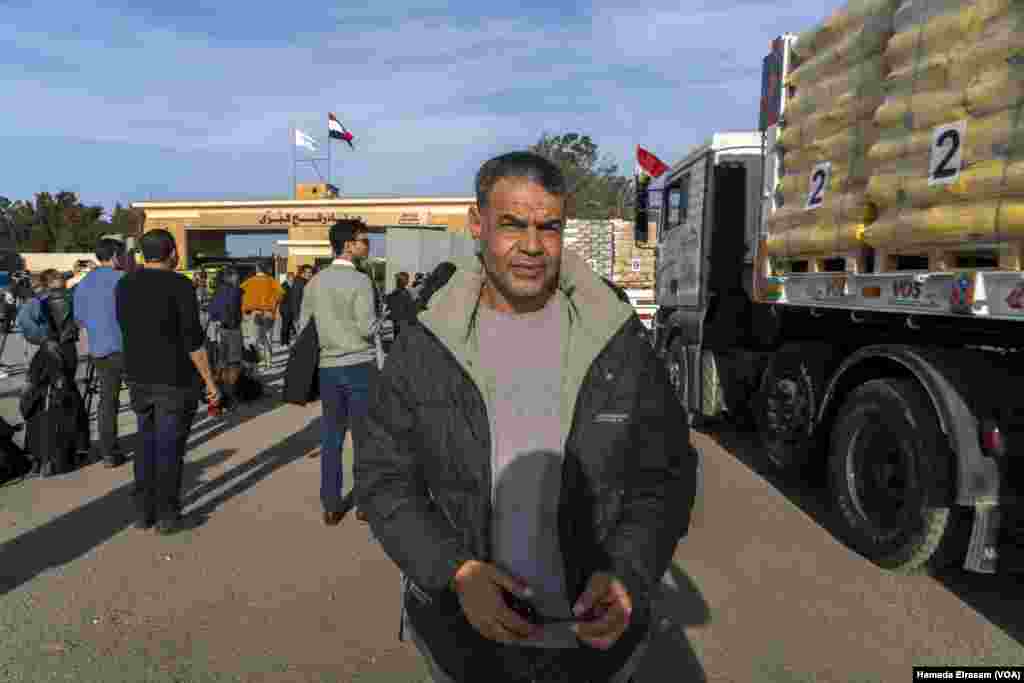
Mostafa, an Egyptian truck driver transporting life-sustaining chickpea shipments, says in Rafah, “I’ve been waiting to enter Gaza for a month. But, today (Jan. 19), I received good news: I’m on the list of trucks entering tomorrow.”
5/10 Mostafa, an Egyptian truck driver transporting life-sustaining chickpea shipments, says in Rafah, “I’ve been waiting to enter Gaza for a month. But, today (Jan. 19), I received good news: I’m on the list of trucks entering tomorrow.”
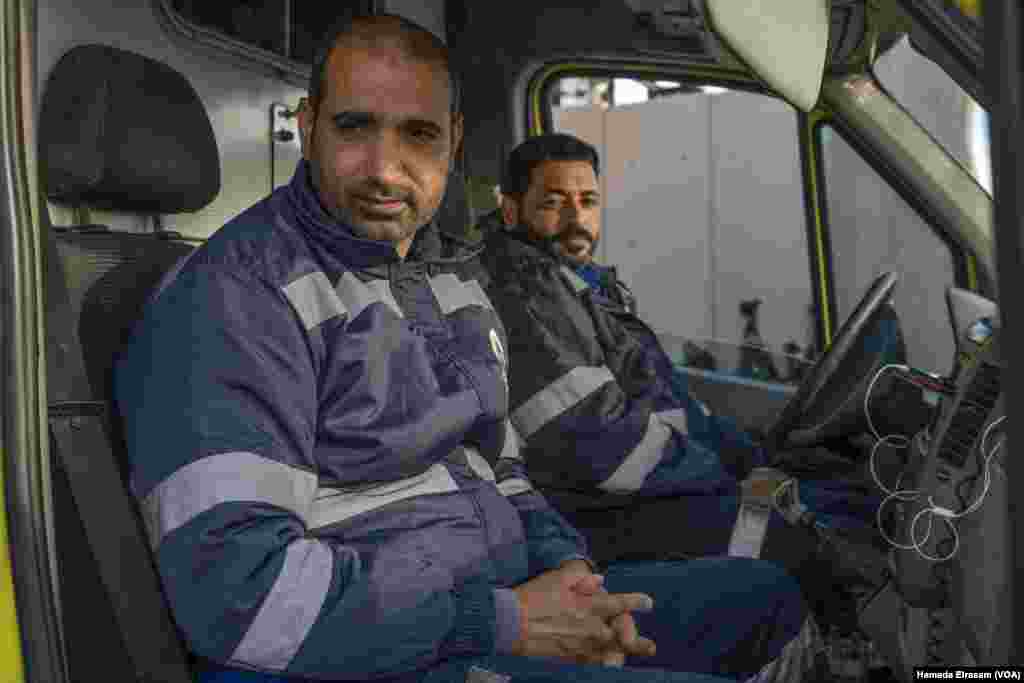
Egyptian paramedics Bahgat, left, and Hany haven’t treated war wounds since Israel shut the Rafah crossing in Gaza in May. “There aren’t signs of casualties coming to Egypt today, but we must stay ready,” says Bahgat.
6/10 Egyptian paramedics Bahgat, left, and Hany haven’t treated war wounds since Israel shut the Rafah crossing in Gaza in May. “There aren’t signs of casualties coming to Egypt today, but we must stay ready,” says Bahgat.
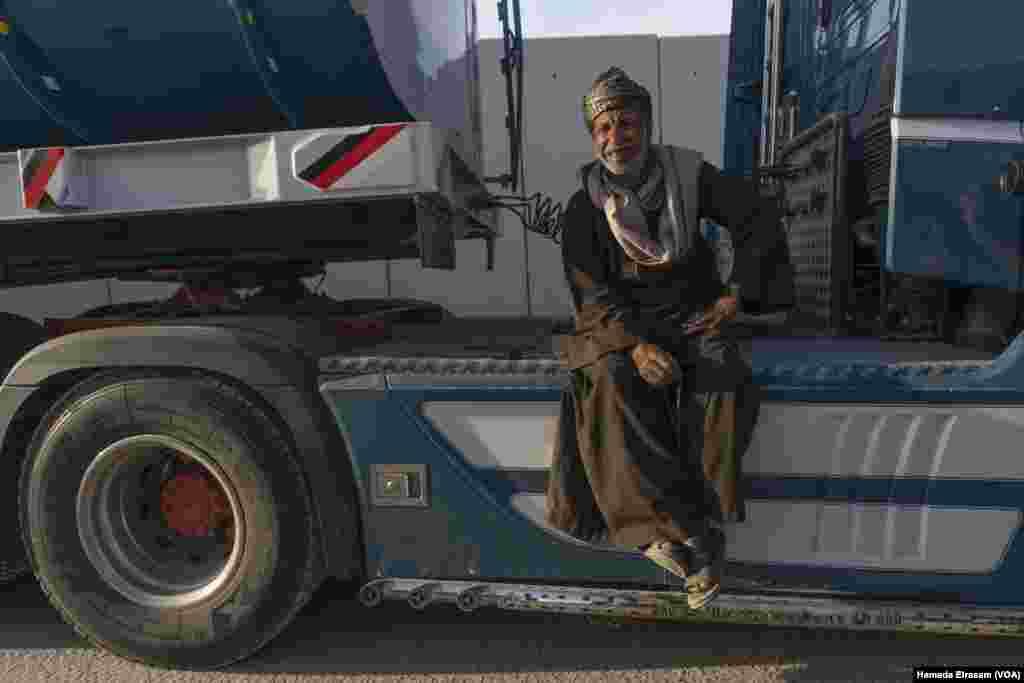
Ahmed, an Egyptian aid truck driver, has been waiting 45 days to enter Gaza. Rafah’s reopening was delayed by a few hours Sunday due to a last-minute dispute between Hamas and Israel, who “continued shooting until 10:30 a.m.,” Ahmed says.
7/10 Ahmed, an Egyptian aid truck driver, has been waiting 45 days to enter Gaza. Rafah’s reopening was delayed by a few hours Sunday due to a last-minute dispute between Hamas and Israel, who “continued shooting until 10:30 a.m.,” Ahmed says.
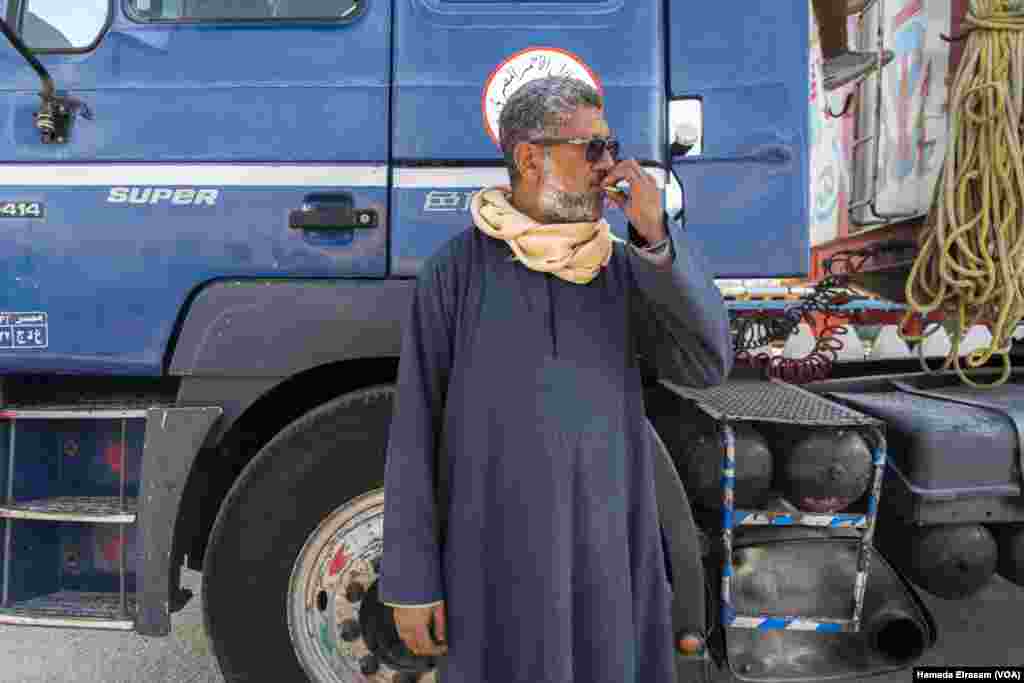
Egyptian truck driver Ali, pictured in Rafah on Jan. 19, 2025, hauled bread to the Rafah crossing in May but met long wait times, so the donor said to "take the aid to a charity for Egypt’s poor.” The majority of Egyptians live in poverty or are vulnerable.
8/10 Egyptian truck driver Ali, pictured in Rafah on Jan. 19, 2025, hauled bread to the Rafah crossing in May but met long wait times, so the donor said to "take the aid to a charity for Egypt’s poor.” The majority of Egyptians live in poverty or are vulnerable.
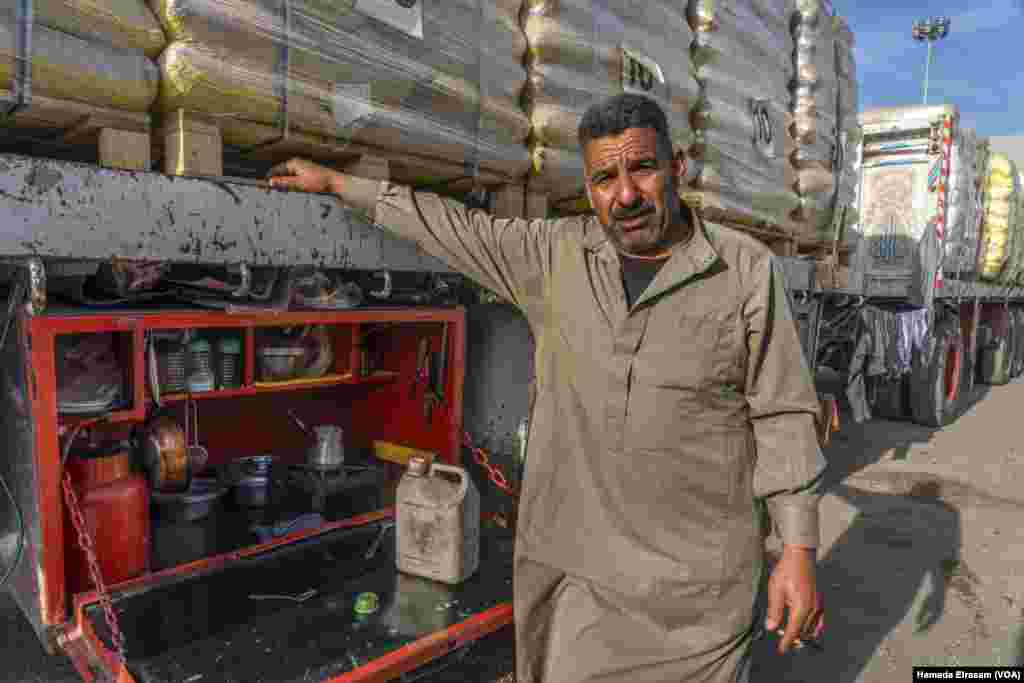
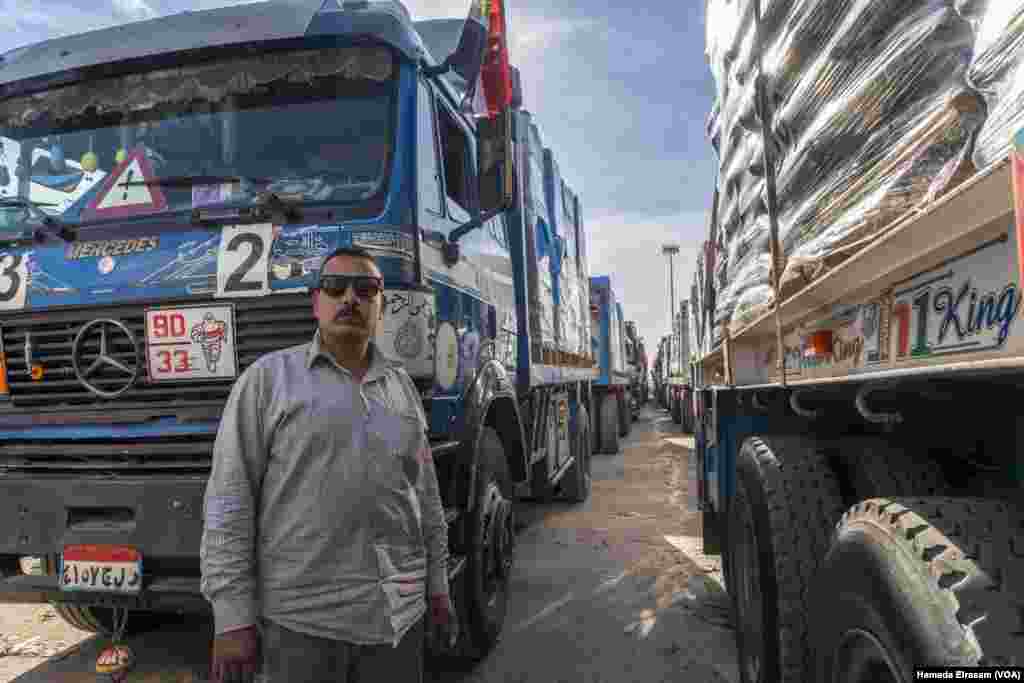
Omar, an Egyptian truck driver carrying diesel for fuel-deprived Gazans, says, “This time, we waited five days to cross Rafah — it used to be up to 30. We may wait forever, but we need peace for the people of Gaza.”
9/10 Omar, an Egyptian truck driver carrying diesel for fuel-deprived Gazans, says, “This time, we waited five days to cross Rafah — it used to be up to 30. We may wait forever, but we need peace for the people of Gaza.”
A truck enters Egypt’s Rafah crossing. The estimated death toll from Israel's war on Gaza is 47,000, more than half of them women and children, with 110,000 wounded, thousands missing, and nine in 10 (or 1.9 million) displaced, according to Gaza's Hamas-controlled health ministry. 
10/10 A truck enters Egypt’s Rafah crossing. The estimated death toll from Israel's war on Gaza is 47,000, more than half of them women and children, with 110,000 wounded, thousands missing, and nine in 10 (or 1.9 million) displaced, according to Gaza's Hamas-controlled health ministry. 
Previous slide
Next slide

"There's a readiness to manifest to send more trucks [into Gaza] in order to make sure that the [need] is met,” the official said. “And the initial filling of the gap on the other side is really important."

Saudi-owned al-Arabiya TV's correspondent in Rafah indicated that 600 aid trucks went into Gaza from Egypt Tuesday. He added that on a normal day before the conflict broke out on Oct. 7, 2023, an average of 500 trucks went into Gaza from Egypt.

As Gazans told Arab media they were pleased a ceasefire appeared to be holding, some observers expressed worries that so much damage has been done to Gaza that it might not be possible to restore any semblance of normalcy for years to come.

Paul Sullivan, a Washington-based Middle East analyst and former professor at the American University of Cairo, told VOA he was not optimistic that a ceasefire deal, even if it holds, will do much to restore calm to Gaza.

"This will be a source of terrorism for decades to come,” Sullivan said. “The ticking human pain of the starving youth will haunt the world for decades to come."

In the meantime, ordinary Egyptians, the overwhelming majority of whom supported Gaza during the months of the conflict against Israel, appeared pleased to see some hope that the fighting was finally winding down.

XS
SM
MD
LG