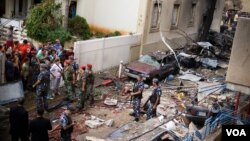
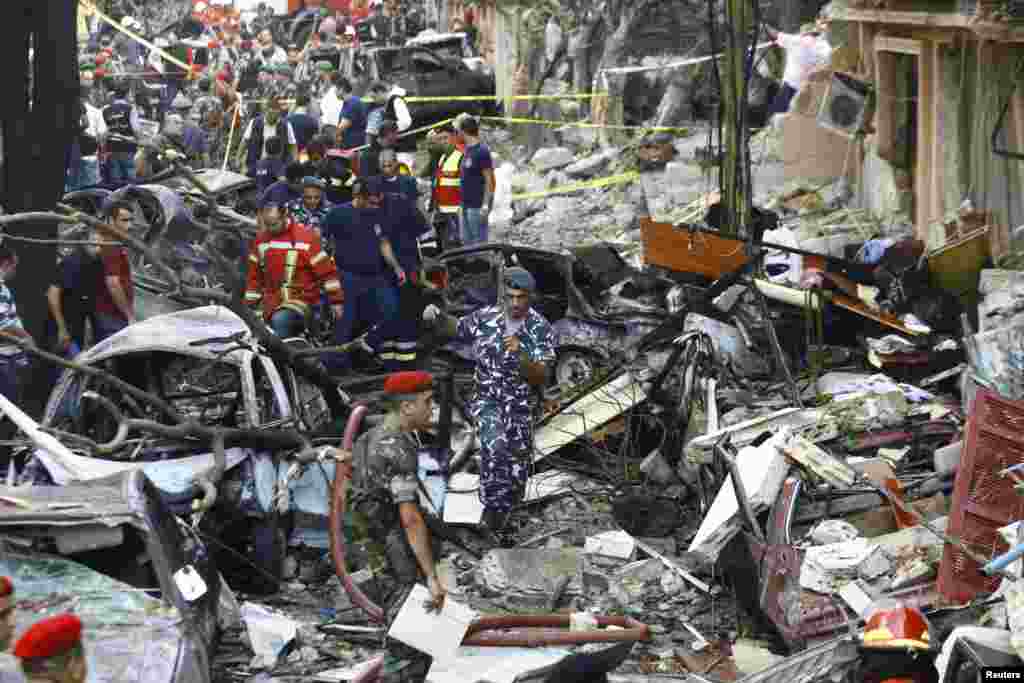
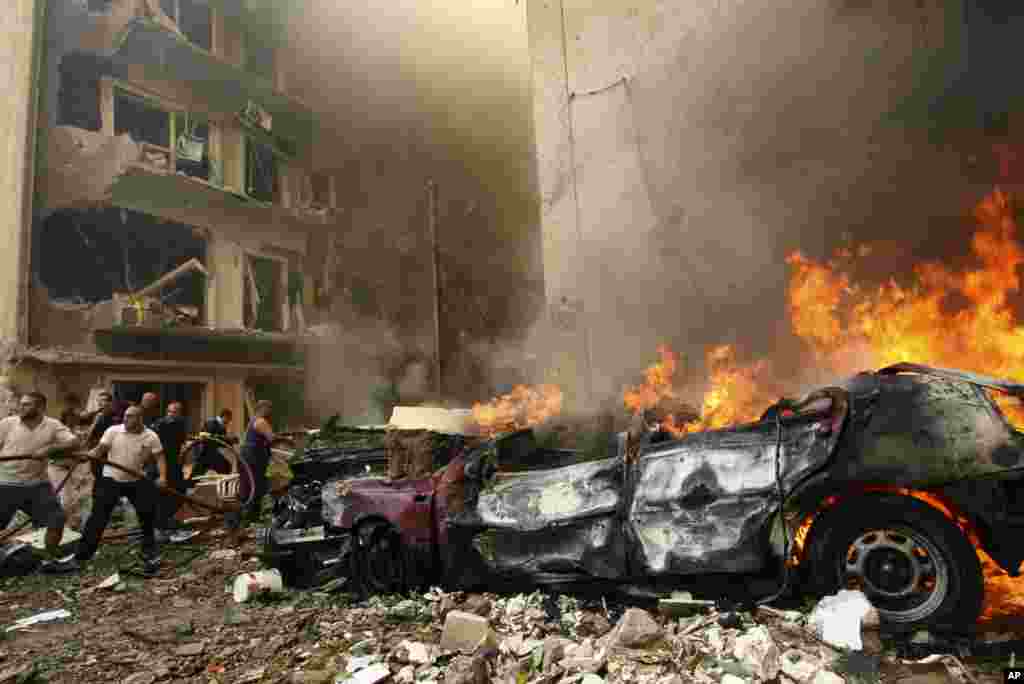
Soldiers inspect damage at scene of the explosion in the mostly Christian neighborhood of Achrafiyeh, Beirut, Lebanon, October 19, 2012. (Jeff Nuemann/VOA)
BEIRUT —
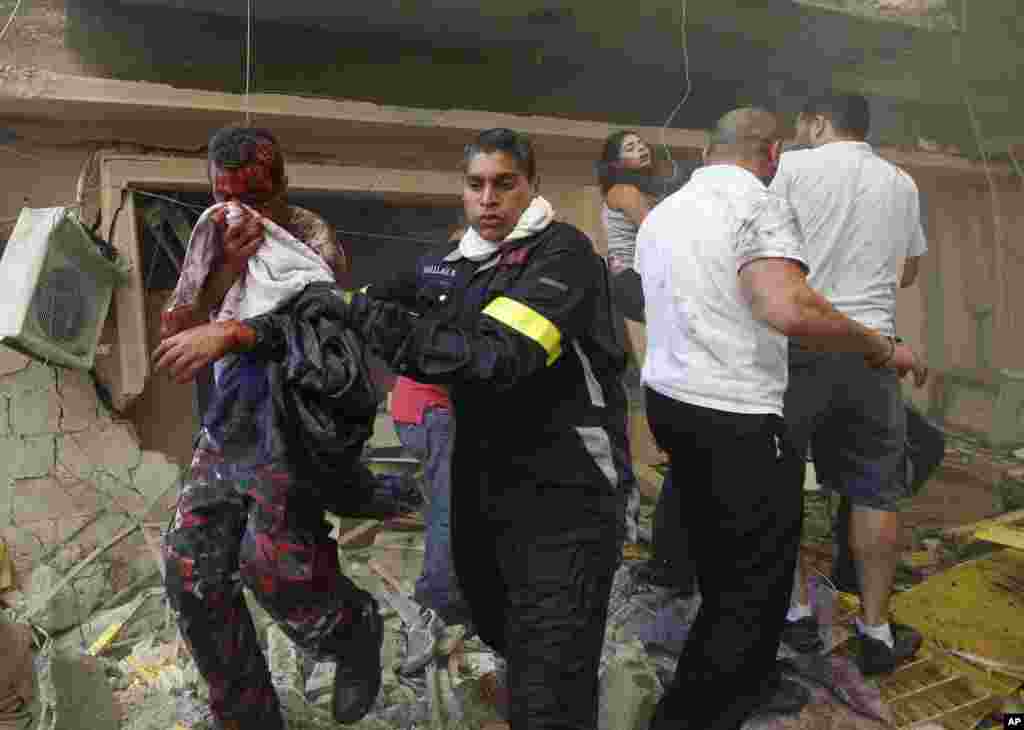
A huge car bomb detonated on a residential street in Beirut at Friday rush hour, killing at least eight people including the nation's intelligence chief.
Scores were wounded in the heavy damage of the largely Christian district, many of whose residents support opponents of President Bashar al-Assad in neighboring Syria.
Pan-Arab and Lebanese media reported that Wissam al-Hassan, who was in charge of a top intelligence unit, was killed and likely targeted. He led an investigation into a recent bomb plot that resulted in the arrest of a pro-Syrian Lebanese politician. He also led the probe that implicated Syria and the Hezbollah faction in the killing of former prime minister Rafik Hariri.
No one took immediate responsibility for the blast and Syria condemned the bombing.
Christian neighborhood
The blast was set off in the Sassine Square area of Beirut’s Achrafiyeh neighborhood, close to a branch of the Syrian-owned Bank BEMO and a small office of Lebanon’s Christian Phalange party, a vocal opponent of the Assad regime in Syria.
"We saw a bright flash through the window and a loud noise,” said a young woman who works at Pharmacie Achrafiyeh, which is on the same street as the explosion. "I thought it was an earthquake. We didn’t think this was possible here."
Two blocks from the blast site is the former Beirut headquarters of the Phalange Party, which now mostly serves as a 24-hour vigil to the one-time commander of the Christian Lebanese Forces militia, Beshir Gemayel, who was assassinated there by a bomb planted by Syrian loyalists in 1982, during the Lebanese Civil War.
In an apartment about 15 meters from the blast site, a middle-aged woman sat distraught on a debris covered floor.
"I am just lucky I wasn't home," she said.
Couches and beds were overturned, and wooden shutters from two balconies were blown inside the apartment. Neighbors from nearby flats wandered the apartment building's darkened hallways in a daze. A thick layer of dust and debris covered the stairs.
Broken glass from car windows was strewn about on streets nearly 500 meters from the blast site.
But several blocks away, next to the upscale ABC Mall, street cafes were doing brisk business as people gathered to drink coffee and smoke as they would on any other evening.
A 24-year-old man, who would only give his name as Paul, said he heard a second explosion shortly after the car exploded, but guessed "it was probably a gas canister."
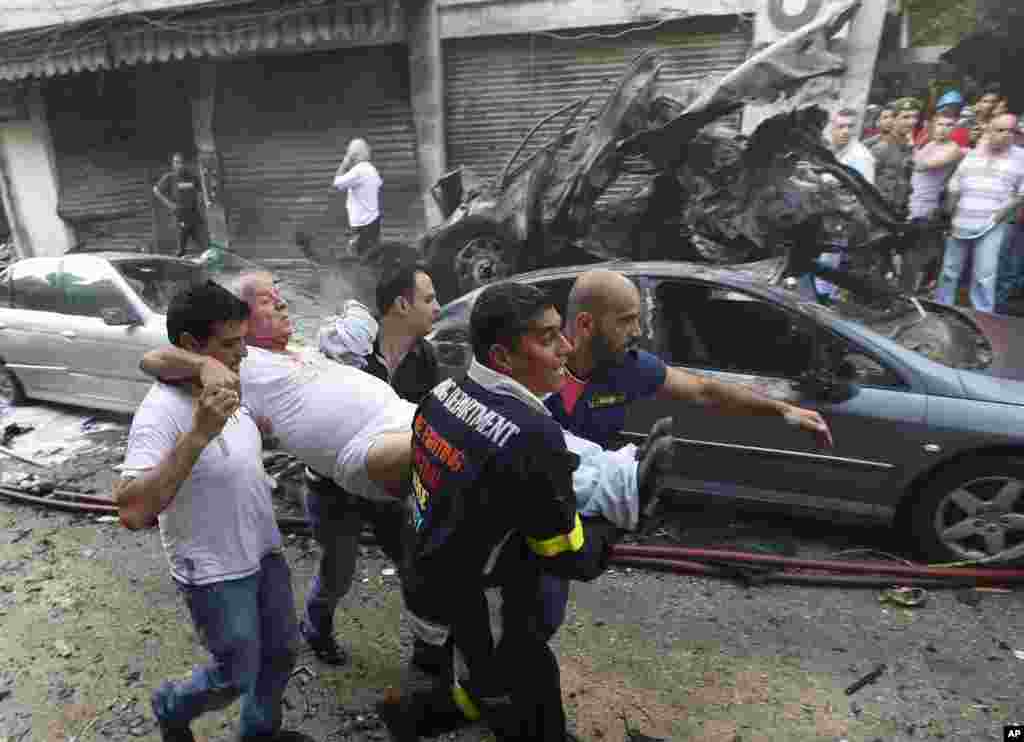
Standing on the street where the blast happened, he said that the block was mostly inhabited by elderly people. Several elderly men and women were seen being removed from nearby apartment buildings on stretchers and taken to ambulances.
Call for blood donations
Several feet from the blast, a construction site for one of Beirut's new luxury residential towers was converted into a makeshift Red Cross field hospital. A young female Red Cross worker at the scene could only say, "We just need people to donate blood."
U.S. State Department spokeswoman Victoria Nuland says there is no justification for such violence and expressed Washington's sympathies for the victims and their families.
Friday's blast comes amid fears of spillover from the civil war in neighboring Syria. Several outbursts of violence have taken the lives of dozens of Lebanese this year, and attacks by Syrian army forces on Lebanese border towns are almost a daily occurrence.
Anti-Syrian politicians, including Mustapha Allouche of the opposition March 14th Coalition, accused Syria of orchestrating the bombing.
Allouche said that Syrian President Assad has threatened on several occasions to “set fire to the whole region,” if the conflict in his country continues.
Story continues below
Massive Car Bomb Explodes in Beirut
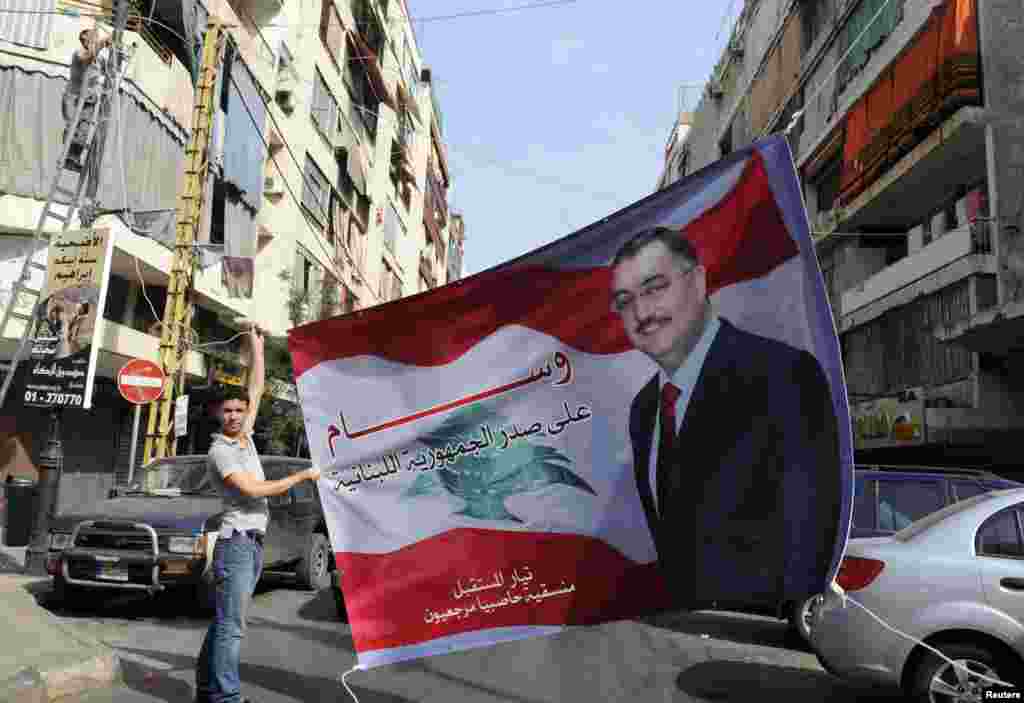
1/11A Sunni Muslim man hangs up a poster with an image of senior intelligence official Wissam al-Hassan, in the Tariq al-Jadideh district in Beirut, October 20, 2012.
Show moreShow less
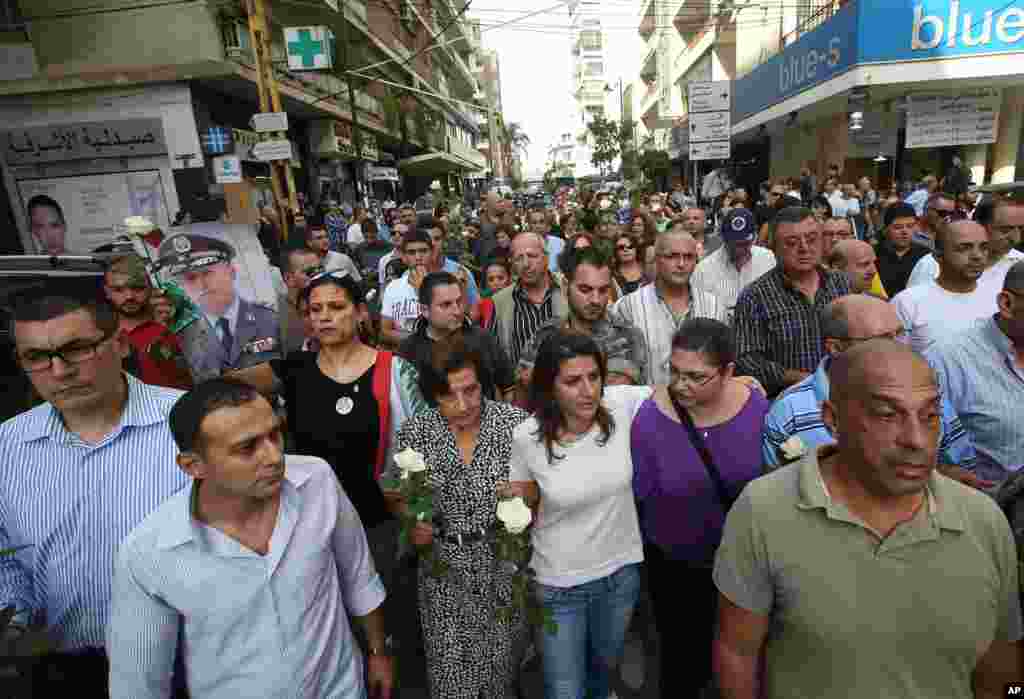
2/11Protesters march in the Achrafieh neighborhood a day after a car bomb attack that killed Brig. Gen. Wissam al-Hassan and at least seven others in Beirut, Lebanon, October 20, 2012.
Show moreShow less
3/11A protester carries a tire to add to burning tires used as a roadblock to protest the death of Brig. Gen. Wissam al-Hassan in a car bomb attack, in the southern port city of Sidon, Lebanon, October 20, 2012.
Show moreShow less
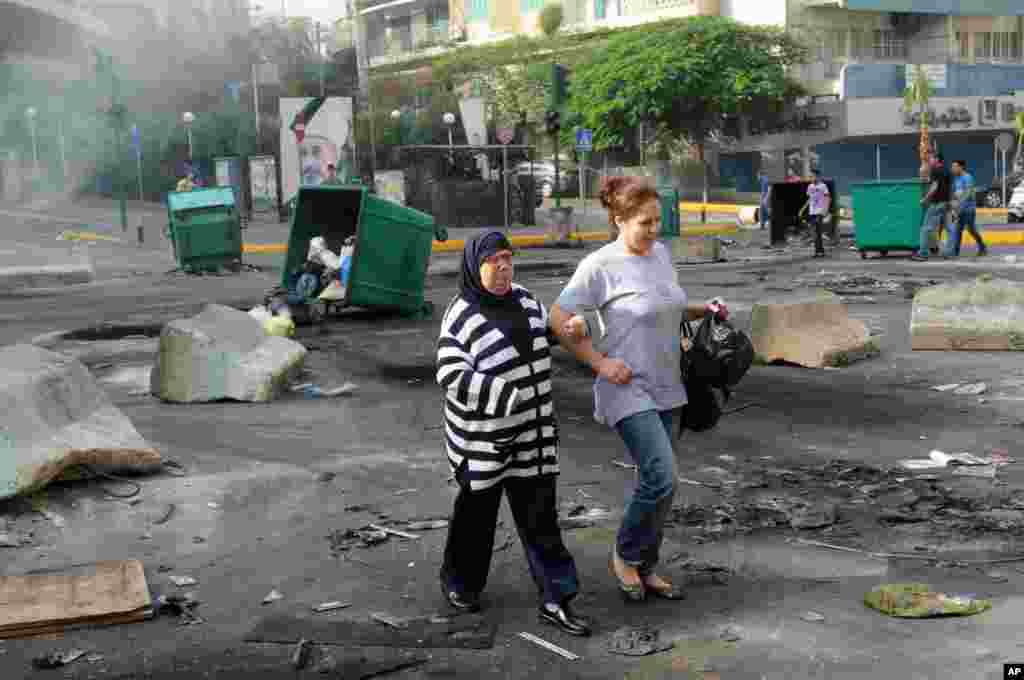
4/11Women walk through a road block of burning garbage containers laid by Sunni protesters angry at the killing of Brig. Gen. Wissam al-Hassan in Beirut, Lebanon, October 20, 2012.
Show moreShow less
5/11Lebanese soldiers and security personnel walk in rubble after an explosion in central Beirut, October 19, 2012.
Show moreShow less
6/11A Lebanese rescue worker, center, helps an wounded man at the scene of an explosion in Beirut, Lebanon, October 19, 2012.
Show moreShow less
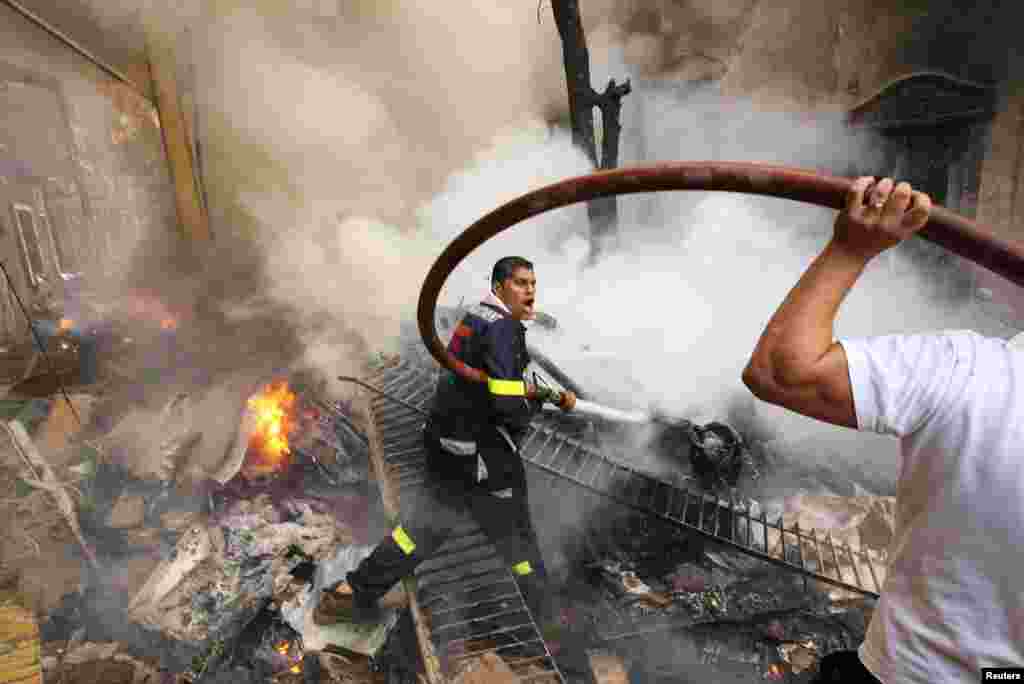
7/11Firefighters extinguish fire at the scene of an explosion Beirut, Lebanon, October 19, 2012.
Show moreShow less
8/11Lebanese rescue workers and civilians carry a wounded man from the scene of an explosion in Beirut, Lebanon, October 19, 2012.
Show moreShow less
9/11Lebanese Red Cross and civil defence personnel work at the site of an explosion in central Beirut, October 19, 2012.
Show moreShow less
10/11Lebanese soldiers inspect damaged buildings at the scene of an explosion in Beirut, Lebanon, October 19, 2012.
Show moreShow less
11/11Firefighters try to extinguish a fire as a car burns at the scene of an explosion in Ashafriyeh, central Beirut, October 19, 2012.
Show moreShow less
Previous slide
Next slide
Dory Chamoun, who heads Lebanon's National Liberal Party and whose home is located in Achrafiyeh, called the explosion a “political message.” He said that the conflict in Syria was causing collateral damage in Lebanon and would stop only when the Syrian crisis ends.
“There is no doubt that the longer the situation lasts in Syria, the more we're going to have some spillovers into Lebanon, but we just hope that things will go faster and normalize faster in Syria and things will be better for everyone concerned,” Chamoun said.
The attack Thursday also brought back memories of high-profile political assassinations in Lebanon, such as that of former Prime Minister Hariri, who was killed by a truck bomb attack on his convoy in Beirut in 2005.
His son, former Prime Minister Saad Hariri, condemned the Friday bombing.
“The cowardly terrorist attack which targeted Achrafiyeh today is an attack against all of Lebanon and all the Lebanese people," he said. "It is a cowardly act against the country’s stability and security.”
Some people at the scene feared that the days of attacks like that were back.
"We never got out of the bad times," Paul said. "But it was just a matter of time."
Edward Yeranian contributed to this report from Cairo.
Correction: An earlier version of this story incorrectly reported that members Lebanon’s Christian Phalange party support Syrian President Bashar al Assad. VOA regrets the error.