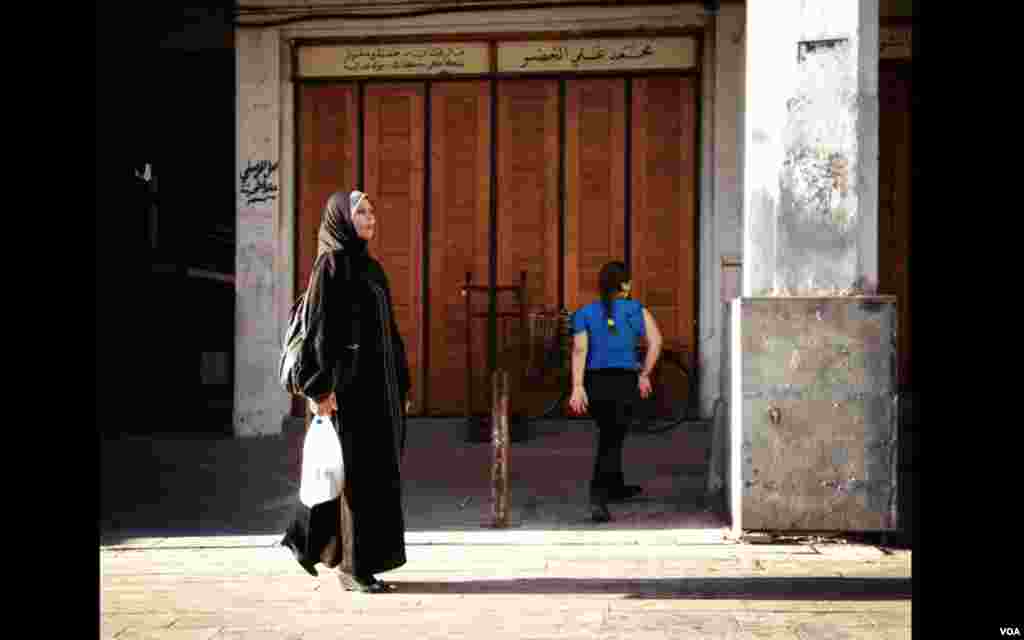
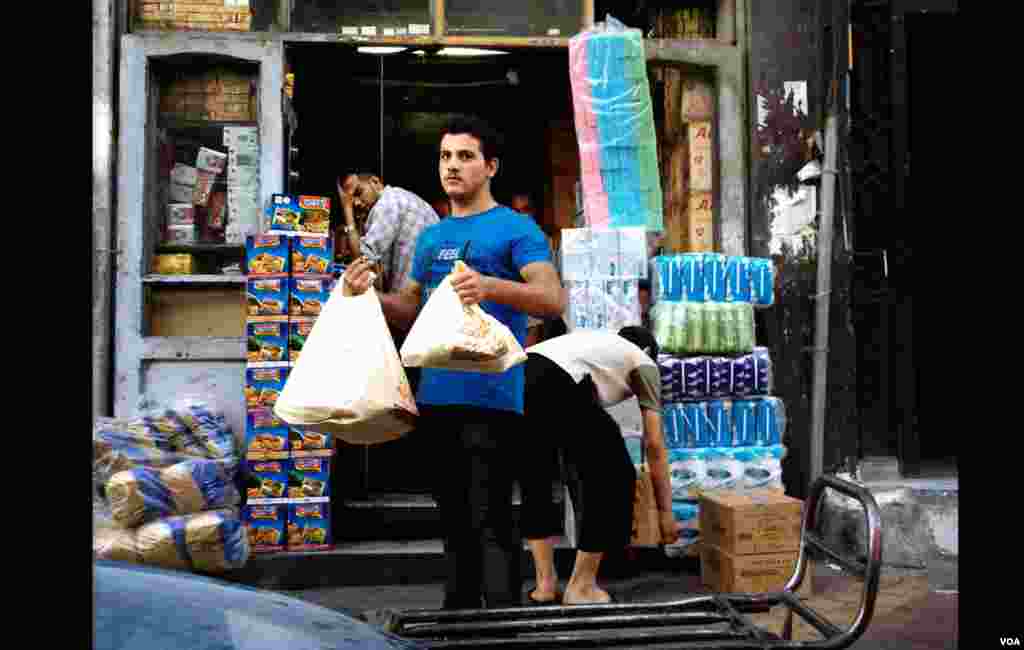
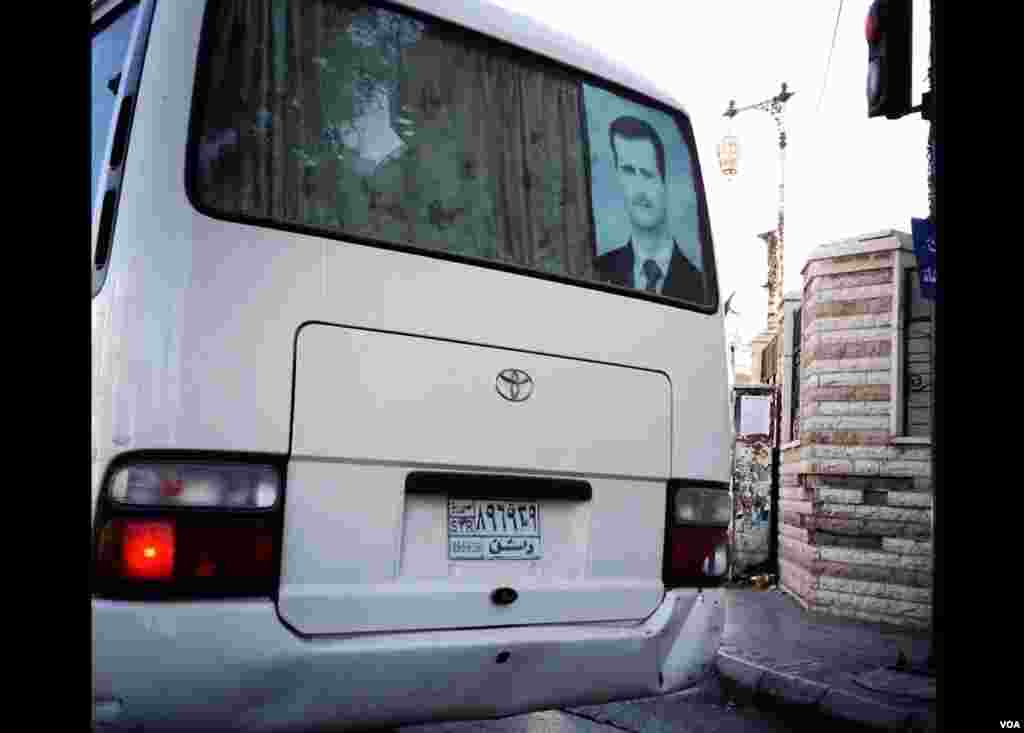
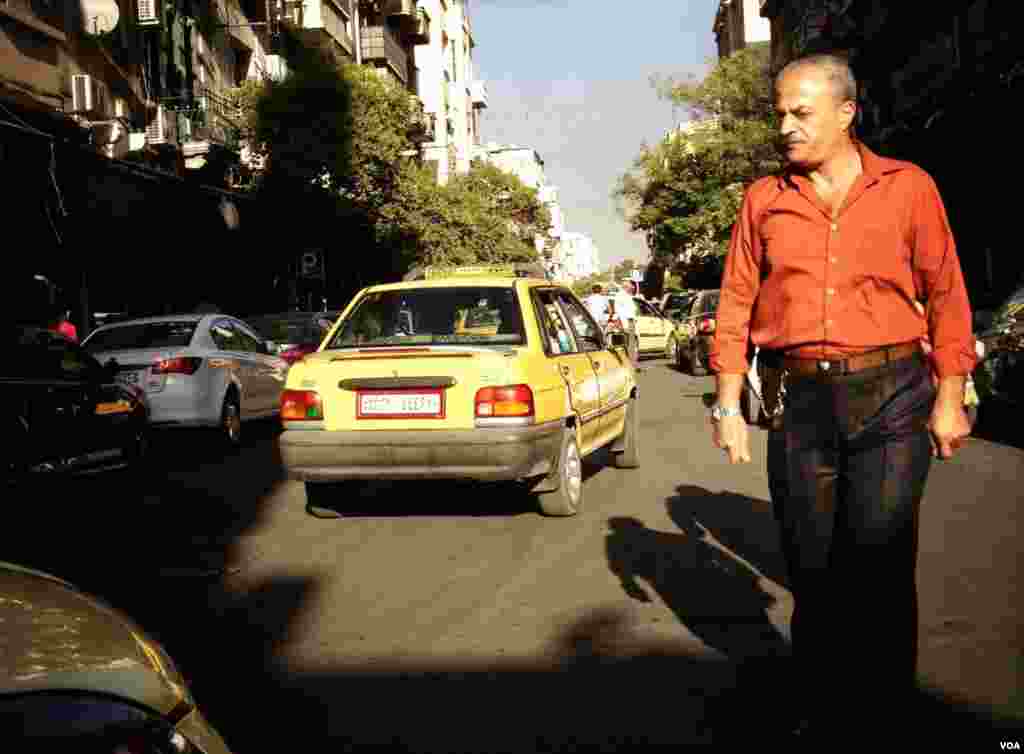
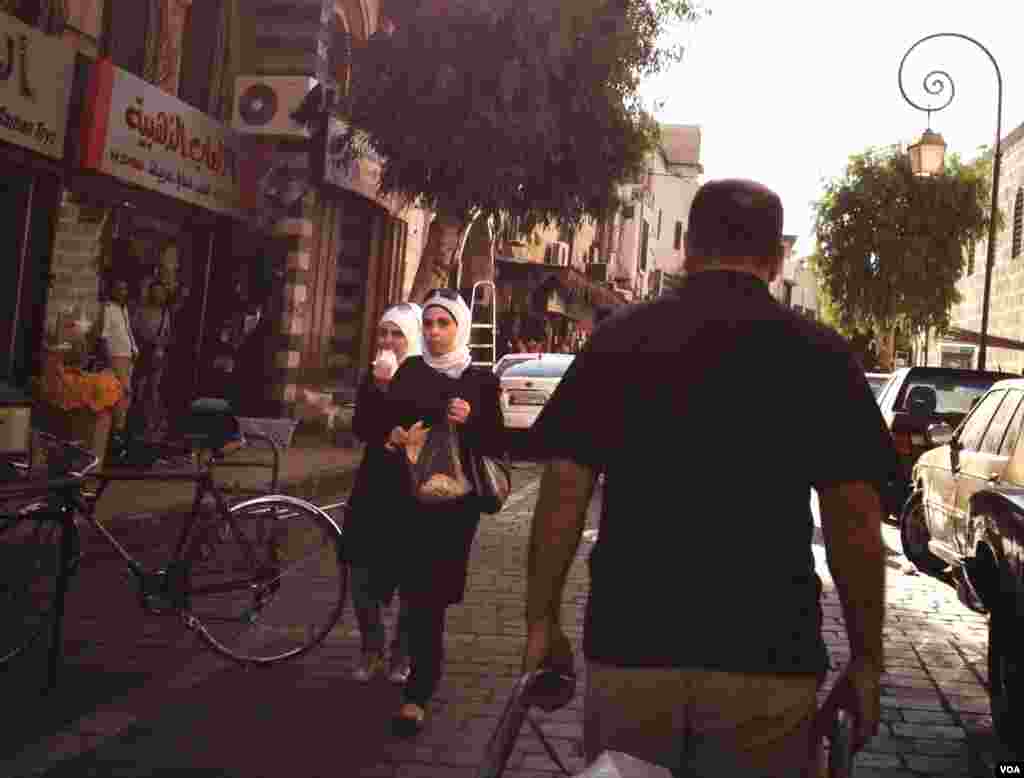
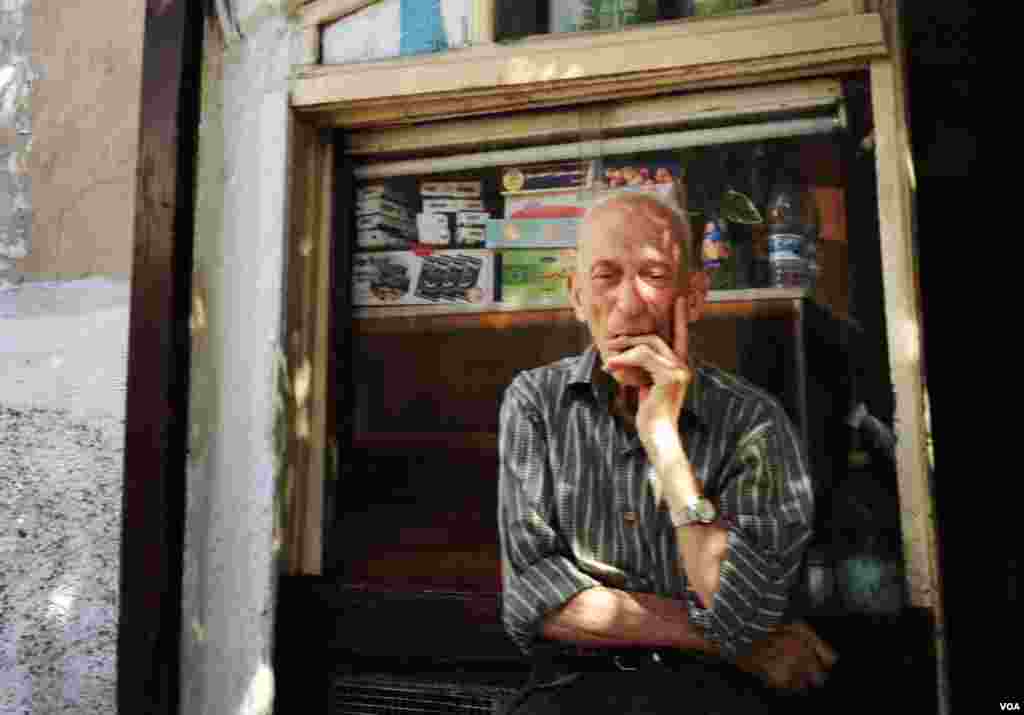
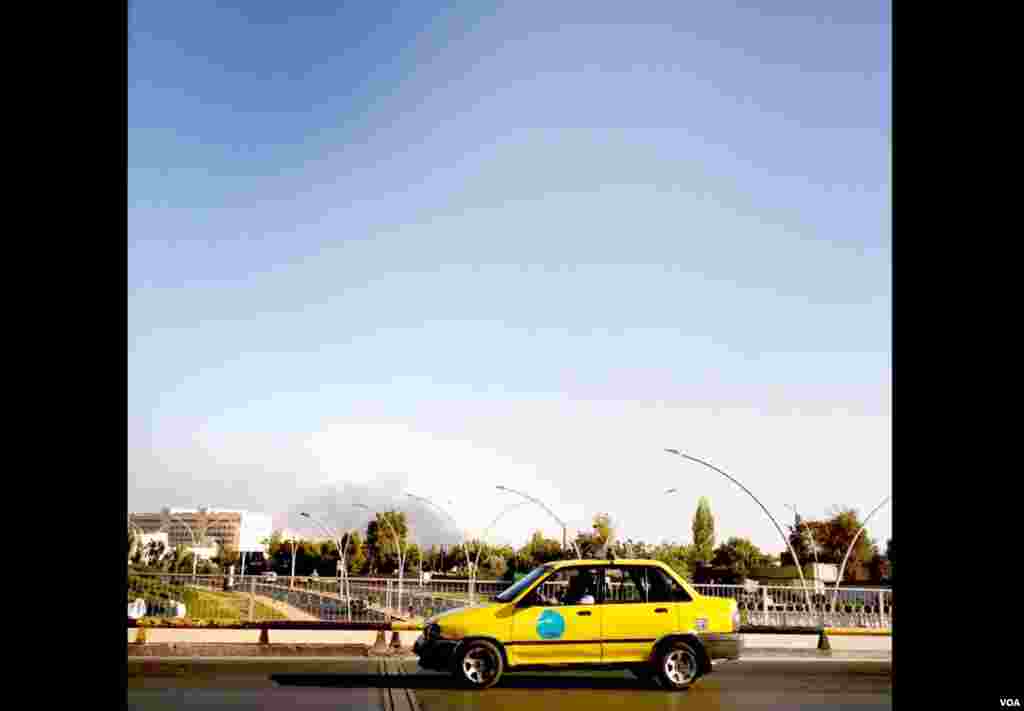
As fighting continues in and around Damascus, shops remain open and life appears surprisingly normal, September 27, 2012. (Yuli Weeks/VOA)
DAMASCUS —
Heavy fighting rages on the outskirts of the Syrian capital, but for residents of the city, life carries on, however precariously.
A bride wearing sequins, shimmies as musicians herald her arrival at the wedding party. She and the groom are celebrating in the marble halls of a hotel; the mood is joyous and, for a moment, most seem to forget the sound of shelling and explosions that carry across the city night.
In the year and a half since a peaceful uprising against the government of Bashar al-Assad became a brutal civil war, the people of Damascus have been spared the brunt of fighting that has devastated other parts of the country.
Still, the city has suffered car bombs and assassinations, and the thick black smoke that rises as government mortars and bombs pound the outskirts keep residents on edge.
No one knows the future, so the focus often shifts to immediate trials: the power cuts, the shortages of gas and oil, the sanctions that take their toll on daily life.
Scenes from Damascus, Syria
1/13A veiled woman walks down the street in Damascus's old city. (J. Weeks/VOA)
Fighting rages on the outskirts of the Syrian capital, Damascus, but life carries on for residents in the city. Japhet Weeks, on assignment for VOA, took these photographs while accompanied by Syrian government officials.
Show moreShow less
2/13As fighting continues in and around the city, shops remain open and life appears surprisingly normal. (J. Weeks/VOA)
Fighting rages on the outskirts of the Syrian capital, Damascus, but life carries on for residents in the city. Japhet Weeks, on assignment for VOA, took these photographs while accompanied by Syrian government officials.
Show moreShow less
3/13A vegetable vendor does brisk business in Damascus. (J. Weeks/VOA)
Fighting rages on the outskirts of the Syrian capital, Damascus, but life carries on for residents in the city. Japhet Weeks, on assignment for VOA, took these photographs while accompanied by Syrian government officials.
Show moreShow less
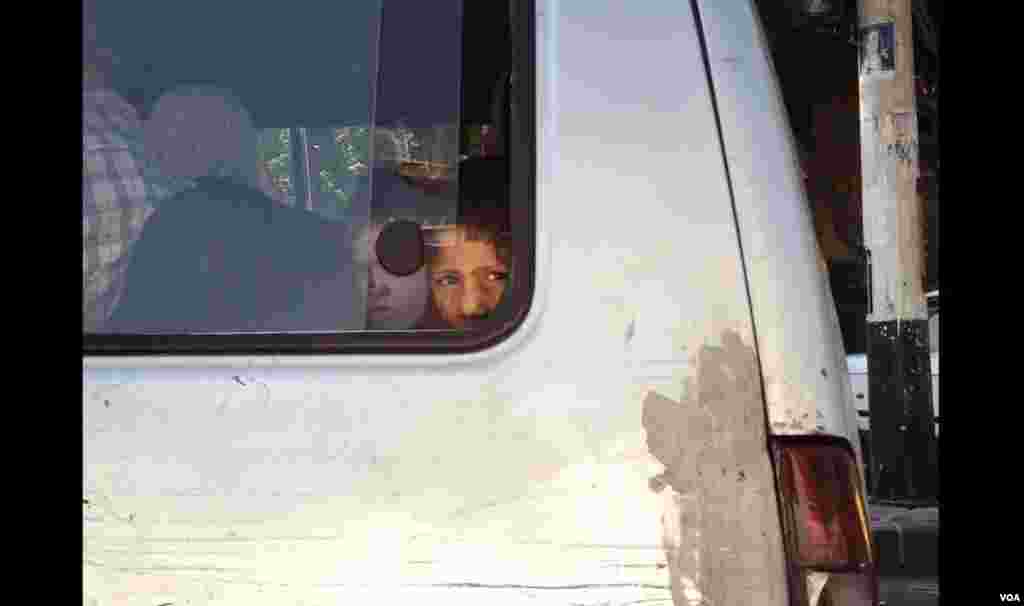
4/13A child peers out of a micro bus window into traffic. (J. Weeks/VOA)
Fighting rages on the outskirts of the Syrian capital, Damascus, but life carries on for residents in the city. Japhet Weeks, on assignment for VOA, took these photographs while accompanied by Syrian government officials.
Show moreShow less
5/13A poster of Syrian president Bashar al-Assad hangs in the rear window of a bus in Damascus. (J. Weeks/VOA)
Fighting rages on the outskirts of the Syrian capital, Damascus, but life carries on for residents in the city. Japhet Weeks, on assignment for VOA, took these photographs while accompanied by Syrian government officials.
Show moreShow less
6/13A man crosses a busy street in Damascus. Though some streets are closed to traffic due to safety concerns, most of the roads remain open. (J. Weeks/VOA)
Fighting rages on the outskirts of the Syrian capital, Damascus, but life carries on for residents in the city. Japhet Weeks, on assignment for VOA, took these photographs while accompanied by Syrian government officials.
Show moreShow less
7/13Business appears normal in Damascus's old city. (J. Weeks/VOA)
Fighting rages on the outskirts of the Syrian capital, Damascus, but life carries on for residents in the city. Japhet Weeks, on assignment for VOA, took these photographs while accompanied by Syrian government officials.
Show moreShow less
8/13A shop owner in a Christian neighborhood in Damascus's old city. (J. Weeks/VOA)
Fighting rages on the outskirts of the Syrian capital, Damascus, but life carries on for residents in the city. Japhet Weeks, on assignment for VOA, took these photographs while accompanied by Syrian government officials.
Show moreShow less
9/13Gray smoke rises over a neighborhood on the outskirts of Damascus, where fighting between government forces and rebels continues. Residents are learning to live with the sounds of distant explosions and gunfire. (J. Weeks/VOA)
Fighting rages on the outskirts of the Syrian capital, Damascus, but life carries on for residents in the city. Japhet Weeks, on assignment for VOA, took these photographs while accompanied by Syrian government officials.
Show moreShow less
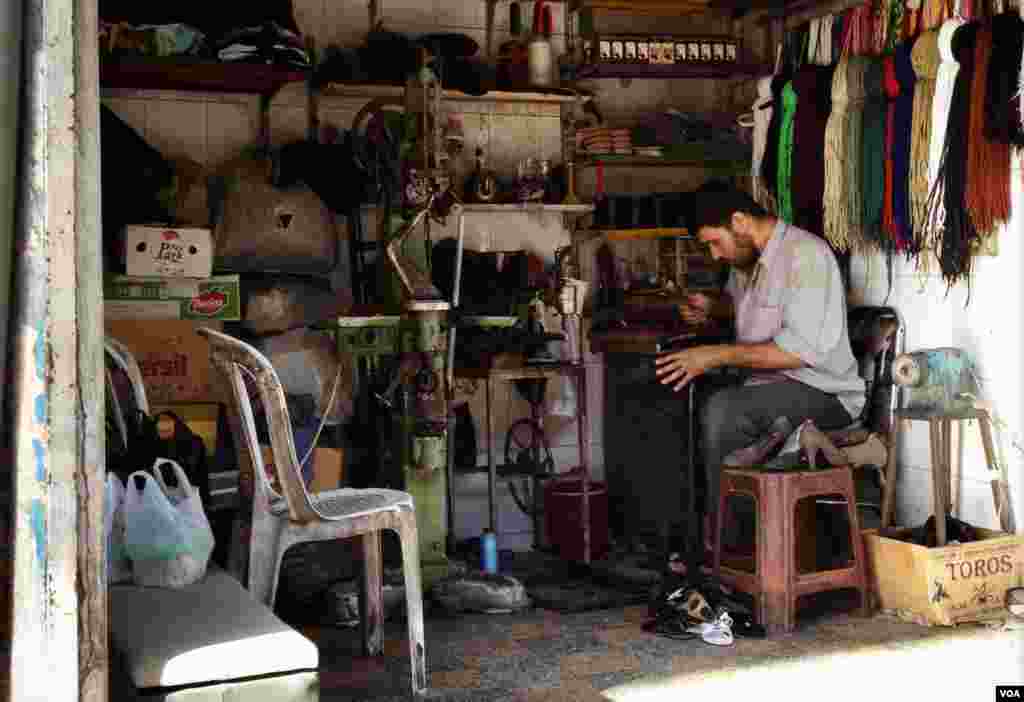
10/13A cobbler busy at work. (J. Weeks/VOA)
Fighting rages on the outskirts of the Syrian capital, Damascus, but life carries on for residents in the city. Japhet Weeks, on assignment for VOA, took these photographs while accompanied by Syrian government officials.
Show moreShow less
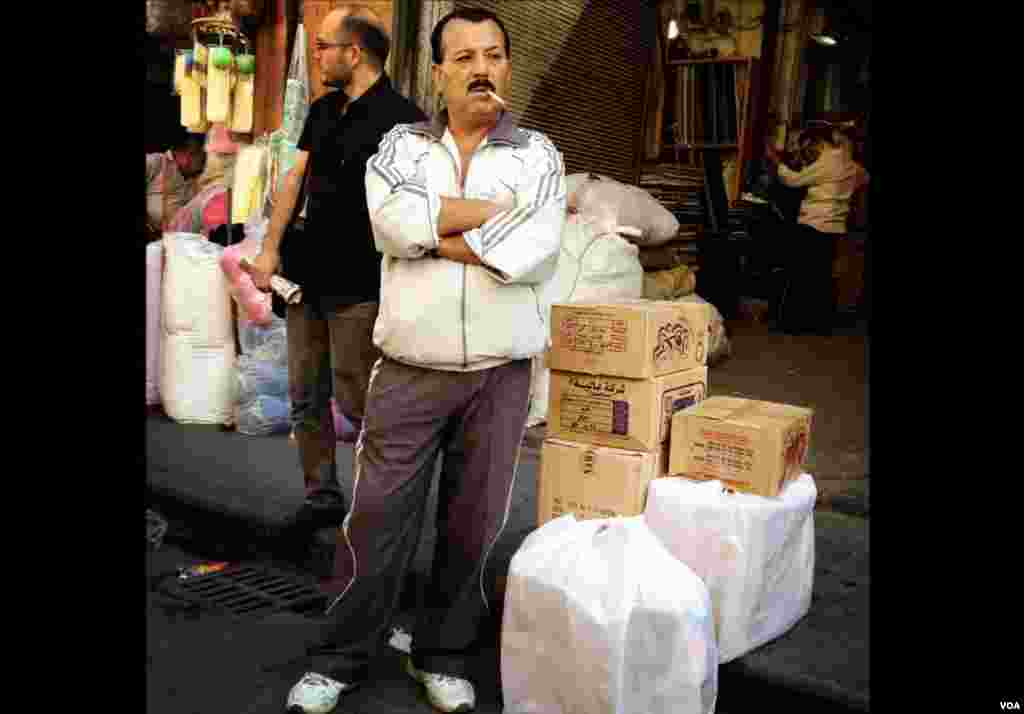
11/13A man waits on the side of the street in a Damascus market with boxes full of goods. (J. Weeks/VOA)
Fighting rages on the outskirts of the Syrian capital, Damascus, but life carries on for residents in the city. Japhet Weeks, on assignment for VOA, took these photographs while accompanied by Syrian government officials.
Show moreShow less
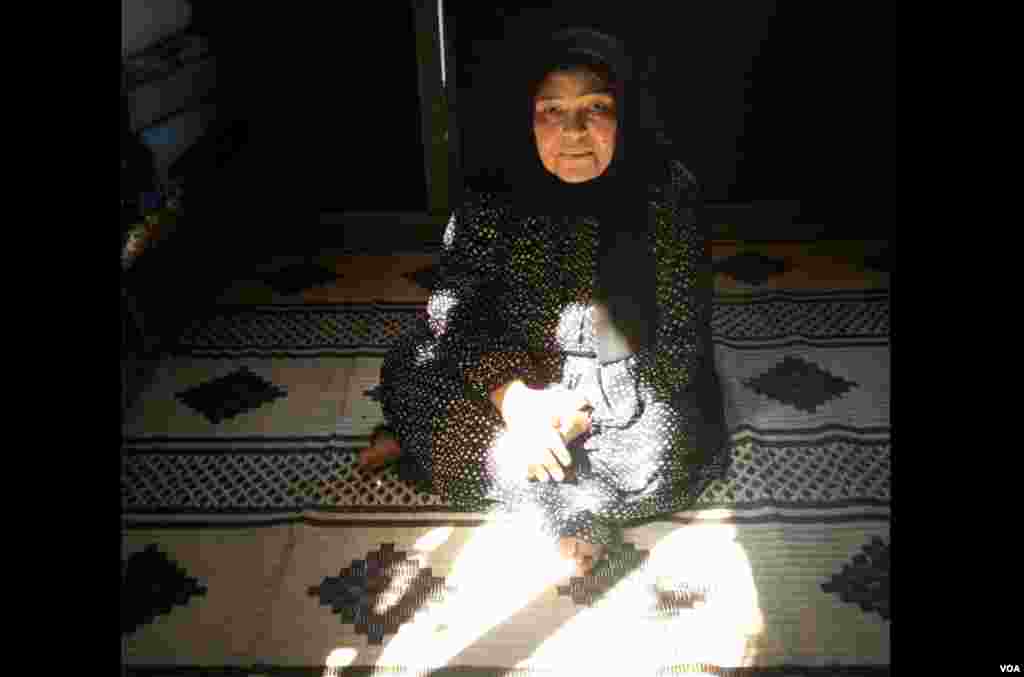
12/13A woman from Aleppo now lives in a government-run refugee center in a Damascus suburb. The center is now home to many refugees, many of whom are ethnic Turkmens. (J. Weeks/VOA)
Fighting rages on the outskirts of the Syrian capital, Damascus, but life carries on for residents in the city. Japhet Weeks, on assignment for VOA, took these photographs while accompanied by Syrian government officials.
Show moreShow less
13/13A newlywed couple celebrates at an upscale Damascus hotel. (J. Weeks/VOA)
Fighting rages on the outskirts of the Syrian capital, Damascus, but life carries on for residents in the city. Japhet Weeks, on assignment for VOA, took these photographs while accompanied by Syrian government officials.
Show moreShow less
Previous slide
Next slide
In the Hamadiya market of old Damascus, a scarf merchant rearranges his merchandise, waiting for a customer. He says the atmosphere is one of crisis. He has cut prices to bring in business, but money is tight and few people are buying. His stock of imported goods has dropped, as sanctions cut off supply.
Unwilling to predict an end to the seeming impasse between the government and the opposition, he falls back on his faith.
He says, simply, “it's in the hands of God.”
But even in this city under government control, cracks are surfacing. Long time members of the ruling Baath party acknowledge the situation is unsustainable.
Bassam Abu Abdullah heads a fledgling political research group in Damascus.
“This regime - when they are saying this regime should collapse - this regime is finished. I am telling you, I am a member of the party Baath. For me, in my psychology, this one party system is finished not because the party Baath is wrong, but because it's not working,” said Abdullah.
It's a qualified acknowledgement and far too late for many on the other side.
Abdullah talks of presidential elections in 2014, but how the country could move from battlefield to ballot box in so short of time remains far from clear.
From the beginning, the government dismissed the indigenous uprising as the work of foreign militants. In the chaos that followed, it became partly true; now, even the opposition acknowledges some ten percent of its fighters are from abroad. Many display a militant Islamist bent, anathema to those who have profited from the harsh yet secular government of this multi-confessional nation.
Bassam Abu Abdullah defines the type of change needed. “We will move ourselves from one dictatorship, if this is dictatorship, to worse dictatorship, which is a religious dictatorship,” said Abdullah.
Pressed on how to find a middle ground, he points to the civil war in Lebanon, and how eventually the parties reconciled. But only, he concedes, after 15 years.
For many in Damascus and beyond, struggling to get through just the next day, such a prospect seems impossible.