STEPANAKERT, NAGORNO-KARABAKH —
At this week’s G8 summit, the leaders of France, Russia and the United States called for a peaceful resolution to the long running dispute between Armenia and Azerbaijan over Nagorno-Karabakh.
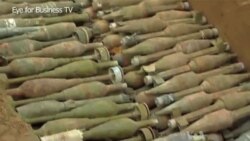
Almost 20 years after fighting stopped over Azerbaijan’s breakaway Nagorno-Karabakh province, this mountainous land still holds its deadly secrets - anti-tank mines, anti-personnel mines and cluster bombs.
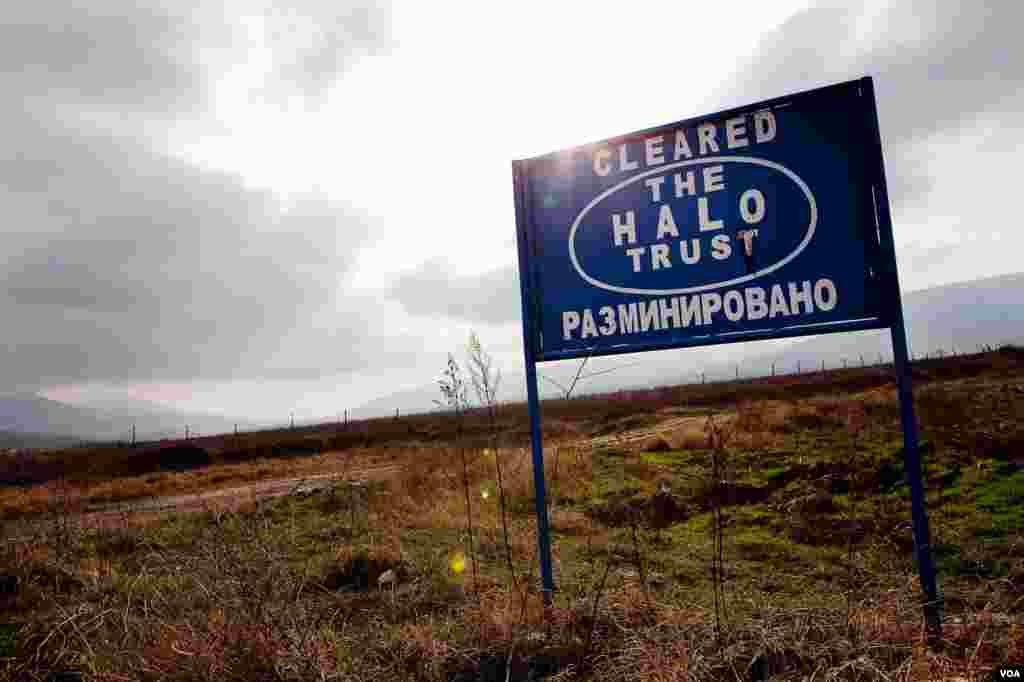
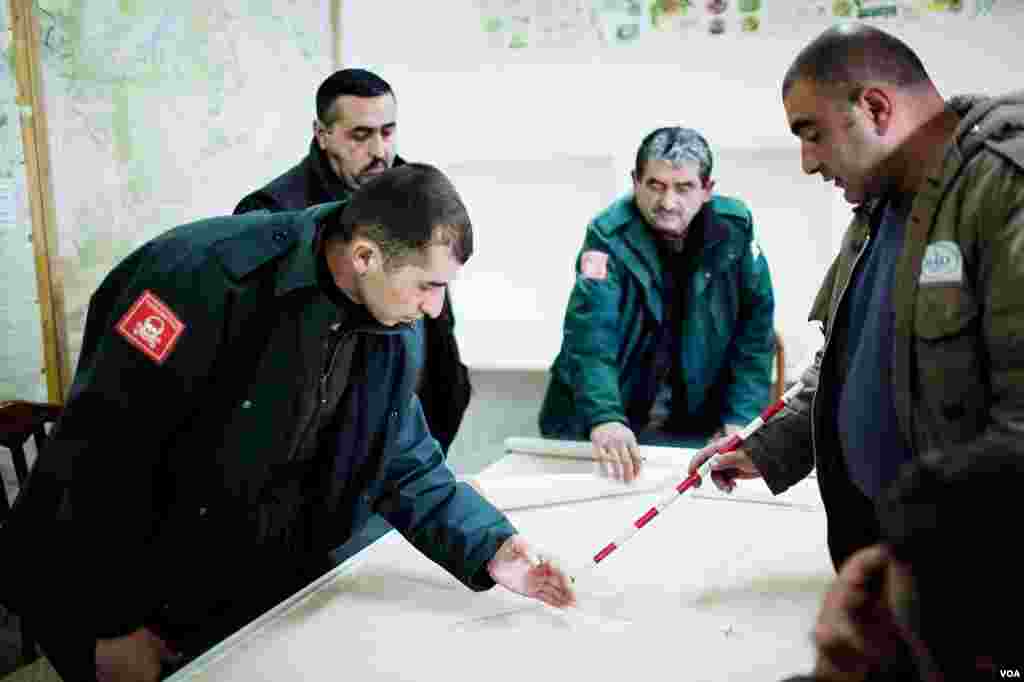
Nick Smart, Nagorno-Karabakh program manager for Halo Trust, leads a team of 190 men demining this remote province, an area controlled for almost a quarter century by ethnic Armenians.
"We are still 20 years on and finding perfectly functioning mines that are still killing people," Smart said of his work that is largely supported by money from USAID. "The ones that we are finding that are in good order are in very good order, you know, and probably will remain so for another 10 years."
Since the year 2000, Halo has cleared 75 percent of known minefield and cluster bomb areas in Nagorno-Karabakh. Experts have discovered and detonated about 66,000 bombs.
But the walls of Halo’s office display photos of villagers who are amputees.
With only 160,000 inhabitants, Nagorno-Karabakh still has one of the world’s highest per capita rates for mine accidents.
"The biggest problem remains in these green areas, these areas outside of traditional Karabakh," said Smart. "Now this is fertile farmland, strategically important during the war, but now remains very attractive farm land to the rural communities."
In Nagorno-Karabakh, lowland farming fields inevitably stretch toward security zones, where armed Azeris and armed Armenians face each other across trench lines.
On Tuesday at the G8 summit in Northern Ireland, the leaders of Russia, France, and the United States urged Armenia and Azerbaijan to abstain from war and to find a peaceful solution. But also on Tuesday, Russia’s Vedemosti newspaper reported that Russia is selling $1 billion in tanks, artillery and rocket launchers to Azerbaijan.
In Yerevan, Armenia’s capital, Richard Giragosian directs the Regional Studies Center, a think tank. He worries about the fragile peace.
"We have our own arms race in this region, where both sides are compelled to keep pace with increasing defense budgets, as well as procurement of more offensive weapons," he said.
Nagorno-Karabakh
1/10Halo Trust, a U.S- supported charity, clears land mines and cluster bombs left over from the 1992-1994 war. (U. Filimonova/VOA)
Show moreShow less
2/10Halo Trust workers plot locations of unexploded ordinance -- still deadly after 20 years. (U. Filimonova/VOA)
Show moreShow less
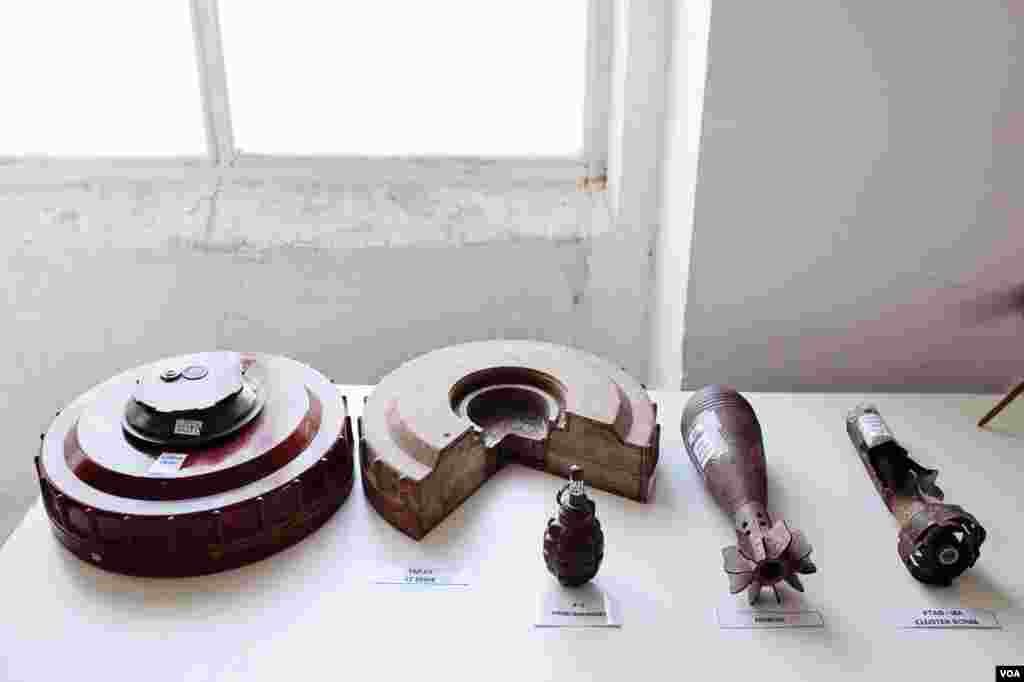
3/10A portable display teaches children and farmers what landmines and hand grenades look like. (U. Filimonova/VOA)
Show moreShow less
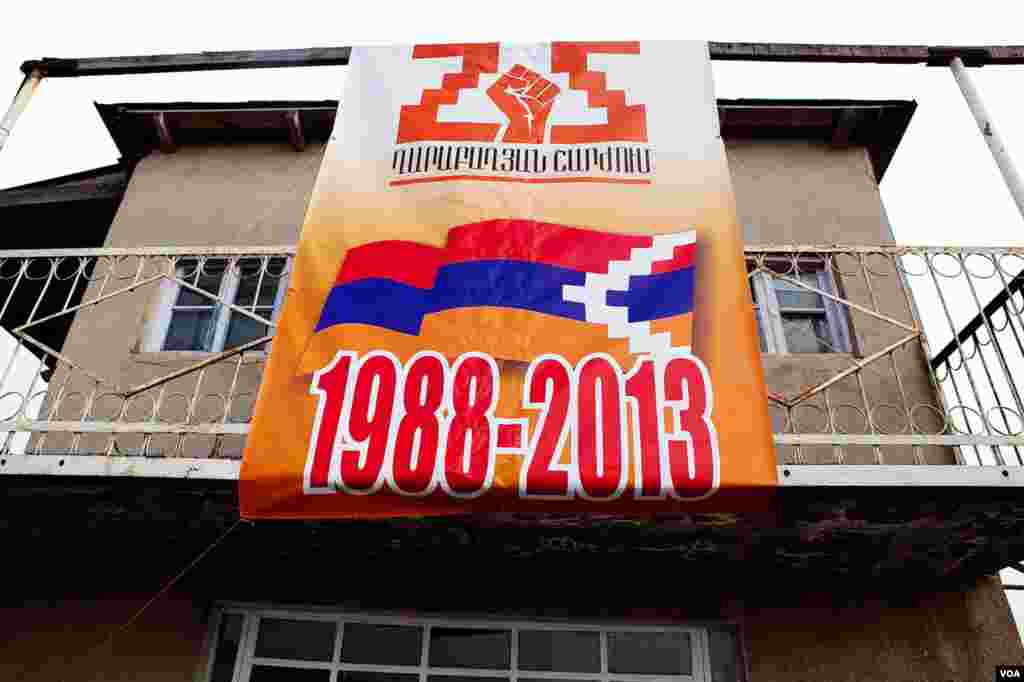
4/10Banners mark 25th anniversary of the 1988 vote by Soviet of People's Deputies of Karabakh to secede from Azerbaijan. (U. Filimonova/VOA)
Show moreShow less
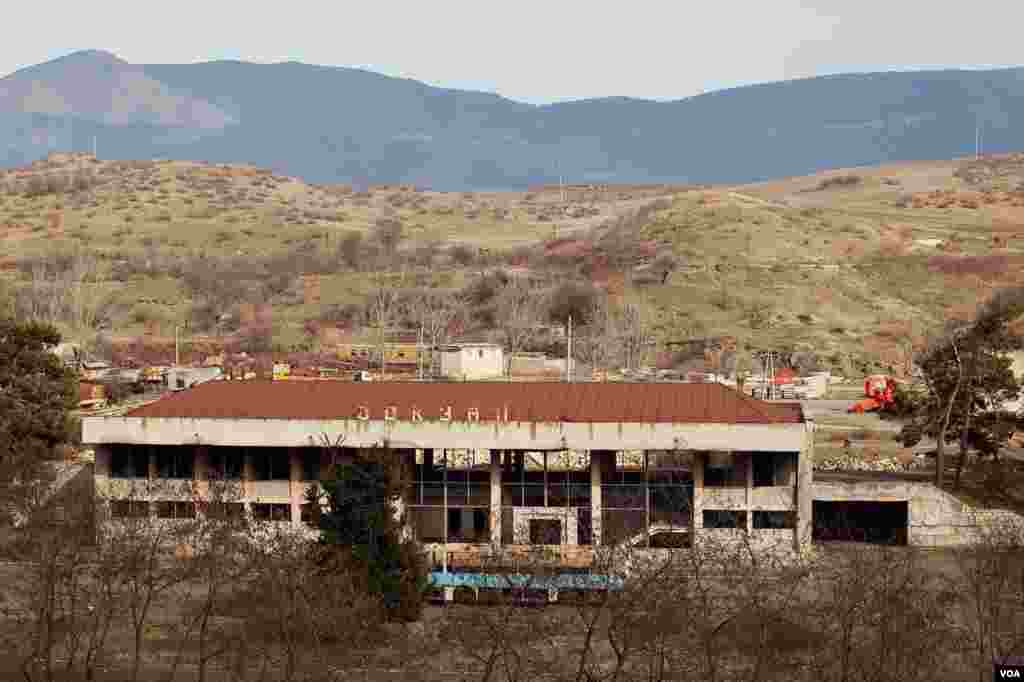
5/10Stepanakert's abandoned rail station is a reminder of Soviet days when trains descended the mountains daily. Now this route east is blocked by the 1994 ceasefire line separating Azeri and Armenian soldiers. (U. Filimonova)
Show moreShow less
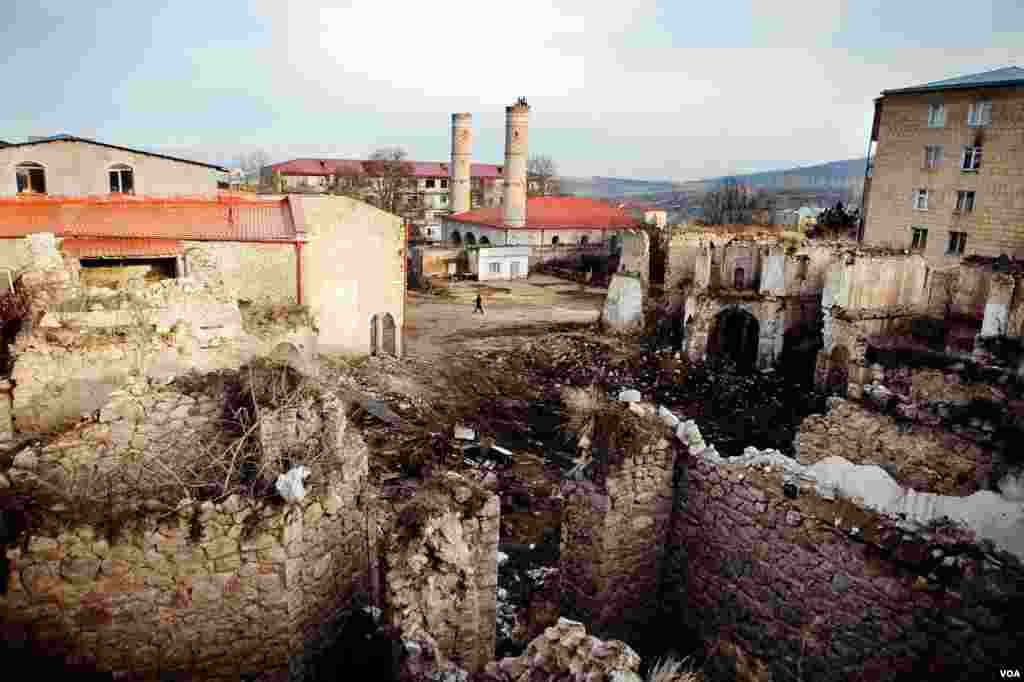
6/10In Shushi, the twin minarets of an abandoned mosque are reminders that this mountaintop city violently changed hands between Muslim Azeris and Christian Armenians several times during the 20th century. (U. Filimonova)
Show moreShow less
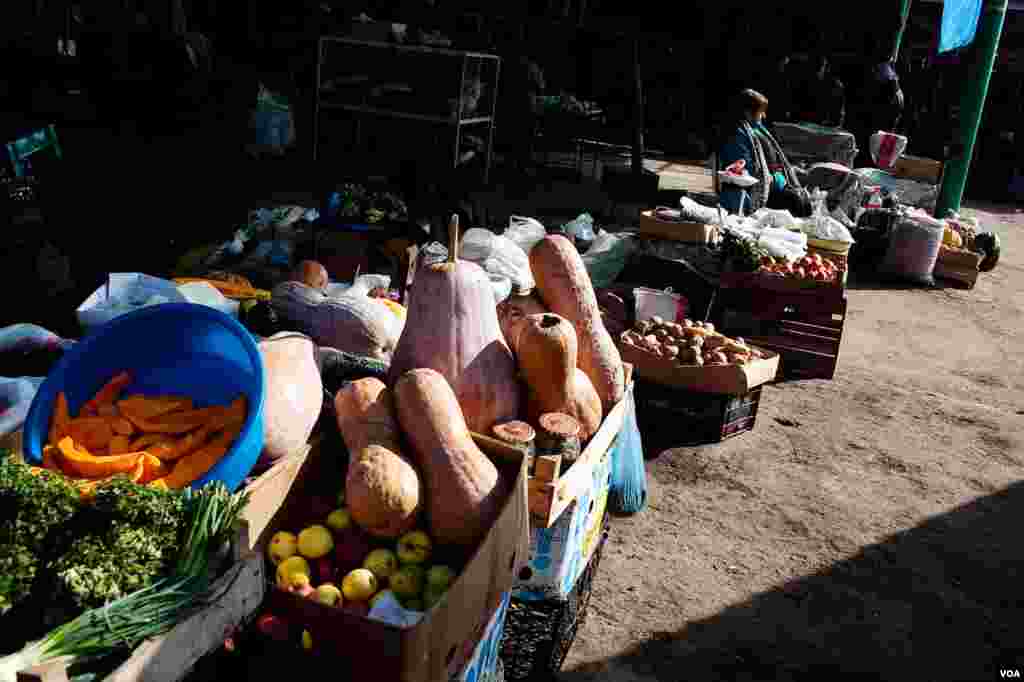
7/10Agriculture remains the backbone of Nagorno-Karabakh's economy. But old land mines often block farmers from the best fields. (U. Filimonova/VOA)
Show moreShow less
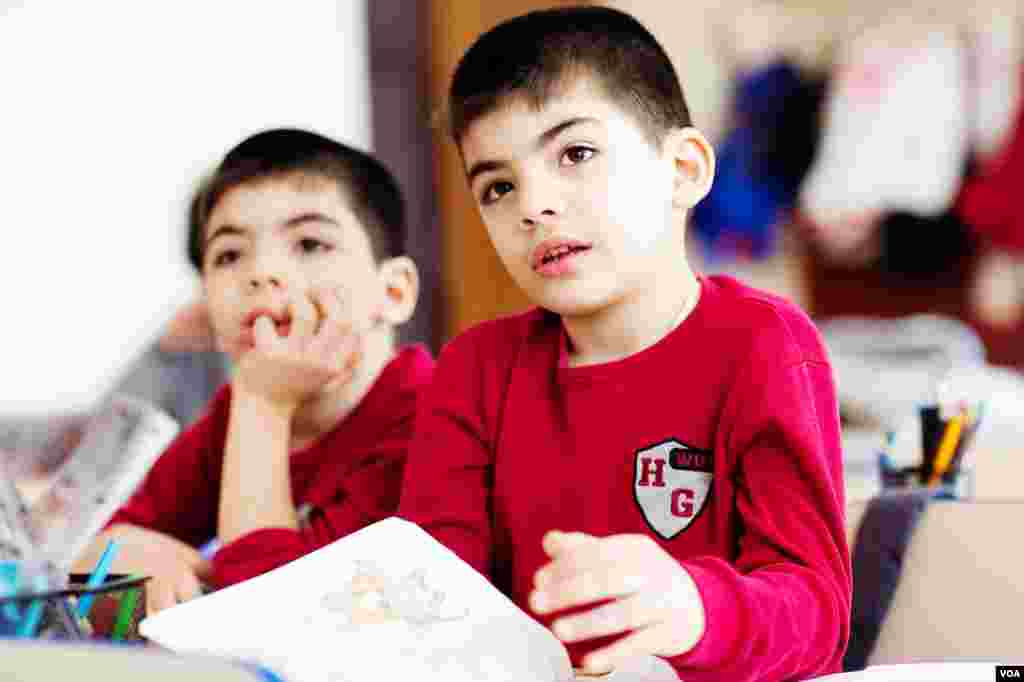
8/10At Stepanakert's Griboedova Middle School No. 3 boys know that obligatory military service faces them at age 18. (U. Filimonova/VOA)
Show moreShow less
9/10As life in Stepanakert returns to normal, Armenian women catch up over lunch at an Italian restaurant, located across the street from a bombed out building. (U. Filimonova)
Show moreShow less
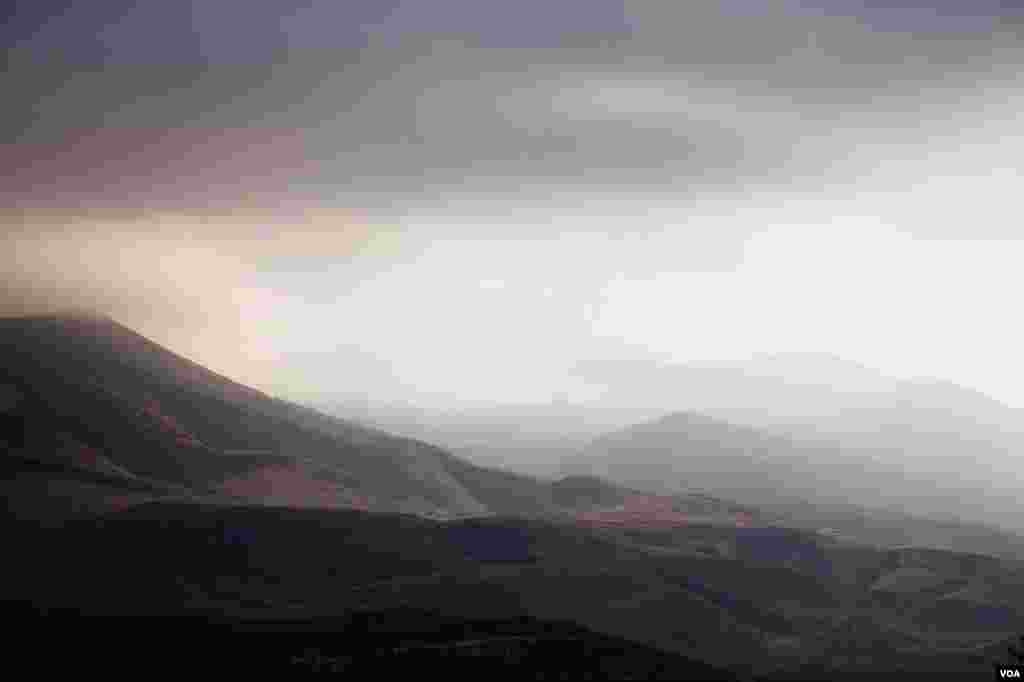
10/10Shrouded in mists, Nagorno-Karabakh, or mountainous Karabakh, is a breakaway region of Azerbaijan, controlled for the last 20 years by ethnic Armenians. (U. Filimonova/VOA)