Israeli riot and undercover policemen arrest a Palestinian protester during clashes in the east Jerusalem Arab neighborhood of Issawiya, May 15, 2012.
Palestinians and Arab Israelis are commemorating "Nakba" day to mark the exodus of hundreds of thousands of Palestinians after the state of Israel was established in 1948.
Palestinians observe "Nakba", which means "catastrophe," with demonstrations every year on May 15, the day after the anniversary of Israel's creation. Israel uses the Hebrew calendar and therefore celebrated its 64th anniversary on April 26 this year.
More than 700,000 Palestinians are estimated to have fled or been forced to leave their homes during the war that followed Israel's declaration of statehood in 1948.
Palestinians Mark Nakba Day
1/6Palestinian women take part in celebrations after a deal to end a prisoners hunger strike was agreed to, in the West Bank city of Ramallah, May 14, 2012.
Palestinians and Arab Israelis commemorate 'Nakba' (which means catastrophe) day to mark the exodus of hundreds of thousands of Palestinians after 1948 establishment of Israel state. The anniversary comes hours after hundreds of Palestinian prisoners in Israeli jails end their hunger strike.
Show moreShow less
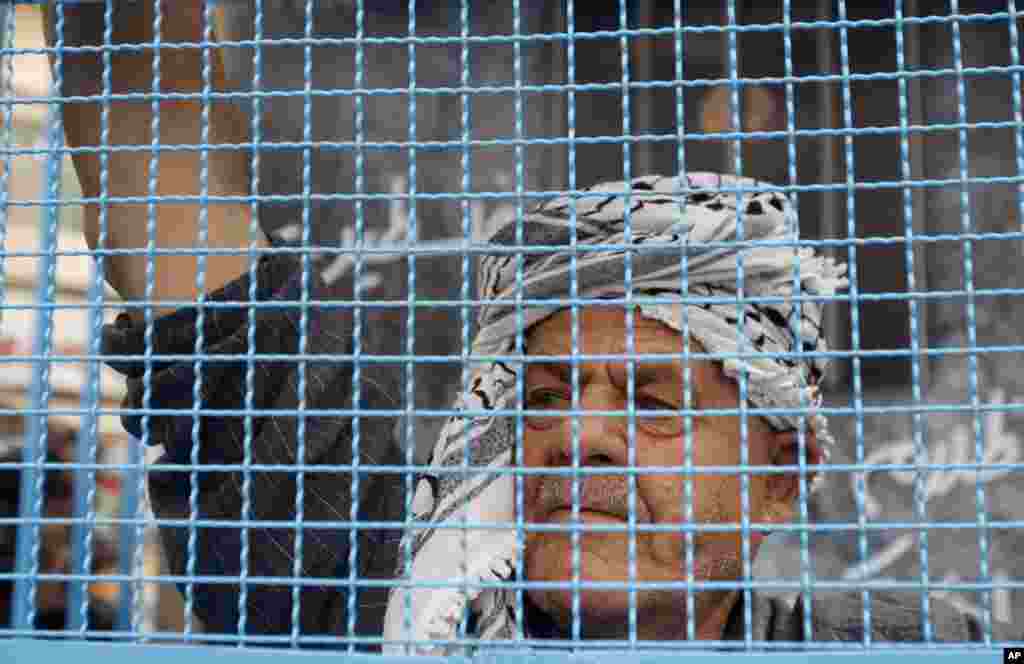
2/6A Palestinian man stands in a symbolic prison cell during a protest supporting Palestinian inmates on hunger strike in Israeli jails, in the West Bank city of Ramallah, May 14, 2012.
Palestinians and Arab Israelis commemorate 'Nakba' (which means catastrophe) day to mark the exodus of hundreds of thousands of Palestinians after 1948 establishment of Israel state. The anniversary comes hours after hundreds of Palestinian prisoners in Israeli jails end their hunger strike.
Show moreShow less
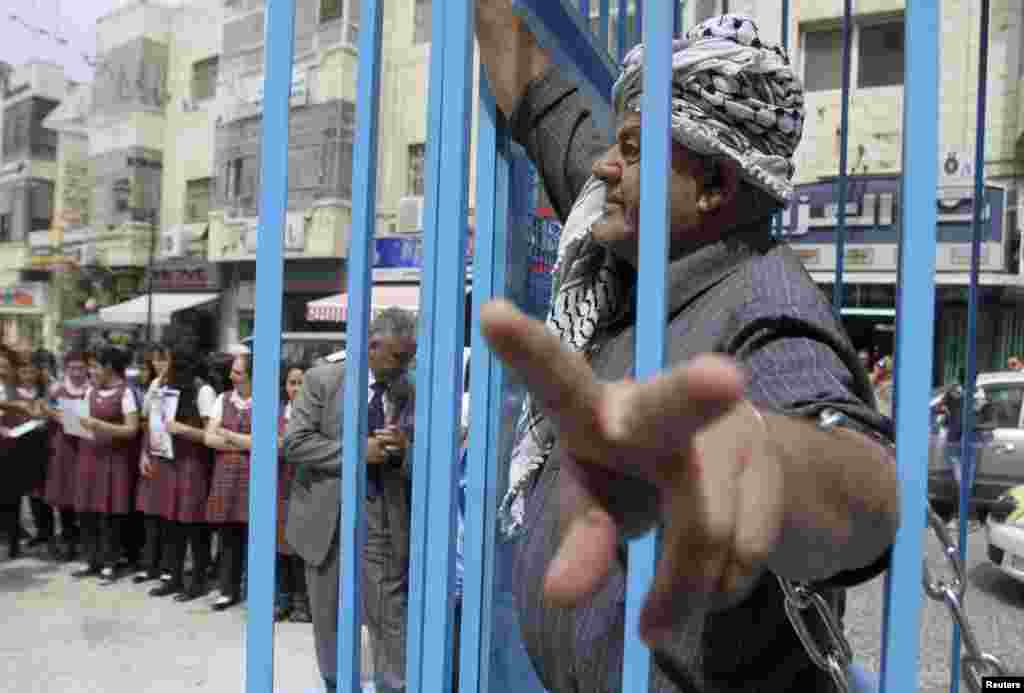
3/6A Palestinian man gestures from inside a mock prison cell during a rally in the West Bank city of Ramallah, in support of Palestinian prisoners on a hunger strike in Israeli jails, May 14, 2012.
Palestinians and Arab Israelis commemorate 'Nakba' (which means catastrophe) day to mark the exodus of hundreds of thousands of Palestinians after 1948 establishment of Israel state. The anniversary comes hours after hundreds of Palestinian prisoners in Israeli jails end their hunger strike.
Show moreShow less
4/6A Palestinian boy readies to throw a flaming molotov cocktail towards Israeli soldiers deployed at the entrance of the al-Aroub Palestinian refugee camp, May 15, 2012.
Palestinians and Arab Israelis commemorate 'Nakba' (which means catastrophe) day to mark the exodus of hundreds of thousands of Palestinians after 1948 establishment of Israel state. The anniversary comes hours after hundreds of Palestinian prisoners in Israeli jails end their hunger strike.
Show moreShow less
5/6An elderly Palestinian man walks past Israeli soldiers deployed at the entrance of the al-Aroub Palestinian refugee camp, just north the West Bank town of Hebron, May 15, 2012.
Palestinians and Arab Israelis commemorate 'Nakba' (which means catastrophe) day to mark the exodus of hundreds of thousands of Palestinians after 1948 establishment of Israel state. The anniversary comes hours after hundreds of Palestinian prisoners in Israeli jails end their hunger strike.
Show moreShow less
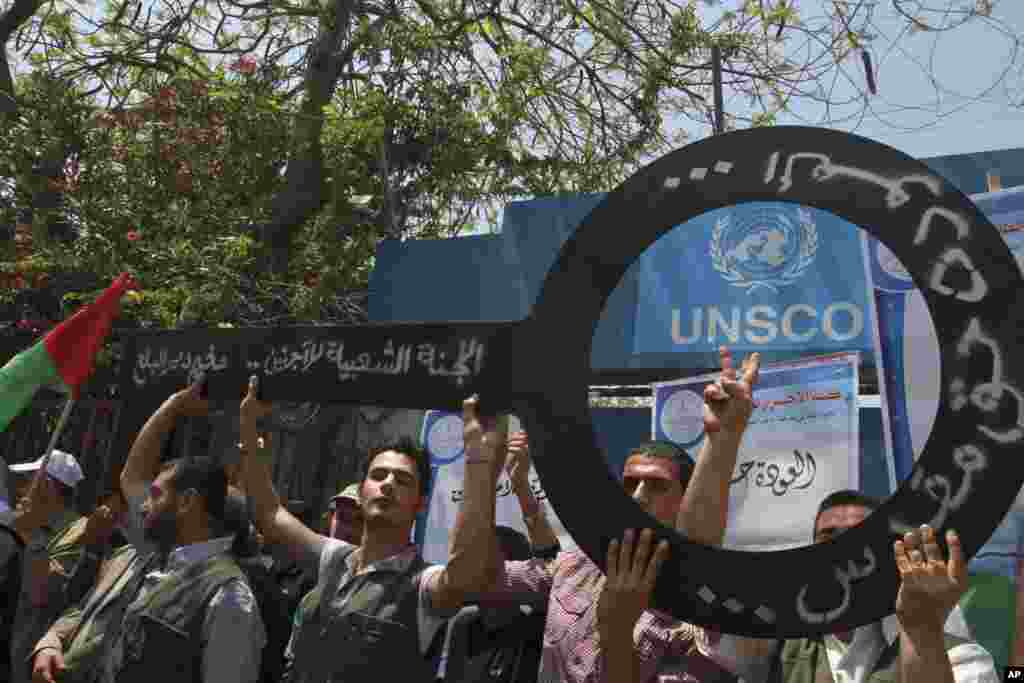
6/6Palestinians hold up a symbolic key during the 64th anniversary of "Nakba", Arabic for catastrophe, the term used to mark the events leading to Israel's founding in 1948, in Gaza City, May 15, 2012.
Palestinians and Arab Israelis commemorate 'Nakba' (which means catastrophe) day to mark the exodus of hundreds of thousands of Palestinians after 1948 establishment of Israel state. The anniversary comes hours after hundreds of Palestinian prisoners in Israeli jails end their hunger strike.
Show moreShow less
Previous slide
Next slide
The anniversary comes just hours after hundreds of Palestinian prisoners in Israeli jails agreed to end a weeks-long hunger strike in exchange for promises of better conditions.
Israel Prisons Service spokeswoman Sivan Weizman confirmed late Monday that a deal had been reached. The deal averts fears of widespread unrest if any of the inmates had died from the strike.
Egypt and Jordan played key roles in mediating between the Israelis and prison leaders representing all Palestinian factions.
The Palestinians won key concessions, including more family visits and limits to a controversial Israeli policy that can imprison people for years without charge.
The agreement also saw roughly 20 prisoners released from solitary confinement back into the general prison population. These include Hamas member Abdullah al-Barghouthi, serving 67 life sentences for helping to plan a series of suicide bombings that killed scores of civilians.
In return, Israel extracted pledges by militant groups "to prevent terror activities."
The hunger strike garnered widespread support among Palestinians, with hundreds joining daily marches and sit-in protests.
Outside mediation was necessary because many of the striking prisoners were associated with groups that Israel has no direct contact with, including Hamas, which refuses to recognize Israel, and the even more militant Islamic Jihad.
The mass action was sparked by Khader Adnan, an Islamic Jihad spokesman who fasted for 66 days this year to demand his release from incarceration without charge. He ended his fast after Israeli authorities agreed to release him a few weeks early.
Some information for this report was provided by AFP.
Join the conversation on our social journalism site - Middle East Voices. Follow our Middle East reports on Twitter and discuss them on our Facebook page.
The Voice of America provides news and information in more than 40 languages to an estimated weekly audience of over 326 million people. Stories with the VOA News byline are the work of multiple VOA journalists and may contain information from wire service reports.