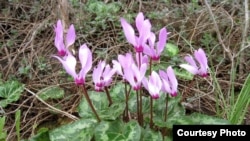
Persian Cyclamen, the national flower of Israel, blooms in winter. (Tel Aviv University Botanical Garden)
TEL AVIV —
The Botanical Garden is a blooming paradise, about four hectares filled with a rich array of some 3,800 species drawn from Israel’s diverse landscape and from around the world.
Danny Chamovitz, director of the Manna Center for Plant Biosciences at Tel Aviv University, visits the garden often to conduct research or just to take a stroll. It's the perfect setting to talk about his new book: “What a Plant Knows: A Field Guide to the Senses.”
“I wrote the book because I had come to realize that a lot of what I take for granted -that plants have senses, that plants see, that plants smell, that plants know when we’re touching them - most people don’t know," he said. "And so I wrote the book to show how complex a plant’s life is and to show the science behind it.”
Earlier in his career as a post-doctoral fellow at Yale University, Chamovitz researched how plants use light, isolating the genes involved in photosynthesis. Sitting beside a shade tree, he gently pulls on a low-hanging branch, thick with leaves.
“You can see that its stems are longer than the ones that are at the top, which are in the light," he said. "And it knows this because it can actually differentiate between higher amounts of light and smaller amounts of light and it uses this information either to make itself longer to get toward the light, or once it’s in the light, to make its leaves broader so that it can do its photosynthesis and make the energy.”
Then Chamovitz rips one of the leaves. He says this simple act sends a message to other leaves on the same branch or tree.
“The leaves next to it know that this plant was ripped. They know it because they can smell it," he said. "What they think is that some bug has come along and eaten the leaf. And when a bug eats a leaf, the leaf then gives off a gas that goes to the other leaves around it, and then those leaves absorb the gas, in other words they smell it, and then they start making chemicals that will make them less tasty to the bugs in order to protect themselves.”
Plants are rooted in earth and are acutely aware of the world around them. They know up from down, and respond to gravity in some of the same ways humans do. They know the difference between hot or cold touch.
Tel Aviv University Botanical Garden
1/12This Botanical Garden trail leads visitors into a Mediterranean scrub plot with Israeli flora. (Tel Aviv University Botanical Garden)
The Tel Aviv University Botanical Garden is a blooming paradise on four hectares with a rich array of 3,800 species drawn from Israel’s diverse landscape and from around the world. It is open to the public, but also serves as an outdoor classroom and a laboratory for scientists.
2/12Tel Aviv University Botanical Garden Director Yuval Sapir uses the garden to teach students about the flora in Israel’s many diverse landscapes. (Tel Aviv University Botanical Garden)
The Tel Aviv University Botanical Garden is a blooming paradise on four hectares with a rich array of 3,800 species drawn from Israel’s diverse landscape and from around the world. It is open to the public, but also serves as an outdoor classroom and a laboratory for scientists.
3/12Various treatments are tested on diseased wheat plants. (Tel Aviv University Botanical Garden)
The Tel Aviv University Botanical Garden is a blooming paradise on four hectares with a rich array of 3,800 species drawn from Israel’s diverse landscape and from around the world. It is open to the public, but also serves as an outdoor classroom and a laboratory for scientists.
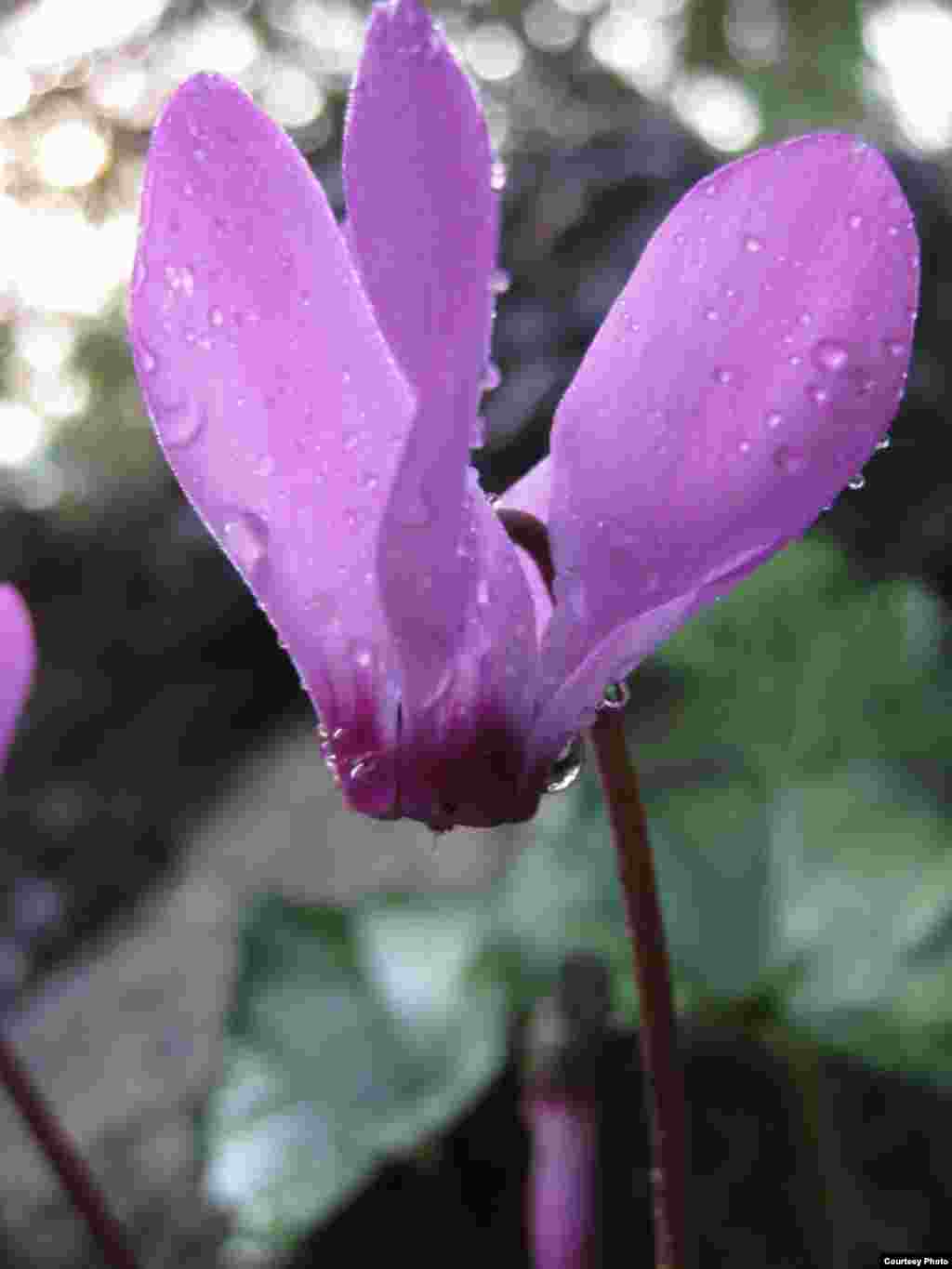
4/12Persian Cyclamen (Cyclamen persicum) is the national flower of Israel. A winter flower, the flower is upside down. (Garden's)
The Tel Aviv University Botanical Garden is a blooming paradise on four hectares with a rich array of 3,800 species drawn from Israel’s diverse landscape and from around the world. It is open to the public, but also serves as an outdoor classroom and a laboratory for scientists.
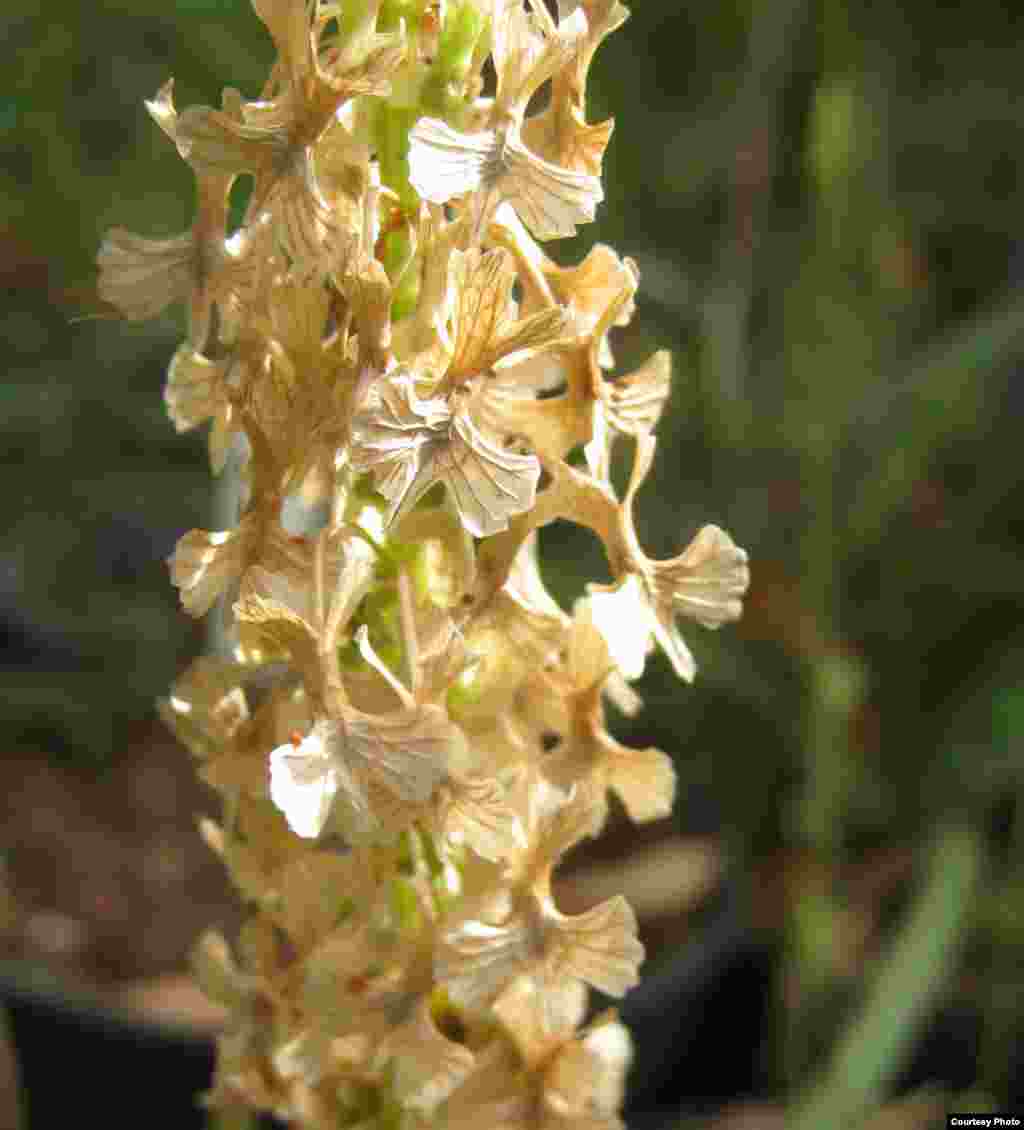
5/12The endangered Rumex rothschildianus grows on coastal dunes in the most populated area of Israel. (Tel Aviv University Botanical Garden)
The Tel Aviv University Botanical Garden is a blooming paradise on four hectares with a rich array of 3,800 species drawn from Israel’s diverse landscape and from around the world. It is open to the public, but also serves as an outdoor classroom and a laboratory for scientists.
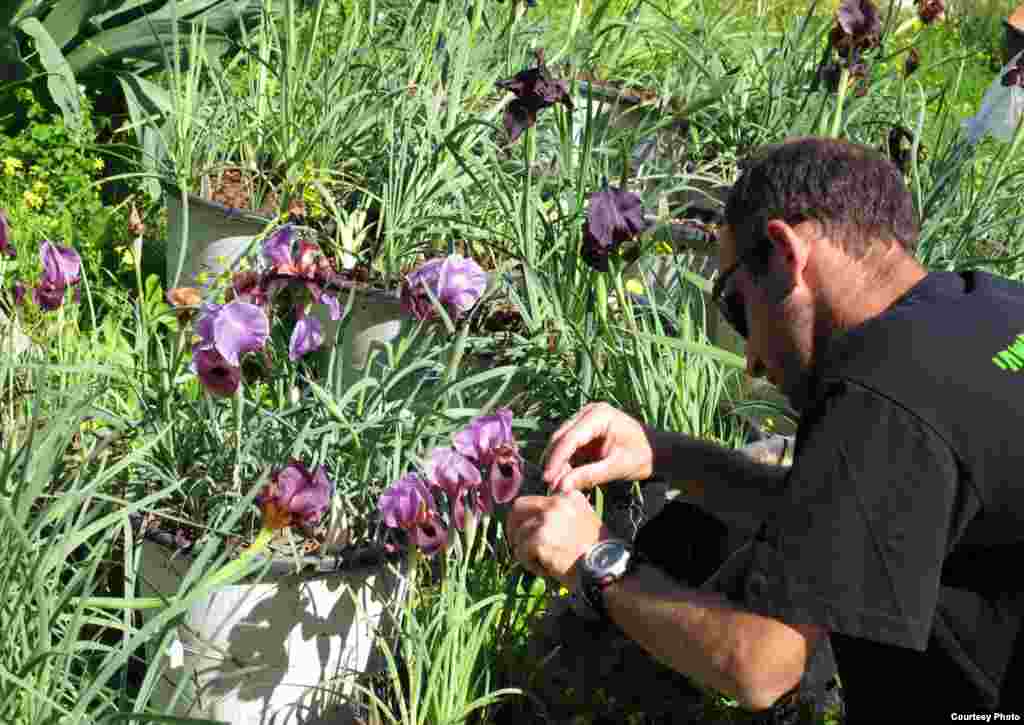
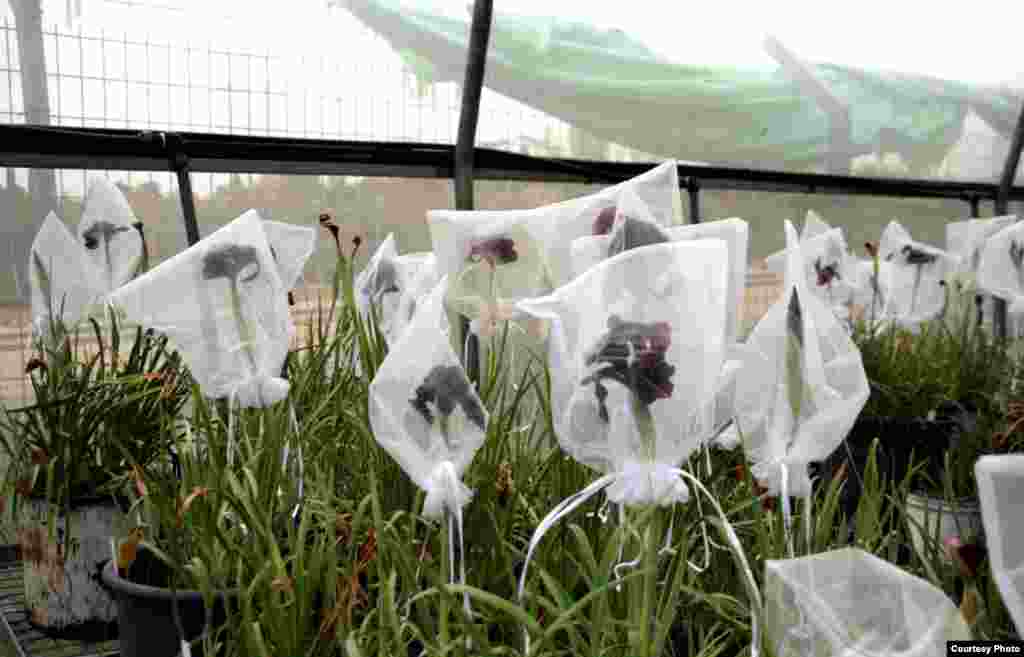
6/12A Tel Aviv University student pollinates irises as part on-going research in plant conservation. (Tel Aviv University Botanical Garden)
The Tel Aviv University Botanical Garden is a blooming paradise on four hectares with a rich array of 3,800 species drawn from Israel’s diverse landscape and from around the world. It is open to the public, but also serves as an outdoor classroom and a laboratory for scientists.
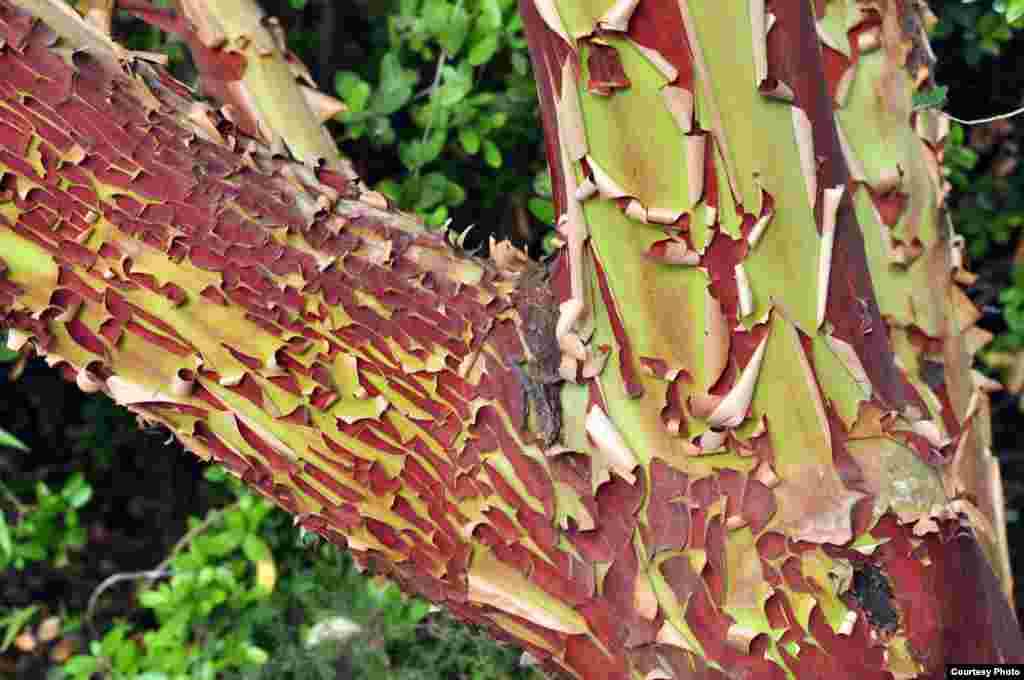
7/12The bark of the Arbutus andrachne helps to fight off pests. (Gavri Sion)
The Tel Aviv University Botanical Garden is a blooming paradise on four hectares with a rich array of 3,800 species drawn from Israel’s diverse landscape and from around the world. It is open to the public, but also serves as an outdoor classroom and a laboratory for scientists.
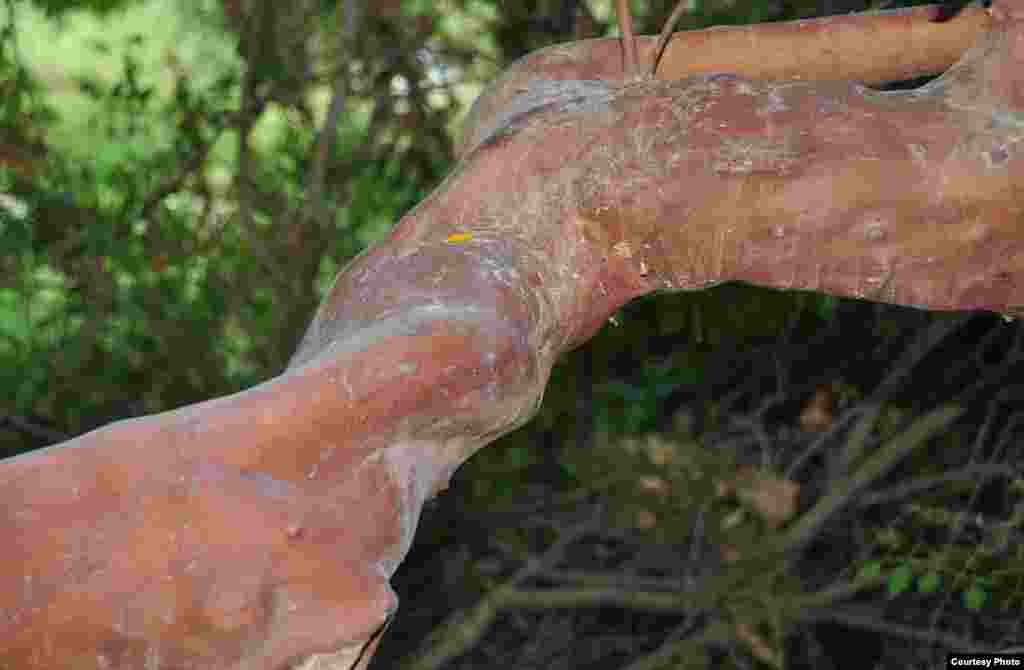
8/12The Eastern Strawberry tree (Arbutus andrachne) grows in the Mediterranean scrub. (Gavi Sion)
The Tel Aviv University Botanical Garden is a blooming paradise on four hectares with a rich array of 3,800 species drawn from Israel’s diverse landscape and from around the world. It is open to the public, but also serves as an outdoor classroom and a laboratory for scientists.
9/12In this garden spot, known as the Temple of Iris, garden director Yuval Sapir and graduate students do research on irises. (Tel Aviv University Botanical Garden)
The Tel Aviv University Botanical Garden is a blooming paradise on four hectares with a rich array of 3,800 species drawn from Israel’s diverse landscape and from around the world. It is open to the public, but also serves as an outdoor classroom and a laboratory for scientists.
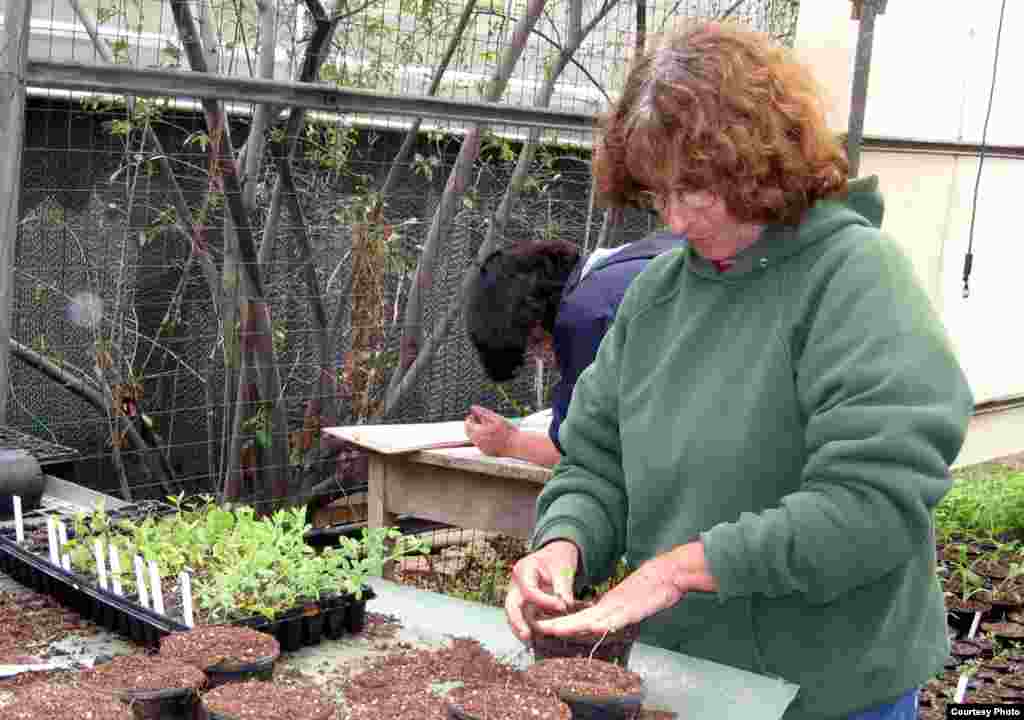
10/12Garden curator Mimi Ron is planting seedlings for garden beds. (Tel Aviv University Botanical Garden)
The Tel Aviv University Botanical Garden is a blooming paradise on four hectares with a rich array of 3,800 species drawn from Israel’s diverse landscape and from around the world. It is open to the public, but also serves as an outdoor classroom and a laboratory for scientists.
11/12The second floor of the Sarah Racine Root laboratory sets up visitors for an unexpected view underground. (Rosanne Skirble/VOA)
The Tel Aviv University Botanical Garden is a blooming paradise on four hectares with a rich array of 3,800 species drawn from Israel’s diverse landscape and from around the world. It is open to the public, but also serves as an outdoor classroom and a laboratory for scientists.
12/12The roots of plants grow through holes in the ceiling in the Sarah Racine Root laboratory giving visitors the sensation of life underground. (Tel Aviv University Botanical Garden)
The Tel Aviv University Botanical Garden is a blooming paradise on four hectares with a rich array of 3,800 species drawn from Israel’s diverse landscape and from around the world. It is open to the public, but also serves as an outdoor classroom and a laboratory for scientists.
But if you think music helps plants grow, think again.
“There is no evidence whatsoever that plants have any musical taste,” Chamovitz said.
But, Chamovitz explains, plants and humans do share a common, though distant, genetic past. Nearly two billion years ago, they were the same single-cell organism.
“Evolution is so amazing that we can see such different adaptations to the world and still live," Chamovitz said. "But what is common is that both animals and plants, both the oak tree and humans, have to know what their environment is. We have to know when we’re thirsty. We have to know where the water is. We have to find mates. We have to know when we’re cold and we have to adapt.”
Humans developed a central nervous system to integrate all that information. Plants did it without a brain. Humans and plants exchange carbon dioxide and oxygen for life. Knowing how plants respond to a world with more people and a warming climate is key to our own survival, according to Chamovitz.
“If we don’t understand how plants adapt to their environment, we won’t be able to assure our own future on this planet, because we won’t be able to feed ourselves,” he said.
A biologist, Chamovitz says that while humans share a lot of biology with plants, we have something that plants don’t have: the ability to care about the future.