ULUGAN, RUSSIA —
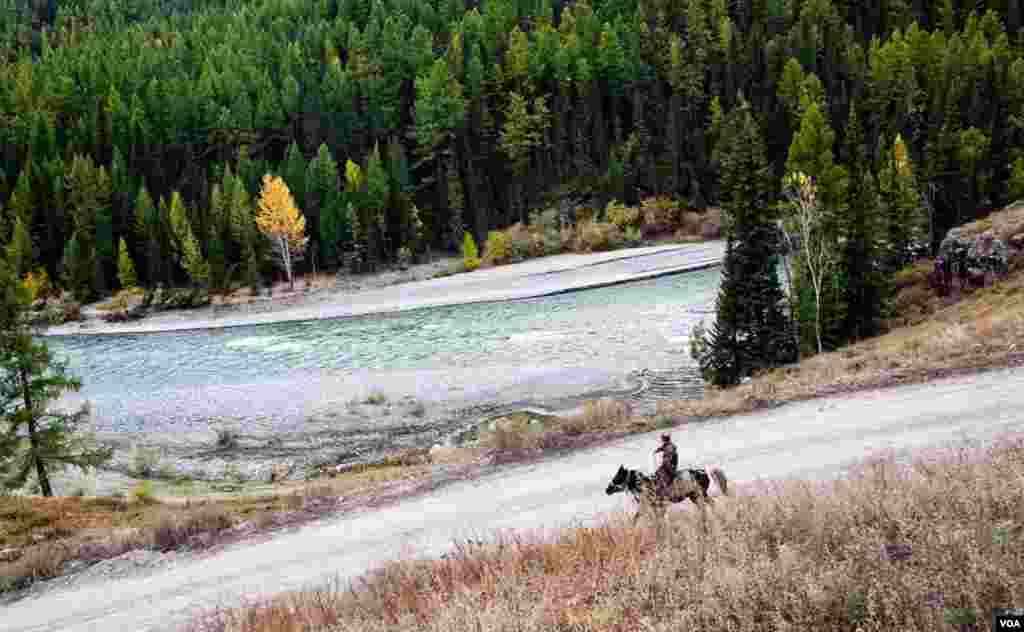
The remote Altai Republic has long been seen as "Russia’s Tibet." Isolated by the tallest mountains in Siberia, Altai is located on the border with Mongolia, China and Kazakhstan. But now Altai is opening up to jet-age tourism.
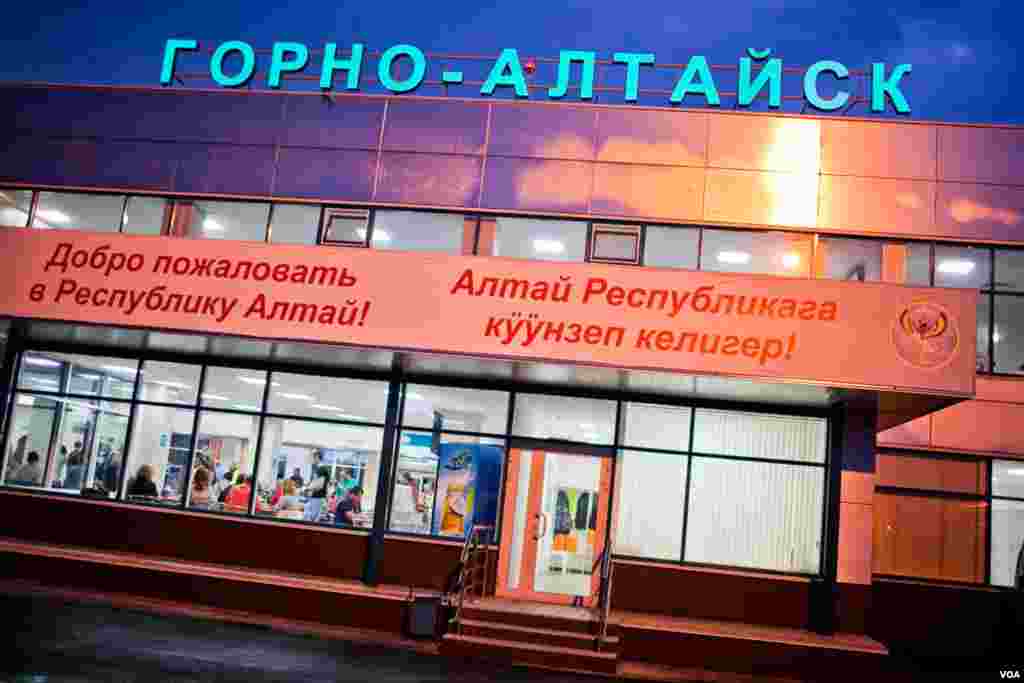
Last year, workers at the region’s only commercial airport doubled the length of the landing strip and built a new terminal. In June, jets started bringing tourists directly from Moscow, Europe’s most populous city, to drink the milk of horses, contemplate clear, glacier-fed rivers and breathe the fresh air of Altai’s Golden Mountains. The range, with peaks of 4,500 meters, is one of Russia’s nine natural areas listed as a UNESCO World Heritage site.
The Altai Republic
1/12The new air terminal at Gorno Altaisk, capital of the Altai Republic. Three months ago, regular jet flights started from Moscow, bringing affluent Russians and foreigners to a long isolated corner of the world's largest nation. (Vera Undritz for VOA)
Isolated by the tallest mountains in Siberia, Altai is located on the border with Mongolia, China and Kazakhstan. But now the republic is opening up to jet-age tourism.
Show moreShow less
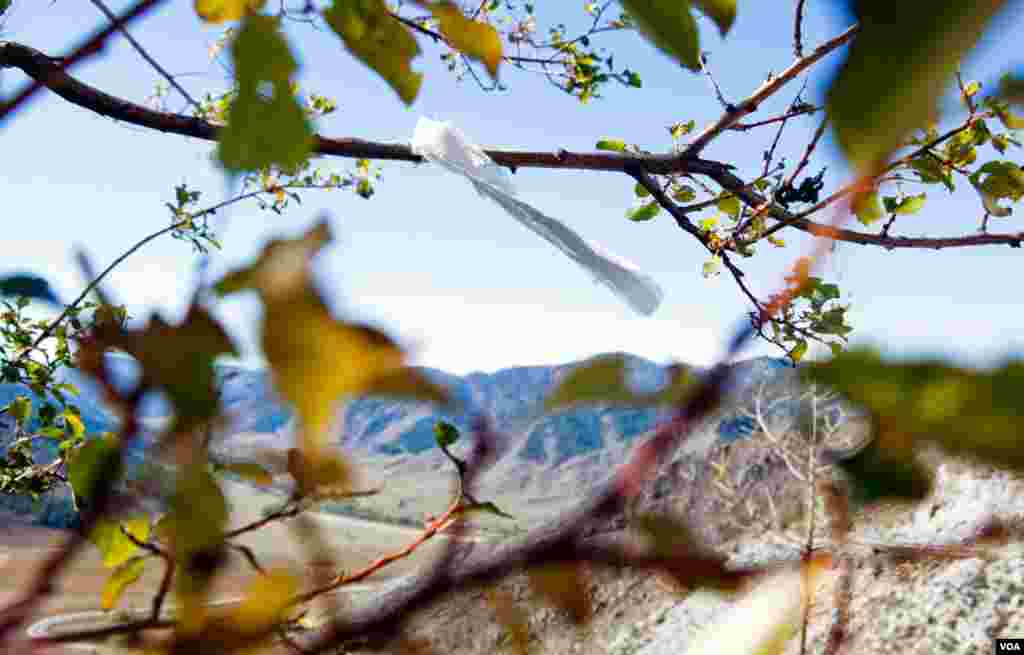
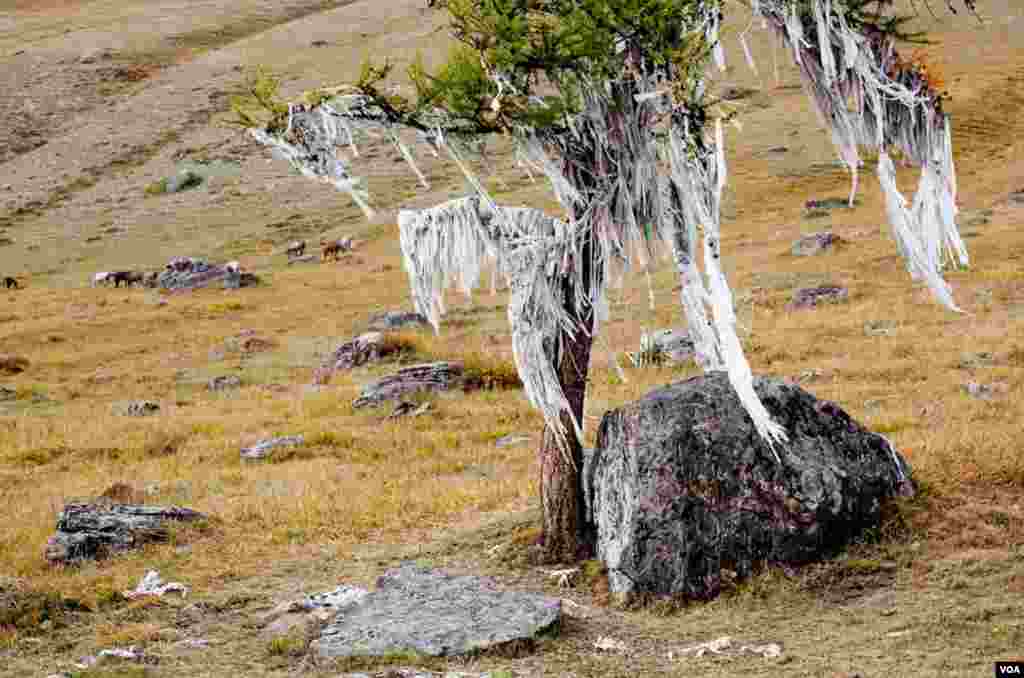
2/12A white ribbon, a good luck totem of the mountain people’s shamanistic faith, flutters from a larch tree overlooking a ridge of the Altai-Sayan mountains. (Vera Undritz for VOA)
Isolated by the tallest mountains in Siberia, Altai is located on the border with Mongolia, China and Kazakhstan. But now the republic is opening up to jet-age tourism.
Show moreShow less
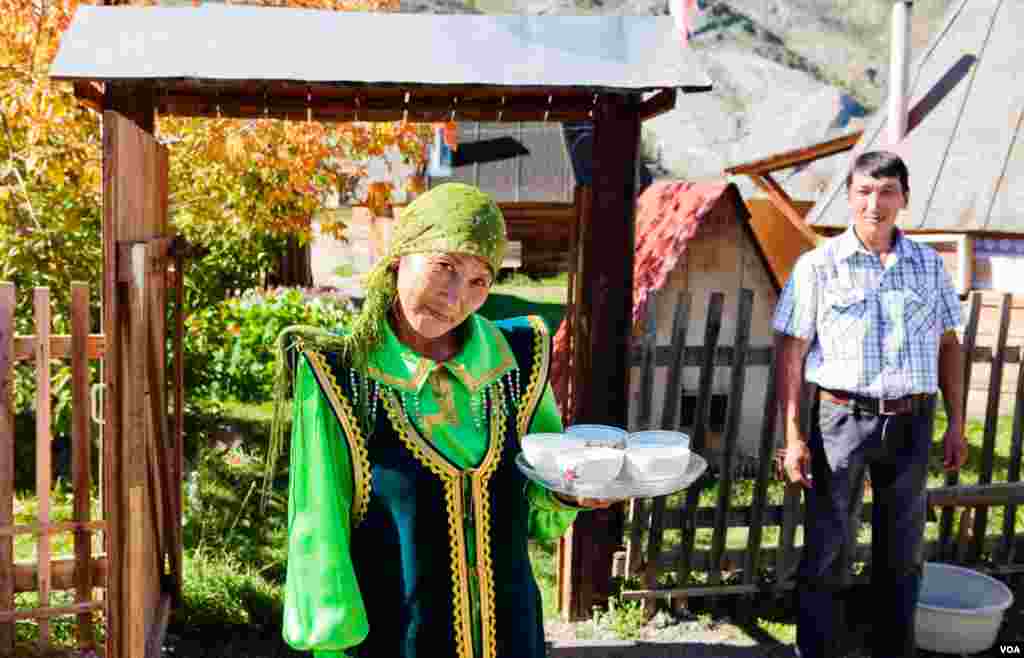
3/12Nadezhda Yegorova offers bowls of fresh mare’s milk to foreign visitors. Two years ago, after attending a class on eco-tourism offered by WWF, Yegorova decided to open to tourists her traditional family yurt in the village of Inya on the Chuiskii Track.
Isolated by the tallest mountains in Siberia, Altai is located on the border with Mongolia, China and Kazakhstan. But now the republic is opening up to jet-age tourism.
Show moreShow less
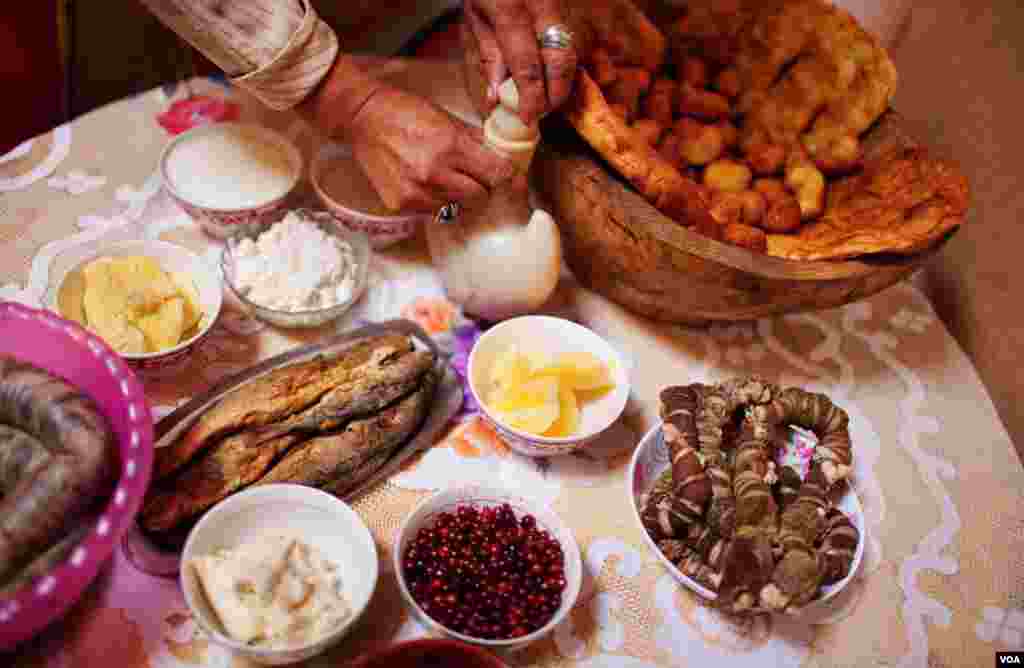
4/12 Mutton sausage, river fish, and sweetened cranberries are some of the delicacies that Altai hosts serve their guests. (Vera Undritz for VOA)
Isolated by the tallest mountains in Siberia, Altai is located on the border with Mongolia, China and Kazakhstan. But now the republic is opening up to jet-age tourism.
Show moreShow less
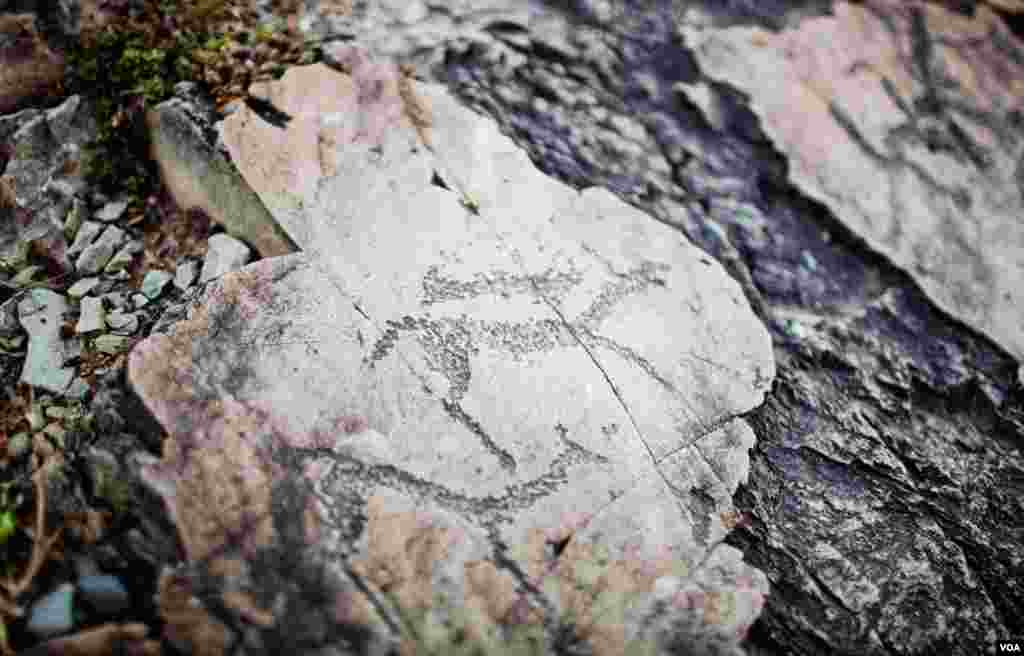
5/12At Chui Oozi cultural center, also on the Chuiskii Track, rock etchings – thousands of years old – commemorate deer and elk hunts by prehistoric peoples of the Altai. (Vera Undritz for VOA)
Isolated by the tallest mountains in Siberia, Altai is located on the border with Mongolia, China and Kazakhstan. But now the republic is opening up to jet-age tourism.
Show moreShow less
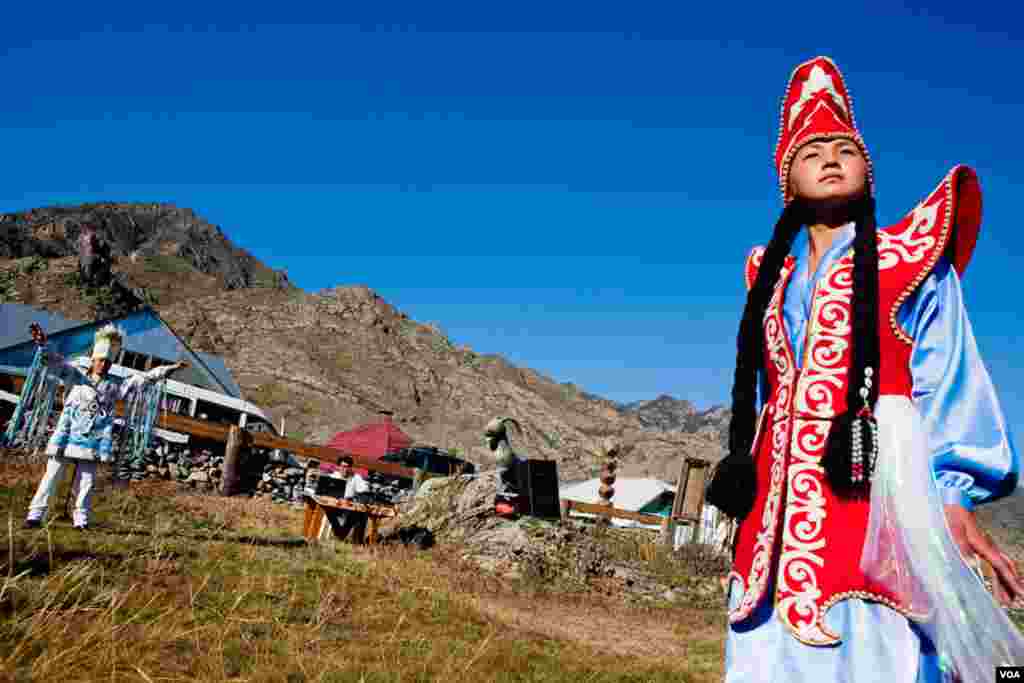
6/12At the Chui Oozi cultural center, a young woman shows off traditional native dress. In the background, Bolot Byiryshev, one of Altai’s most accomplished throat singers, rests after singing an epic ballad. (Vera Undritz for VOA)
Isolated by the tallest mountains in Siberia, Altai is located on the border with Mongolia, China and Kazakhstan. But now the republic is opening up to jet-age tourism.
Show moreShow less
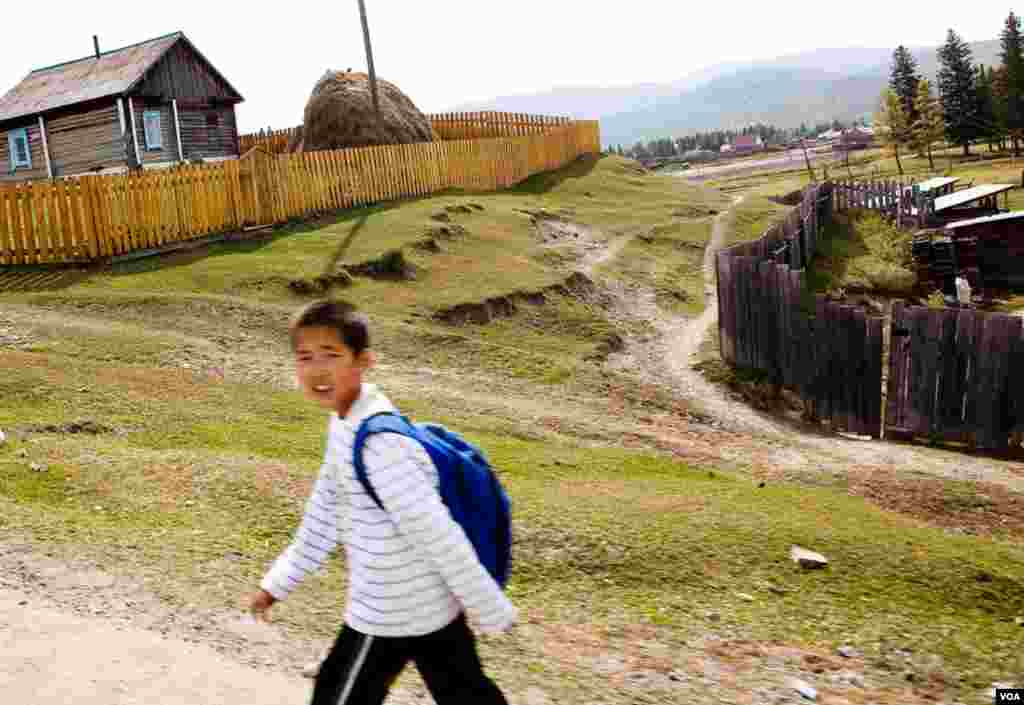
7/12A young Altai boy walks to school, where he will study in Russian and Altai, the region’s Turkic language. An Altai population boom means that within a generation, Altai people will probably displace Russians as the ethnic majority.
Isolated by the tallest mountains in Siberia, Altai is located on the border with Mongolia, China and Kazakhstan. But now the republic is opening up to jet-age tourism.
Show moreShow less
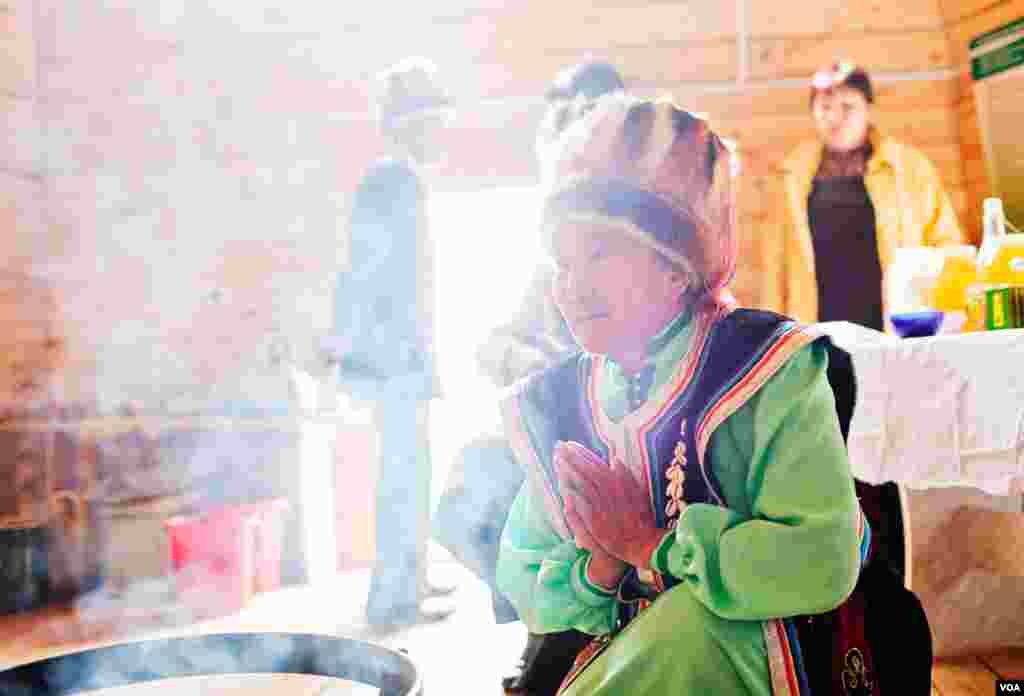
8/12In a high mountain yurt, a woman elder from the Kun community burns juniper twigs in a shamanistic purification and blessing welcome ceremony for foreign visitors. (Vera Undritz for VOA)
Isolated by the tallest mountains in Siberia, Altai is located on the border with Mongolia, China and Kazakhstan. But now the republic is opening up to jet-age tourism.
Show moreShow less
9/12華航在國際花車獎項連續九年稱霸
Isolated by the tallest mountains in Siberia, Altai is located on the border with Mongolia, China and Kazakhstan. But now the republic is opening up to jet-age tourism.
Show moreShow less
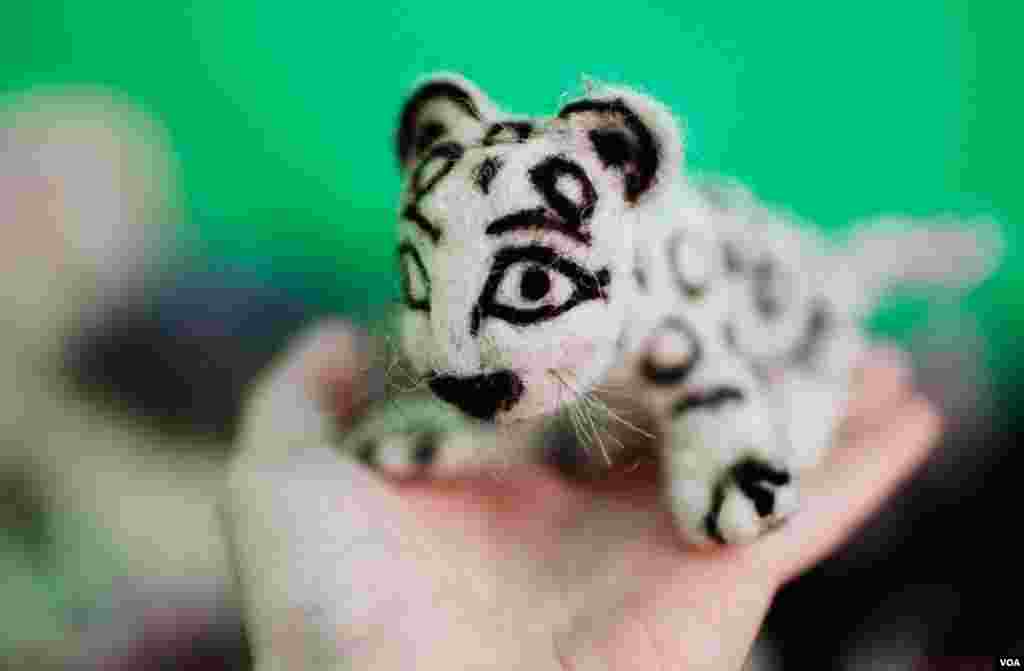
10/12Muscovites ask visitors returning from the Altai: Did you see a Snow Leopard? No, but we bought little leopards fashioned out of felt, made from the pressed and matted wool of sheep raised in the Altai. (Vera Undritz for VOA)
Isolated by the tallest mountains in Siberia, Altai is located on the border with Mongolia, China and Kazakhstan. But now the republic is opening up to jet-age tourism.
Show moreShow less
11/12A summer season of white prayer ribbons festoon a cedar tree on a mountainside. Following shamanistic beliefs of the White Faith, travelers tie white ribbons to tree branches for good luck. VOA Photo: Vera Undritz
Isolated by the tallest mountains in Siberia, Altai is located on the border with Mongolia, China and Kazakhstan. But now the republic is opening up to jet-age tourism.
Show moreShow less
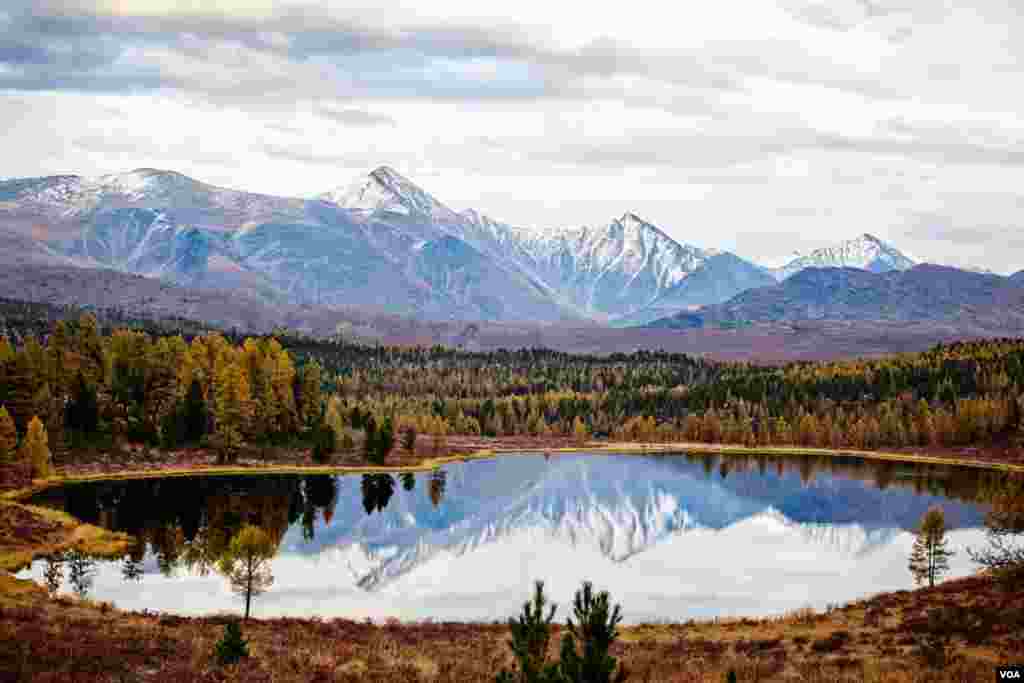
12/12On a cool autumn evening, a mountain lake carries the reflections of high mountain slopes where the first snows of winter have already fallen. These high altitudes are home to the snow leopard and its prey, the Argali sheep.
Isolated by the tallest mountains in Siberia, Altai is located on the border with Mongolia, China and Kazakhstan. But now the republic is opening up to jet-age tourism.
Show moreShow less
Previous slide
Next slide
Visitors are also attracted by the Altai’s exotic traditional culture. Alexei Kaichi, for example, is a throat singer who voices the epic ballads of his native land.
“I truly stand for worshiping the hills, the mountain passes, and the water springs,” he says as he stands outside a yurt, a traditional circular dwelling of Altai’s semi-nomadic people. “Because, as I was taught, every part of the land is a deity.”
Galina Toptigina, who built the Chui Ooz Cultural Center near her ancestral village, emphasizes the importance of tourism revenue as foreign and Russian visitors bargain for locally made scarves and hats of silk and felt.
“With the new airport, we get different people, and we make money with this,” says Toptigina. “We have to keep tourism in our hands, offering our tourism, our services, our handicrafts.”
Selling hats, scarves and toy snow leopards made of felt, Olga Safanova says she was unemployed for three years until she took an eco-tourism course from the World Wildlife Fund nature group.
"Tourism here is just developing, and I think it is not bad because the local people have started to prepare souvenirs," she says. "And we have our traditions and customs that attract tourists and earn money.”
But some big city tourists do not share the mountain peoples’ reverence for land. At one stop, trash of picnickers and campers is piled between a mountain lake and a sacred pass where good luck strips of white cloth flutter from cedar trees.
Igor Kalmykov, who directs the Altai Biosphere Reserve, says the first step is to get local community leaders to see that local jobs depend on a pristine environment.
“We prepare local guides,” he says. “We try very hard to give them the possibilities to sell locally made souvenirs in places where they can sell.”
With unemployment high, nature tourism could provide jobs for the next generation growing up in Russia’s faraway Altai.