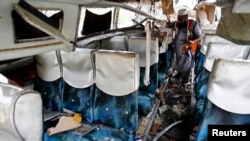
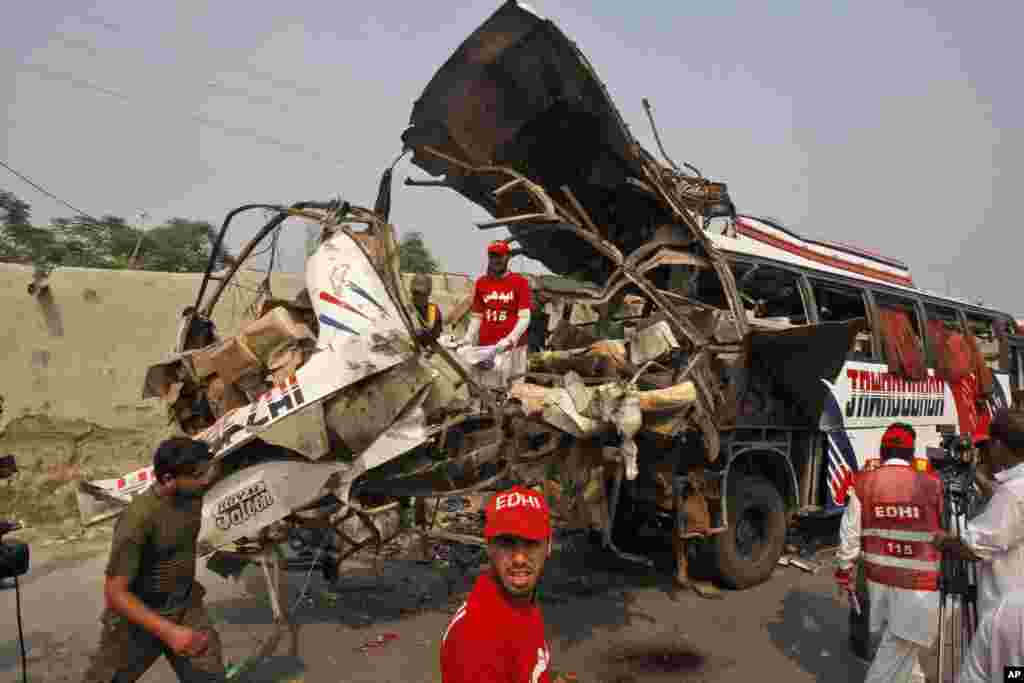
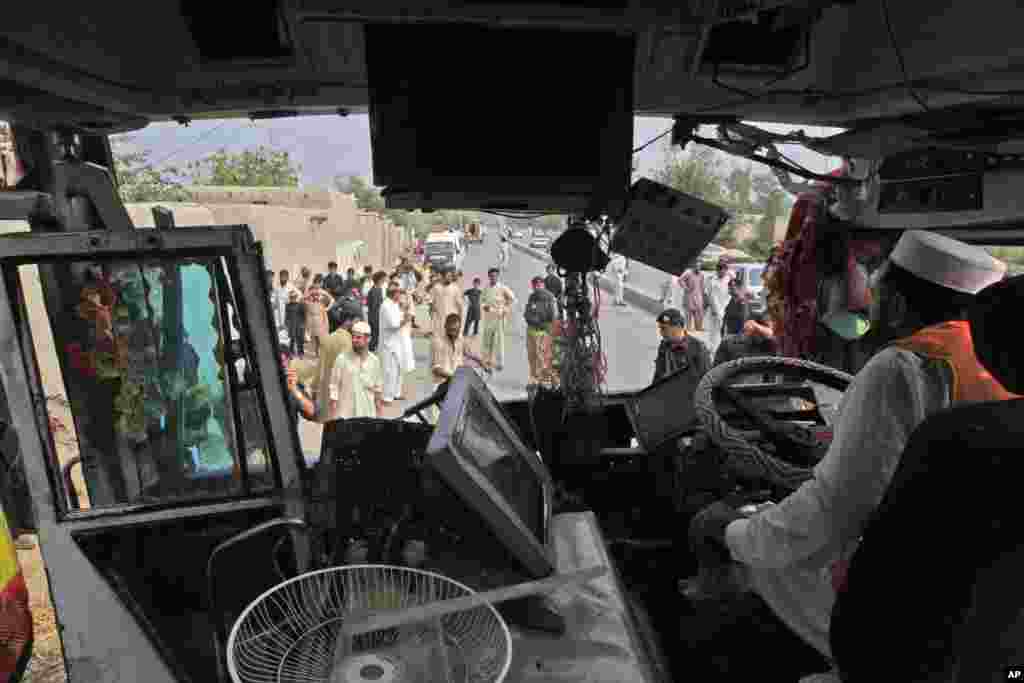
A rescue worker collects evidence from a damaged bus after it was hit by a bomb attack on the outskirts of Peshawar, Pakistan, Sept. 27, 2013.
ISLAMABAD —
In Pakistan, a bomb attack against a bus carrying government workers has killed at least 19 people and wounded dozens more in the insurgency-hit city of Peshawar. Friday's violence came days after a pair of suicide bombers attacked a church in the same city and killed more than 80 members of the country's minority Christian community.
Witnesses and Pakistani officials said the packed bus was traveling through the outskirts of Peshawar when a remote-control bomb exploded. A number of people were said to be on the roof of the overcrowded bus.
A man told reporters he "was driving his car behind the bus when the powerful blast ripped open the back end, and those sitting on the roof were thrown on the side."
There were women among the victims, and hospital sources said some people were seriously wounded.
The provincial chief of the bomb disposal squad, Shafqat Malik, said the initial probe suggested an improvised explosive device or IED was planted in the back of the bus.
Malik said police "seized an IED container from the scene along with parts of a remote-control device, and the evidence has led experts to conclude that up to 15 kilograms of explosive material was used."
Bomb Blast in Peshawar
1/5Ultra-Orthodox Jewish men carry the body of 17-year-old student Shalom Baadani during his funeral in Jerusalem, Nov. 7, 2014.
Show moreShow less
2/5A rescue worker inspects the wreckage of a bus that was destroyed in a bomb blast, Peshawar, Pakistan, Sept. 27, 2013.
Show moreShow less
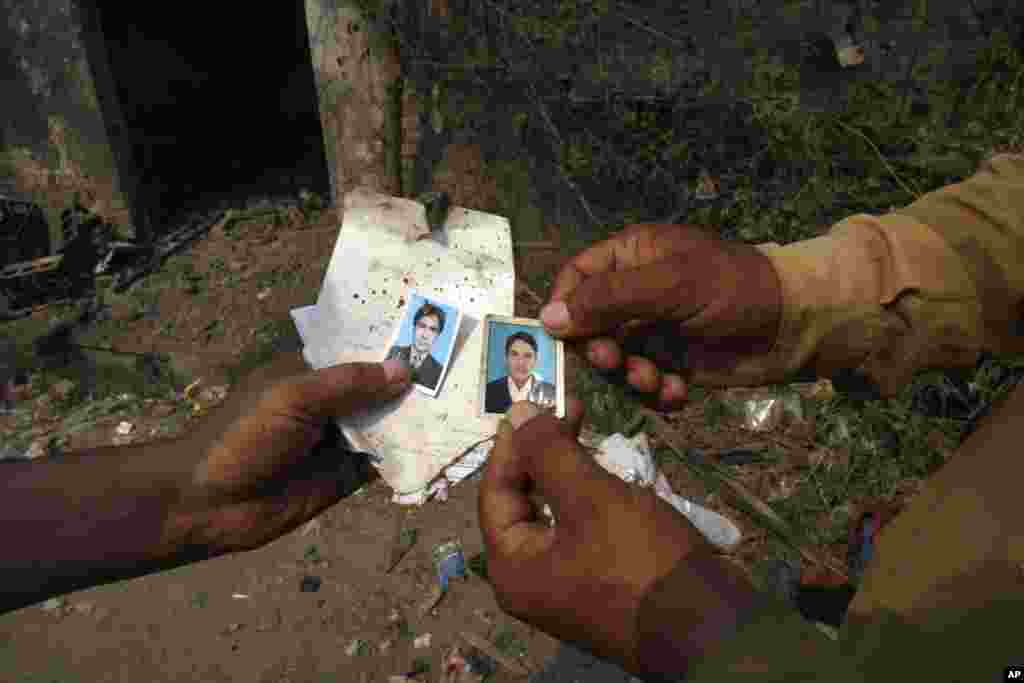
3/5Men show passport pictures they found at the site of a bomb blast, Peshawar, Pakistan, Sept. 27, 2013.
Show moreShow less
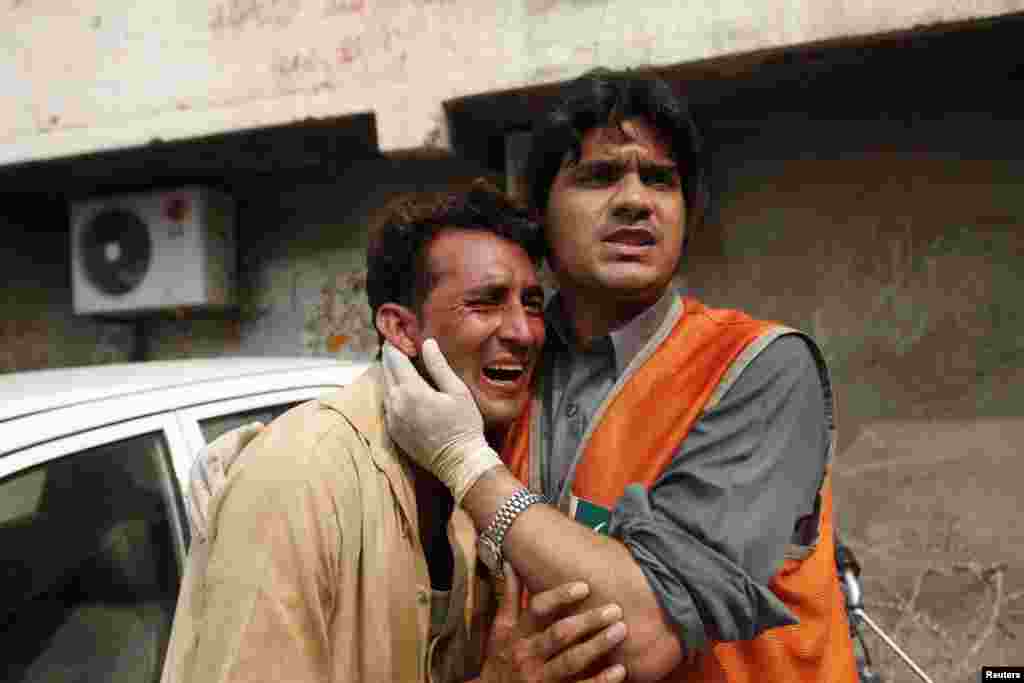
4/5A rescue worker comforts a man as he cries over the death of his brother, who was killed in a bomb blast, at a hospital in Peshawar, Paksitan, Sept. 27, 2013.
Show moreShow less
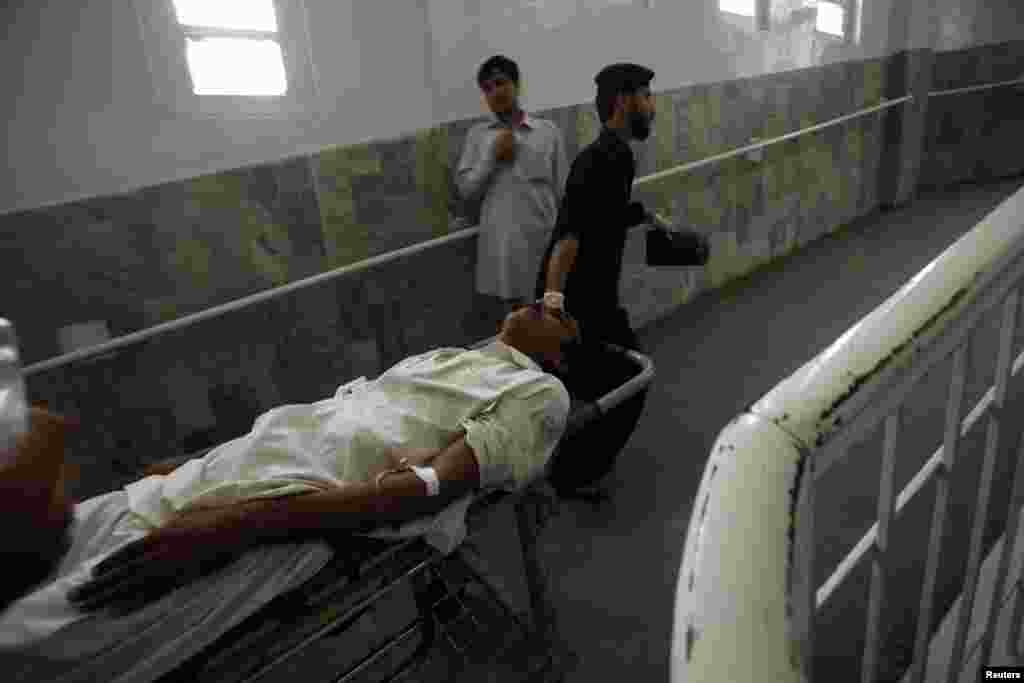
5/5Hospital staff wheel a man, who was injured in a bomb blast, at the Lady Reading Hospital, Peshawar, Pakistan, Sept. 27, 2013.
Show moreShow less
Previous slide
Next slide
Friday's attack is the second deadly bombing in Peshawar within a week. Last Sunday, a pair of suicide bombers targeted a church in the center of the city as Christian worshipers were finishing their prayers. That attack killed more than 80 members of the minority Christian community.
An outlawed Islamist group, Tehreek-e-Taliban Pakistan or TTP, is suspected to be behind the bloodshed. Its members have carried out hundreds of suicide and other deadly terrorist attacks around the country in recent years, killing thousands of Pakistanis.
For nearly a decade, Pakistan's army has tried to eliminate bases of the TTP in the northwestern tribal districts bordering Afghanistan. The anti-militancy operations have apparently failed to disrupt the group.
Newly-elected Prime Minister Nawaz Sharif has vowed to solve the problem of militancy through peaceful means rather than the military might.
In the wake of continued extremist attacks, Sharif's policy of engaging Taliban militants in peace talks has come under severe criticism at home and many critics believe the mounting pressure could prompt the Pakistani government to revisit the strategy.