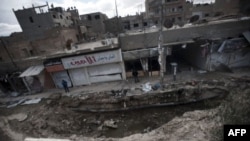
Site of massive bomb allegedly dropped by pro-government war planes in eastern Syrian city of Deir Ezzor, Feb. 16, 2013
GENEVA —
A United Nations Commission of Inquiry on Monday alleged possible crimes of war by both pro- and anti-government supporters in Syria.
In a 131-page report, the commission accuses both pro- and anti-government forces of becoming more violent and reckless. It says the Syrian war has become more sectarian and is attracting criminal elements and increased numbers of foreign fighters.
It alleges that government forces and anti-government armed groups are massacring civilians.
It accuses the government of arbitrary arrests, murder, torture, and rape - all acts, which if proven, can constitute crimes against humanity.
Though they say the government side carries more blame, the investigators also allege that rebel groups have committed murder, torture, arbitrary arrests and hostage-taking, which also may constitute war crimes if proven.
The Syrian government and rebel groups did not comment on Monday's report.
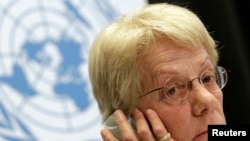
Member of the Commission of Inquiry on Syria Carla del Ponte listens during a news conference at the United Nations European headquarters in Geneva, February 18, 2013.
Continuing 'atrocities'
One of the U.N. commissioners, former war crimes prosecutor Carla del Ponte, said atrocities have gone on far too long in Syria.
Del Ponte said it is time for the U.N. Security Council to act to bring about justice. So far, deep splits in the council between Western members and China and Russia have blocked action.
"After two years, it is incredible that the Security Council does not take a decision," she said. "Justice must be imminent urgently because crimes are continuing, committed in Syria and the number of victims are increasing day to day. So, justice must be done."
The commission of inquiry was set up in 2011 by the U.N. Human Rights Council.
The four investigators were not allowed to enter Syria. They gathered information from testimony of nearly 450 people.
Children targeted
Del Ponte said some of the most shocking allegations involve children.
"The children are used, for example as messengers during the war and, of course, they are under high risk and many children were wounded," she said. "And, we have also some crimes committed against children - rape, sexual violence."
The latest images from Syria
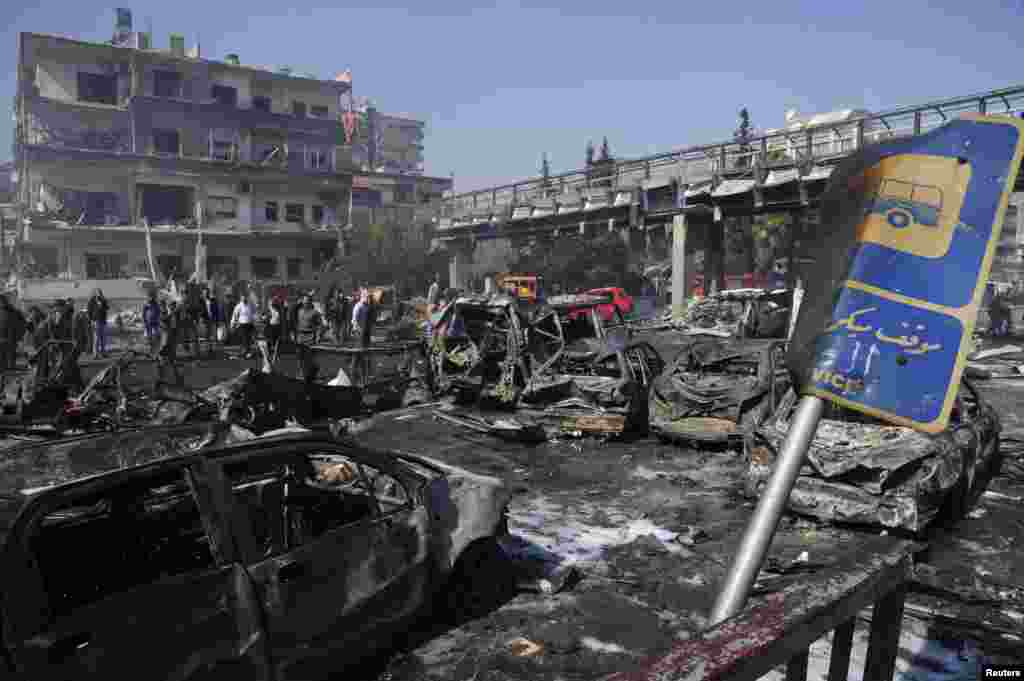
1/10Vehicles burn after an explosion in central Damascus February 21, 2013. Syrian state media blamed what it said was a suicide bombing on "terrorists" battling President Bashar al-Assad.
Show moreShow less
2/10People walk near debris and damaged vehicles after an explosion in central Damascus February 21, 2013. Residents said that the big explosion shook the central Damascus district of al-Mazraa.
Show moreShow less
3/10A Free Syrian Army member carries a weapon while walking down a debris-filled street in Aleppo's district of Salaheddine, February 19, 2013.
Show moreShow less
4/10A man covers his face with a rag as deputy head of the OSCE mission to Ukraine Alexander Hug stands outside a refrigerated train as members of Netherlands' National Forensic Investigations Team inspect bodies, seen in plastic bags, Torez, eastern Ukraine, July 21, 2014.
Show moreShow less
5/10Syrian government forces deploy themselves in the streets of Aleppo, February 20, 2013.
Show moreShow less
6/10Syrian government forces walk along a street in the al-Sabaa Bahrat district of Aleppo, February 20, 2012.
Show moreShow less
7/10A boy gets his hair cut at a makeshift barber shop at the Azaz refugee camp along the Syrian-Turkish border, February 19, 2013.
Show moreShow less
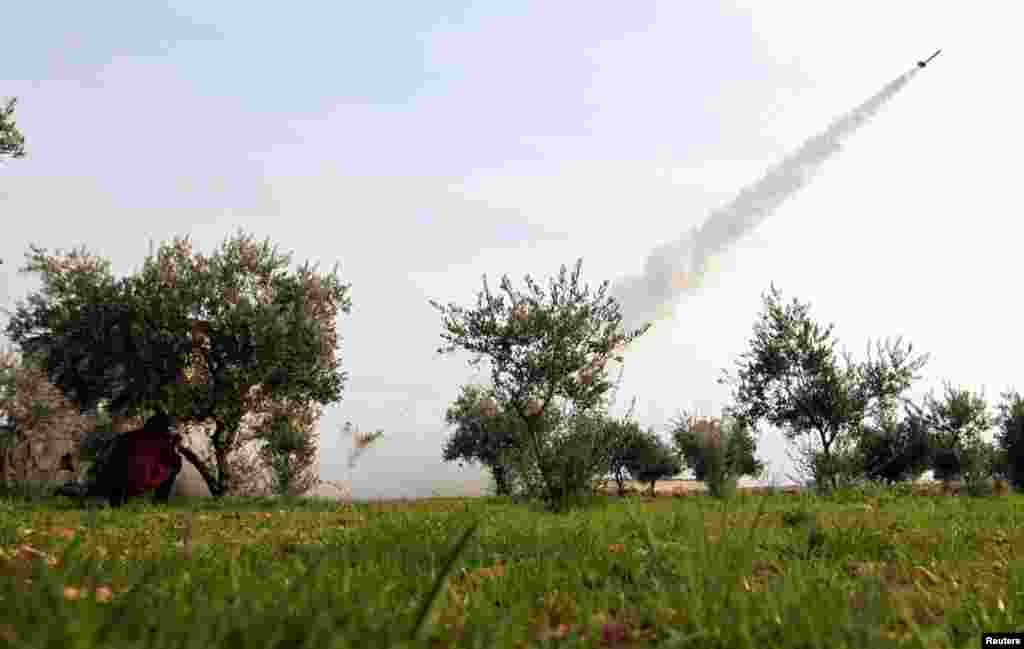
8/10A rocket is launched by Free Syrian Army fighters towards Nairab military airport and the international airport in Aleppo, which are controlled by forces loyal to Syria's President Bashar al-Assad, February 19, 2013.
Show moreShow less
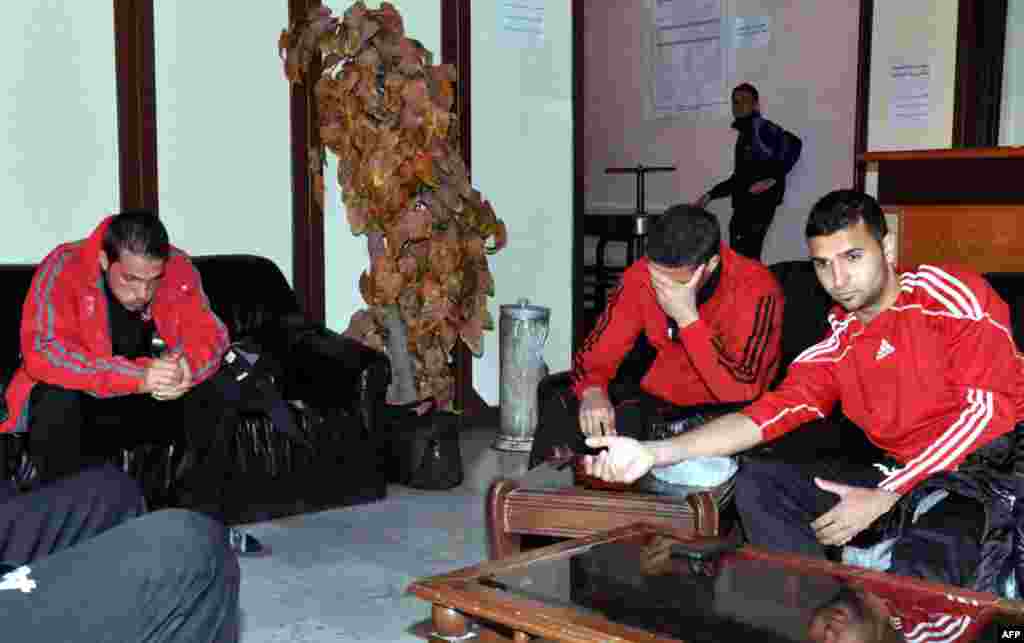
9/10Players of the Homs-based Al-Wathba football react after a mortar fell as they were training at the Tishreen Sport City Stadium on the outskirts of Damascus, February 20, 2013.
Show moreShow less
10/10Free Syrian Army fighters play football near Al Neirab airport in Aleppo, February 17, 2013.
Show moreShow less
Previous slide
Next slide
The commission has a confidential list of high-level political and military individuals and units it suspects to be responsible for crimes.
It will submit the list to the U.N. High Commissioner for Human Rights next month. A tribunal will conduct a formal investigation which may lead to indictments.
The decision to refer the conflict to the ICC lies with the U.N. Security Council, which is deeply divided between Western nations, and China and Russia, which have blocked action.
EU sanctions
On Monday, European Union governments extended for three months sanctions against Syria, but said they would amend an arms embargo to provide "non-lethal" support and technical assistance to help protect civilians.
The decision was reached at an EU foreign minister meeting in Brussels, where Britain lobbied to ease the arms embargo so that rebels can gain access to military aid in their fight against President Bashar al-Assad. Most foreign ministers opposed the request, with Luxembourg's Jean Asselborn stating "there is no shortage of arms in Syria."
Meanwhile, the French news agency, citing the pro-Damascus Lebanese newspaper As-Safir, quoted Assad as telling the paper he is confident his military will defeat the rebels.
The published comments came as Syrian rebels reportedly captured a key army checkpoint on the main road to the airport in the northern city of Aleppo, the latest win in their battle to secure strategic airports in the area.
The United Nations estimates some 70,000 people have lost their lives since anti-government protests erupted in March 2011 and broadened into war.