WASHINGTON —
America’s U.N. ambassador has defended comments she made in the days following the September terrorist attack on the U.S. consulate in Benghazi, Libya,
Five days after the Benghazi attack that killed U.S. Ambassador Christopher Stevens and three other Americans, Susan Rice appeared on multiple domestic television programs. Rice said initial intelligence assessments pointed to a spontaneous demonstration that attracted heavily-armed militants.
The Obama administration has since conceded that the assault was, in fact, a terrorist attack.
Speaking at the United Nations late Wednesday, Rice addressed lingering questions about her assertions in September.
“When discussing the attacks against our facilities in Benghazi, I relied solely and squarely on the information provided to me by the intelligence community. I made clear that the information was preliminary and that our investigations would give us the definitive answers," Rice said. "Everyone, particularly the intelligence community, has worked in good faith to provide the best assessment based on the information available.”
Last week, several Republican lawmakers, including Senator John McCain, blasted Rice’s initial Benghazi comments as proof of deception or incompetence. To this day, some Republicans and conservative commentators allege the administration downplayed the true nature of the Benghazi incident to protect President Obama from political fallout during his reelection bid.
Ambassador Rice responded directly to Senator McCain.
“I have great respect for Senator McCain and his service to our country," she said. "I always have, and I always will. I do think that some of the statements he’s made about me have been unfounded, but I look forward to having the opportunity at the appropriate time to discuss all of this with him.”
Rice is thought to be a possible candidate to replace Hillary Clinton as secretary of state during President Obama’s second term. If nominated, she would have to be confirmed by the Senate to assume the post.
US Diplomatic Posts Attacked in Middle East
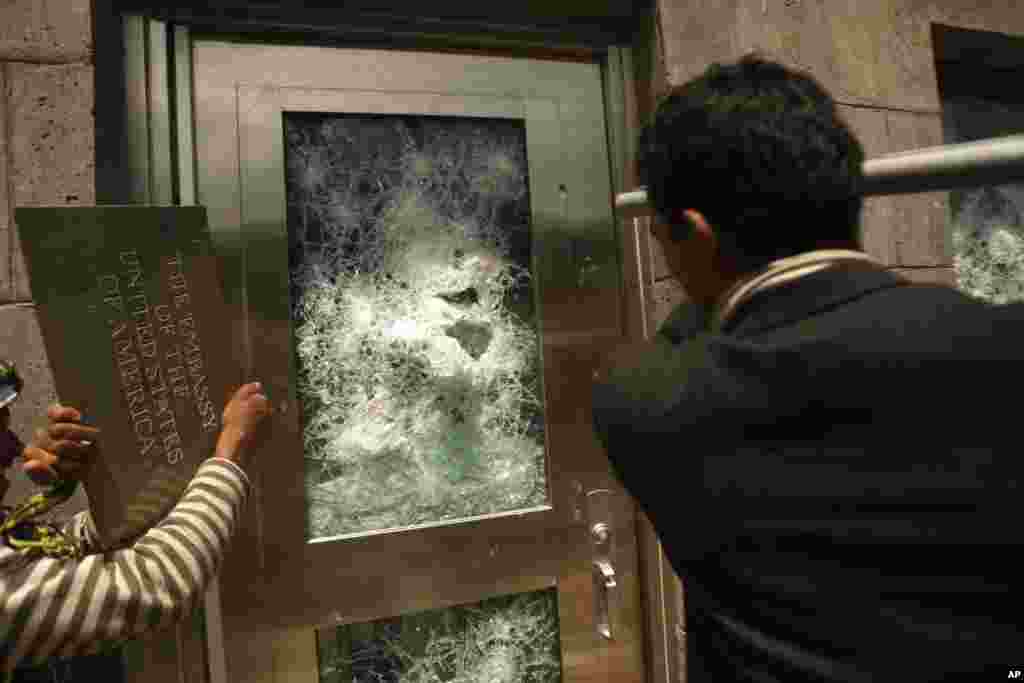
1/14Yemeni protestors break a door of the U.S. Embassy during a protest about a film ridiculing Islam's Prophet Mohammed, Sana'a, Yemen, September 13, 2012.
Demonstrators angered over a film mocking Islam attacked U.S. embassies in Egypt and Yemen. The U.S ambassador to Libya was killed during demonstrations at the U.S. consulate in Benghazi, Libya.
Show moreShow less
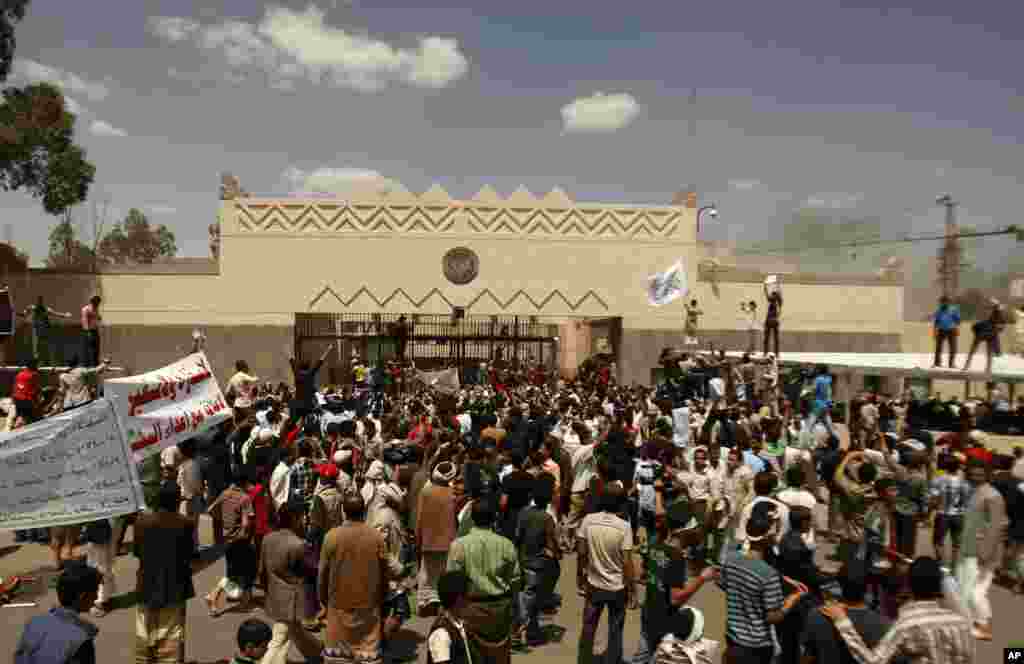
2/14Yemenis protest in front of the U.S. Embassy during a protest about a film ridiculing Islam's Prophet Mohammed, Sana'a, September 13, 2012.
Demonstrators angered over a film mocking Islam attacked U.S. embassies in Egypt and Yemen. The U.S ambassador to Libya was killed during demonstrations at the U.S. consulate in Benghazi, Libya.
Show moreShow less
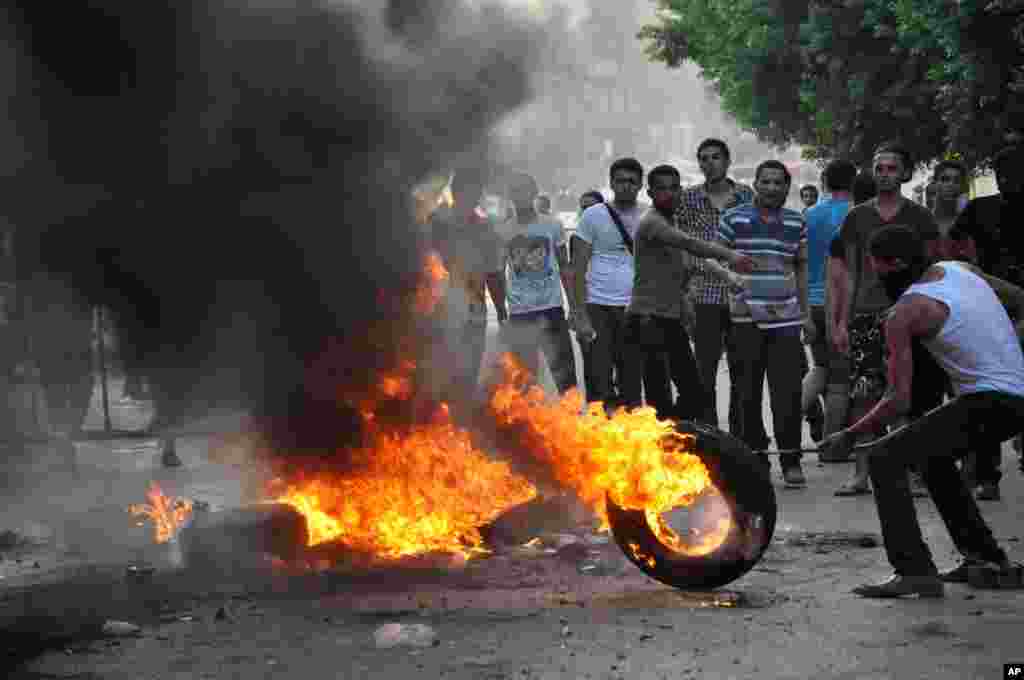
3/14Egyptian protesters burn tires as they clash with riot police outside the U.S. embassy in Cairo, Egypt, September 13, 2012.
Demonstrators angered over a film mocking Islam attacked U.S. embassies in Egypt and Yemen. The U.S ambassador to Libya was killed during demonstrations at the U.S. consulate in Benghazi, Libya.
Show moreShow less
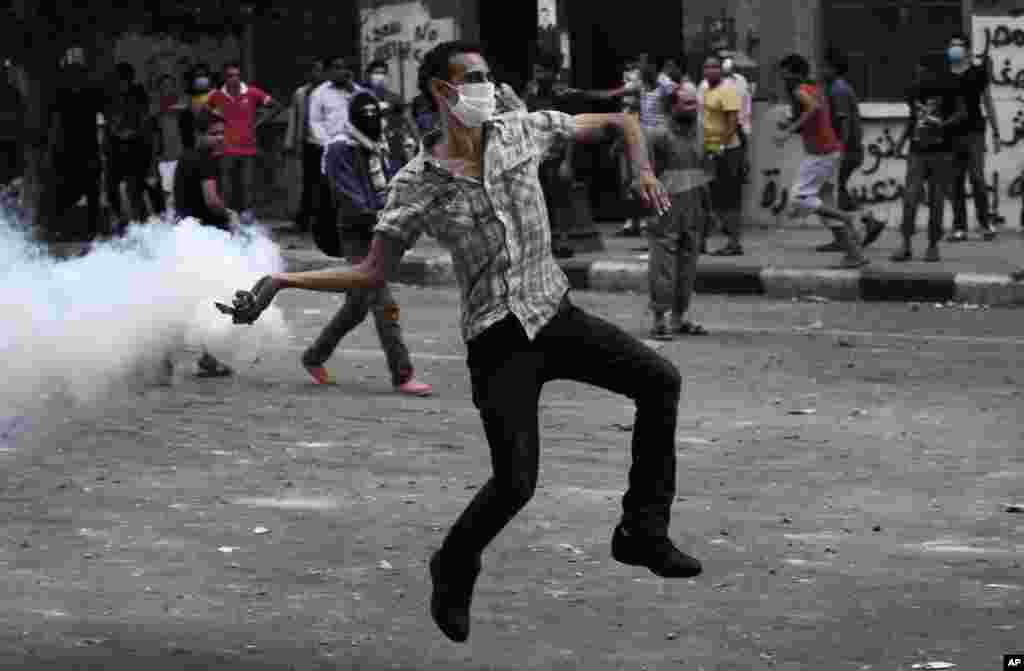
4/14An Egyptian protester throws back a tear gas canister toward riot police outside the U.S. embassy in Cairo, September 13, 2012.
Demonstrators angered over a film mocking Islam attacked U.S. embassies in Egypt and Yemen. The U.S ambassador to Libya was killed during demonstrations at the U.S. consulate in Benghazi, Libya.
Show moreShow less
5/14A policeman stands in front of a police car set on fire by protesters in front of the U.S. embassy in Cairo, Egypt, during clashes between protesters and police, September 13, 2012.
Demonstrators angered over a film mocking Islam attacked U.S. embassies in Egypt and Yemen. The U.S ambassador to Libya was killed during demonstrations at the U.S. consulate in Benghazi, Libya.
Show moreShow less
6/14White House staff are pictured after they lowered the U.S. flag to half staff on the roof of the White House in Washington, September 12, 2012, following the death of U.S. Ambassador to Libya, Chris Stevens.
Demonstrators angered over a film mocking Islam attacked U.S. embassies in Egypt and Yemen. The U.S ambassador to Libya was killed during demonstrations at the U.S. consulate in Benghazi, Libya.
Show moreShow less
7/14President Barack Obama delivers a statement with Secretary of State Hillary Clinton from the Rose Garden of the White House in Washington, September 12, 2012
Demonstrators angered over a film mocking Islam attacked U.S. embassies in Egypt and Yemen. The U.S ambassador to Libya was killed during demonstrations at the U.S. consulate in Benghazi, Libya.
Show moreShow less
8/14A burnt car is parked at the U.S. consulate, which was attacked and set on fire by gunmen, in Benghazi, Libya, September 12, 2012.
Demonstrators angered over a film mocking Islam attacked U.S. embassies in Egypt and Yemen. The U.S ambassador to Libya was killed during demonstrations at the U.S. consulate in Benghazi, Libya.
Show moreShow less
9/14Typhoon survivor Manolito Pacurib stands inside his damaged home near a shipping vessel that remains grounded after being washed ashore during Typhoon Haiyan, in Tacloban, Philippines, Dec. 23, 2013.
Demonstrators angered over a film mocking Islam attacked U.S. embassies in Egypt and Yemen. The U.S ambassador to Libya was killed during demonstrations at the U.S. consulate in Benghazi, Libya.
Show moreShow less
10/14An interior view of the damage at the U.S. consulate, which was attacked and set on fire by gunmen yesterday, in Benghazi, Libya, September 12, 2012.
Demonstrators angered over a film mocking Islam attacked U.S. embassies in Egypt and Yemen. The U.S ambassador to Libya was killed during demonstrations at the U.S. consulate in Benghazi, Libya.
Show moreShow less
11/14Christopher Stevens, the U.S. ambassador to Libya, was killed along with three of his staff on September 11, 2012 during a demonstration at the U.S. consulate in Benghazi. This photo was taken at his home in Tripoli, June 28, 2012.
Demonstrators angered over a film mocking Islam attacked U.S. embassies in Egypt and Yemen. The U.S ambassador to Libya was killed during demonstrations at the U.S. consulate in Benghazi, Libya.
Show moreShow less
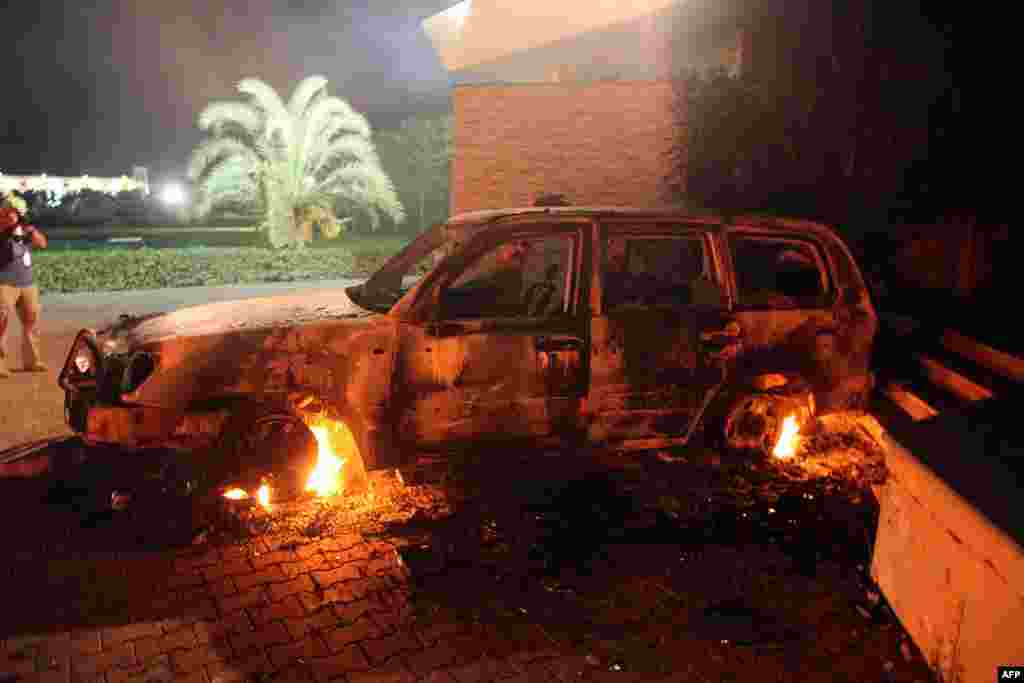
12/14A vehicle sits smoldering in flames after being set on fire inside the US consulate compound in Benghazi late on September 11, 2012.
Demonstrators angered over a film mocking Islam attacked U.S. embassies in Egypt and Yemen. The U.S ambassador to Libya was killed during demonstrations at the U.S. consulate in Benghazi, Libya.
Show moreShow less
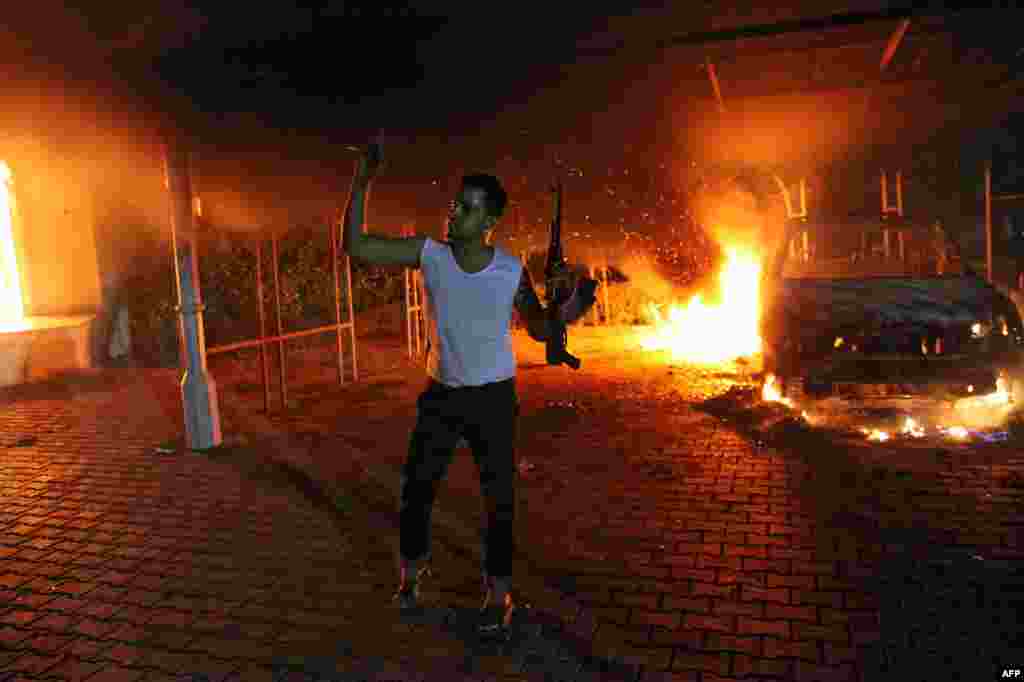
13/14An armed man waves his rifle as buildings and cars are engulfed in flames after being set on fire inside the U.S. consulate compound in Benghazi, Libya, late on September 11, 2012.
Demonstrators angered over a film mocking Islam attacked U.S. embassies in Egypt and Yemen. The U.S ambassador to Libya was killed during demonstrations at the U.S. consulate in Benghazi, Libya.
Show moreShow less
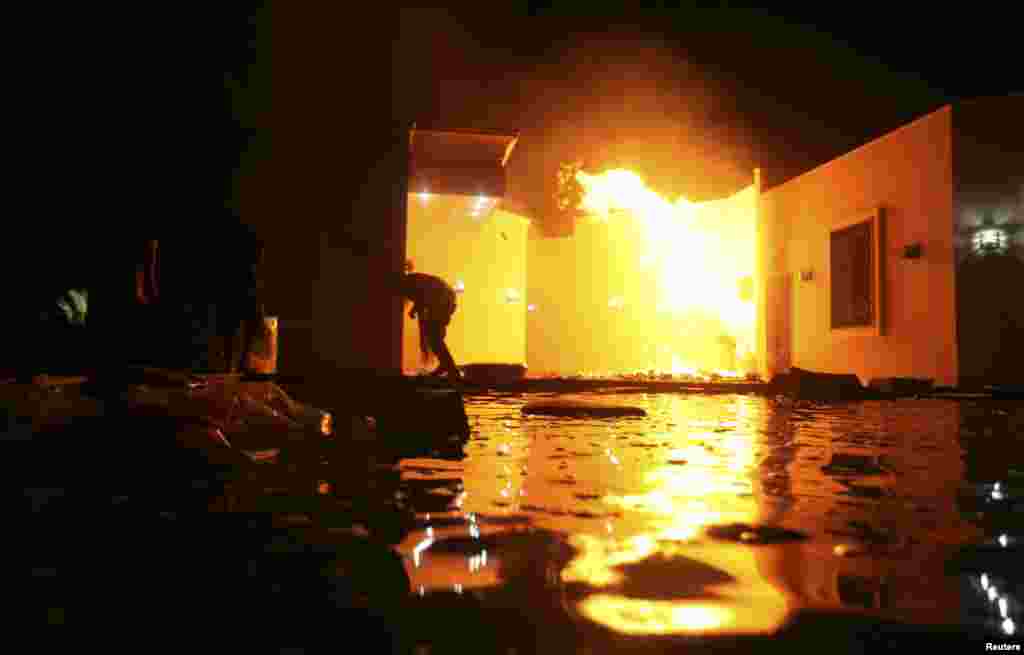
14/14U.S. Consulate in Benghazi in flames during protest, September 11, 2012
Demonstrators angered over a film mocking Islam attacked U.S. embassies in Egypt and Yemen. The U.S ambassador to Libya was killed during demonstrations at the U.S. consulate in Benghazi, Libya.