


LONDON —
As Egyptians mark the second anniversary of their revolution, experts are assessing the actual impact of the Arab Spring, which many people expected to transform the Middle East.
The Egyptian revolution was a time of great hope and enthusiasm among millions of Egyptians.
But the second anniversary finds secular liberals protesting what they see as excesses by the new Islamist-led government.
Multiple Arab Springs
The contrast is emblematic of the disappointment and conflict that followed the euphoria of the uprisings in Egypt, Libya, Tunisia and other countries.
“The word ‘revolution’ is a very romantic term,” said Stacy Gutkowski, a Middle East Expert at London’s King’s college.
“It conjures up images of something dramatic like the Berlin Wall falling. That isn’t what has happened in the region. These are rumblings, long-term rumblings. But not yet radical change.”
Gutkowski said people were bound to be disappointed, even where governments were overthrown. And the kind of dramatic change the North African countries have seen has not spread to other parts of the region, where activists face either lengthy violent conflict, as in Syria, or piecemeal changes meted out slowly by entrenched autocracies, as in the Persian Gulf states.
“To say that there is one Arab Spring is really a misnomer. In fact, there are three Arab Springs,” she said.

![Anti-Gadhafi and proud: Libyans chronicle their uprising in Tripoli. (E. Arrott/VOA)]()

![A drummer is surrounded by flags in the heady hours before President Mubarak's speech, Cairo, February 10, 2011 (E. Arrott/VOA)]()

![Egypt's military allowed for presidential elections in mid-2012. Rallies were held for candidates across the country. Photo taken in Edwa, April 23, 2012 (E. Arrott/VOA)]()

![Egyptian President Hosni Mubarak, a few months before his ouster, September, 2010. (E. Arrott/VOA)]()

![Pope Shenouda's photograph outside the Hanging Church in Coptic Cairo, March 2012. (E. Arrott/VOA)]()

![Mohamed Morsi was the second choice candidate of Egypt's Muslim Brotherhood. (E. Arrott/VOA)]()

![The few classes that are in session are light on studying. Photo taken in Benghazi, June 26, 2011. (E. Arrott/VOA)]()

![Hunkering down: a poster of Syria's president at a checkpoint on the outskirts of Damascus, January 2012. (E. Arrott/VOA)]()

![Voters scan the lists at a polling station in Sana'a, February 21, 2012. (E. Arrott/VOA)]()

![Women played an unusally large role in the uprising leading to Yemen's elections. (E. Arrott/VOA)]()
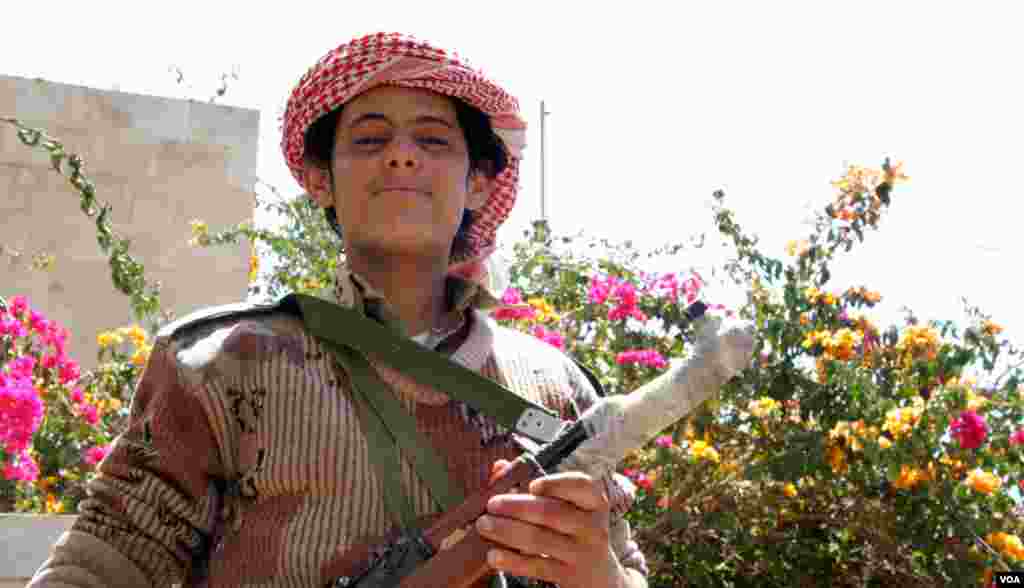
![Febuary 19, 2012 - One year after the Arab Spring hit Yemen, youths on both sides are hopeful. (E. Arrott/VOA)]()
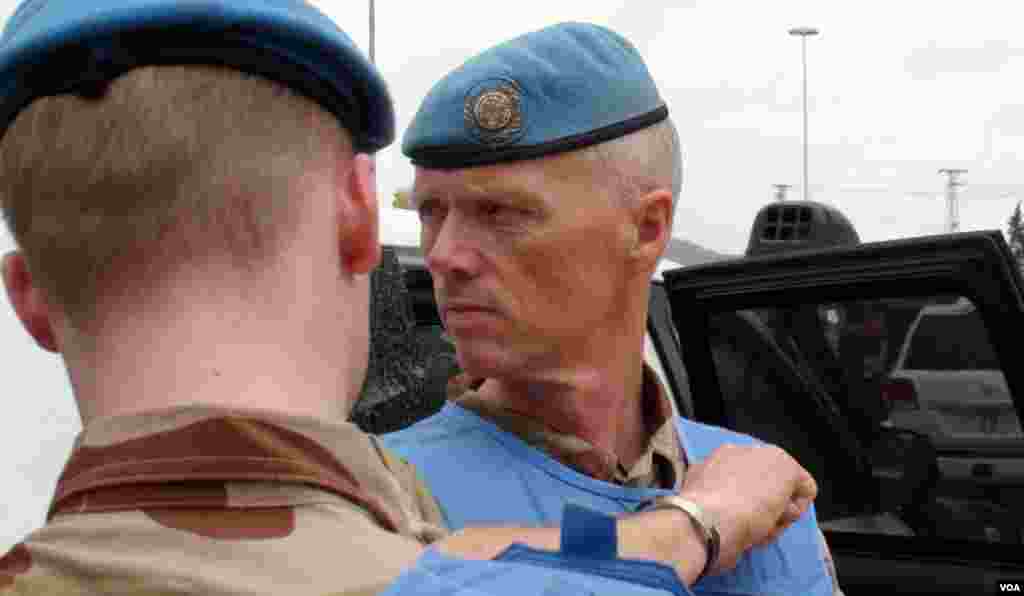
![The head of the UN mission in Syria, General Robert Mood, in Hama, May 3, 2012. (E. Arrott/VOA)]()
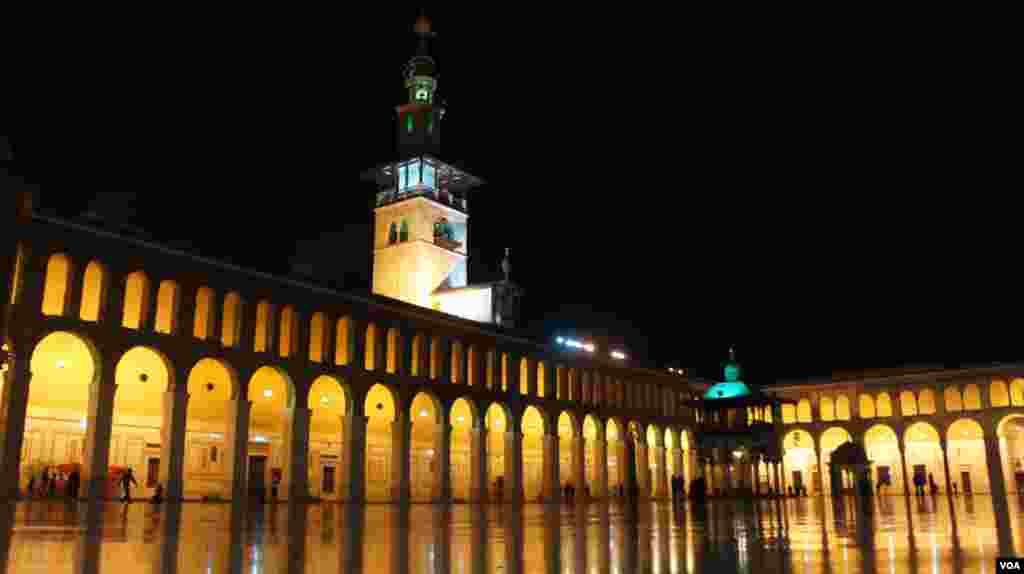
![Courtyard of the Umayyad Mosque in Damascus, January 2012. (E. Arrott/VOA)]()

![Made in the USA: A tear gas canister is displayed by a protestor on Tahrir square, November 2011. (E. Arrott/VOA)]()
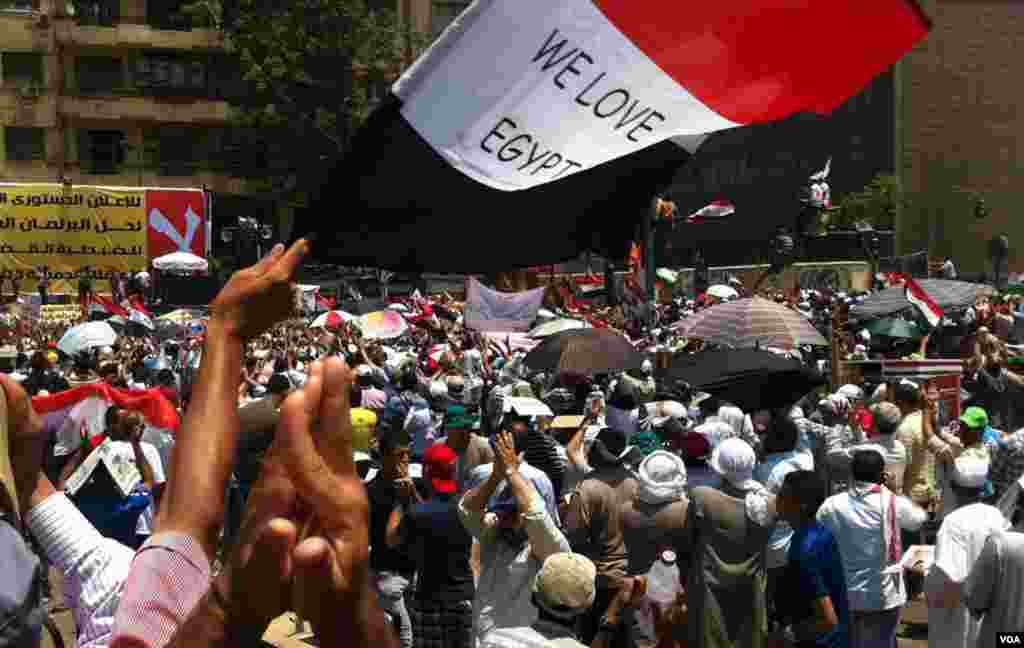
![A rally on behalf of the Muslim Brotherhood's Mohamed Morsi on Tahrir Square, June 24, 2012. (E. Arrott/VOA)]()
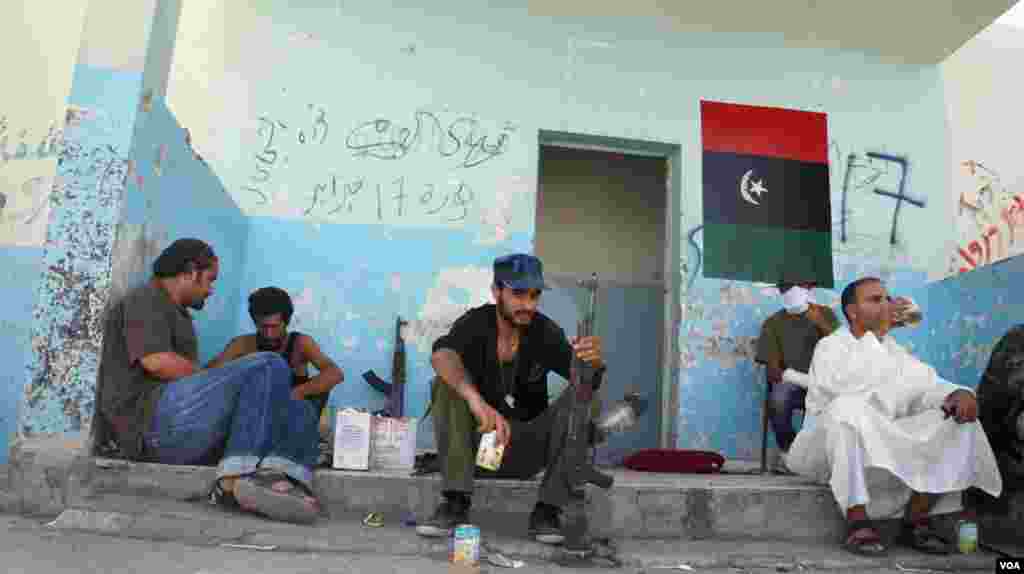
![Sept 4, 2011 - Waiting for action in the Gadhafi-held town of Bani Walid. (E. Arrott/VOA)]()

![Neighbor and rebel Mohammed Arab guards Mohammed Gadhafi's abandoned home in Tripoli, August 29, 2011. (E. Arrott/VOA)]()

![Getting a good view of the festivities in Tripoli, August 30, 2011. (E. Arrott/VOA)]()

![Libyan leader Moammar Gadhafi in better times -- celebrating 40 years in power, August 29, 2009 in Tripoli. (E. Arrott/VOA)]()

![Egypt's military took control, but some said it marked little change from the old system. Military ruler Hussein Tantawi's face merged with Hosni Mubarak, Cairo, April 2012. (E. Arrott/VOA)]()
Work in progress
Considering the different types of governments and the variety of local cultures in the vast region, that’s not surprising. It certainly is not to the former British ambassador to Libya and Iran, Richard Dalton, who spoke to VOA via Skype.
“The Arab Awakening was always going to be the work of a generation. It’s not a surprise that there are different rates of change. But nowhere in the Arab World has the population been untouched,” said Dalton.
Not only is change slow and uneven, in some cases it is in the wrong direction - as people deal with issues the former autocrats covered up, like economic problems that have made life worse for many, rather than better. There also are concerns about the rights of women and members of minority groups.
And while the region’s new leaders are being tougher on the West and Israel, the autocrats’ pro-Western policies have not been changed as dramatically as many had hoped.
“Whatever government is in power, countries have interests and there’s a narrow range of options for maximizing advantage to both government and people,” said Dalton.
So, whether in the presidential palaces or in the streets, two years later the Arab Spring still is very much a work in progress.
The Egyptian revolution was a time of great hope and enthusiasm among millions of Egyptians.
But the second anniversary finds secular liberals protesting what they see as excesses by the new Islamist-led government.
Multiple Arab Springs
The contrast is emblematic of the disappointment and conflict that followed the euphoria of the uprisings in Egypt, Libya, Tunisia and other countries.
“The word ‘revolution’ is a very romantic term,” said Stacy Gutkowski, a Middle East Expert at London’s King’s college.
“It conjures up images of something dramatic like the Berlin Wall falling. That isn’t what has happened in the region. These are rumblings, long-term rumblings. But not yet radical change.”
Gutkowski said people were bound to be disappointed, even where governments were overthrown. And the kind of dramatic change the North African countries have seen has not spread to other parts of the region, where activists face either lengthy violent conflict, as in Syria, or piecemeal changes meted out slowly by entrenched autocracies, as in the Persian Gulf states.
“To say that there is one Arab Spring is really a misnomer. In fact, there are three Arab Springs,” she said.
The Arab Spring, Two Years On
VOA's Elizabeth Arrott has chronicled the Arab Spring with photographs.
Show more
Show less
VOA's Elizabeth Arrott has chronicled the Arab Spring with photographs.
Show more
Show less
VOA's Elizabeth Arrott has chronicled the Arab Spring with photographs.
Show more
Show less
VOA's Elizabeth Arrott has chronicled the Arab Spring with photographs.
Show more
Show less
VOA's Elizabeth Arrott has chronicled the Arab Spring with photographs.
Show more
Show less
VOA's Elizabeth Arrott has chronicled the Arab Spring with photographs.
Show more
Show less
VOA's Elizabeth Arrott has chronicled the Arab Spring with photographs.
Show more
Show less
VOA's Elizabeth Arrott has chronicled the Arab Spring with photographs.
Show more
Show less
VOA's Elizabeth Arrott has chronicled the Arab Spring with photographs.
Show more
Show less
VOA's Elizabeth Arrott has chronicled the Arab Spring with photographs.
Show more
Show less
VOA's Elizabeth Arrott has chronicled the Arab Spring with photographs.
Show more
Show less
VOA's Elizabeth Arrott has chronicled the Arab Spring with photographs.
Show more
Show less
VOA's Elizabeth Arrott has chronicled the Arab Spring with photographs.
Show more
Show less
VOA's Elizabeth Arrott has chronicled the Arab Spring with photographs.
Show more
Show less
VOA's Elizabeth Arrott has chronicled the Arab Spring with photographs.
Show more
Show less
VOA's Elizabeth Arrott has chronicled the Arab Spring with photographs.
Show more
Show less
VOA's Elizabeth Arrott has chronicled the Arab Spring with photographs.
Show more
Show less
VOA's Elizabeth Arrott has chronicled the Arab Spring with photographs.
Show more
Show less
VOA's Elizabeth Arrott has chronicled the Arab Spring with photographs.
Show more
Show less
VOA's Elizabeth Arrott has chronicled the Arab Spring with photographs.
Show more
Show less
Work in progress
Considering the different types of governments and the variety of local cultures in the vast region, that’s not surprising. It certainly is not to the former British ambassador to Libya and Iran, Richard Dalton, who spoke to VOA via Skype.
“The Arab Awakening was always going to be the work of a generation. It’s not a surprise that there are different rates of change. But nowhere in the Arab World has the population been untouched,” said Dalton.
Not only is change slow and uneven, in some cases it is in the wrong direction - as people deal with issues the former autocrats covered up, like economic problems that have made life worse for many, rather than better. There also are concerns about the rights of women and members of minority groups.
And while the region’s new leaders are being tougher on the West and Israel, the autocrats’ pro-Western policies have not been changed as dramatically as many had hoped.
“Whatever government is in power, countries have interests and there’s a narrow range of options for maximizing advantage to both government and people,” said Dalton.
So, whether in the presidential palaces or in the streets, two years later the Arab Spring still is very much a work in progress.