



In Catalao, Brazil, pulsing drums reverberate through the streets as thousands of people in colorful garb march, dance and shimmy their way toward Our Lady of the Rosary church. The procession known as the "Congada" is an annual tradition that takes place on the second Sunday of October and combines elements of Roman Catholic and African traditions, a testament to the mixing of cultures, religions and races in Latin America's largest nation. It was initially performed by groups of black slaves brought to Brazil to work on plantations during Portuguese colonial rule.
Brazil's 'Congada' Mixes African, Christian Roots
5
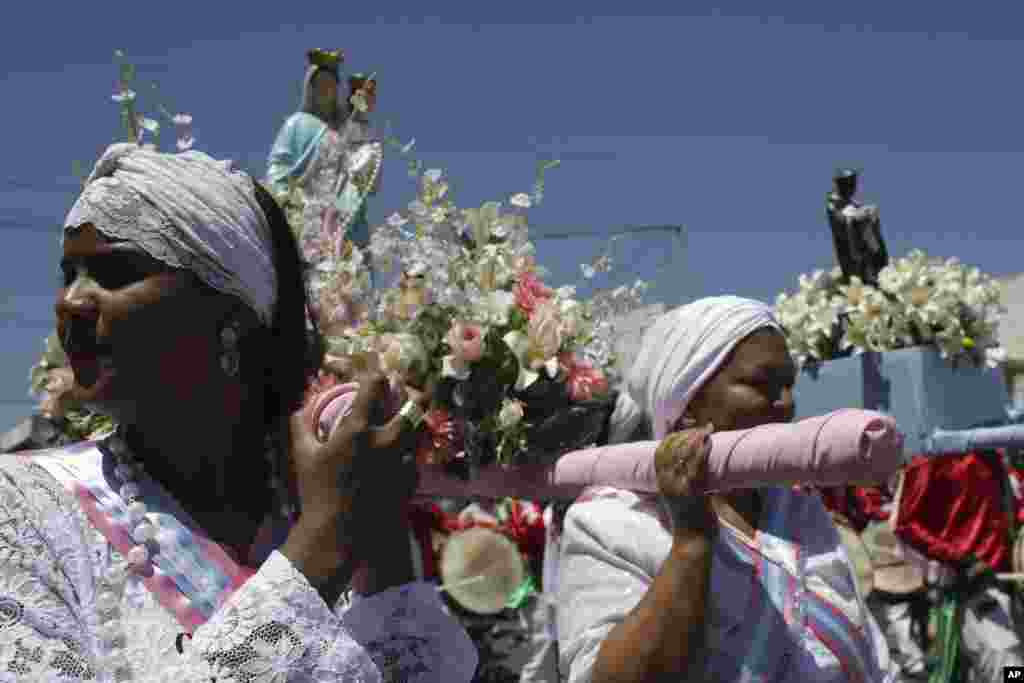
Women carry statues of Our Lady of the Rosary and St. Benedict during the annual Afro-Christian Congada celebration in Catalao, Goias state, Brazil, Oct. 9, 2015. Our Lady of the Rosary represents the African divinity Yemanja, or Sea Mother, and St. Bened
6
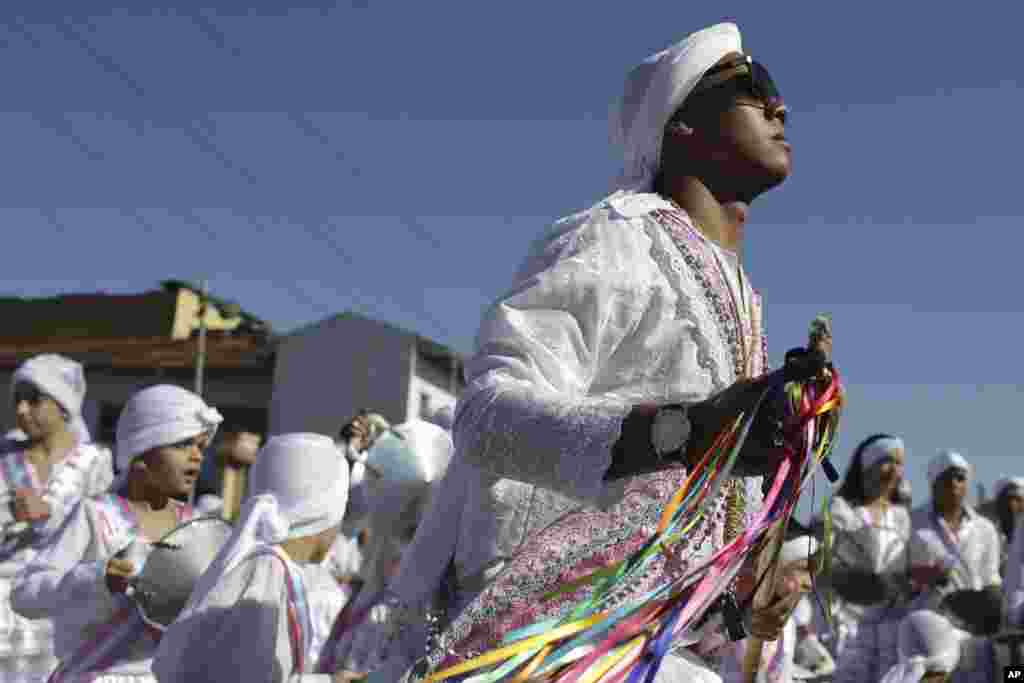
Matheus Alves, captain of the Mozambique Our Lady of the Rosary dance group, performs during the annual Afro-Christian Congada celebration in Catalao, Goias state, Brazil, Oct. 9, 2016. His turban is the signature of Mozambique dance group, as they pay tr

7
A girl dressed as an angel attends a Mass in honor of Our Lady of Rosario during the annual Afro-Christian Congada celebration in Catalao, Goias state, Brazil, Oct. 7, 2016. Some children participate in the annual celebration dressed as angels, considered
8
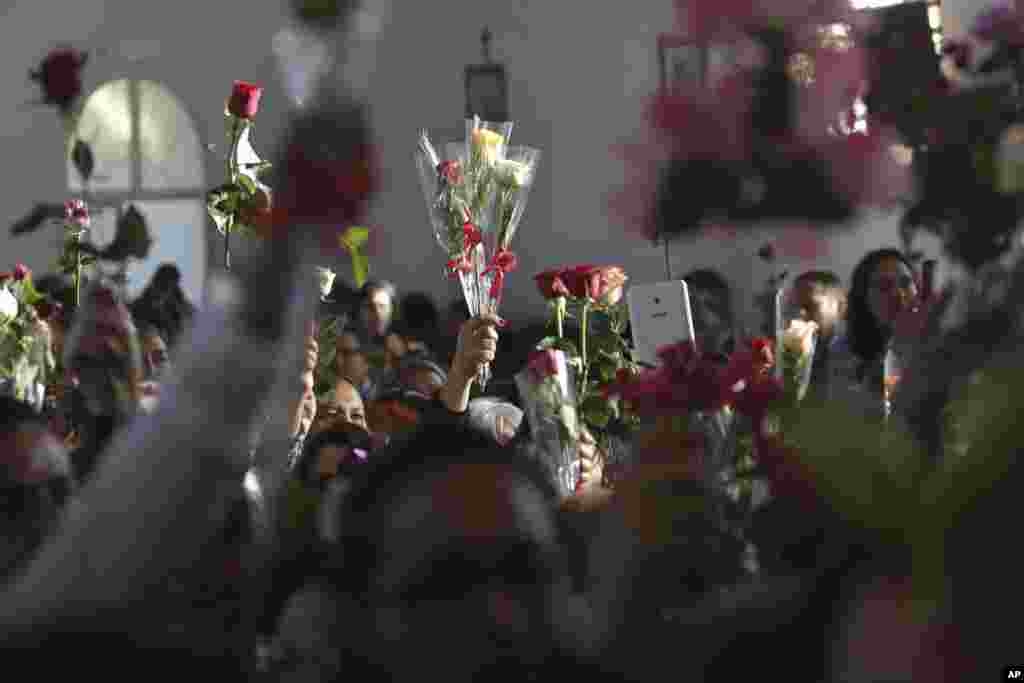
People hold up flowers during a Mass in honor of Our Lady of the Rosary during the annual Afro-Christian Congada celebration in Catalao, Goias state, Brazil, Oct. 8, 2016. After Mass people place their flowers at the statue of the virgin, who represents t