



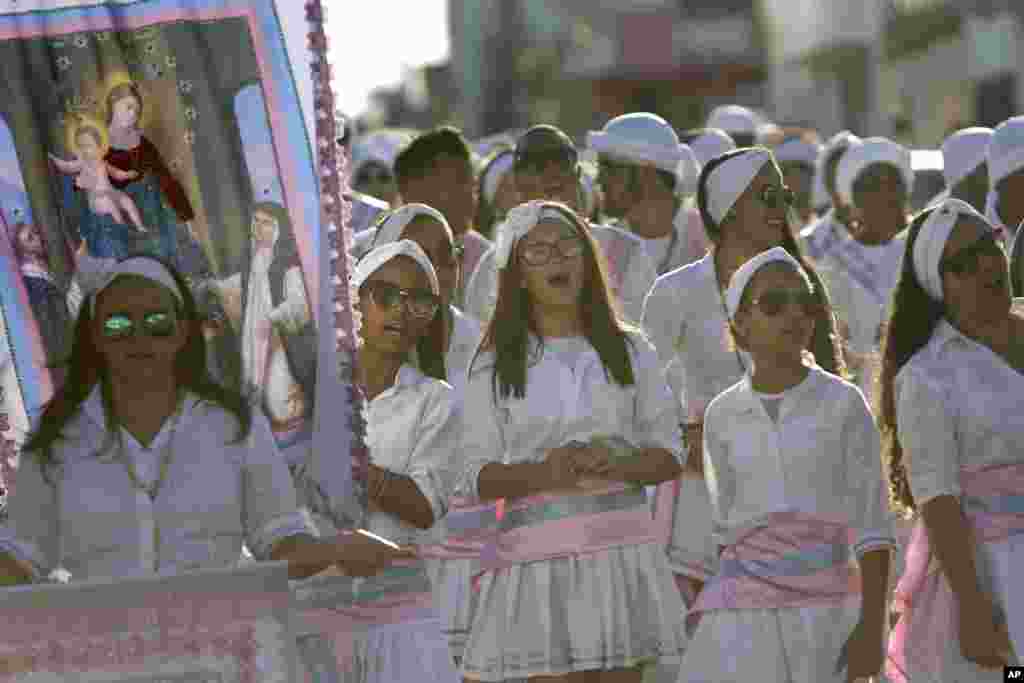
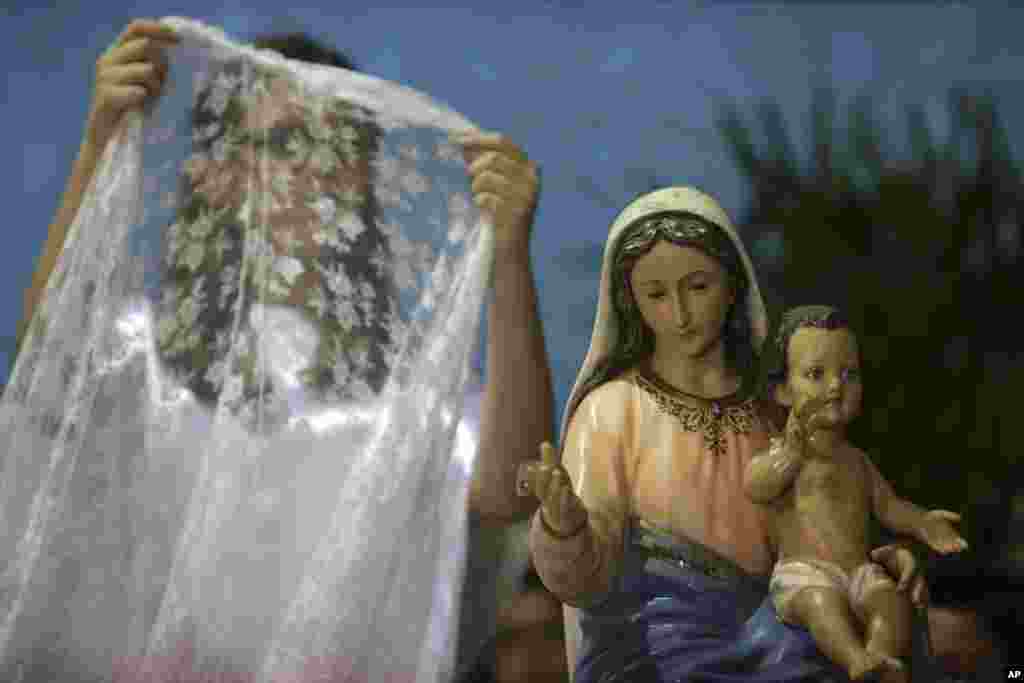
In Catalao, Brazil, pulsing drums reverberate through the streets as thousands of people in colorful garb march, dance and shimmy their way toward Our Lady of the Rosary church. The procession known as the "Congada" is an annual tradition that takes place on the second Sunday of October and combines elements of Roman Catholic and African traditions, a testament to the mixing of cultures, religions and races in Latin America's largest nation. It was initially performed by groups of black slaves brought to Brazil to work on plantations during Portuguese colonial rule.
Brazil's 'Congada' Mixes African, Christian Roots
1
Girls sing as they carry an image of Our Lady of Rosary during the annual Afro-Christian Congada celebration in Catalao, Goias state, Brazil, Oct. 9, 2016. The group's leader sings a verse, and members repeat, making references to Brazil's history of slav
2
Fire crackers explode near supporters of presidential candidate Prabowo Subianto during clashes with the police in Jakarta, Indonesia. President Joko Widodo said authorities have the volatile situation in the country's capital under control after six people died in riots by supporters of his losing rival in last month's presidential election.
3
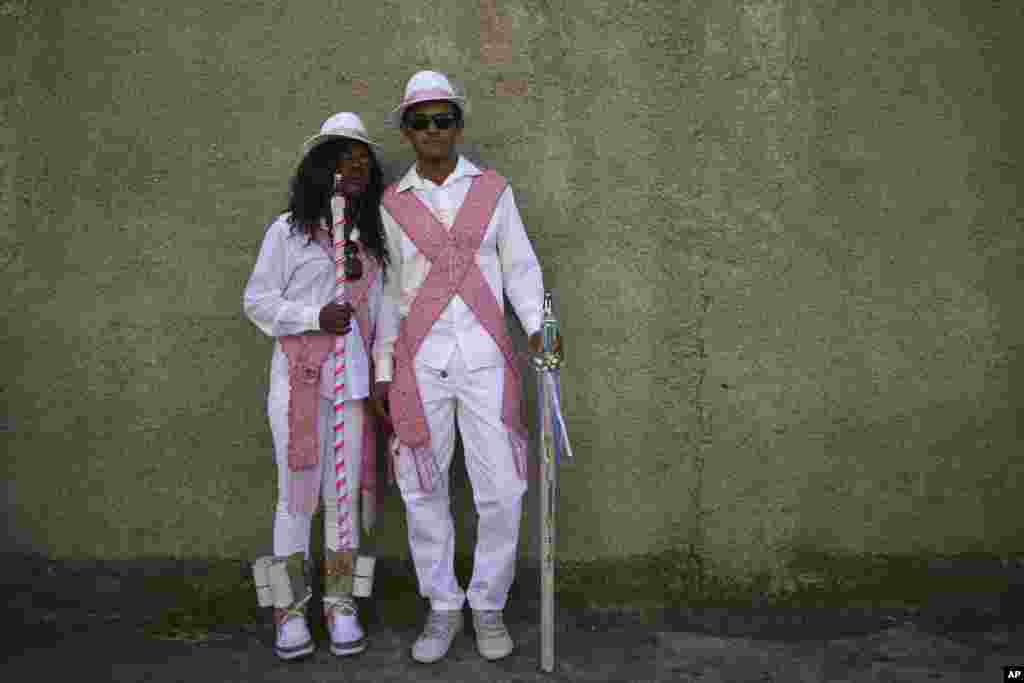
The captain, right, and a dancer with the Mozambique Sacred Heart of Mary dance group, during the annual Afro-Christian Congada celebration in Catalao, Goias state, Brazil, Oct. 9, 2016. The Congada represents an African royal court, with a king, queen, g
4
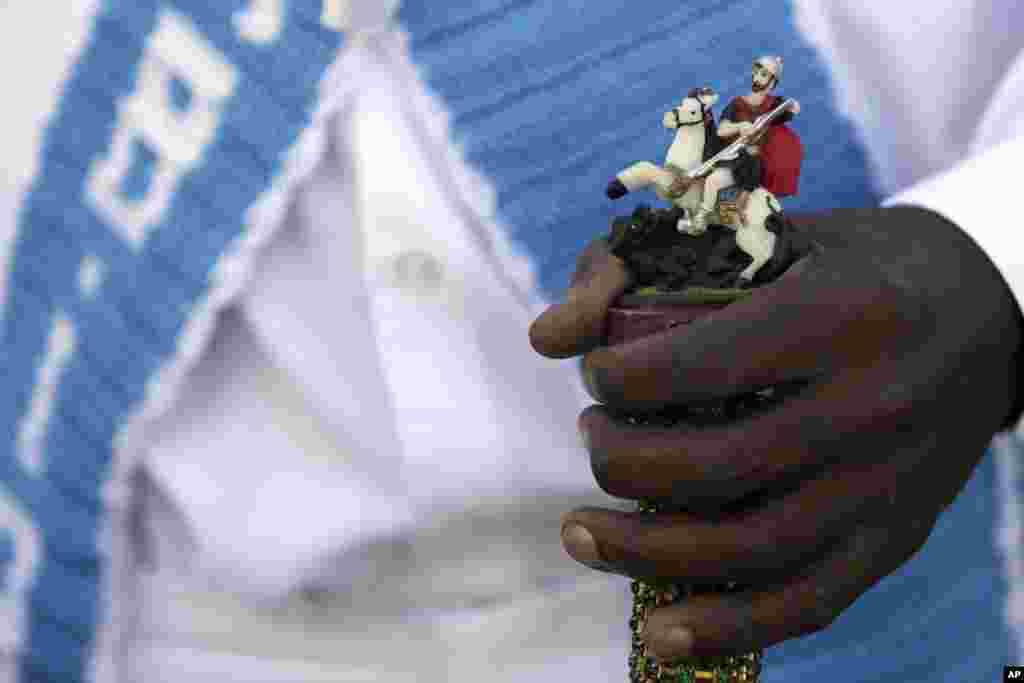
A man holds a walking cane decorated with a statue of St. George during an annual Afro-Christian dance tradition called Congada, in Catalao, Goias state, Brazil, Oct. 9, 2016. St. George is one of the most important and popular saints in Brazilian, and is