George H. W. Bush Signs Americans With Disabilities Act into Law on This Day in 1990
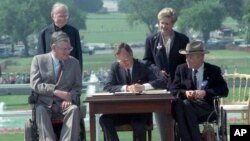
President George Bush signs the Americans with Disabilities Act during a ceremony on the South Lawn of the White House July 26, 1990.
“It was the fair and right thing to do,” former President George H. W. Bush said in an interview in 1999 when asked why he supported the Americans With Disabilities Act (ADA), which he signed into law on July 26, 1990.
“I think there are a lot of people who, if given access to the workplace, for example, can achieve things,” Bush continued. “But if they are denied that, they won’t have a shot at the American dream.”
In his remarks at the signing ceremony, Bush noted that there were 43 million Americans living with disabilities.
The ADA bars discrimination against Americans with disabilities in jobs, schools, transportation, and all public and privately-owned places that are open to the general public.
The signing of the legislation marked a rare moment of bipartisanship in Washington politics.
Even the most hardened politicians, such as Lee Atwater, a senior Bush adviser who was considered a key architect of the “negative campaign” concept, supported the measure.
A priest with no arms attended the signing ceremony, using his feet to hand the president a pen to sign the bill.

The Rev. Harold H. Wilke, top left, accepts a pen from President George Bush with his left foot, after Bush signed into law the Americans with Disabilities Act of 1990 at a White House South Lawn ceremony July 26, 1990.
Before becoming law, the ADA faced some resistance, mostly by small business owners concerned about the cost of outfitting workspaces with the proper facilities to accommodate disabled workers.
Since 1990, the ADA has been retooled, by former Presidents Bill Clinton and Barack Obama, as medical treatment for some chronic conditions like muscular sclerosis have dramatically improved.
In the digital era, the challenges for disabled employees have shifted from building ramps for those in wheelchairs and making other office accommodations to unmet technical needs for others who cannot use computers without assistance.
Millions of disabled Americans benefited from 1990 law, barring discrimination in all aspects of public life, including employment.

1/7In this Nov. 11, 2010 file photo, 43-year-old Peter Berg who lost his vision to diabetes in his 20s, works at his office in Chicago. Using software that reads content to him, he can surf websites for work, check Facebook and pay his bills online.
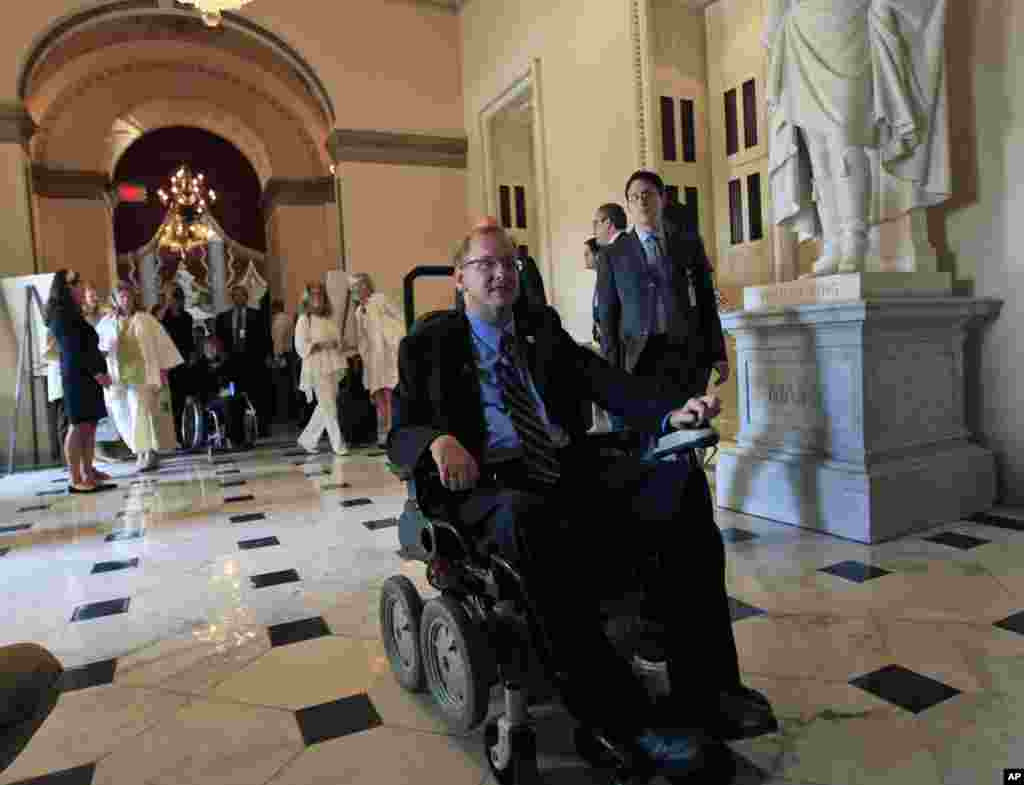
2/7Rep. Jim Langevin, D-R.I., heads to the House floor on Capitol Hill in Washington Monday, July 26, 2010 to preside over the House after an event celebrating the Americans with Disabilities Act.
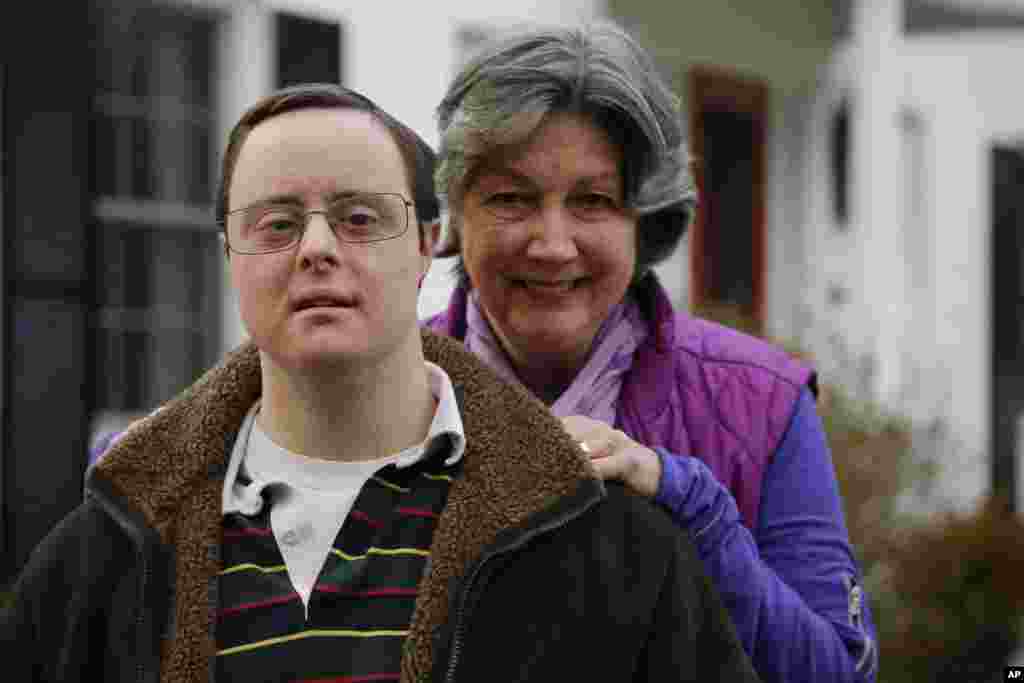
3/7Matthew McMeekin poses with his mother, Bebe McMeekin at their home in Bethesda, Md. in this Feb. 10, 2014 file photo. Most Americans with intellectual or developmental disabilities remain shut out of the workforce, despite the ADA.
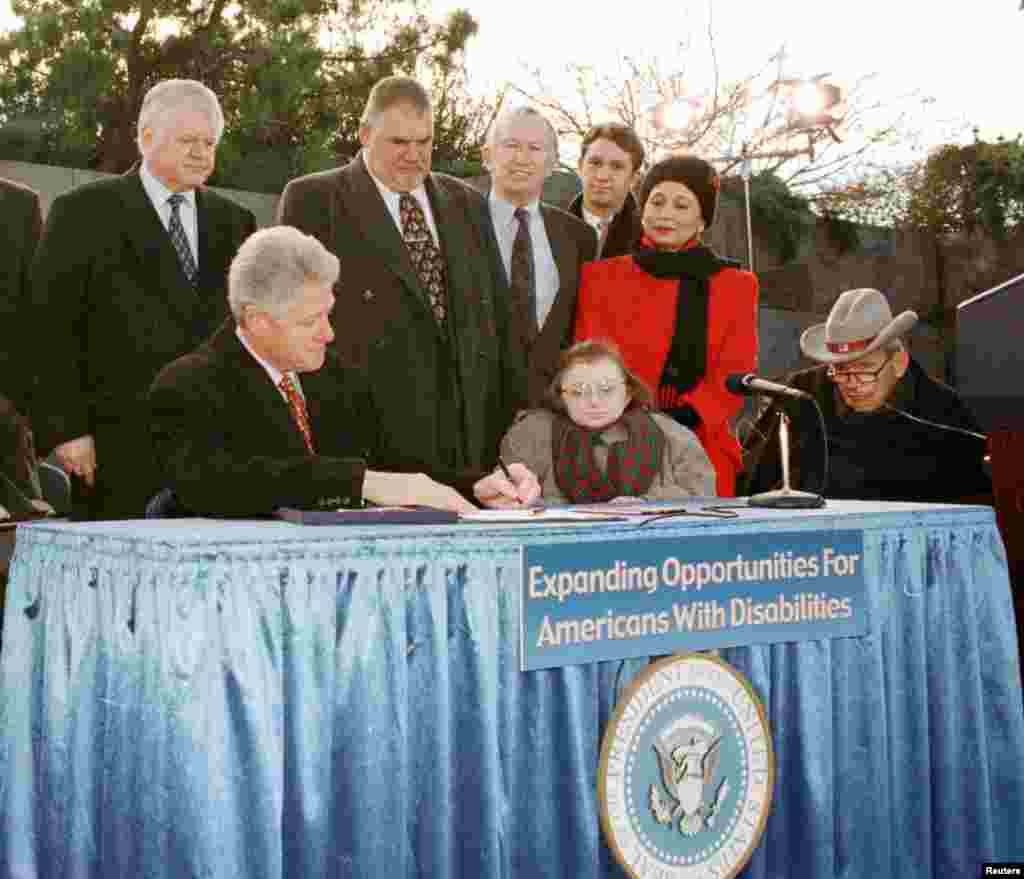
4/7Then President Bill Clinton signs new disabilities legislation at the FDR memorial Dec. 17, 1999 that could allow as many as eight million disabled Americans to go to work without fear of losing their federal health insurance.
5/7Police issue citations for blocking the front of the White House to wheelchair-bound demonstrators who had chained themselves to the White House fence on Pennsylvania Avenue in Washington in this April 27, 2009 file photo.
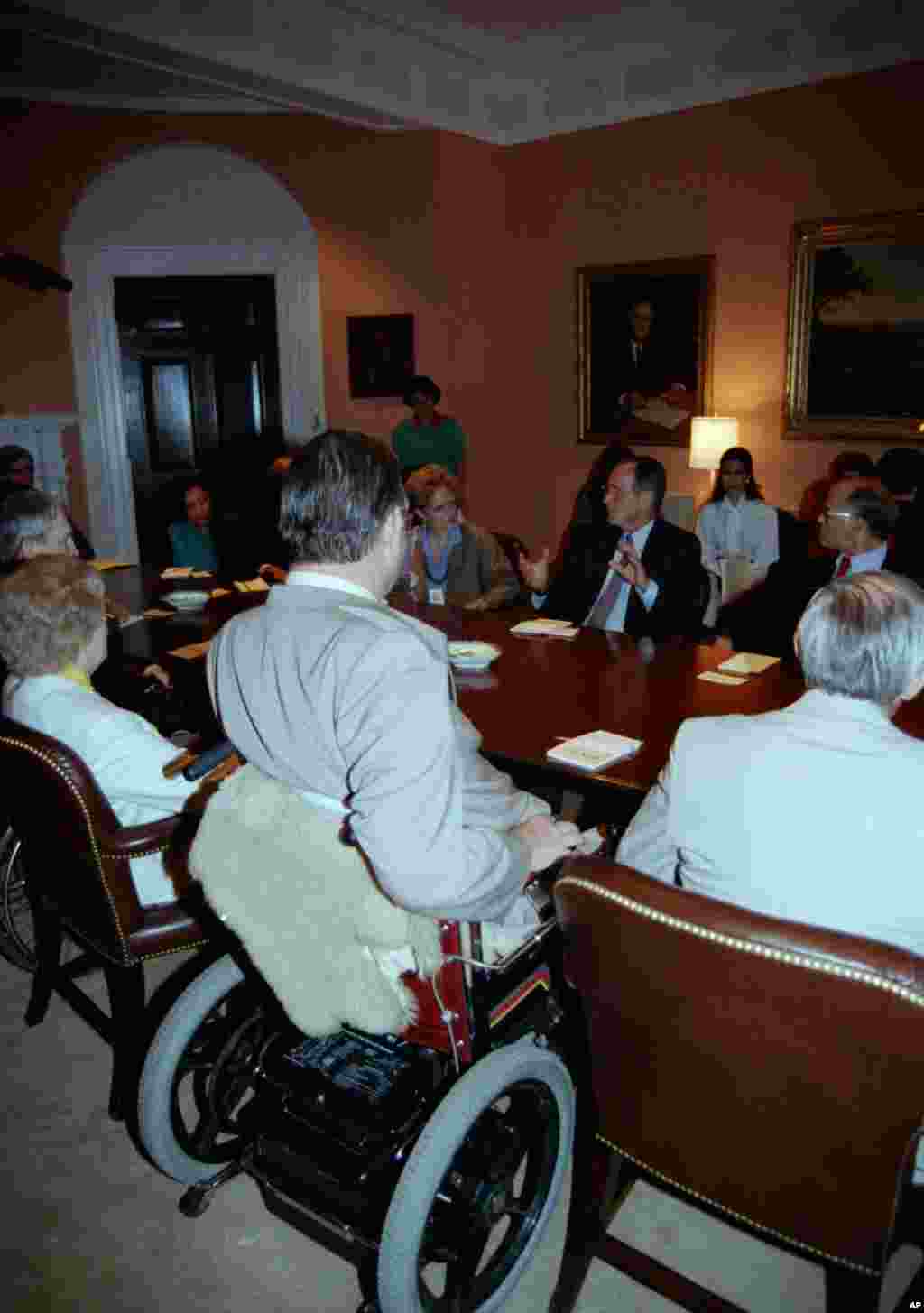
7/7President George H.W. Bush meets with disabled community leaders at the White House in Washington, D.C., to discuss the Americans With Disabilities Act on Aug. 11, 1989.
The Voice of America provides news and information in more than 40 languages to an estimated weekly audience of over 326 million people. Stories with the VOA News byline are the work of multiple VOA journalists and may contain information from wire service reports.