General Health Systems Damaged by Ebola in West Africa
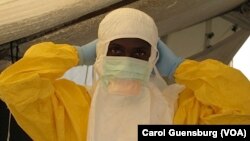
FILE - A health worker adjusts protective gear at a Doctors Without Borders' Ebola treatment unit in Conakry, Guinea. (VOA / Carol Guensburg)
GENEVA —
The World Health Organization reports the spread of Ebola is having a damaging impact on the delivery of health services for people suffering from other illnesses in the three severely affected Ebola countries in West Africa. And it says one of the root causes of the rapid spread of Ebola in the region is linked to the weakness in the health systems of the three heavily infected countries.
Ebola has killed about 6,000 people. But WHO Coordinator of Health Systems, Dr. Gerard Schmets said the deaths of many more people suffering from malaria, chronic diseases and other illnesses probably can be linked to Ebola.
He said Ebola has damaged the delivery of general services in Guinea, Sierra Leone and Liberia. For example, he noted health workers who are caring for Ebola patients are no longer available to work in ordinary health care centers, disrupting important services such as vaccination programs.
“For example, pregnant women do not have access to the care they need. Pregnant women do not have access to health centers simply because the health centers are closed, because we do not have staff in these health centers anymore. In Guinea, for example, the general consultations and the hospitalization rates have dropped by 50 percent,” said Schmets.
Weakened health systems
Schmets noted that health systems in the three countries were very weak well before Ebola struck. For example, in pre-Ebola days Sierra Leone had 0.2 doctors per 10,000 inhabitants compared to 2.5 in the rest of Africa and 14 doctors per 10,000 inhabitants in the rest of the world.
He said the impact of the epidemic on already shaky health systems is huge and must be urgently addressed.
“We need clearly to focus on Ebola response. We need clearly to focus on rebuilding the general services, but we need also to focus on making the system resilient, to making the system stronger to resist the future epidemics or any disasters in the future,” said Schmets.
The World Health Organization is organizing a meeting next week in Geneva focused on building resilient health systems in Ebola affected countries. Major financial institutions including the World Bank and the African Development Bank will participate, as will ministers of health and finance from Liberia, Sierra Leone and Guinea.
Important technical agencies and non-governmental organizations operating in the region also will contribute to creating an action plan.
U.S. and Liberia Partner to Open First Ebola Treatment Unit
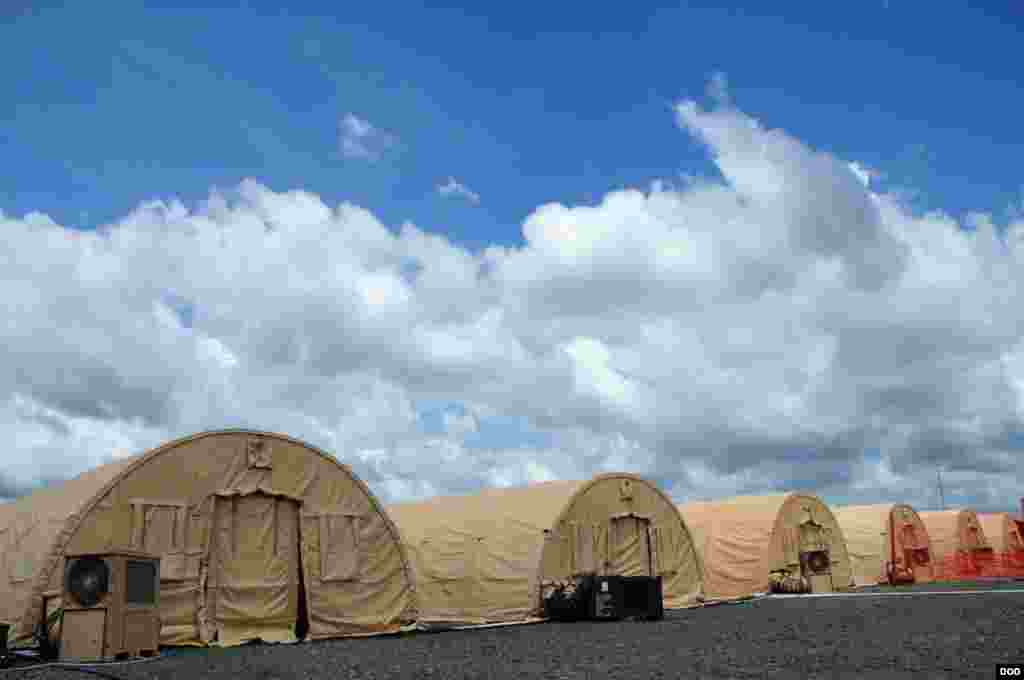
1/7The Monrovia Medical Unit, an Ebola treatment facility built specifically for the care of medical workers who become infected with the virus, near Monrovia, Liberia. (Sgt. 1st Class Nathan Hoskins/DOD)
The. U.S. and Liberian governments have opened a 25-bed Ebola treatment unit outside Monrovia to treat health workers infected with the virus.
Show moreShow less
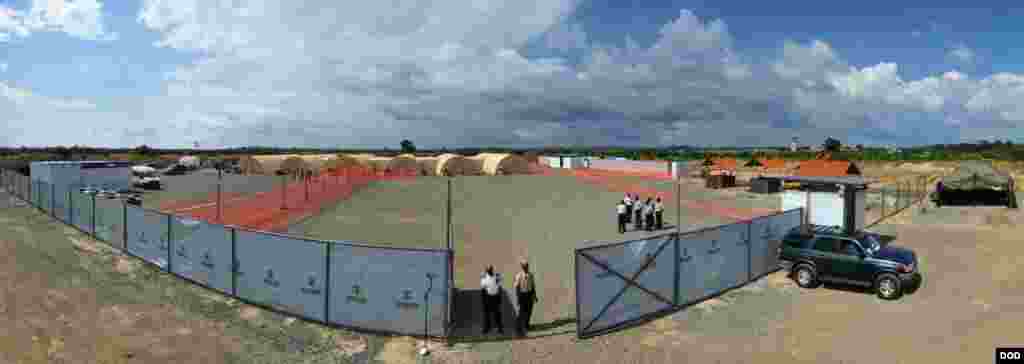
2/7Seen in this photo is the exterior of the Monrovia Medical Unit, an Ebola treatment facility built specifically for the care of medical workers who become infected with the virus, near Monrovia, Liberia. (Sgt. 1st Class Nathan Hoskins/DOD)
The. U.S. and Liberian governments have opened a 25-bed Ebola treatment unit outside Monrovia to treat health workers infected with the virus.
Show moreShow less
3/7Personnel from the U.S. Public Health Service during a meeting in the staff reporting tent of the Monrovia Medical Unit, near Monrovia, Liberia, Nov. 4, 2014. (Sgt. 1st Class Nathan Hoskins/DOD)
The. U.S. and Liberian governments have opened a 25-bed Ebola treatment unit outside Monrovia to treat health workers infected with the virus.
Show moreShow less
4/7Simple red lines on the floor are what mark the boundary between the low-risk zone and the high-risk zone inside the Monrovia Medical Unit, near Monrovia, Liberia, Nov. 4, 2014. (Sgt. 1st Class Nathan Hoskins/DOD)
The. U.S. and Liberian governments have opened a 25-bed Ebola treatment unit outside Monrovia to treat health workers infected with the virus.
Show moreShow less
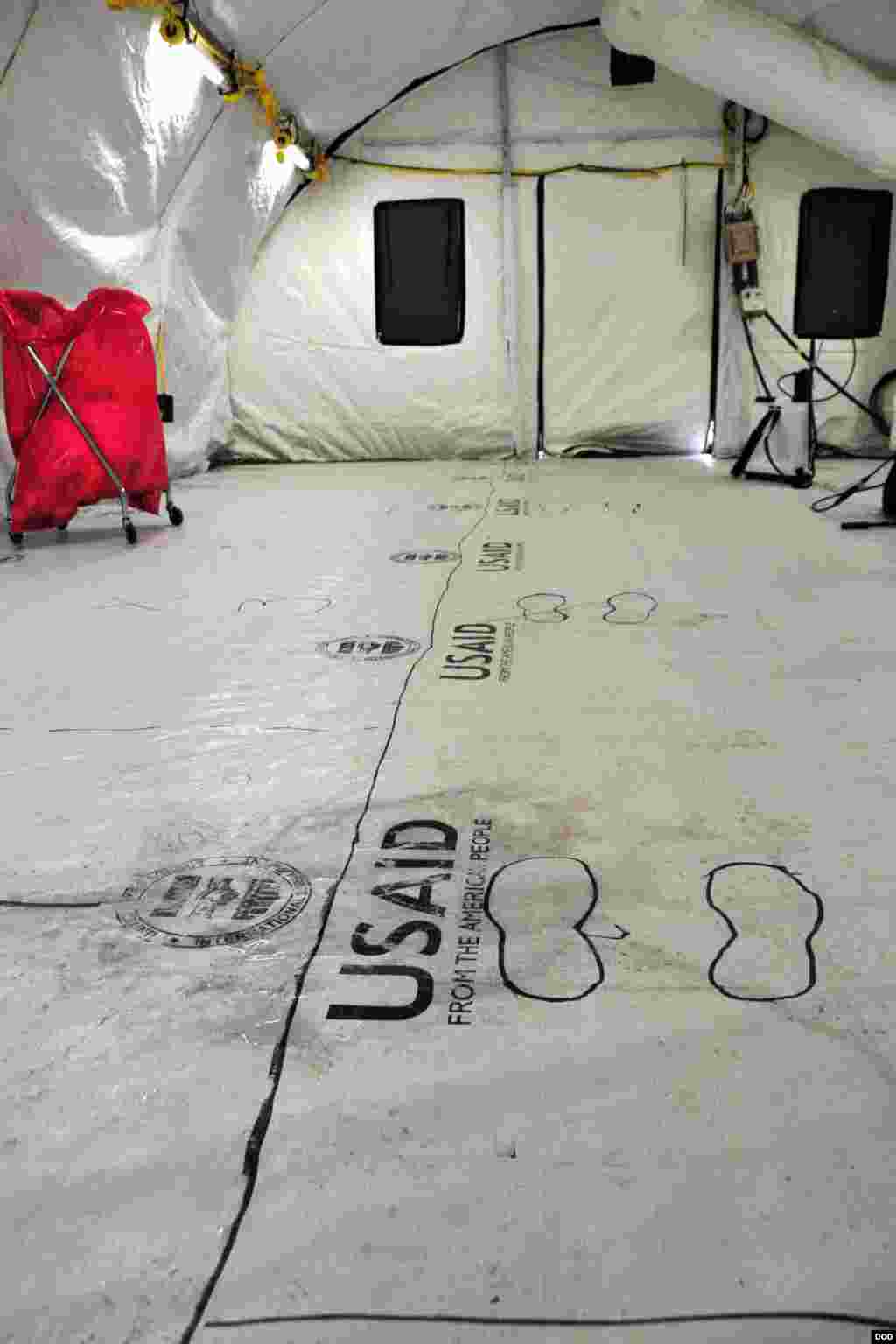
5/7Footprint outlines mark the floor in the doffing station where medical workers at the Monrovia Medical Unit will decontaminate and take off their personal protective equipment after working in the high-risk Ebola zone, near Monrovia, Liberia, Nov. 4, 2014. (Sgt. 1st Class Nathan Hoskins/DOD)
The. U.S. and Liberian governments have opened a 25-bed Ebola treatment unit outside Monrovia to treat health workers infected with the virus.
Show moreShow less
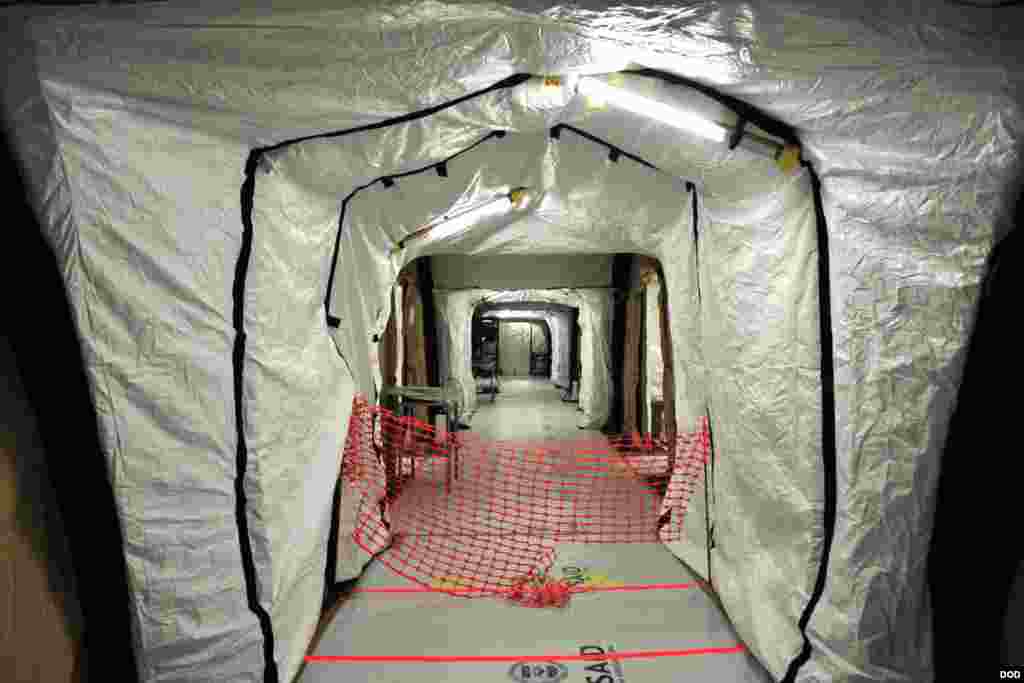
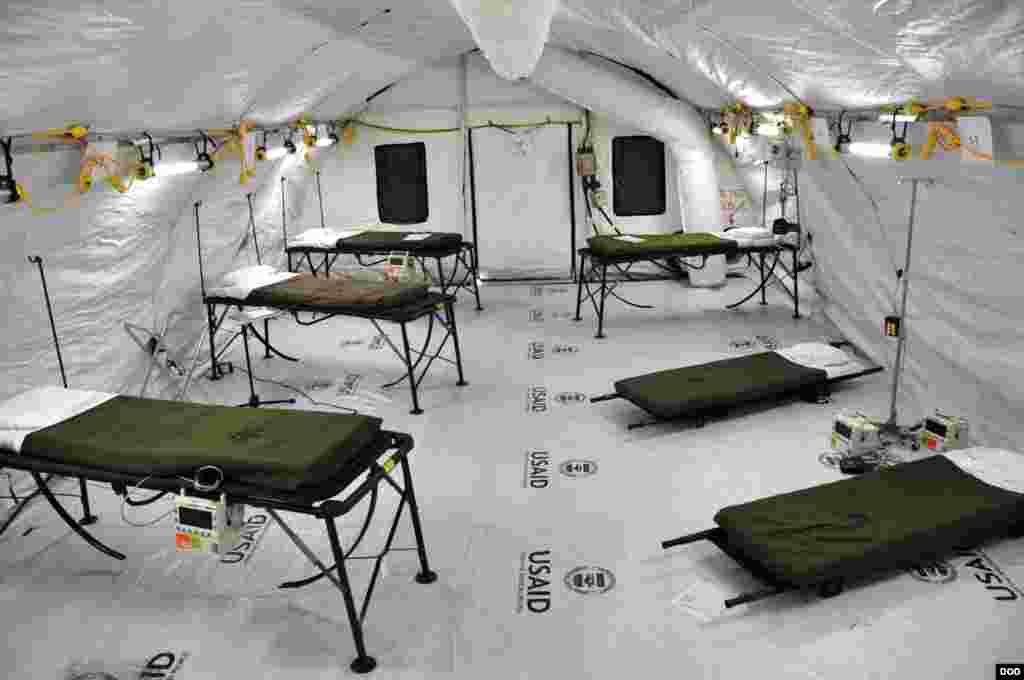
6/7Inside the Ebola treatment facility before its opening, near Monrovia, Liberia, Nov. 4, 2014. (Sgt. 1st Class Nathan Hoskins/DOD).
The. U.S. and Liberian governments have opened a 25-bed Ebola treatment unit outside Monrovia to treat health workers infected with the virus.
Show moreShow less
7/7A fully stocked medical supply room stands ready for the opening of the Ebola treatment facility located about 48 kilometers outside Monrovia, Liberia, Nov. 4, 2014. (Sgt. 1st Class Nathan Hoskins/DOD)
The. U.S. and Liberian governments have opened a 25-bed Ebola treatment unit outside Monrovia to treat health workers infected with the virus.