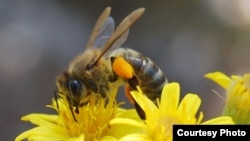
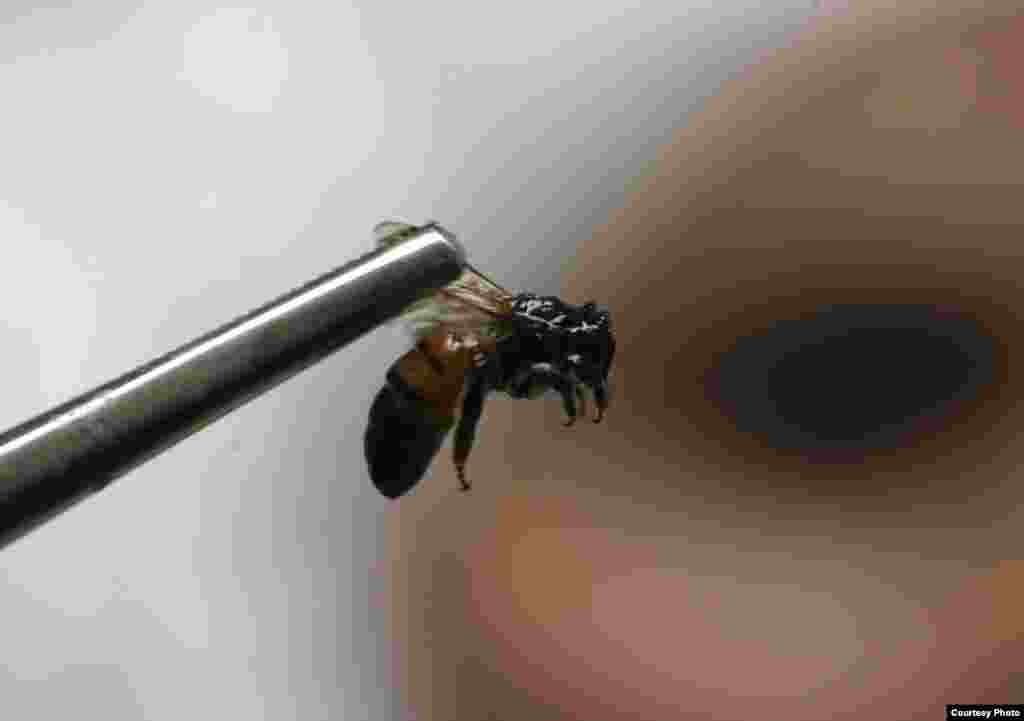
Insects help pollinate 75 percent of crop species and over 90 percent of wild flowering plants. (Creative Commons)
The global decline of honey bees and other pollinating insects is caused by multiple, largely human-induced effects, according to a new study.
Over the past decade, scientists have been reporting steady and mysterious declines in the populations of so-called pollinator insects.
These include the honeybees, wasps, flies, beetles, butterflies and moths that help pollinate three-quarters of the world’s food crops, services worth $200 billion annually to the global economy.
The new report is the first to pull together years of research on pollinator species decline. Forty scientists from six countries worked on the project organized by the Insect Pollinators Initiative of the United Kingdom (IPI).
While no single factor is responsible for the population decline, the analysis finds intensive land use, climate change and the spread of alien species and disease, are among the major threats to pollinating insects.
Pollinators Being Threatened
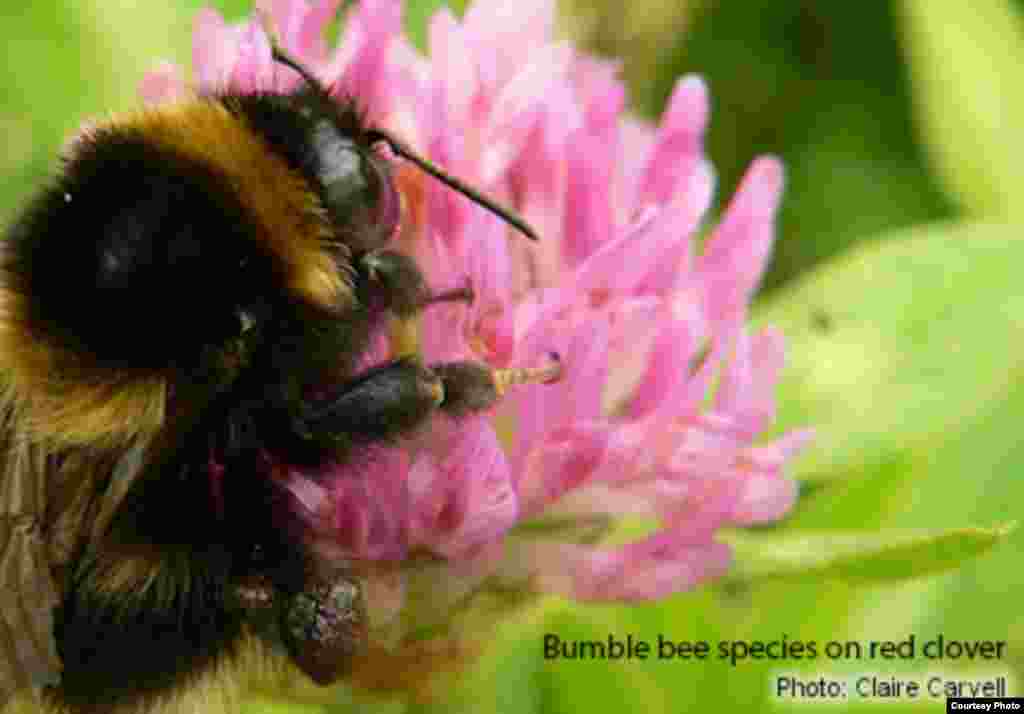
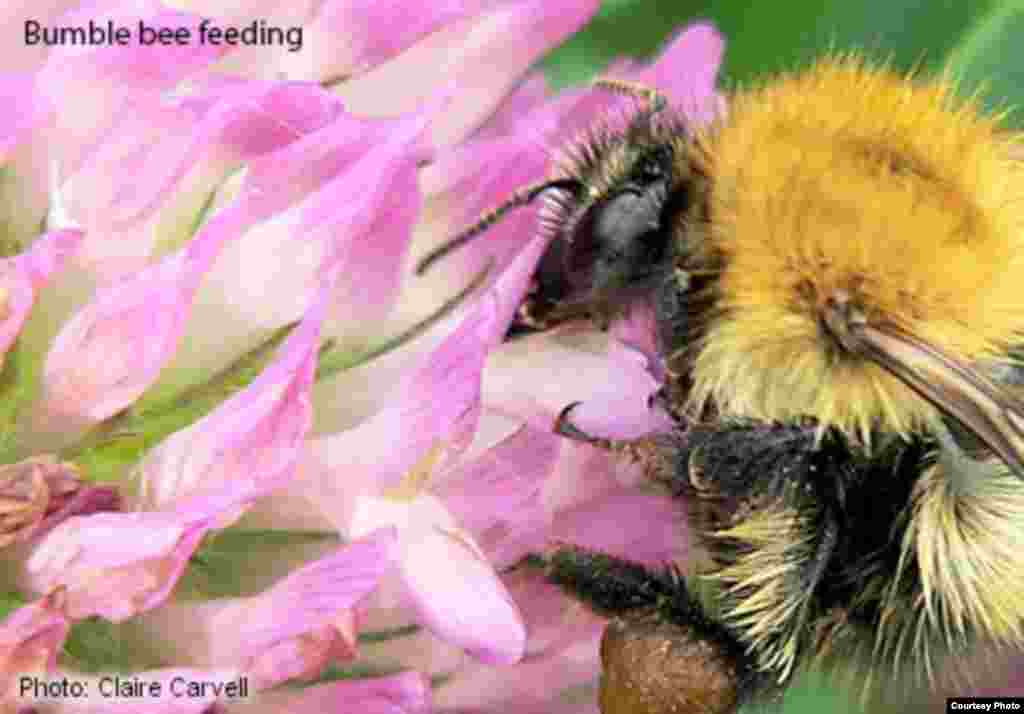
1/14Bumble bees are in decline around the world due to agricultural pesticide use, disease, and human encroachments on their habitats. (Photo: Claire Carvell)
The 25,000 to 30,000 species of bees, together with flies, moths, butterflies, wasps, and beetles, make up the majority of pollinating species. They face multiple threats to their survival, including habitat loss, agricultural pesticides, climate change, alien species competition and disease.
Show moreShow less
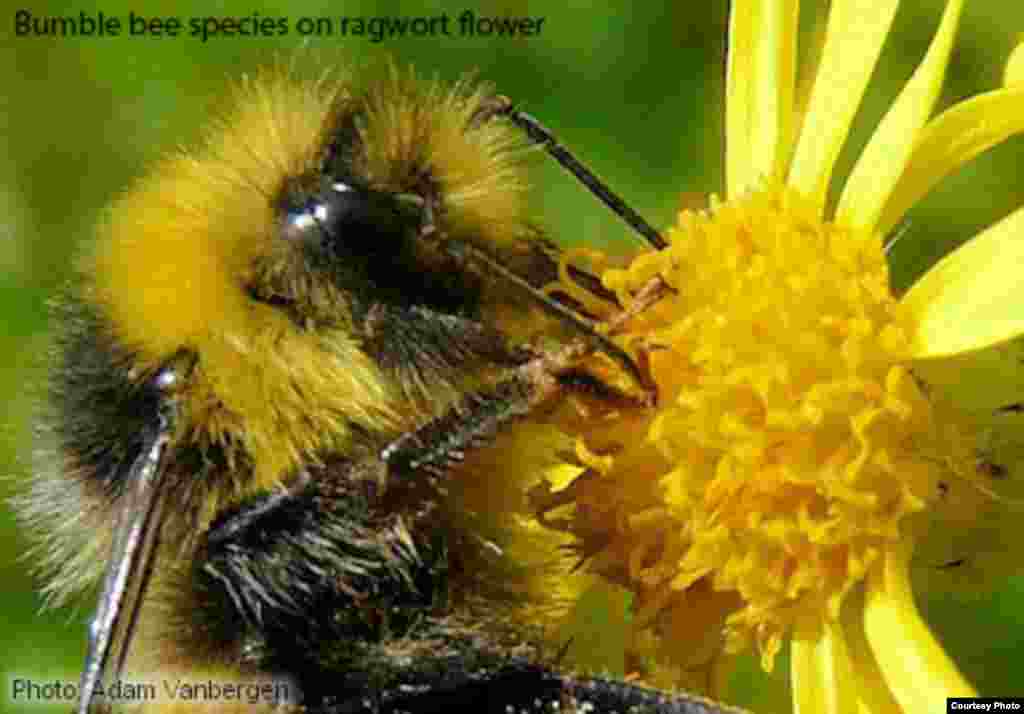
2/14Across the temperate regions of the world, bumble bees are crucial pollinators of wild flowers, transferring pollen and helping to ensure genetically diverse plant populations. (Photo: Adam Vanbergen)
The 25,000 to 30,000 species of bees, together with flies, moths, butterflies, wasps, and beetles, make up the majority of pollinating species. They face multiple threats to their survival, including habitat loss, agricultural pesticides, climate change, alien species competition and disease.
Show moreShow less
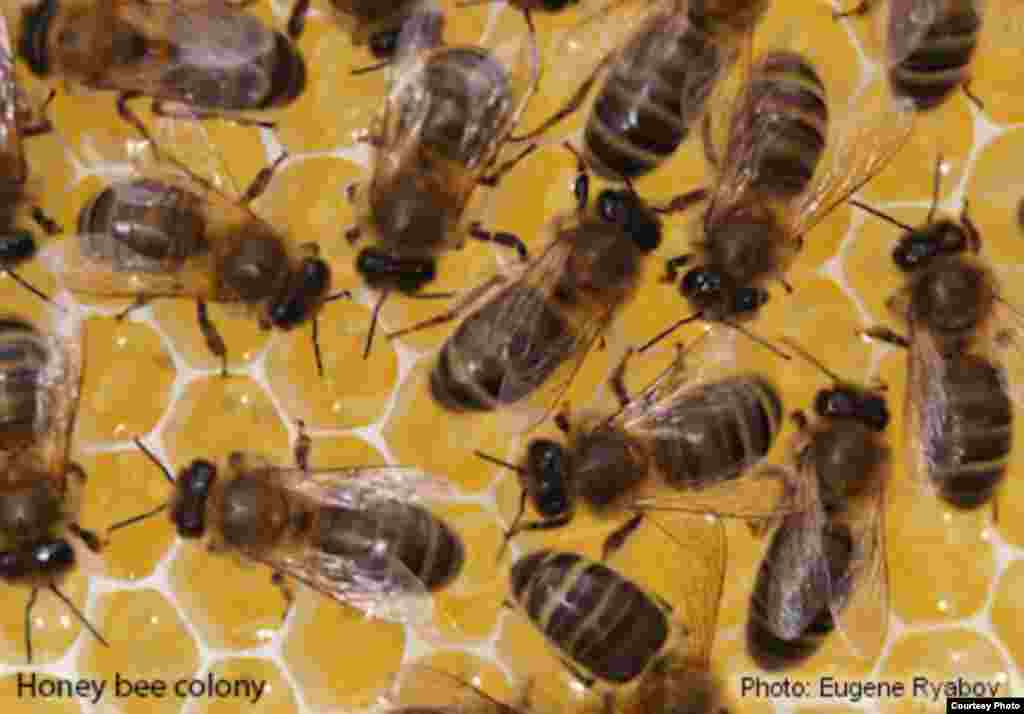
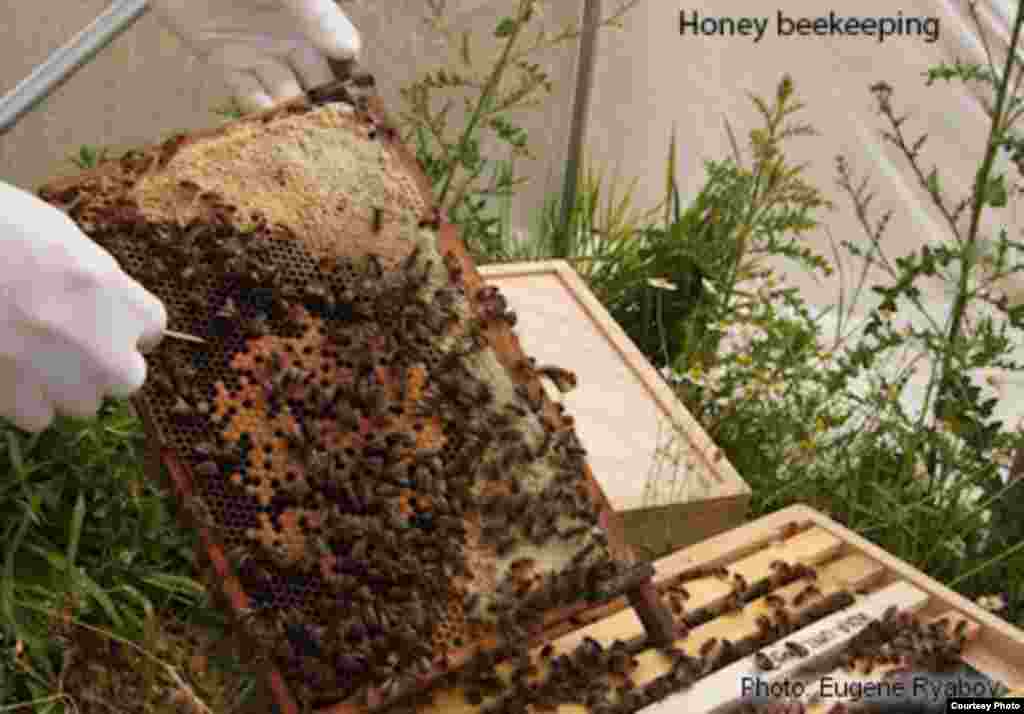
3/14Honey bees, managed for honey production and crop pollination services, are threatened by parasites and fungal and viral pathogens, and by the effects of land-use intensification. (Photo: Eugene Ryabov)
The 25,000 to 30,000 species of bees, together with flies, moths, butterflies, wasps, and beetles, make up the majority of pollinating species. They face multiple threats to their survival, including habitat loss, agricultural pesticides, climate change, alien species competition and disease.
Show moreShow less
4/14Certain bumble bee species and some solitary bee species are increasingly being domesticated and managed by humans to provide pollination services for agricultural crops like apples or strawberries. (Photo: Claire Carvell)
The 25,000 to 30,000 species of bees, together with flies, moths, butterflies, wasps, and beetles, make up the majority of pollinating species. They face multiple threats to their survival, including habitat loss, agricultural pesticides, climate change, alien species competition and disease.
Show moreShow less
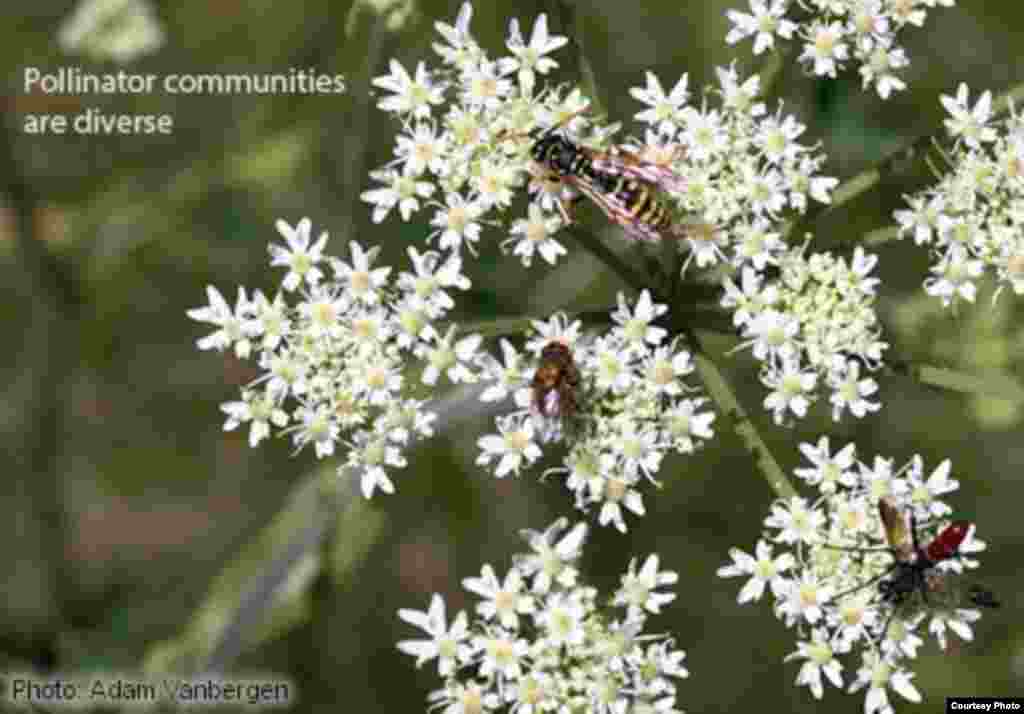
5/14Pollination of wildflowers and crops is done by a huge variety of insect species including social honey and bumble bees, solitary bees, wasps, flies, beetles and moths. Their diversity helps ensure the healthy function of ecosystems. (Photo: Adam Vanbergen)
The 25,000 to 30,000 species of bees, together with flies, moths, butterflies, wasps, and beetles, make up the majority of pollinating species. They face multiple threats to their survival, including habitat loss, agricultural pesticides, climate change, alien species competition and disease.
Show moreShow less
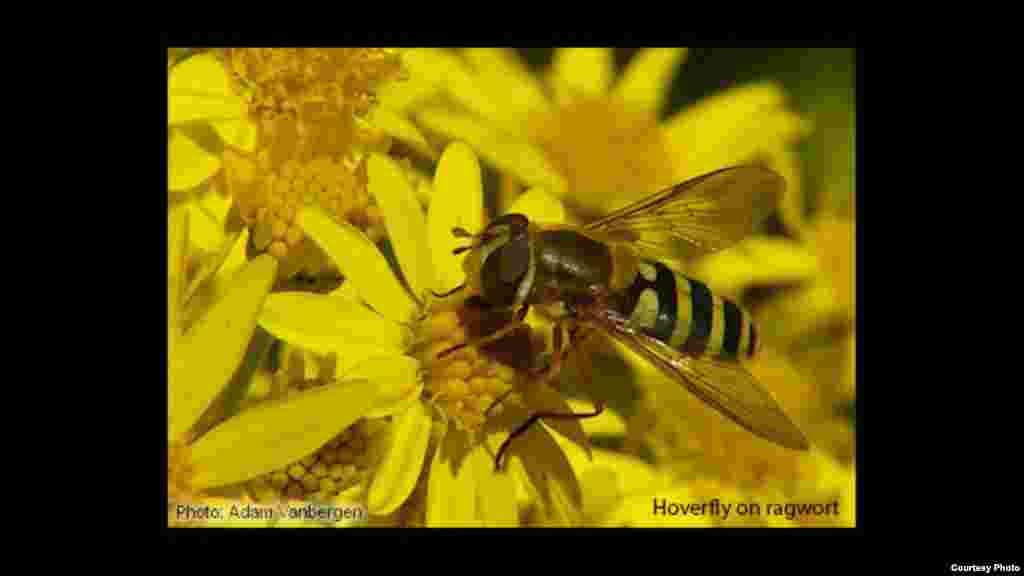
6/14Hoverflies, like bees, help pollinate food crops and wild plants and face multiple threats. (Photo: Adam Vanbergen)
The 25,000 to 30,000 species of bees, together with flies, moths, butterflies, wasps, and beetles, make up the majority of pollinating species. They face multiple threats to their survival, including habitat loss, agricultural pesticides, climate change, alien species competition and disease.
Show moreShow less
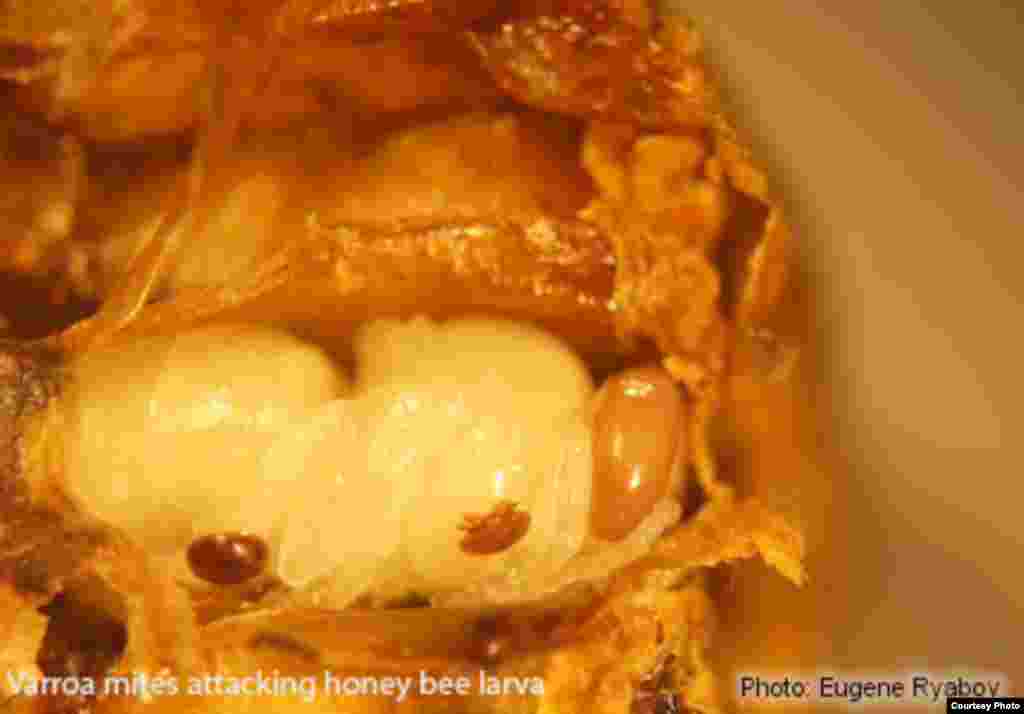
7/14The Varroa mite is a major threat to honey bee colonies. It feeds on the 'blood' of the insects and in the process transmits many different types of harmful virus. (Photo: Eugene Ryabov)
The 25,000 to 30,000 species of bees, together with flies, moths, butterflies, wasps, and beetles, make up the majority of pollinating species. They face multiple threats to their survival, including habitat loss, agricultural pesticides, climate change, alien species competition and disease.
Show moreShow less
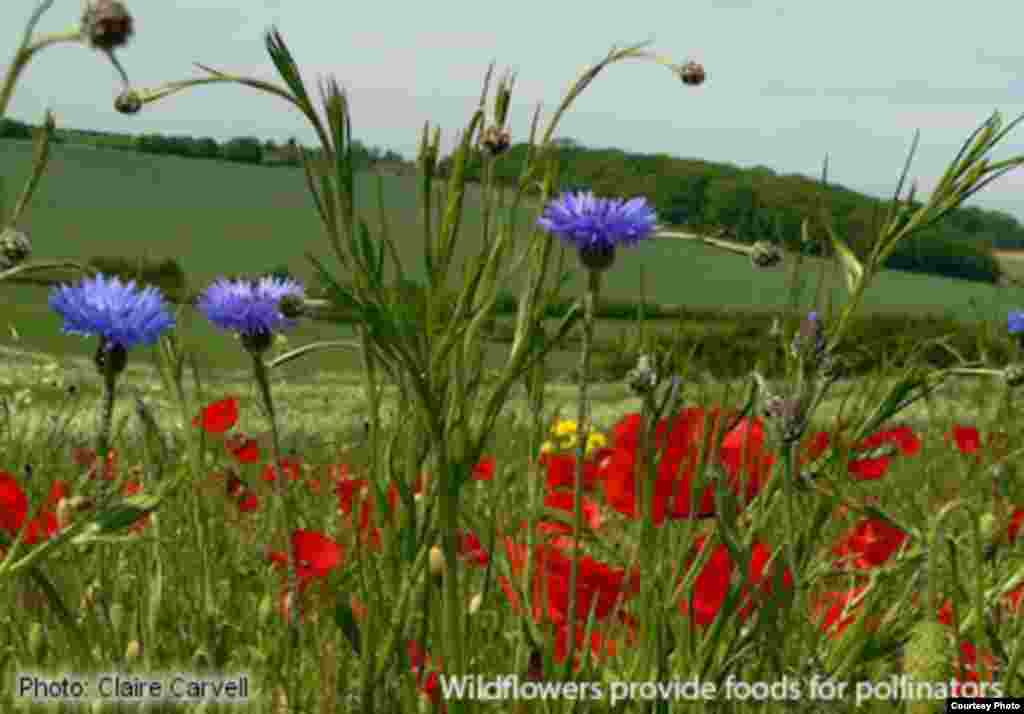
8/14Wild habitat networks in intensively farmed landscapes help to provide the food and nesting resources, which sustain pollinator populations and buffer them against disease and climate change. (Photo: Claire Carvell)
The 25,000 to 30,000 species of bees, together with flies, moths, butterflies, wasps, and beetles, make up the majority of pollinating species. They face multiple threats to their survival, including habitat loss, agricultural pesticides, climate change, alien species competition and disease.
Show moreShow less
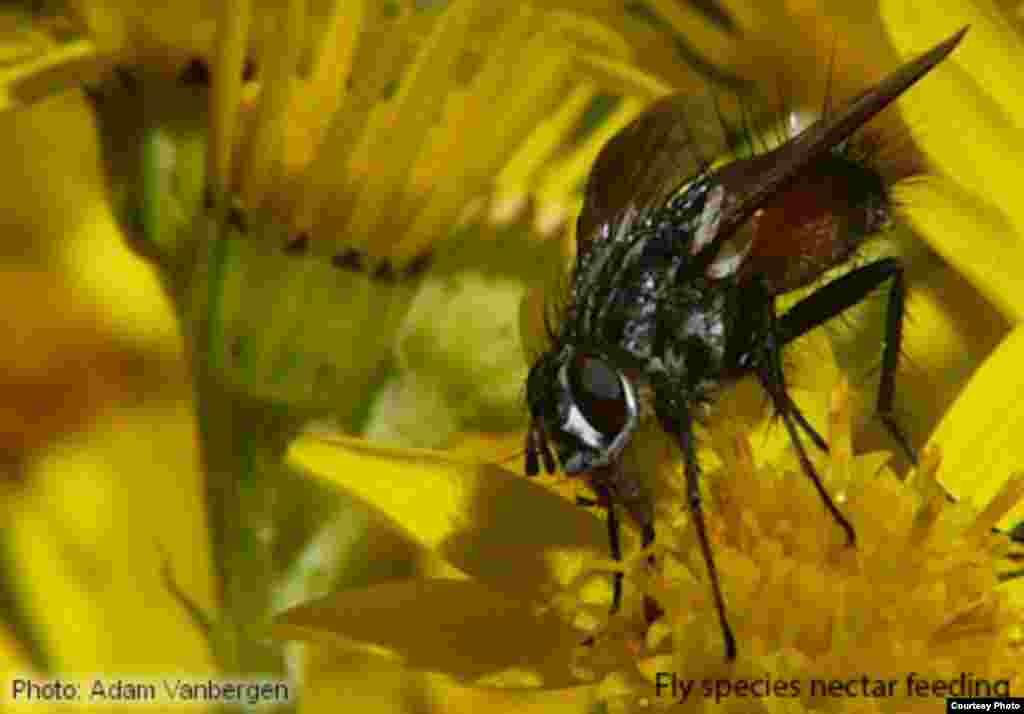
9/14Flies forage widely across landscapes and may provide a substantial pollination service to wild plants and crops. Compared to bees, however, they are poorly studied. (Photo: Adam Vanbergen)
The 25,000 to 30,000 species of bees, together with flies, moths, butterflies, wasps, and beetles, make up the majority of pollinating species. They face multiple threats to their survival, including habitat loss, agricultural pesticides, climate change, alien species competition and disease.
Show moreShow less
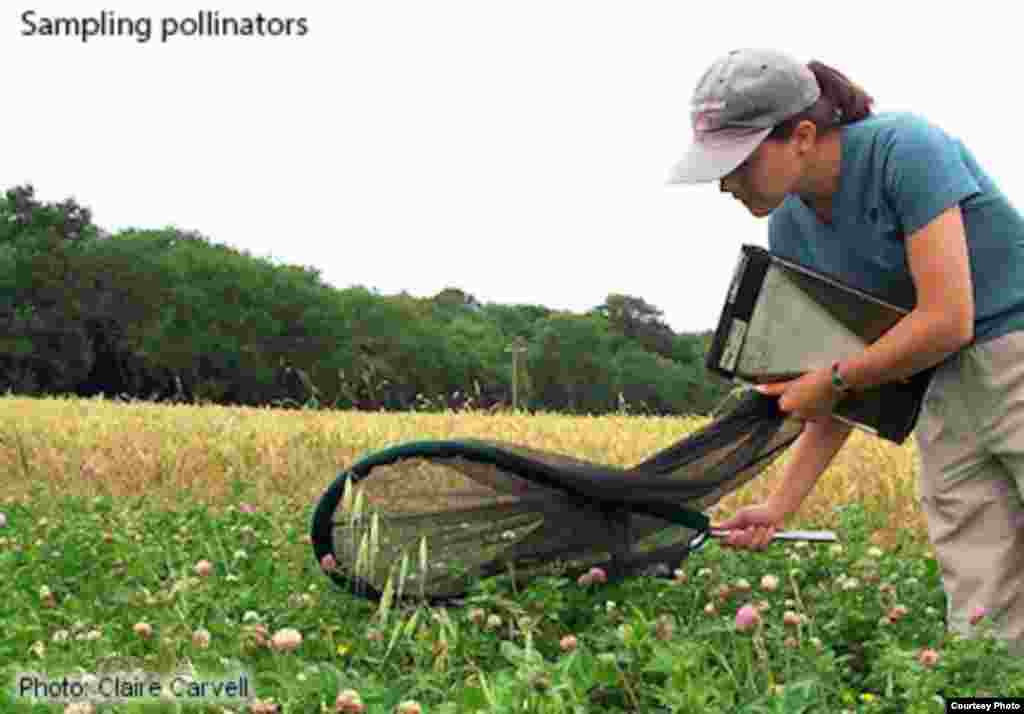
10/14Wildlife biologists, working with colleagues from disciplines as diverse as mathematics, neuroscience, molecular biology, epidemiology and economics are studying the causes and consequences of insect pollinator decline and what we can do to arrest this loss of beneficial biodiversity. (Photo: Claire Carvell)
The 25,000 to 30,000 species of bees, together with flies, moths, butterflies, wasps, and beetles, make up the majority of pollinating species. They face multiple threats to their survival, including habitat loss, agricultural pesticides, climate change, alien species competition and disease.
Show moreShow less
11/14In some regionsof the world, bee farmers often must transport their bee hives long distances to supply economically important pollination services to agricultural crops like fruits and vegetables. (Photo: Eugene Ryabov)
The 25,000 to 30,000 species of bees, together with flies, moths, butterflies, wasps, and beetles, make up the majority of pollinating species. They face multiple threats to their survival, including habitat loss, agricultural pesticides, climate change, alien species competition and disease.
Show moreShow less
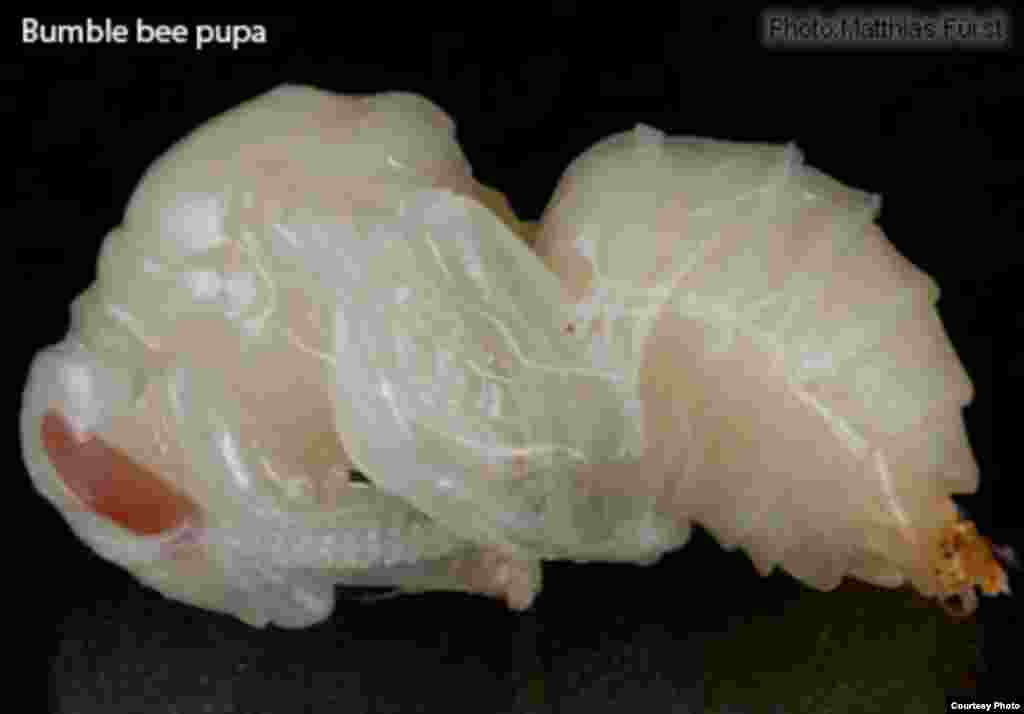
12/14Bumble bees live in a colony with a queen bee that produces the offspring. Lack of flowers in the nest vicinity and exposure to pesticides threatens the colony's ability to feed their young and produce new queens. (Photo: Matthias Furst)
The 25,000 to 30,000 species of bees, together with flies, moths, butterflies, wasps, and beetles, make up the majority of pollinating species. They face multiple threats to their survival, including habitat loss, agricultural pesticides, climate change, alien species competition and disease.
Show moreShow less
13/14Beekeepers in Sofia, Bulgaria, hold an Earth Day protest demanding the suspension of the usage of neonicotinoid pesticides linked to the death of bees worldwide. (Photo: Reuters)
The 25,000 to 30,000 species of bees, together with flies, moths, butterflies, wasps, and beetles, make up the majority of pollinating species. They face multiple threats to their survival, including habitat loss, agricultural pesticides, climate change, alien species competition and disease.
Show moreShow less
14/14A new laboratory was established in Jordan to protect bees from infectious diseases following an outbreak that decimated nearly half of the region's bee hives in 2008. (Photo: Reuters)
The 25,000 to 30,000 species of bees, together with flies, moths, butterflies, wasps, and beetles, make up the majority of pollinating species. They face multiple threats to their survival, including habitat loss, agricultural pesticides, climate change, alien species competition and disease.
Show moreShow less
Previous slide
Next slide
"What we are beginning to see is that it’s likely that there’s a combination of these effects that are driving the declines in these insects and in some cases they may be combining in subtle ways that exacerbate the overall negative effect,” said Adam Vanbergen, an ecologist with the Britain-based Centre for Ecology and Hydrology who served as the science coordinator on the IPI-led review.
Vanbergen says more research must be done on this complex interplay, across a vast scale, from genetics to worldwide ecosystems.
“We need to launch a whole suite of studies looking at subtle interactions between, say, land use change and its impacts on the resources that insects rely on, and how that can effect interactions with disease organisms or with exposure to pesticides that would be one example,” he said.
The ecologist says there is also a need to carefully document how climate change affects the insects’ ability to adapt to a warmer world.
“There is evidence now accumulating that impacts from these different pressures hits insects at different levels of biological organization," Vanbergen said. "So you have some pressures that will be damaging, for example, the brain function of individual insects and you have other pressures that will be perhaps affecting the ability of species to move in landscapes or indeed their range across continents.”
Learning how to protect pollinators from these environmental pressures will require a multi-disciplinary scientific effort. Farmers, policy makers, and industry will need to collaborate on programs to conserve these species.
“We need to come together really to try and set the appropriate framework to enable strategic planning at a landscape scale," said Vanbergen. "That’s going to be important if we are going to devise the appropriate habitat network to help support these insects in order to buffer them against effects such as climate change and local effects such as pesticide impacts.”
The IPI analysis also calls for re-evaluating common pesticide risks and developing new treatments for insect disease.
“All we really need to do is just try to build a more sympathetic approach to integrate practices that are able to lessen some of these impacts and to support the biodiversity that provides these important ecosystem services to human kind,” said Vanbergen.