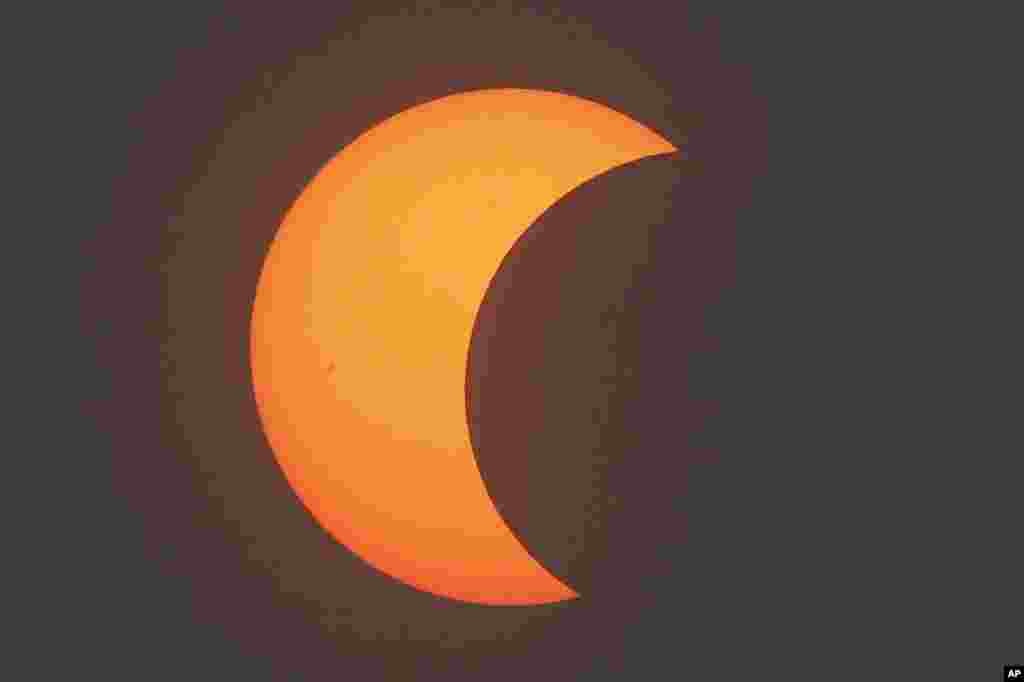
People from eastern Asia to the western United States enjoyed a rare treat when the moon blotted out most of the sun to create a "ring of fire" in the sky.
The annular lunar eclipse was visible in parts of Asia early Monday and the United States late Sunday. The moon passed in front of the sun leaving only a bright ring visible around its edges.
Viewing parties gathered by the hundreds and even thousands in fields and at observatories across the globe. Many people used special eclipse glasses to protect their eyes during the viewing.
The Ring of Fire Eclipse
1/10The moon slides across the sun, showing a blazing halo of light, during an annular eclipse at a waterfront park in Yokohama, Japan, May 21, 2012.
People were able to view the eclipse from eastern Asia to the western United States.
Show moreShow less
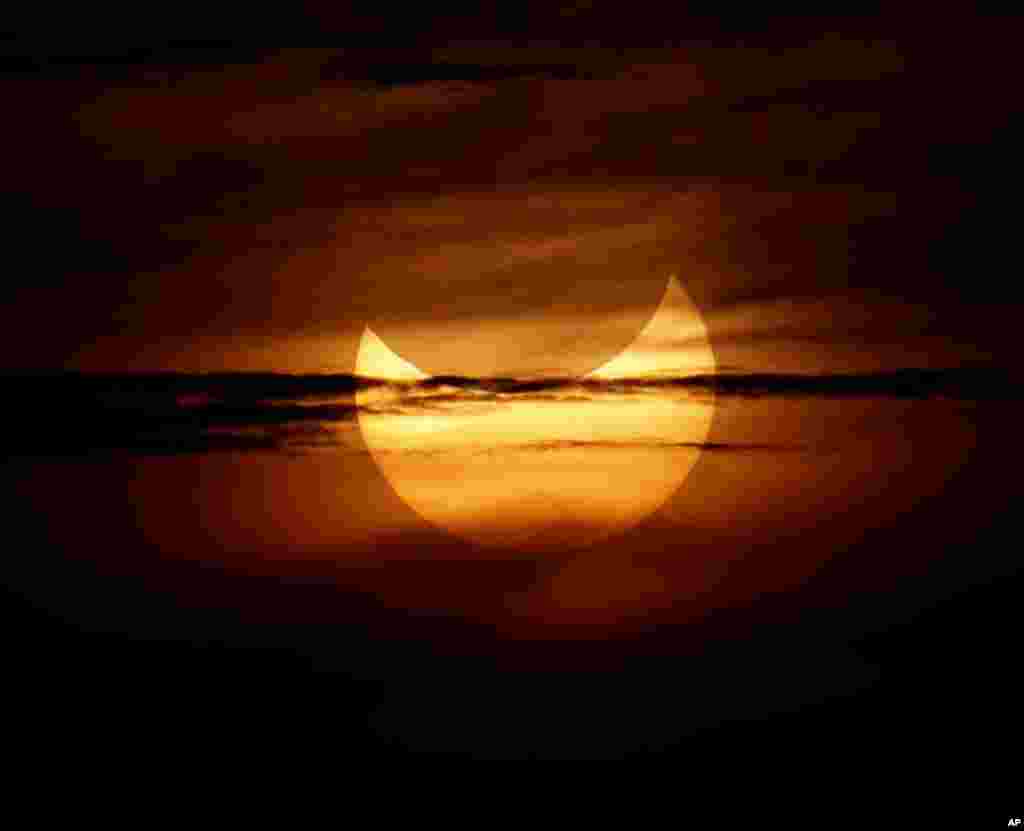
2/10A partial annular solar eclipse is seen over Beijing, China.
People were able to view the eclipse from eastern Asia to the western United States.
Show moreShow less
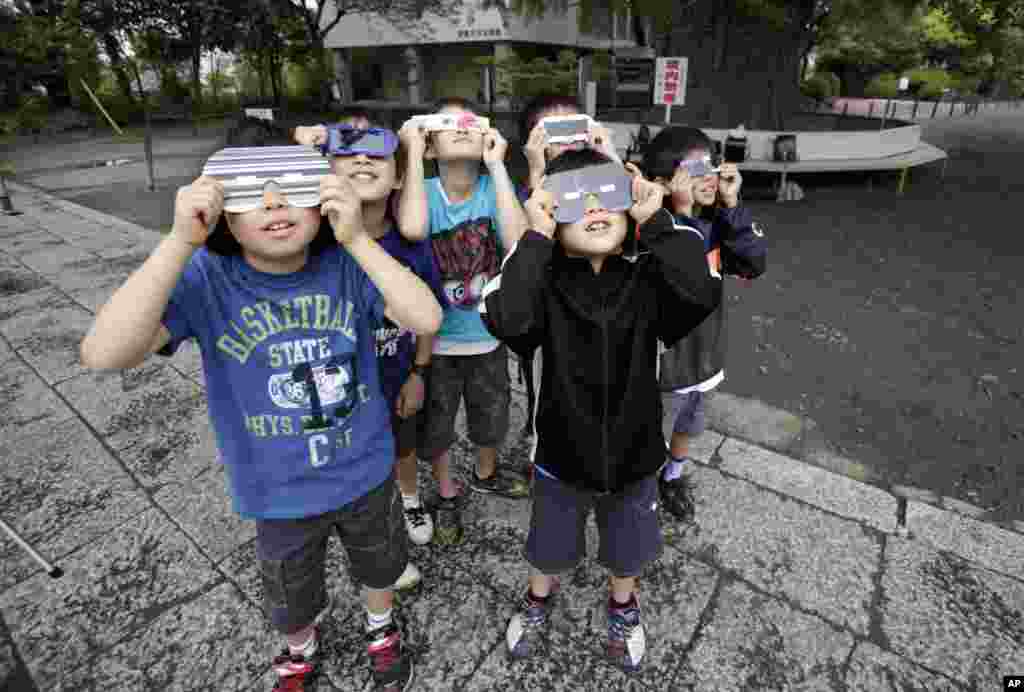
3/10School children using solar viewers lie down on a lawn as they observe an annular eclipse at Hirai Daini Elementary School, Tokyo, Japan, May 21, 2012.
People were able to view the eclipse from eastern Asia to the western United States.
Show moreShow less
4/10Tourists look through solar eclipse glasses and solar viewers during an annular eclipse in Monument Valley Tribal Park in Utah.
People were able to view the eclipse from eastern Asia to the western United States.
Show moreShow less
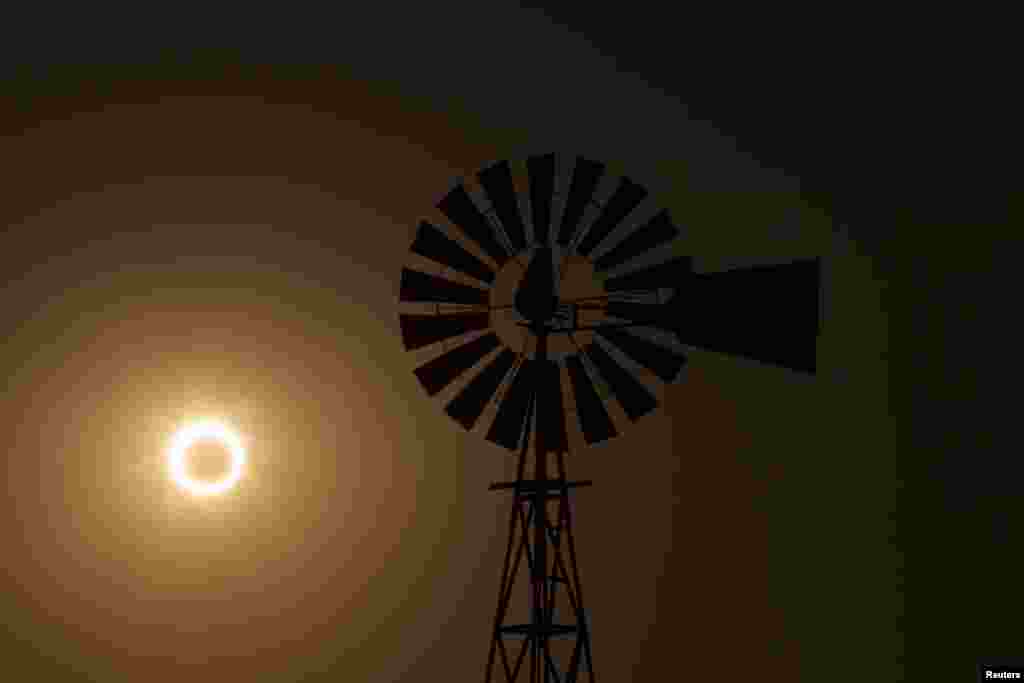
5/10The moon passes between the sun and the earth behind a windmill near Albuquerque, New Mexico.
People were able to view the eclipse from eastern Asia to the western United States.
Show moreShow less
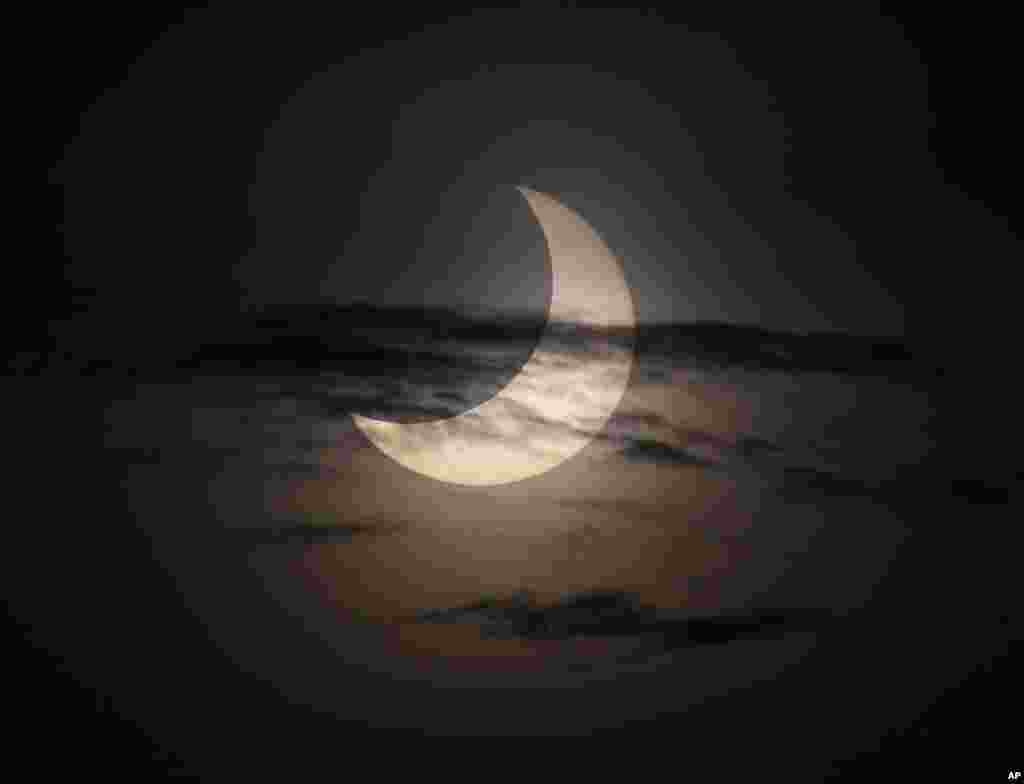
6/10An annular solar eclipse is partially seen at sunrise from the coastal township of Gumaca, Quezon province, southeast of Manila, Philippines.
People were able to view the eclipse from eastern Asia to the western United States.
Show moreShow less
7/10An annular solar eclipse is partially seen at sunrise from the coastal township of Gumaca, Quezon province, southeast of Manila, Philippines.
People were able to view the eclipse from eastern Asia to the western United States.
Show moreShow less
8/10Children watch an annular solar eclipse in Fujisawa, Japan.
People were able to view the eclipse from eastern Asia to the western United States.
Show moreShow less
9/10A partial annular solar eclipse is seen over Beijing, China.
People were able to view the eclipse from eastern Asia to the western United States.
Show moreShow less
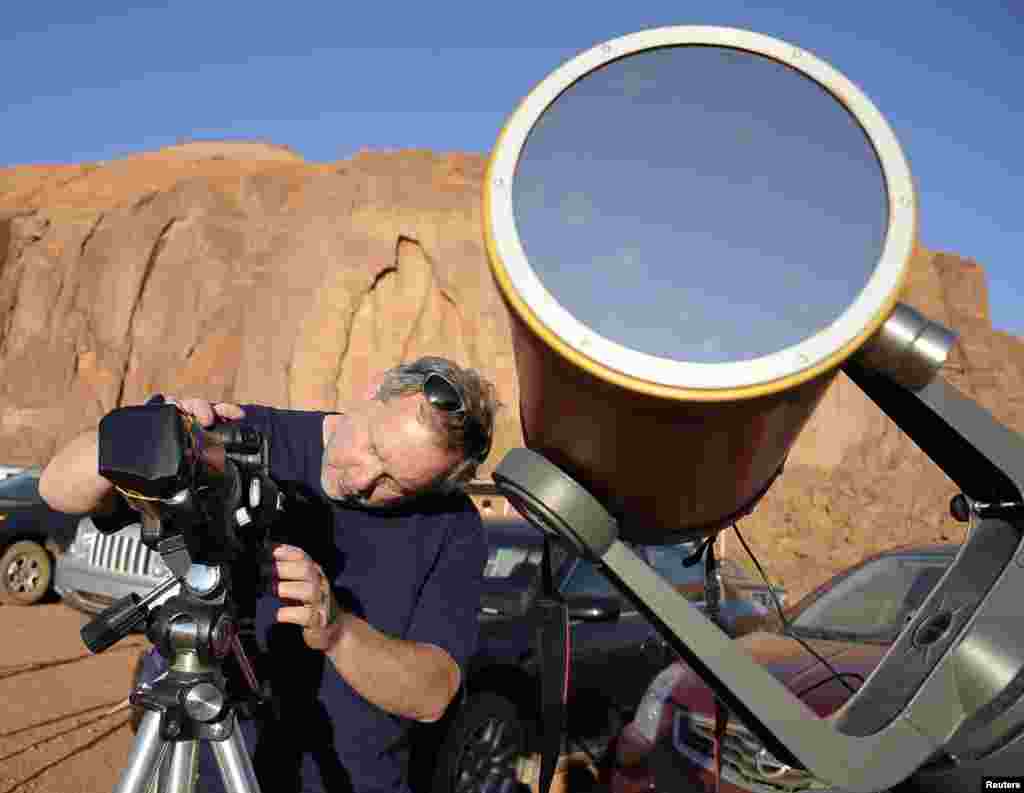
10/10Aerospace photographer William Hartenstein prepares his camera to photograph an annular eclipse in Monument Valley Tribal Park in Utah.
People were able to view the eclipse from eastern Asia to the western United States.
Show moreShow less
Previous slide
Next slide
Japanese TV crews broadcast the eclipse live.
The moon covers about 95 percent of the sun in an annular eclipse. The last one seen from the U.S. was 18 years ago.
The Voice of America provides news and information in more than 40 languages to an estimated weekly audience of over 326 million people. Stories with the VOA News byline are the work of multiple VOA journalists and may contain information from wire service reports.