KIGALI, RWANDA —
On the 20th anniversay of the 1994 Rwandan genocide, President Paul Kagame paid tribute to the victims and also took a swipe at the international community following a diplomatic rift with France.
African heads of state and foreign dignitaries joined commemoration events in the Rwandan capital, beginning with a ceremony to light the National Flame of Mourning at the Kigali Genocide Memorial.
April 7 marks the day 20 years ago when ethnic Hutu militias began a killing rampage targeting Tutsis and moderate Hutus who would not take part in the slaughter. Some 800,000 people were killed within 100 days.
Kagame honored the victims at a memorial event at Kigali's Amahoro Stadium.
“As we pay tribute to the victims, both the living and those who have passed, we also salute the unbreakable Rwandan spirit to which we owe the survival and renewal of our country,” he said.
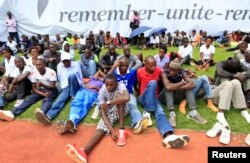
People follow the proceedings of the 20th anniversary commemoration of the Rwandan genocide, in Kigali April 7, 2014.
Thousands of people filled stadium seats to watch speeches, performances and a video to commemorate the anniversary.
Shouts and wails could be heard throughout the crowd as some became overwhelmed with emotion. Handlers in the crowd helped soothe those who had become distraught.
Current and former leaders from around the world also turned out for the occasion, but France withdrew its delegation in protest over comments from Kagame accusing France of having a role in the planning and execution of the genocide. France has long denied the claims.
France was the Rwandan government's main Western backer before the genocide, and trained its Hutu-dominated army.
Rwanda Marks 20 Years Since Genocide
1/8Bizimana Emmanuel, who was born two years before the genocide, is consoled by an unidentified woman while attending a ceremony to mark the 20th anniversary of the Rwandan genocide, at Amahoro stadium in Kigali, April 7, 2014.
Show moreShow less
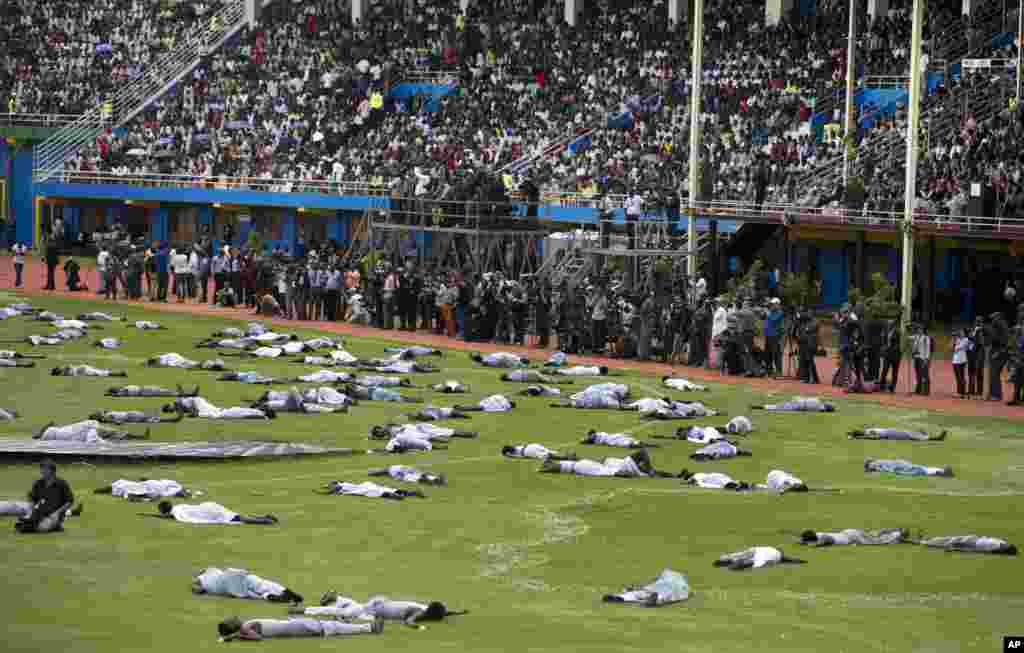
2/8Performers re-enact some of the events enter a public ceremony to mark the 20th anniversary of the Rwandan genocide, at Amahoro stadium in Kigali, April 7, 2014.
Show moreShow less
3/8Performers re-enact events at a ceremony to mark the 20th anniversary of the Rwandan genocide, at Amahoro stadium in Kigali, April 7, 2014.
Show moreShow less
4/8Two wailing women, some of dozens overcome by grief at recalling the horror of the genocide, are carried away to receive help during a ceremony to mark the 20th anniversary of the Rwandan genocide, at Amahoro stadium in Kigali, April 7, 2014.
Show moreShow less
5/8U.N. Secretary General Ban Ki-moon, Rwandan President Paul Kagame, Jeannette Kagame and AU Commission Chairwoman Nkosazana Dlamini-Zuma participate in the commemoration of the 20th anniversary of the genocide in Kigali, April 7, 2014.
Show moreShow less
6/8Rwandan children listen and pray during a Sunday morning service at the Saint-Famille Catholic church, the scene of many killings during the 1994 genocide, in the capital Kigali, April 6, 2014.
Show moreShow less
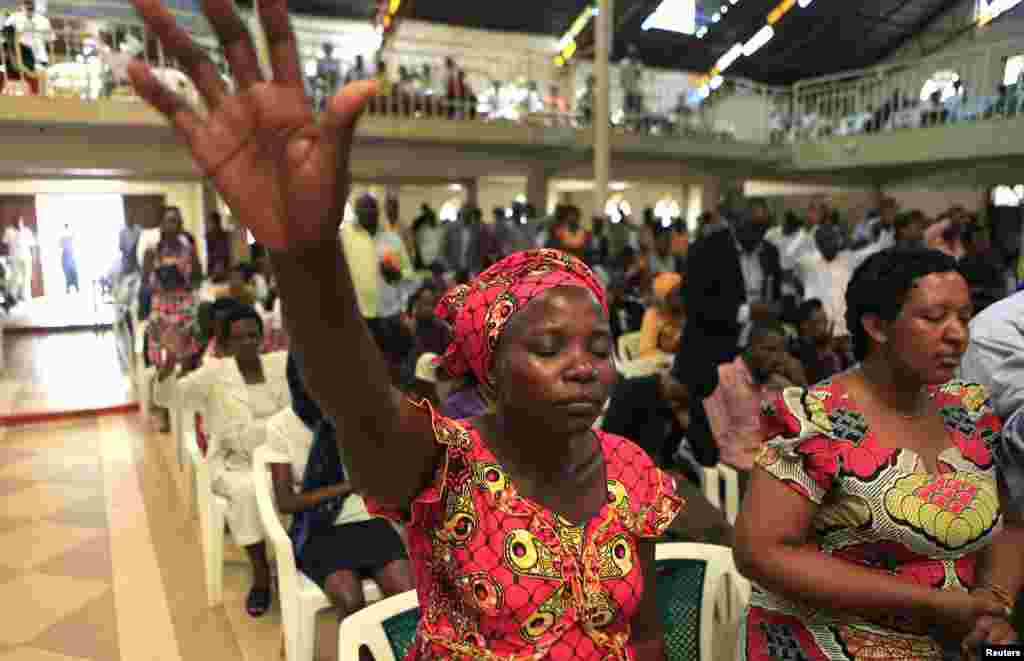
7/8Rwandan worshippers attend the Evangelical Restoration Church, Kimisagara, one day ahead of the commemoration of the 20th anniversary of the genocide in Kigali, April 6, 2014.
Show moreShow less
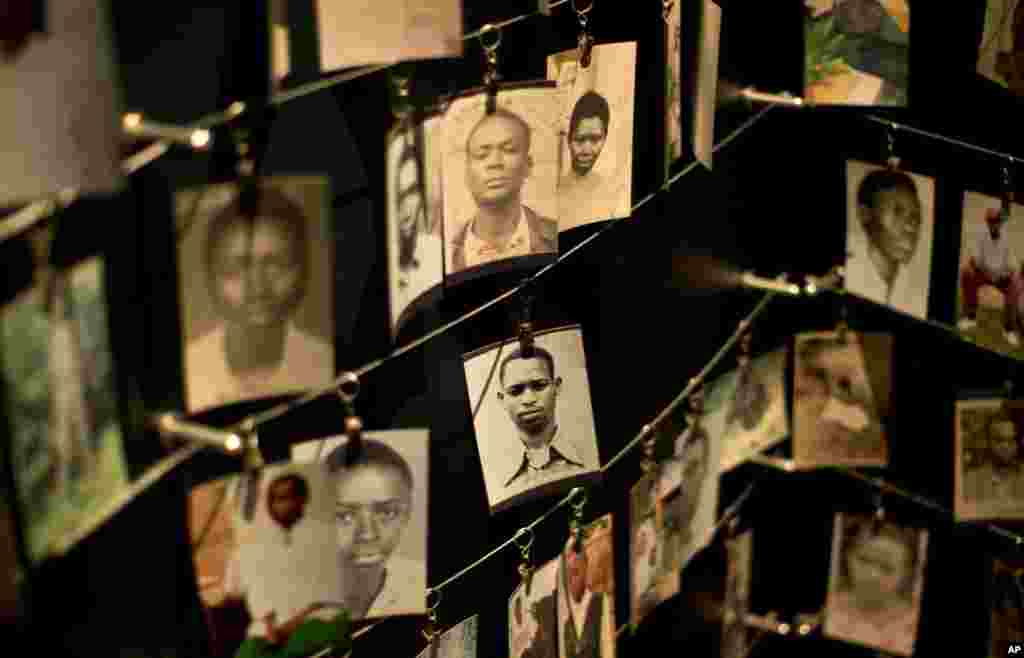
8/8Family photographs of some of those who died hang in a display in the Kigali Genocide Memorial Centre in Kigali, April 5, 2014.
Show moreShow less
Previous slide
Next slide
While not directly mentioning the dispute, Kagame said Rwandans will continue to seek “concrete explanations" for the genocide.
“People cannot be bribed or forced into changing their history and no country is powerful enough - even when they think they are - to change the facts,” Kagame said.
The international community has been criticized for not doing enough to prevent the genocide, despite numerous warnings.
Speaking at the memorial event, U.N. Secretary-General Ban Ki-moon acknowledged these shortcomings.
“Many United Nations personnel and others showed remarkable bravery, but we could have done much more," he said. "We should have done much more.”
Ban said the international community still has more to learn from the lessons of Rwanda, noting the failure to stop the conflicts in Central African Republic and in Syria.