Accessibility links

Breaking News

Syrian Refugees Risk Lives to Flee Fighting

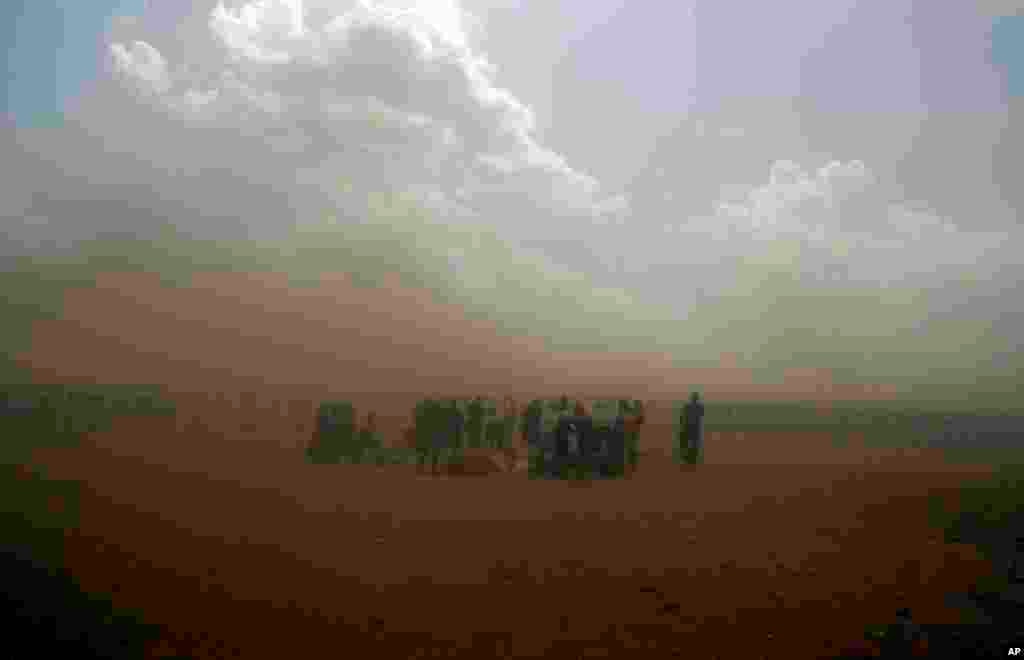
Syrian refugees enter Turkey during a sand storm at Yumurtalik crossing gate near Suruc, Turkey, Sept. 24, 2014.
1/7 Syrian refugees enter Turkey during a sand storm at Yumurtalik crossing gate near Suruc, Turkey, Sept. 24, 2014.
Refugees daring to escape fighting in Syria often get tangled in long, treacherous travel in search of safe havens; and some never make it.
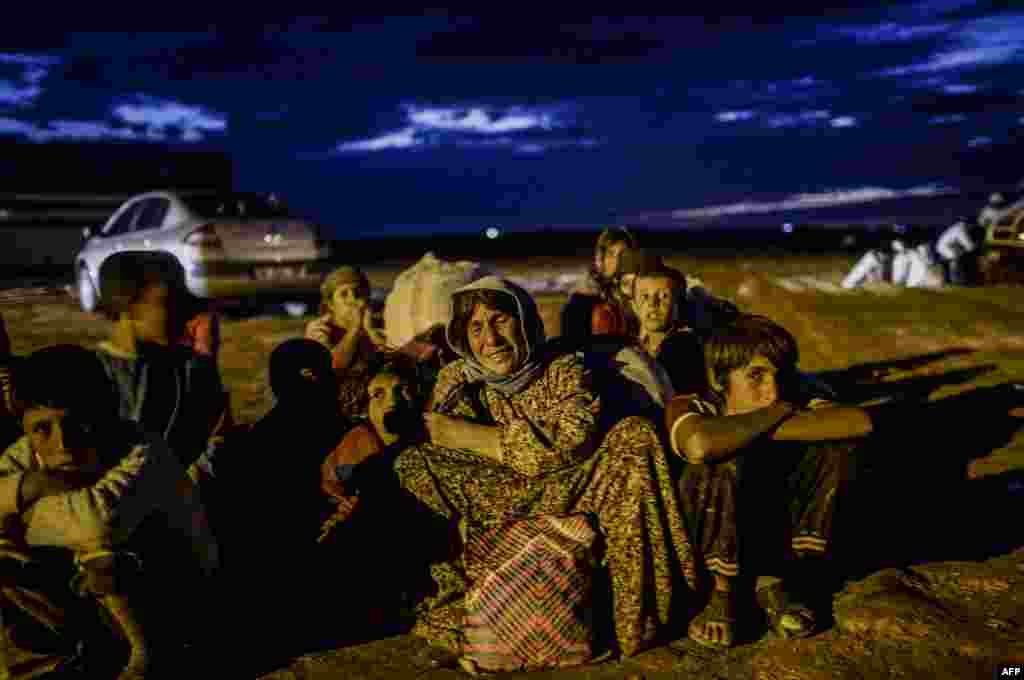
A Syrian Kurdish family waits after crossing the border between Syria and Turkey after several mortars hit both sides near the southeastern town of Suruc in Sanliurfa province, Sept. 29, 2014.
2/7 A Syrian Kurdish family waits after crossing the border between Syria and Turkey after several mortars hit both sides near the southeastern town of Suruc in Sanliurfa province, Sept. 29, 2014.
Refugees daring to escape fighting in Syria often get tangled in long, treacherous travel in search of safe havens; and some never make it.
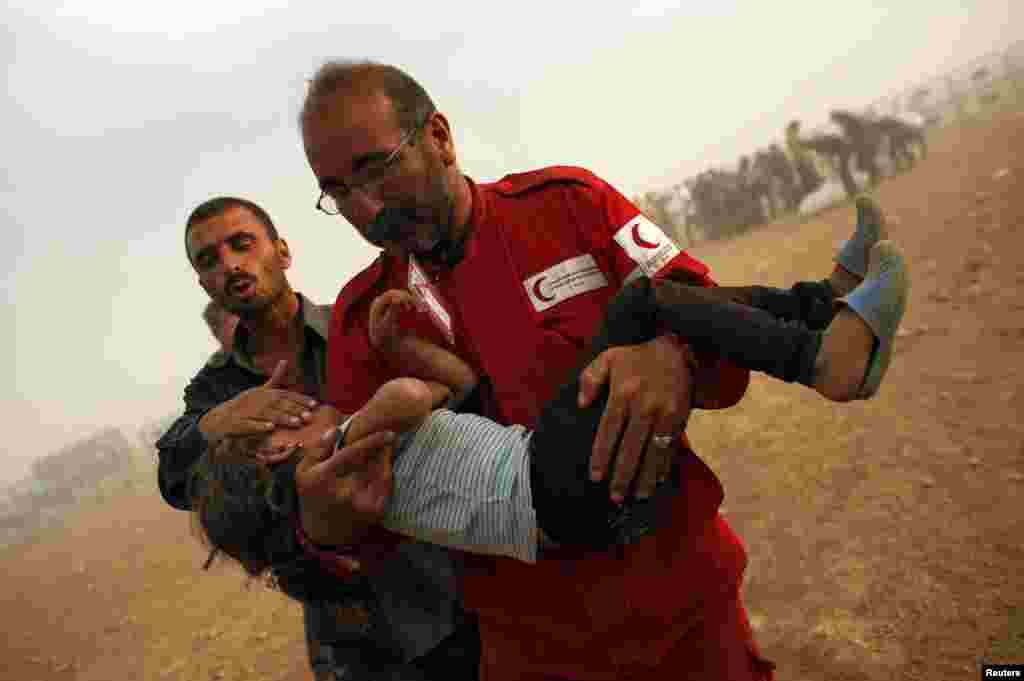
A member of the Syrian Arab Red Crescent carries a Kurdish Syrian refugee girl to the first aid tent after crossing the Turkish-Syrian border near the southeastern town of Suruc in Sanliurfa province, Sept. 25, 2014.
3/7 A member of the Syrian Arab Red Crescent carries a Kurdish Syrian refugee girl to the first aid tent after crossing the Turkish-Syrian border near the southeastern town of Suruc in Sanliurfa province, Sept. 25, 2014.
Refugees daring to escape fighting in Syria often get tangled in long, treacherous travel in search of safe havens; and some never make it.
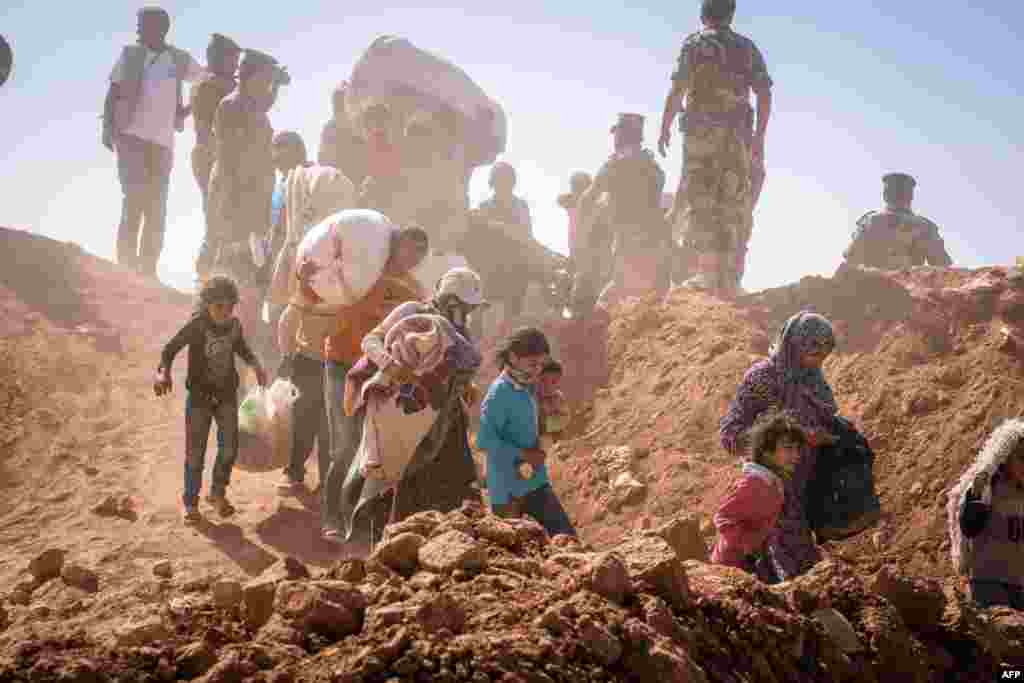
A handout picture released Aug. 29, 2014 by the United Nations High Commissioner for Refugees (UNHCR) shows Syrian refugees streaming across the border into Jordan at a remote border point in the east.
4/7 A handout picture released Aug. 29, 2014 by the United Nations High Commissioner for Refugees (UNHCR) shows Syrian refugees streaming across the border into Jordan at a remote border point in the east.
Refugees daring to escape fighting in Syria often get tangled in long, treacherous travel in search of safe havens; and some never make it.
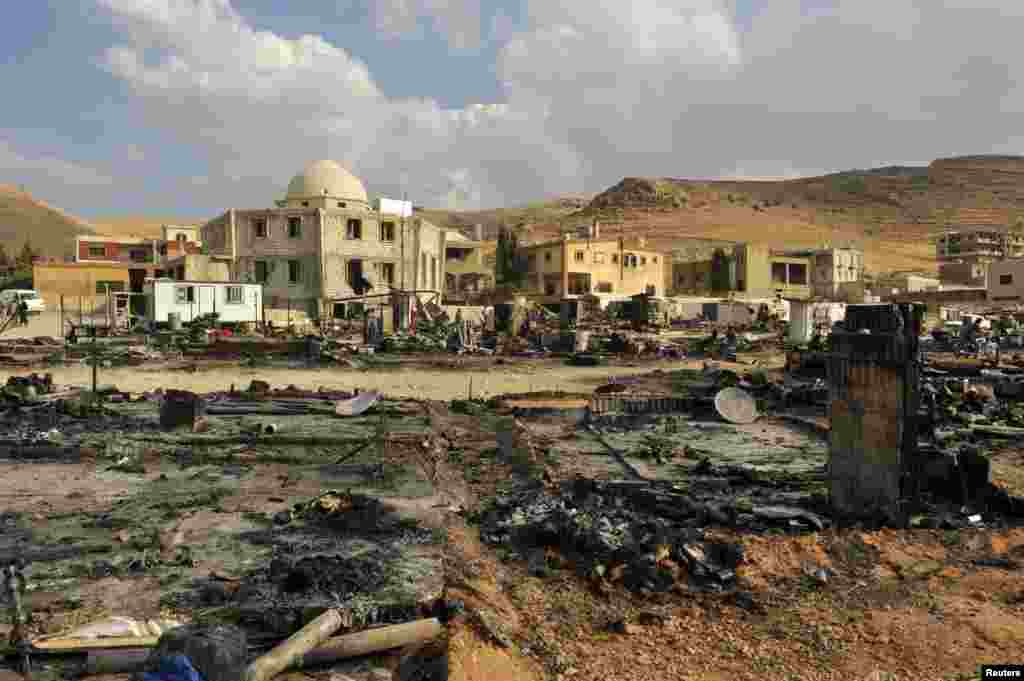
A general view shows damage and burnt tents for Syrian refugees from the fighting between Lebanese army soldiers and Islamist militants in the Sunni Muslim border town of Arsal, in eastern Bekaa Valley, Aug. 7, 2014.
5/7 A general view shows damage and burnt tents for Syrian refugees from the fighting between Lebanese army soldiers and Islamist militants in the Sunni Muslim border town of Arsal, in eastern Bekaa Valley, Aug. 7, 2014.
Refugees daring to escape fighting in Syria often get tangled in long, treacherous travel in search of safe havens; and some never make it.
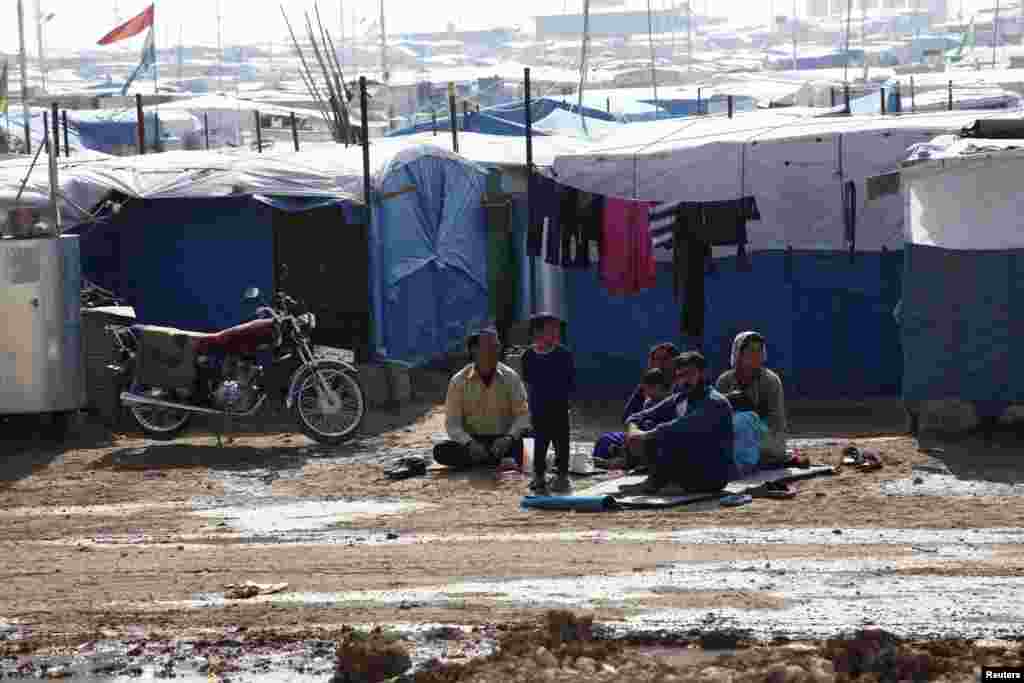
Syrian refugees, who fled violence back home, are seen at the Domiz refugee camp in the northern Iraqi province of Dohuk, Feb. 20, 2014.
6/7 Syrian refugees, who fled violence back home, are seen at the Domiz refugee camp in the northern Iraqi province of Dohuk, Feb. 20, 2014.
Refugees daring to escape fighting in Syria often get tangled in long, treacherous travel in search of safe havens; and some never make it.
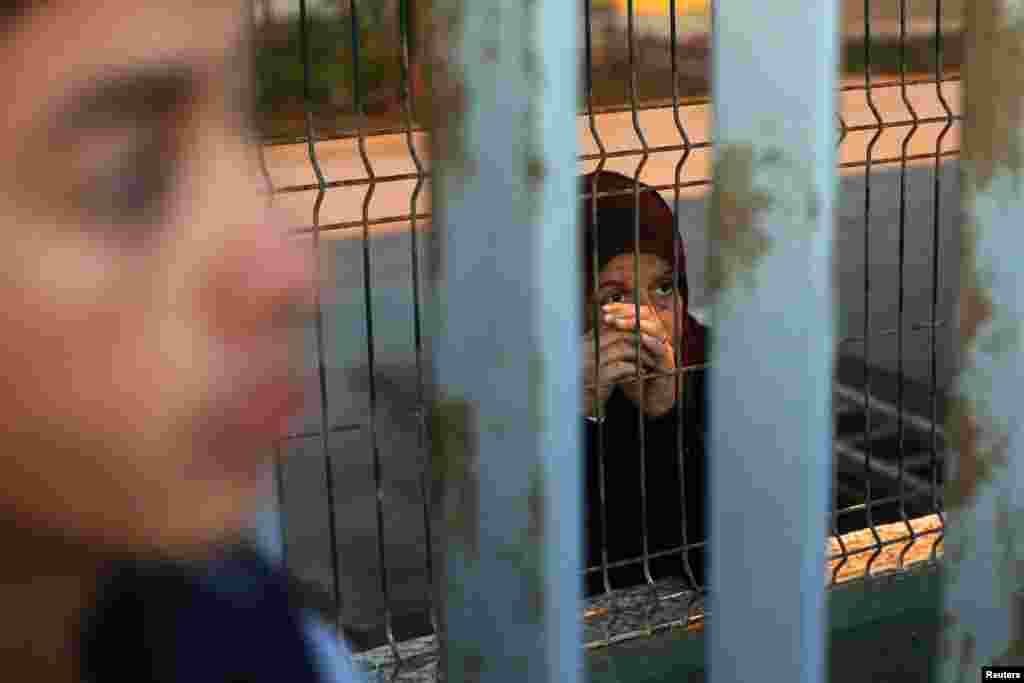
Syrian refugees from Latakia wait on opposite sides of a fence at a refugee center in Spain's north African enclave Melilla, Dec. 5, 2013.
7/7 Syrian refugees from Latakia wait on opposite sides of a fence at a refugee center in Spain's north African enclave Melilla, Dec. 5, 2013.
Refugees daring to escape fighting in Syria often get tangled in long, treacherous travel in search of safe havens; and some never make it.
Previous slide
Next slide

As the Syrian refugee crisis continues to spiral out of control, more and more people are risking their lives - not just to get out of Syria, but to flee the region altogether. Refugees in Lebanon say the longer the war drags on, the fewer chances they have to build a future for their families. And some say they will immigrate or die trying.

When 29-year-old Morhaf decided to travel from Turkey to Europe, he knew, as a Syrian refugee, the journey would be hard, but he had no idea how hard.

First he flew to Algeria and walked hours through the desert to the Libyan border where he met human traffickers who packed him and 70 other people on the back of a truck.

”It’s only 400 kilometers but we crossed from desert, so it takes about 20 hours,” he said. “From 10 in the morning until about 7 morning the next day. All this time in desert. No water, no food, nothing. Under the sun.”

Nearly half of all Syrian people have left their homes since the war began, but most remain inside the country. The largest single group is in Lebanon, where more than a million refugees squeeze into the tiny country of 4.5 million people.

Speaking in Lebanon last week, United Nations High Commissioner for Refugees Antonio Guterres said, “That Syria became the worst humanitarian tragedy of our times, that the suffering of the Syrian people is something that we never would have been able to foresee a few years ago.”

Morhaf says what collectively is a “humanitarian tragedy” is a highly personal nightmare for everyone involved, and he, as a young, healthy and educated man, is one of the lucky ones.

And on the way to Europe, he says, it was mostly luck that kept him alive.

When he arrived at Libya’s shores, traffickers made him wait in a crowded shelter with almost no food or water for weeks before he could get on a boat.

”Not a home,” he said.. It’s a place. “Dogs cannot stay in it.”

Then came the rickety wooden boat that got lost at sea before a rescue by Italian security forces. He sat on a crowded ship’s deck for three days as authorities pulled more desperate migrants out of the sea.

”Most of the people, they do not know these things,” he said. “If they know they will not go.”

In a single-room apartment in Beirut that houses 37-year-old Khaled, his wife and five children, refugees say they do know, but they feel the risk is worth the possible reward.

The men say most Syrians they know who tried to get smuggled into Europe are either missing or dead. But some, like Morhaf, have also succeeded.

Khaled says if he makes it close to the coast of Greece - a trip that costs as much as $10,000 through traffickers - he’ll have to jump off the boat and swim for more than two hours to shore. His brother made the trip, he says, and watched a small family drown on the way.

But in Lebanon, Khaled says, he cannot afford to send even one child to school. And as the war gets worse, life is getting harder every day.

Morhaf says he would not make the trip again, but for now, he is glad that he left.

”Maybe we don’t know,” he said. “Maybe they will return us to Italy, to Germany, because that is where we crossed from.”

If he is deported, Morhaf says, he will try again to reach another country in Europe. Going back to Turkey and competing with hundreds of thousands of other refugees for not enough jobs, shelter or food, is definitely not an option, he says.

XS
SM
MD
LG