




Thai opposition protesters expanded their demonstrations across the capital Wednesday, vowing to take over every government ministry until Prime Minister Yingluck Shinawatra resigns.
The protesters have already taken over parts of the finance and foreign ministries and surrounded the interior ministry. Protest leader Suthep Thaugsuban told supporters they should march on "every ministry" to keep them from being used by the government.
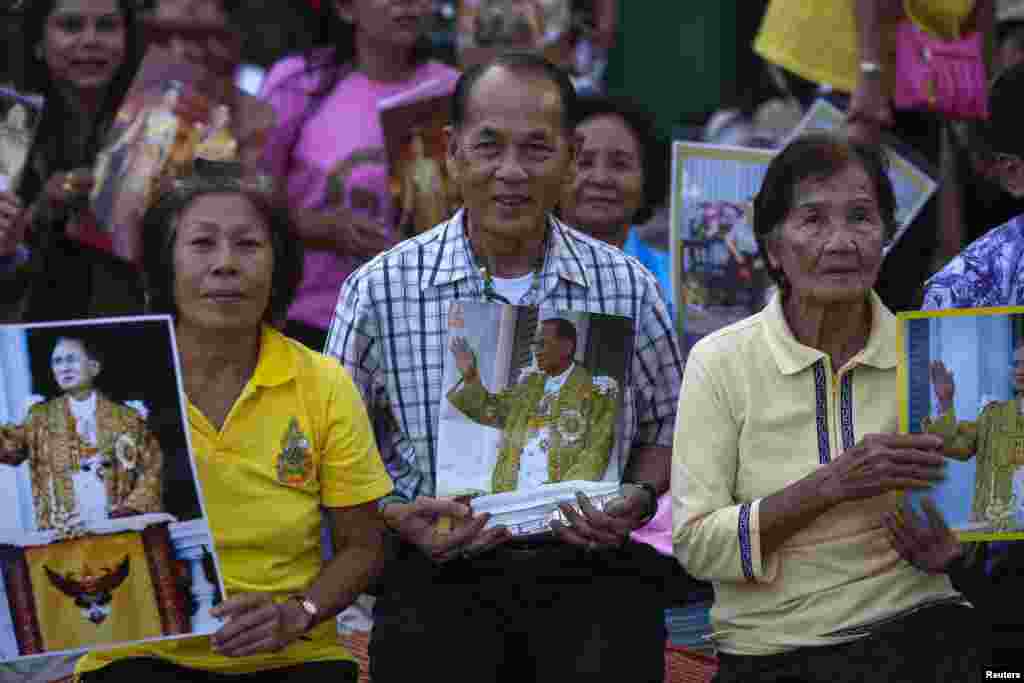
![Well-wishers hold pictures of Thailand's King Bhumibol Adulyadej, Dec. 4, 2013, as they camp outside the palace where he is staying in Hua Hin, Prachuap Khiri Khan province, Thailand, a day before his birthday.]()

![Anti-government protesters shout as they break down the barriers at the Thai Police Headquarters in Bangkok, Dec. 4, 2013. ]()

![An anti-government protester sweeps the street around the Democracy Monument, Bangkok, Dec. 4, 2013.]()

![Anti-government protesters sweep the street around the Democracy Monument after weeks of protesting and days of clashes with police in Bangkok's city center, Dec. 4, 2013.]()
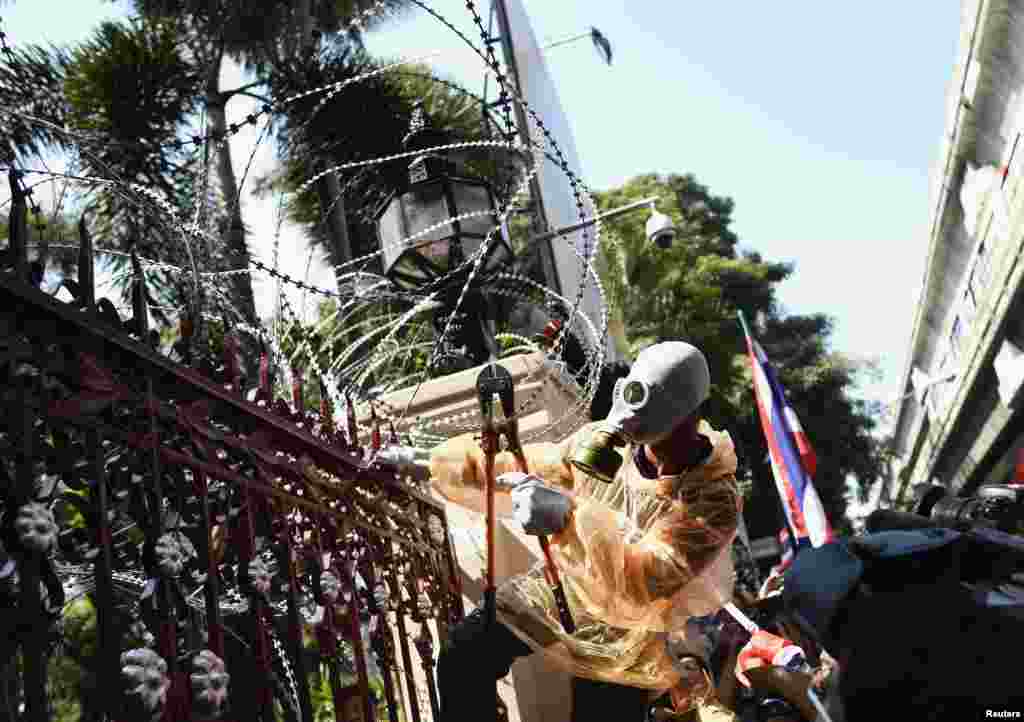
![An anti-government protester uses a wire cutter in an attempt to break down the barriers at the Thai Police Headquarters, Bangkok, Thailand, Dec. 4, 2013. ]()

![Anti-government protesters gesture towards riot police outside the headquarters of the ruling Puea Thai Party of Prime Minister Yingluck Shinawatra in Bangkok, Nov. 29, 2013.]()

![An anti-government protester gestures towards riot police outside the headquarters of the ruling Puea Thai Party of Prime Minister Yingluck Shinawatra in Bangkok, Nov. 29, 2013.]()
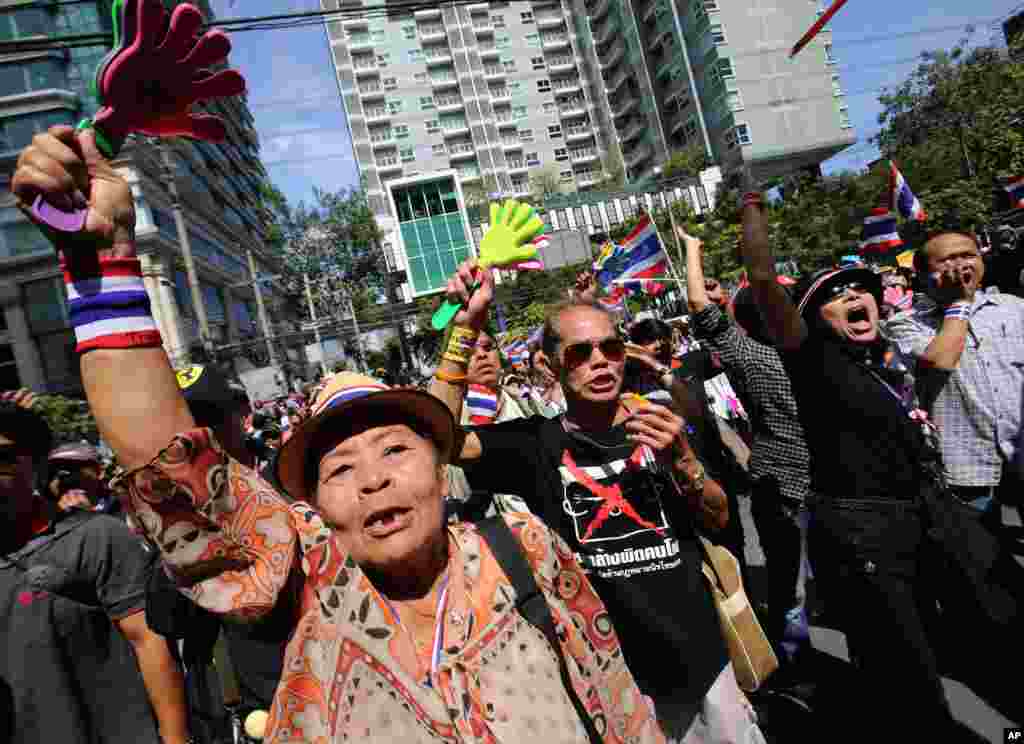
![Anti-government protesters shout slogans outside the headquarters of Prime Minister Yingluck Shinawatra's Puea Thai Party in Bangkok, Nov. 29, 2013.]()
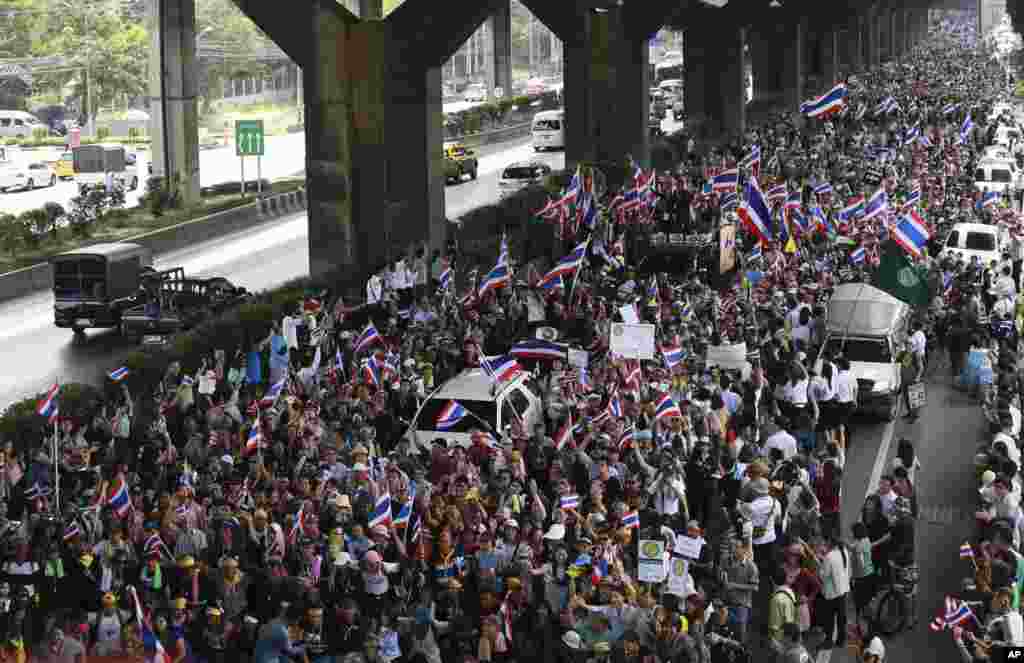
![Anti-government protesters march to the government complex in Bangkok, Nov. 27, 2013.]()
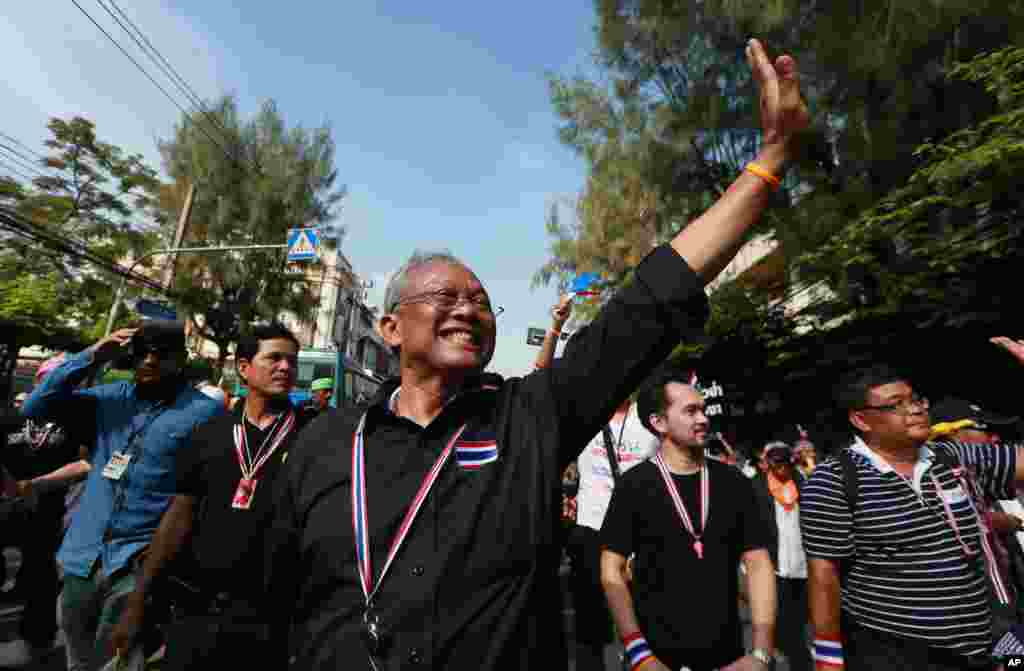
![Suthep Thaugsuban, a former deputy prime minister leading the protest, waves to his supporters during an anti-government march in Bangkok, Nov. 27, 2013.]()

![Supporters cheer anti-government protesters marching in Bangkok, Nov. 27, 2013.]()
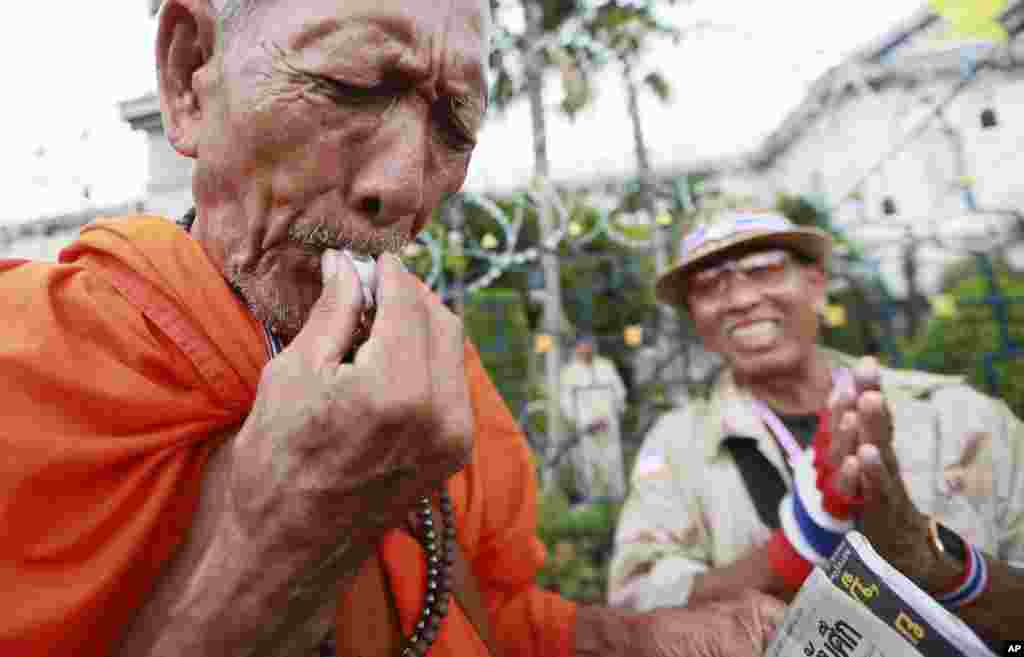
![A Buddhist monk blows a whistle during a rally outside Interior Ministry in Bangkok, Nov. 26, 2013.]()

![Riot police stand guard behind barricades during an anti-government rally in Bangkok, Nov. 26, 2013.]()

![Anti-government protesters march toward Thailand's Finance Ministry in Bangkok, Nov. 25, 2013.]()

![An anti-government protester fights with police at a barricade near Government House in Bangkok, Nov. 25, 2013.]()
"If government workers stop working for the tyrants, the Thaksin regime will be crippled," said Suthep.
Suthep, a former deputy prime minister, announced Tuesday his goal to form a non-elected council to replace the current government. He said Yingluck's government is corrupt and controlled by her brother, exiled former Prime Minister Thaksin Shinawatra.
Police have issued an arrest warrant for Suthep but so far have not acted on it or attempted to remove the protesters by force. Still, many fear a return of the deadly political unrest that has gripped the country in recent years.
Meanwhile, the opposition Democrat Party has launched a no-confidence debate in parliament against Yingluck. She is virtually certain to survive the motion, as her Pheu Thai party dominates parliament.
Prime Minister Yingluck has refused to step down and has called for dialogue to resolve the situation. She has vowed not to use violence to stop the protests.
The street protests are the largest in Thailand since 2010, when more than 90 people were killed in a military crackdown on an opposition protest.
The latest round of protests was triggered several weeks ago by an amnesty bill that would have allowed Thaksin to return home and avoid a two-year jail term for corruption. That bill was rejected by the Senate, but opposition-led protests have continued.
Prime Minister Yingluck Shinawatra came to power in 2011. Her brother, Thaksin, was toppled by a coup in 2006 and convicted of corruption in 2008. He has lived in exile to escape the charges, which he says were politically motivated.
The protesters have already taken over parts of the finance and foreign ministries and surrounded the interior ministry. Protest leader Suthep Thaugsuban told supporters they should march on "every ministry" to keep them from being used by the government.
Anti-Government Protests in Bangkok
Show more
Show less
Show more
Show less
Show more
Show less
Show more
Show less
Show more
Show less
Show more
Show less
Show more
Show less
Show more
Show less
Show more
Show less
Show more
Show less
Show more
Show less
Show more
Show less
Show more
Show less
Show more
Show less
Show more
Show less
"If government workers stop working for the tyrants, the Thaksin regime will be crippled," said Suthep.
Suthep, a former deputy prime minister, announced Tuesday his goal to form a non-elected council to replace the current government. He said Yingluck's government is corrupt and controlled by her brother, exiled former Prime Minister Thaksin Shinawatra.
Police have issued an arrest warrant for Suthep but so far have not acted on it or attempted to remove the protesters by force. Still, many fear a return of the deadly political unrest that has gripped the country in recent years.
Meanwhile, the opposition Democrat Party has launched a no-confidence debate in parliament against Yingluck. She is virtually certain to survive the motion, as her Pheu Thai party dominates parliament.
Prime Minister Yingluck has refused to step down and has called for dialogue to resolve the situation. She has vowed not to use violence to stop the protests.
The street protests are the largest in Thailand since 2010, when more than 90 people were killed in a military crackdown on an opposition protest.
The latest round of protests was triggered several weeks ago by an amnesty bill that would have allowed Thaksin to return home and avoid a two-year jail term for corruption. That bill was rejected by the Senate, but opposition-led protests have continued.
Prime Minister Yingluck Shinawatra came to power in 2011. Her brother, Thaksin, was toppled by a coup in 2006 and convicted of corruption in 2008. He has lived in exile to escape the charges, which he says were politically motivated.