BANGKOK —
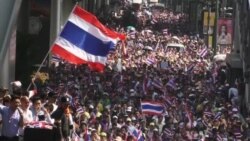
Thailand's prime minister dissolved the government and called for new elections Monday, but that did little to appease the more than 150,000 people who took to the streets in the capital, demanding she resign.
As demonstrators began converging again on the seat of the Thai government's power, a conciliatory Prime Minister Yingluck Shinawatra announced she would ask the crown to consent to dissolve parliament and hold snap elections.
In a brief, nationally televised address, the prime minister acknowledged widespread opposition to her government, emphasizing authorities do not want to see any further "loss of life."
The prime minister says that after listening to opinions from all sides, she has “decided to request a royal decree to dissolve parliament.”
But Yingluck says her cabinet will remain intact, albeit with limited powers, and she is staying on as caretaker prime minister. Her party says she will stand as a candidate in the new election to be held by February 2.
That did little to appease protesters whose leaders demanded she immediately step down.
Protests in Bangkok
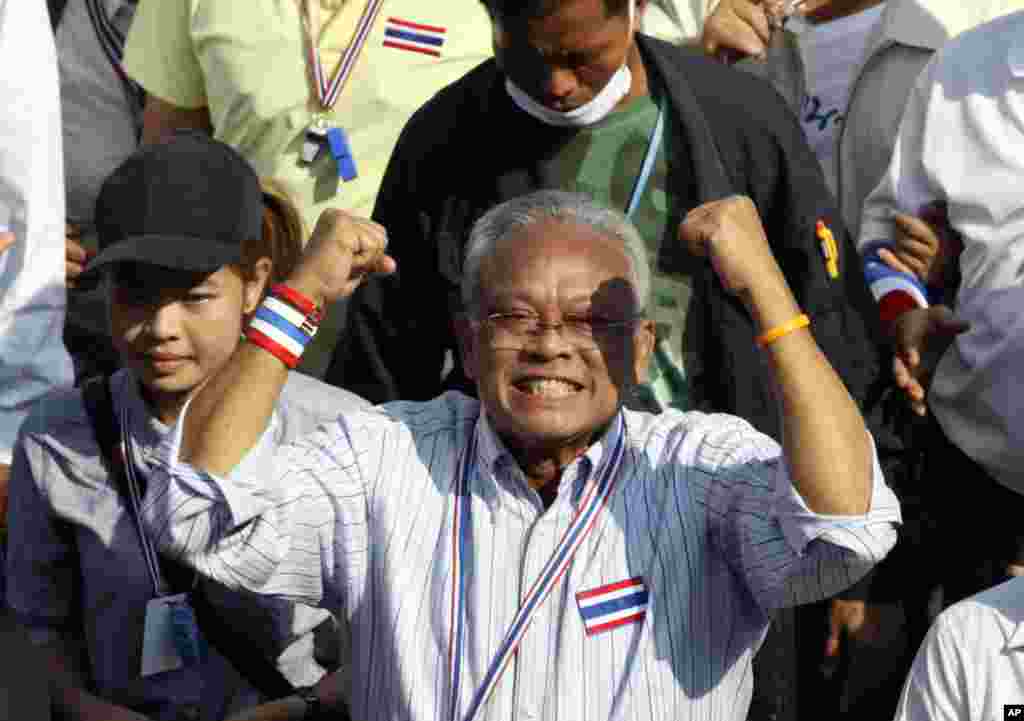
1/12Thai anti-government protest leader Suthep Thaugsuban holds clenched fists during a march with his supporters in Bangkok, Thailand, Dec. 22, 2013.
Show moreShow less
2/12Thai anti-government protesters march cross Takin Bridge during a rally, Dec. 22, 2013, in Bangkok, Thailand.
Show moreShow less
3/12Thai anti-government protesters march in the streets, Dec. 22, 2013, in Bangkok, Thailand.
Show moreShow less
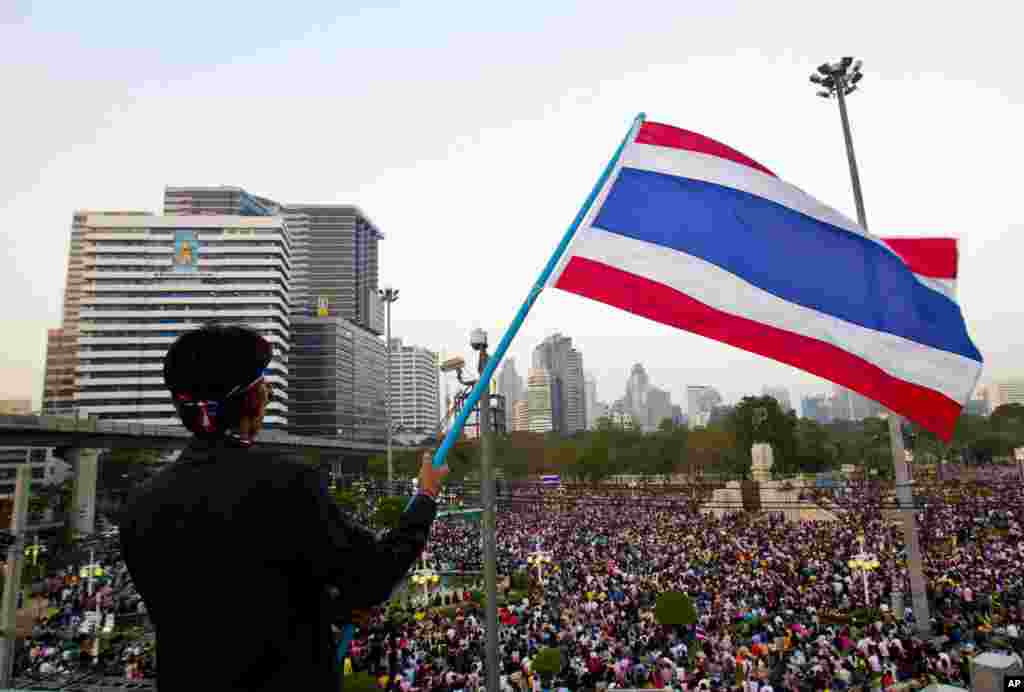
4/12Tens of thousands of protesters marched through Thailand's capital paralyzing traffic and facing off with police outside the prime minister's residence in their latest mass rally against Thailand's government, Dec. 22, 2013, Bangkok, Thailand.
Show moreShow less
5/12A Thai anti-government protester holds a banner as she joins a rally outside Prime Minister Yingluck Shinawatra's residence, Dec. 22, 2013, Bangkok, Thailand.
Show moreShow less
6/12Anti-government protest leader Suthep Thaugsuban, center, with his wife Srisakul Promphan, in white, arrives at the Democracy monument, in Bangkok, Thailand, Dec. 15, 2013.
Show moreShow less
7/12A protester with a Thai national flag walks past concrete barriers sprayed with "Failed Government" outside the fence around Government House, wrapped by a long banner in the colors of the national flag in Bangkok, Dec. 13, 2013.
Show moreShow less
8/12Anti-government protesters remove barbed wire after briefly entering the compound of the prime minister's office, known as Government House, in Bangkok, Dec. 12, 2013.
Show moreShow less
9/12Police wear their riot gear inside Government House, as anti-government protesters gather behind its fence and gates in Bangkok, Dec. 12, 2013.
Show moreShow less
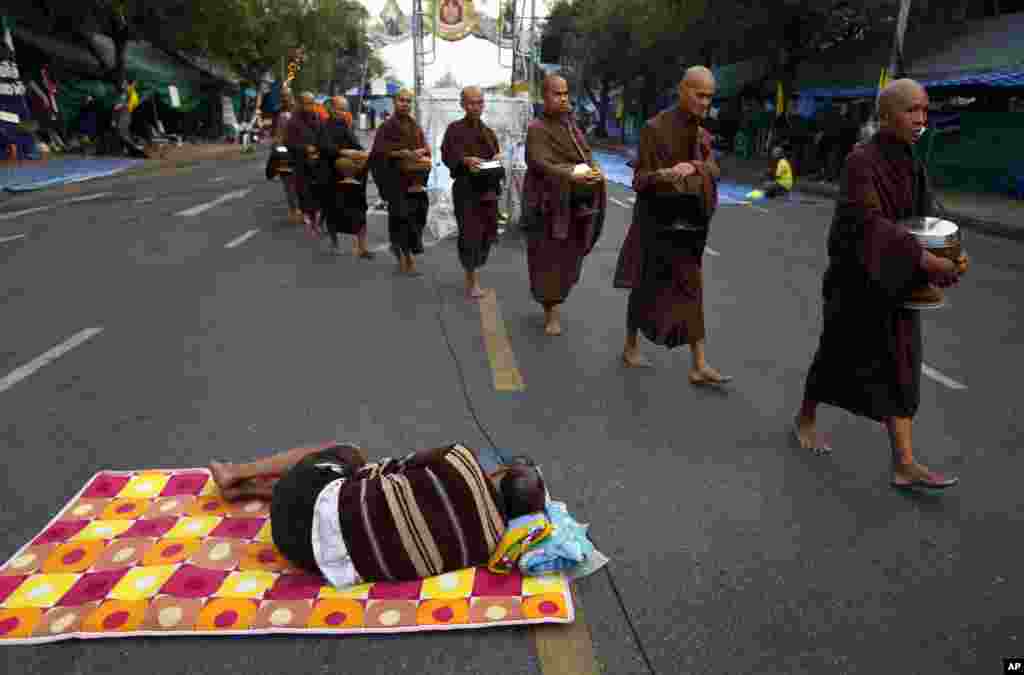
10/12A group of Buddhist monks walk past a sleeping anti-government protester at a protest camp on a road near Government House in Bangkok, Dec. 11, 2013.
Show moreShow less
11/12Anti-government protesters sleep outside Government House in Bangkok, Dec. 10, 2013.
Show moreShow less
12/12Anti-government protesters carry a huge Thai national flag as they march in Bangkok, Dec. 9, 2013.
Show moreShow less
Previous slide
Next slide
Demonstrator Watcharapon Wuou was among those marching to the government center after Yingluck's announcement.
He says the protestors are not satisfied with the dissolution of the parliament and the "prime minister must resign or get out of the country."
The opposition has repeatedly rejected the idea of new elections, instead saying they want to change the country's political system.
Its most vocal leader, a former deputy prime minister, has demanded the elected government be replaced by an appointed but vaguely defined "people's council."
The roots of Thailand's political instability go back years to when Yingluck's brother, the billionaire tycoon Thaksin Shinawatra was prime minister. Although he lives in exile to avoid prison for corruption charges, the parties he has backed have won every national election since 2001, largely from the support of rural and working-class voters.
Observers have deemed the elections free and fair, but his opponents, mainly the capital's middle class and royalist elite, contend Thaksin and his family buy their way to power and enrich themselves while in office.
Protester Santhanee Methaneethom says that is why new elections will not work.
“It is the time that the Thai country should be clean from corruption. So that’s why the people are all here,” said Santhanee Methaneethom.
The latest round of demonstrations began over an amnesty bill introduced by the ruling party that would have cleared the way for Thaksin to return home. The bill was defeated, but sparked mostly peaceful protests that have lasted weeks.
Domestic media reports say leaders of Thailand's powerful military are growing increasingly displeased. The generals have intervened 18 times since 1932, when absolute monarchy rule ended. And despite the assurances of military leaders that this latest crisis will not lead to another coup, few Thais rule that out as a possibility.