Accessibility links

Breaking News

Tunisia Presidential Poll Heading for Run-off

update
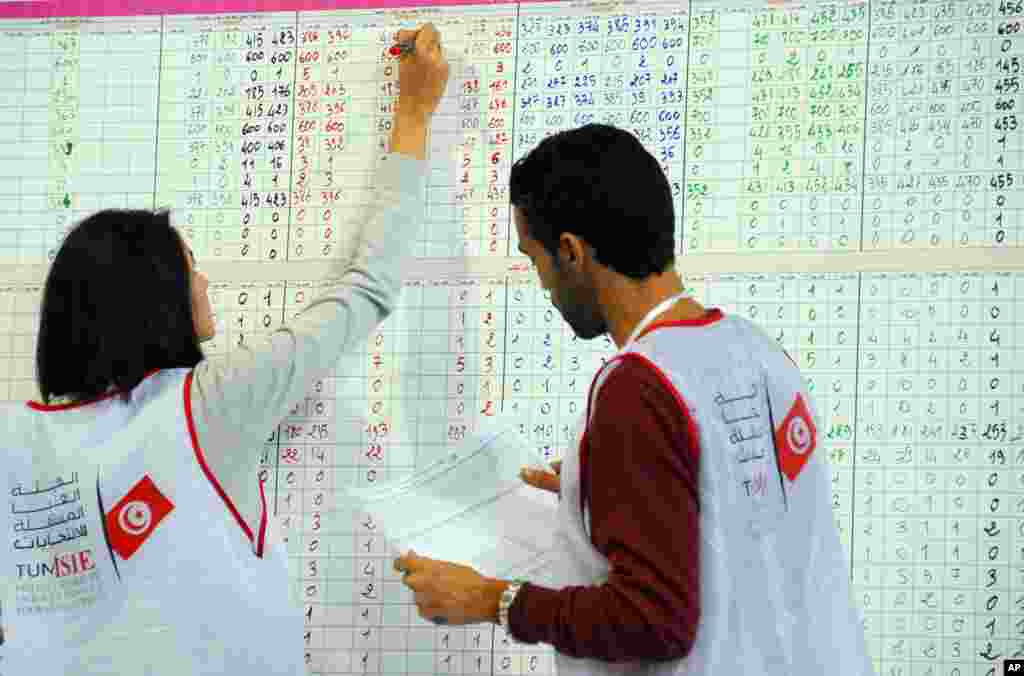
An election official keeps track of votes on a board at a polling station in Tunis, Tunisia, , Nov. 24, 2014.
1/7 An election official keeps track of votes on a board at a polling station in Tunis, Tunisia, , Nov. 24, 2014.
Tunisians voted in the country's first presidential elections since a 2011 pro-democracy uprising, with the two major parties preparing for a run-off poll next month.
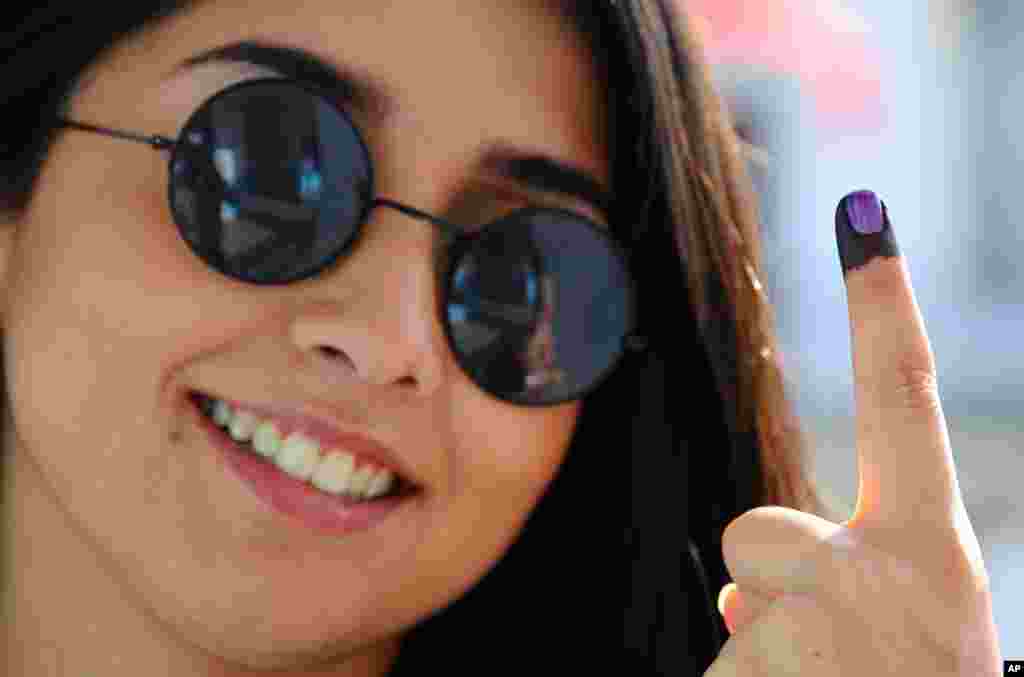
A young woman shows her ink-stained finger after casting her vote during the first round of the Tunisian presidential election, in a polling station at Marsa, outside Tunis, Nov. 23, 2014.
2/7 A young woman shows her ink-stained finger after casting her vote during the first round of the Tunisian presidential election, in a polling station at Marsa, outside Tunis, Nov. 23, 2014.
Tunisians voted in the country's first presidential elections since a 2011 pro-democracy uprising, with the two major parties preparing for a run-off poll next month.
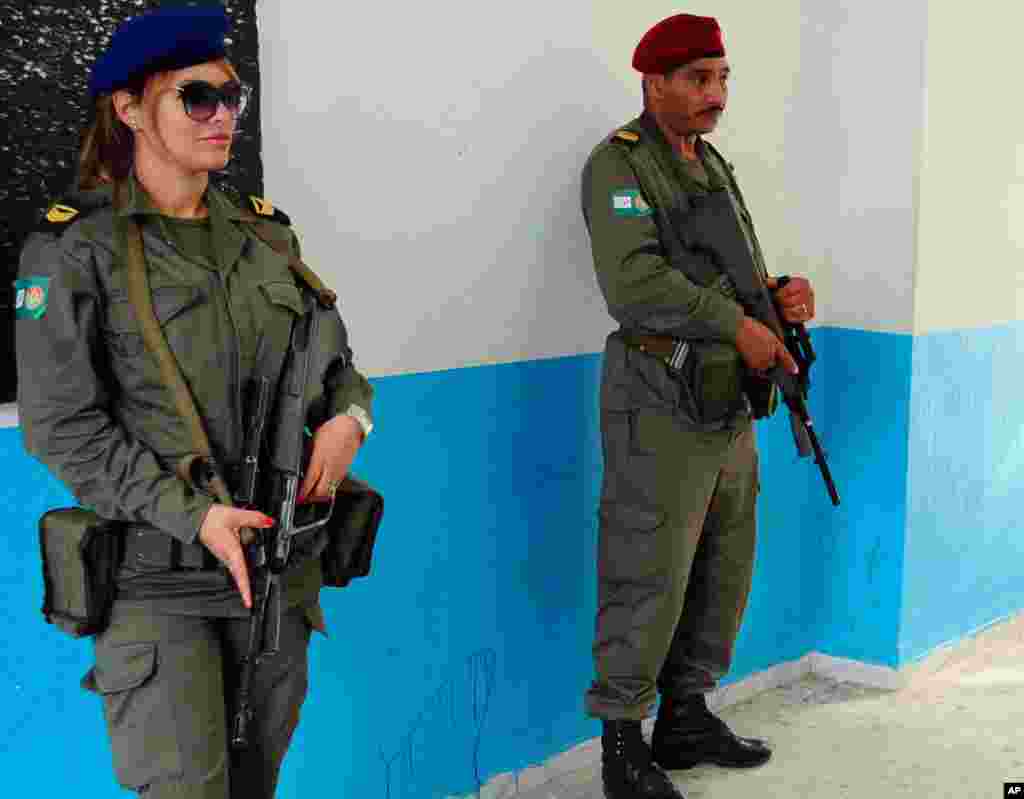
Tunisian soldiers stand guard at a polling station in Marsa, outside Tunis, Nov. 23, 2014.
3/7 Tunisian soldiers stand guard at a polling station in Marsa, outside Tunis, Nov. 23, 2014.
Tunisians voted in the country's first presidential elections since a 2011 pro-democracy uprising, with the two major parties preparing for a run-off poll next month.
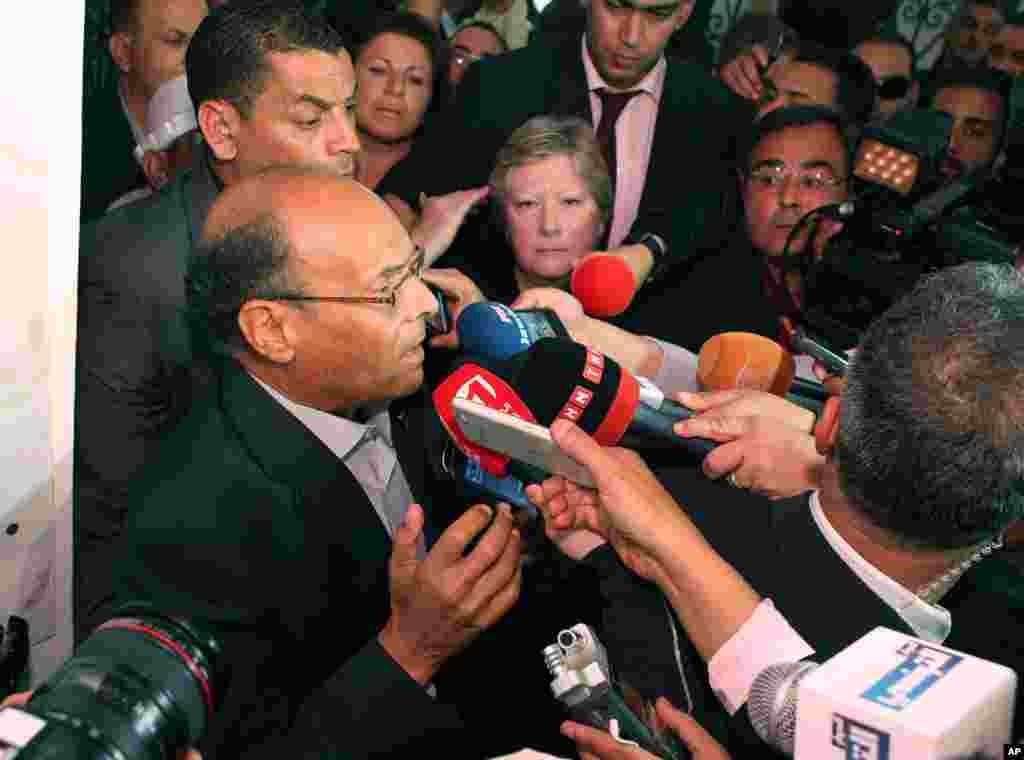
Presidential candidate and Tunisian President Moncef Marzouki addresses the media after he casts his vote during the first round of the Tunisian presidential election, in Sousse, Tunisia, Nov. 23, 2014.
4/7 Presidential candidate and Tunisian President Moncef Marzouki addresses the media after he casts his vote during the first round of the Tunisian presidential election, in Sousse, Tunisia, Nov. 23, 2014.
Tunisians voted in the country's first presidential elections since a 2011 pro-democracy uprising, with the two major parties preparing for a run-off poll next month.
Presidential candidate and Nidaa Tounes party leader Beji Caid Essebsi casts his vote during the first round of the Tunisian presidential election, in Soukra, Tunisia, Nov. 23, 2014.
5/7 Presidential candidate and Nidaa Tounes party leader Beji Caid Essebsi casts his vote during the first round of the Tunisian presidential election, in Soukra, Tunisia, Nov. 23, 2014.
Tunisians voted in the country's first presidential elections since a 2011 pro-democracy uprising, with the two major parties preparing for a run-off poll next month.
A woman casts her vote while holding her child, during the first round of the Tunisian presidential election, in a polling station at Marsa, outside Tunis, Nov. 23, 2014.
6/7 A woman casts her vote while holding her child, during the first round of the Tunisian presidential election, in a polling station at Marsa, outside Tunis, Nov. 23, 2014.
Tunisians voted in the country's first presidential elections since a 2011 pro-democracy uprising, with the two major parties preparing for a run-off poll next month.
Tunisian security officers stand guard outside a polling station during Tunisia's first presidential election since the 2011 revolution, in the center of Tunis, Nov. 23, 2014.
7/7 Tunisian security officers stand guard outside a polling station during Tunisia's first presidential election since the 2011 revolution, in the center of Tunis, Nov. 23, 2014.
Tunisians voted in the country's first presidential elections since a 2011 pro-democracy uprising, with the two major parties preparing for a run-off poll next month.
Previous slide
Next slide

Tunisians voted in the country's first presidential elections since a 2011 pro-democracy uprising, with the two major parties preparing for a run-off poll next month.

Official results had not been announced by early Monday. But the campaign manager for 87-year-old secularist Beji Caid Essebsi said the Nidaa Tounes party candidate had emerged as the frontrunner. Advisers to incumbent rival Moncef Marzouki acknowledged the run-off, without providing details.

The vote marked the long-awaited completion of a transition to democracy that began with the 2011 overthrow of entrenched authoritarian leader Zine El Abidine Ben Ali. That revolt also sparked uprisings in Egypt, Syria, Yemen and Libya, which collectively became known as the Arab Spring pro-democracy uprisings.

Tunisian secularists won the most seats in parliament in general elections last month.

They are expected to form a government in the near future.

Since the overthrow of Ben Ali's one-party rule, secularist and Islamist parties have largely avoided the turmoil and violence that spread through other Arab Spring countries, and lawmakers have adopted a new constitution.

Material for this report came from AP, AFP, and Reuters.

  • 16x9 Image

    VOA News

    The Voice of America provides news and information in more than 40 languages to an estimated weekly audience of over 326 million people. Stories with the VOA News byline are the work of multiple VOA journalists and may contain information from wire service reports.

This item is part of
XS
SM
MD
LG