UN Envoy: Syria, Some Rebels Agree to Holiday Truce
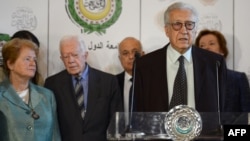
Syria peace envoy Lakhdar Brahimi, behind podium at Arab League headquaraters in Cairo Oct. 24, 2012. Seen in the background from left are former president of Ireland Mary Robinson (R) and former US president Jimmy Carter (2nd L)
CAIRO, MOSCOW —
International envoy Lakhdar Brahimi says the Syrian government and some rebel groups opposed to President Bashar al-Assad have agreed to a cease-fire during the Eid al-Adha holiday, which begins Thursday evening.
Brahimi made the cease-fire announcement in Cairo surrounded by retired world leaders and diplomats, including former U.S. President Jimmy Carter. The envoy appeared to weigh his words carefully, giving an encouraging outlook to an otherwise bleak situation.
The former Algerian diplomat and veteran negotiator said that small steps would be made to build on the cease-fire if it succeeds.
Later Wednesday, during a video briefing to the United Nations Security Council, Brahimi asked for strong council support, saying another failure of a truce attempt would lead to a worsening regionalization of the conflict.
Before the briefing, ambassadors from four of the council's permanent members, China, Russia, Britain and France, voiced support for the truce. Russia's Vitaly Churkin said he hopes it holds, but he added making that happen is very hard. The U.S. envoy, Susan Rice, did not stop to talk to reporters.
Brahimi has visited a number of Middle Eastern countries during the past several weeks in order to broker a truce.
Government decision due
Syrian government TV reported that Damascus would make a final decision Thursday on whether to respect a cease-fire.
The Syrian government announced several days ago that it would release prisoners who are “not terrorists,” in honor of the holiday.
Rebel Free Syrian Army commander Malek Kurdi told Arab satellite channels that his men would “observe the cease-fire, if the government does.” He said, however, that the government “must release prisoners [as it has promised],” or the cease-fire will “fall apart.”
Hardline Syrian opposition leader Haithem Maleh said that rebel forces “are on the offensive, while the government is on the defensive,” so it is “important the government does not try to use the cease-fire to strengthen its position on the ground.”
Analysts doubt
Analyst Peter Harling of the International Crisis Group says that many attempts have been made before to arrange a cease-fire, but that none has worked out.
"Within the context of this crisis, virtually every kind of possible cease-fire has already been attempted," Harling said. "None of these concepts have worked out, given the fact that we're still in a conflict which is escalating gradually and in which both sides are convinced that they can win this militarily, although it will take time."
Harling added that a “significant change in the dynamics of the conflict must take place” for a cease-fire to work. He said a “huge amount of details” are required, so as to “contain breaches that can and will occur.”
Former U.N. spokesman Timor Goksel, who now teaches at the American University of Beirut, warns that a key hurdle in working out a cease-fire in Syria revolves around the decentralized command structure of the rebel fighters.
Goksel said that during his lengthy experience of Lebanon's civil war, cease-fires tend to unravel quickly. But he said they are very important for ordinary citizens caught in the crossfire.
"For the people in the street, something like this is fantastic, to put their lives in order, at least for three, four days and......but I'm not really sure about the parties involved," he said. "I don't know who makes their decisions for them. Really, it's very hard to say."
Russian claims
Meanwhile, Russia's top general says Syrian rebels have acquired portable surface-to-air missiles, including a model made in the United States.
Story continues below
Developments in Syria
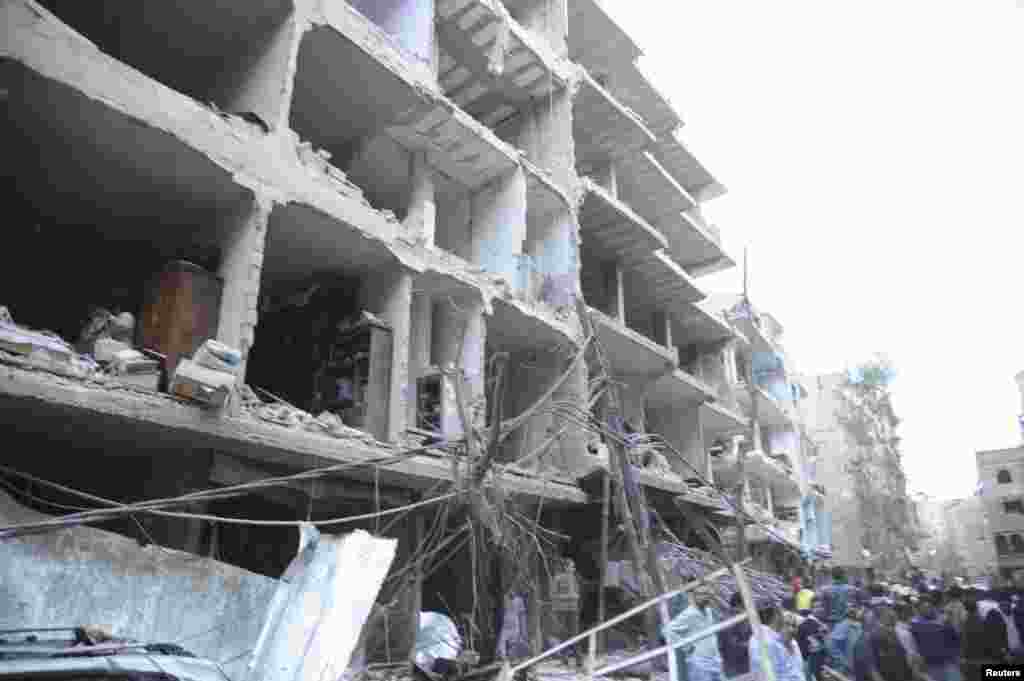
1/12A crowd gathers in front of damaged buildings after a car bomb exploded at Daf al-Shok district, in Damascus, Syria, October 26, 2012, in this photograph released by Syria's national news agency SANA.
A blast in Damascus and fighting elsewhere in Syria left several people dead Friday despite the start of a four-day cease-fire.
Show moreShow less
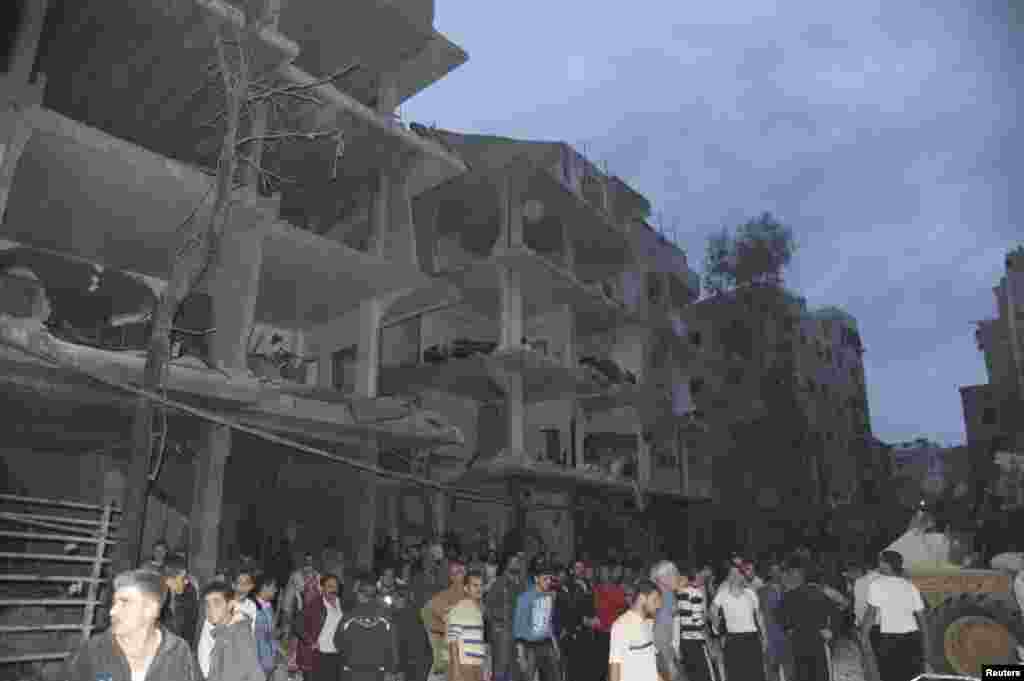
2/12A crowd gathers in front of damaged buildings after a car bomb exploded at Daf al-Shok district, in Damascus, Syria, October 26, 2012, in this photograph released by Syria's national news agency SANA.
A blast in Damascus and fighting elsewhere in Syria left several people dead Friday despite the start of a four-day cease-fire.
Show moreShow less
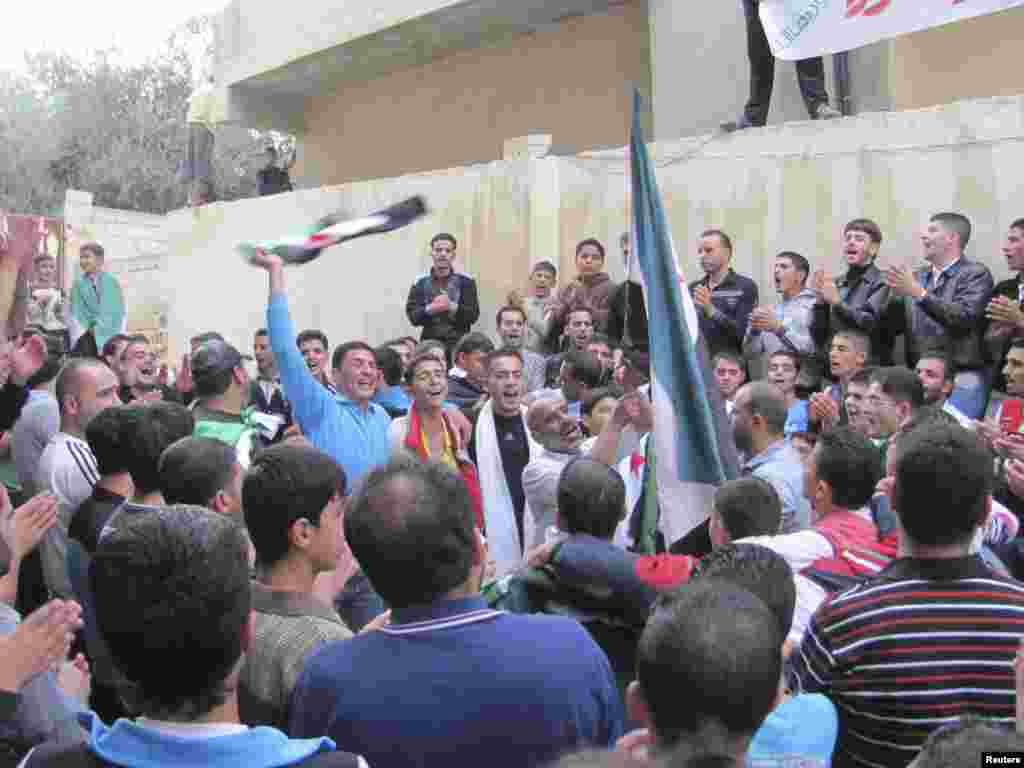
3/12Demonstrators hold opposition flags during a protest against Syria's President Bashar al-Assad, after Eid al-Adha prayers, Dara, Syria, October 26, 2012.
A blast in Damascus and fighting elsewhere in Syria left several people dead Friday despite the start of a four-day cease-fire.
Show moreShow less
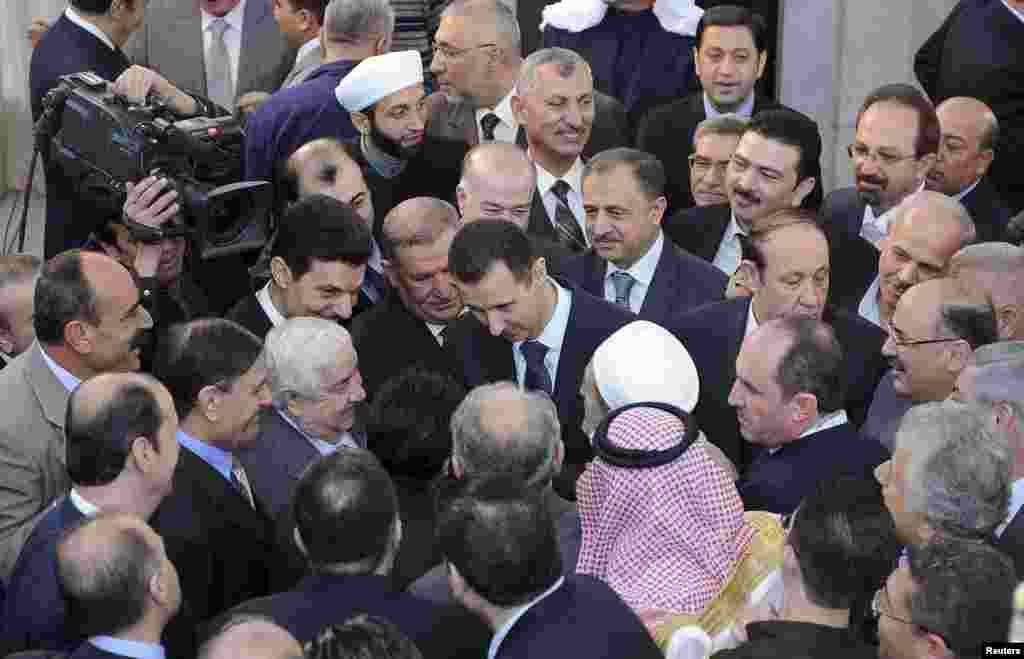
4/12Syria's President Bashar al-Assad (C) chats with people after prayers for Eid al-Adha at al-Afram Mosque, Damascus, Syria, October 26, 2012.
A blast in Damascus and fighting elsewhere in Syria left several people dead Friday despite the start of a four-day cease-fire.
Show moreShow less
5/12Members of the Free Syrian Army watch for snipers during fighting against pro-government forces in Harem, Idlib, Syria, October 25, 2012.
A blast in Damascus and fighting elsewhere in Syria left several people dead Friday despite the start of a four-day cease-fire.
Show moreShow less
6/12Smoke is seen after pro-government forces shelled the outskirts of Atareb, in Idlib governorate, Syria, October 24, 2012.
A blast in Damascus and fighting elsewhere in Syria left several people dead Friday despite the start of a four-day cease-fire.
Show moreShow less
7/12A member of the Free Syrian Army stands guard during a shelling by pro-government forces on the outskirts of Atareb, in Idlib governorate, Syria, October 24, 2012.
A blast in Damascus and fighting elsewhere in Syria left several people dead Friday despite the start of a four-day cease-fire.
Show moreShow less
8/12В городе Сочи - олимпийские ночи
A blast in Damascus and fighting elsewhere in Syria left several people dead Friday despite the start of a four-day cease-fire.
Show moreShow less
9/12Residents are seen near damaged buildings at Marat al-Numan, near the northern province of Idlib, Syria, October 23, 2012.
A blast in Damascus and fighting elsewhere in Syria left several people dead Friday despite the start of a four-day cease-fire.
Show moreShow less
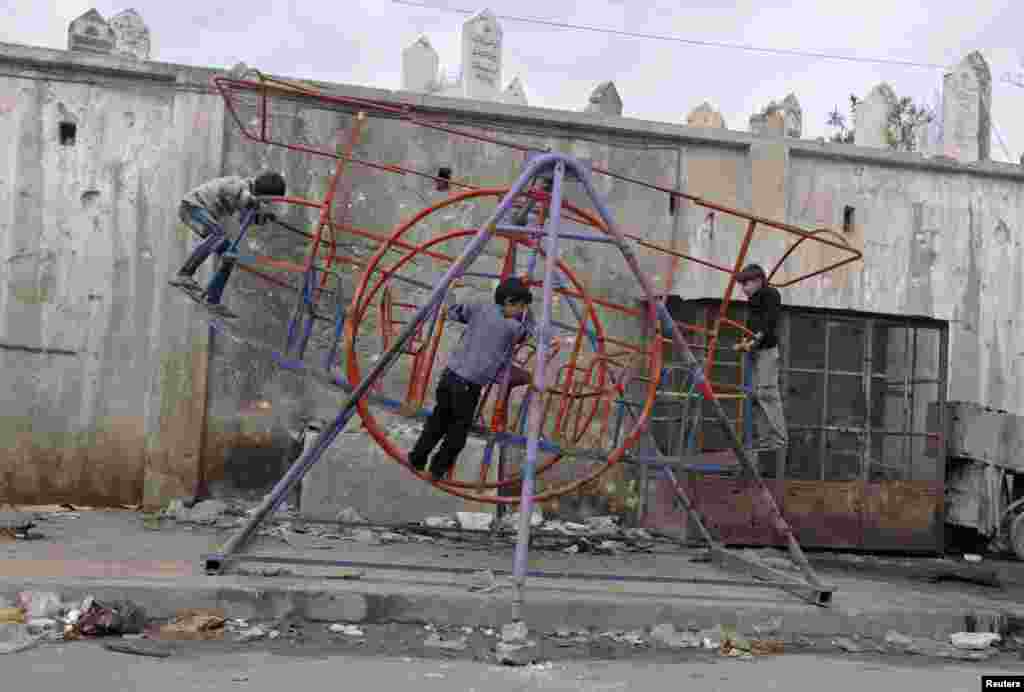
10/12Children play on swings in Aleppo, Syria, October 23, 2012.
A blast in Damascus and fighting elsewhere in Syria left several people dead Friday despite the start of a four-day cease-fire.
Show moreShow less
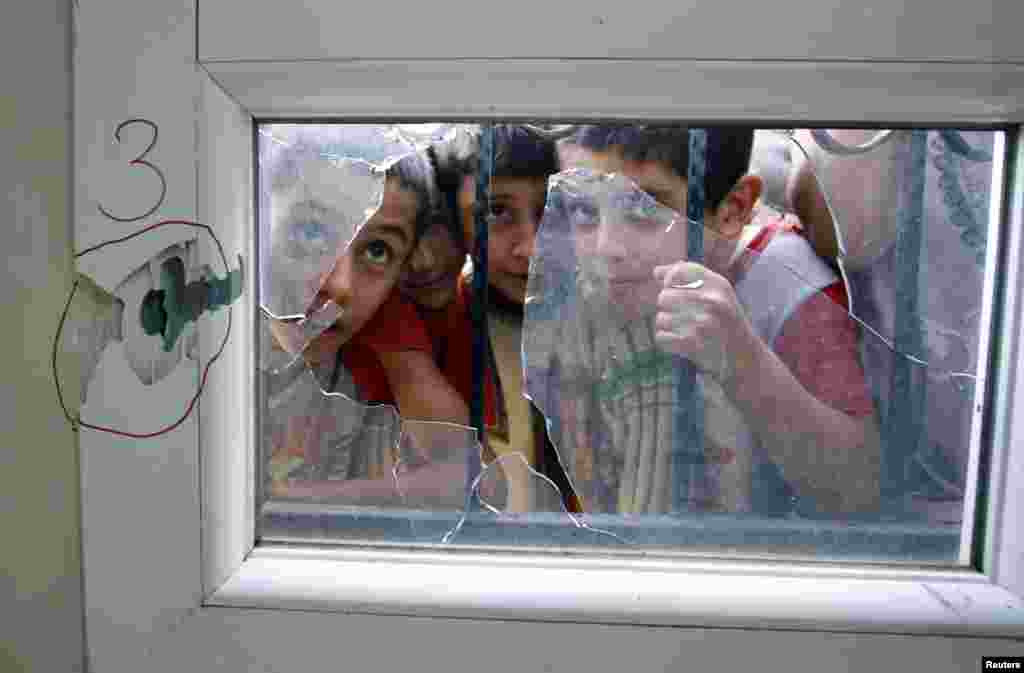
11/12Turkish boys look through a shattered window after an anti-aircraft shell fired from Syria hit a health center across the border in Reyhanli, Hatay province, Turkey, October 23, 2012.
A blast in Damascus and fighting elsewhere in Syria left several people dead Friday despite the start of a four-day cease-fire.
Show moreShow less
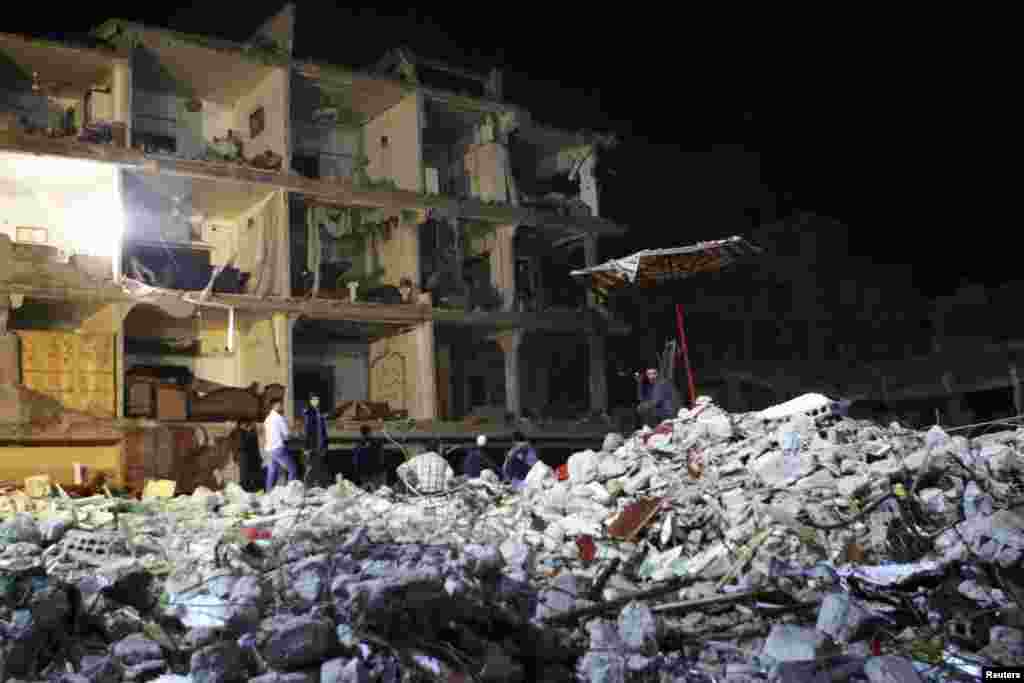
12/12A building that anti-government sources said was destroyed by Syrian President Bashar al-Assad's forces is seen in Saqba, Damascus, Syria, October 22, 2012.
A blast in Damascus and fighting elsewhere in Syria left several people dead Friday despite the start of a four-day cease-fire.
Show moreShow less
Previous slide
Next slide
Interfax news agency quotes General Nikolai Marakov as saying "that militants fighting Syrian government forces have portable missile launchers of various states, including American-made Stingers.”
He did not make any direct accusation of how the rebels acquired the weapons.
The U.S. Defense Department had no immediate comment. In the past, the U.S. government has denied supplying Syrian rebels with weapons or having any information that American-made weapons are in the hands of rebel forces.
Marakov’s comments were part of a back and forth between Moscow and Washington regarding the conflict in Syria.
Russia has blocked three attempts in the United Nations Security Council to impose sanctions against its long-time ally, saying dialogue with both the opposition and the Syrian government is necessary for peace.
Yeranian reported from Cairo and Golloher from Moscow.