



((NARRATOR))
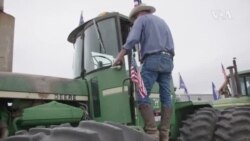
In rural Karnes City, Texas, ranchers and farmers are firing (starting) up their tractors to caravan for Donald Trump. Tracy Jendrusch is riding his tried-and-true tractor.
((Tracy Jendrusch, Cotton Farmer and Rancher))
“It’s an old dog, it’s probably a ‘78, ‘80 model, 40 years old, but it’s still running like a baby doll.”
((NARRATOR))
Jendrush’s great grandfather moved to the U.S. from Poland. His family has been farming ever since, and he’s always been self-employed, just like Trump.
((Tracy Jendrusch, Cotton Farmer and Rancher))
“He’s (Trump) an independent businessman. He's not a politician, you know. And I love what he's doing.”
((NARRATOR))
More than 380 kilometers south at the Texas-Mexico border city of Brownsville, Democrats are revved up for Joe Biden. David Betancourt, whose grandparents are Hispanic, says he disapproves of how Trump has handled his presidency.
((David Betancourt, Joe Biden Supporter))
“I mean, Donald Trump was just a very self-centered human being. It's obvious and I think we're all kind of tired of that.”
((NARRATOR))
The political parties on both sides of the presidential race are highly mobilized in a state that had been a model of Republican conservatism. 1976 was the last time Texas supported a Democratic presidential candidate. But the dynamics are changing in the second-largest state in the country, says University of Texas government professor Jim Henson.
((Jim Henson, Professor, University of Texas ))
“This year, in 2020, you can actually see a path for Biden to narrowly win in the state.”
((NARRATOR))
Texas is deeply divided between the red Republican rural regions and the blue Democratic urban areas. But the bridge between the two areas – the suburb – is changing Texas politics. The communities outside the urban centers used to be Republican strongholds, but they are turning purple due to nearly a decade of rapid population growth, economic development and migration.
((Jim Henson, Professor, University of Texas))
“As people from California, from other parts of Texas, from the cities that were close to those suburbs that moved out looking for better schools and cheaper housing – as all those people moved around, a lot of them settled in those districts, and they changed those districts.”
((NARRATOR))
Minorities such as African Americans, Latinos, East and South Asians make up the faces of many suburbs. The different ethnicities as well as whites lead to a greater mix of political beliefs. In addition to the voters in the suburbs, the Latino vote is another factor. While the majority of Latinos consider themselves Democrats, in some cases, Republican candidates in Texas have earned more than 40% of the Latino vote. Voter turnout among Latinos, especially in the border towns, has been a challenge for the Democrats.
((FOR RADIO: Jared Hockema is the Democratic Party Chairman in Cameron County))
((Jared Hockema, Cameron County Democratic Party Chairman))
“If Mexican Americans and people who live along the border can be activated and they go out to vote, that has a tremendous impact on the outcome of the election.”
((NARRATOR))
But Republicans at this parade do not think Texas will become a Democratic state.
((FOR RADIO: But Republicans at this parade, including one of its organizers, Sean O'Brien, do not think Texas will become a Democratic state.))
((Sean O'Brien, Electoral College Elector))
“I don't think it's ever going to turn blue, but yeah, purple maybe.”
((NARRATOR))
A polling average shows Trump and Biden essentially tied in Texas. Henson says the Republicans and Democrats are doing everything they can to mobilize people to vote, in hopes of making a difference in the Lone Star state.
((Elizabeth Lee, VOA News))
In rural Karnes City, Texas, ranchers and farmers are firing (starting) up their tractors to caravan for Donald Trump. Tracy Jendrusch is riding his tried-and-true tractor.
((Tracy Jendrusch, Cotton Farmer and Rancher))
“It’s an old dog, it’s probably a ‘78, ‘80 model, 40 years old, but it’s still running like a baby doll.”
((NARRATOR))
Jendrush’s great grandfather moved to the U.S. from Poland. His family has been farming ever since, and he’s always been self-employed, just like Trump.
((Tracy Jendrusch, Cotton Farmer and Rancher))
“He’s (Trump) an independent businessman. He's not a politician, you know. And I love what he's doing.”
((NARRATOR))
More than 380 kilometers south at the Texas-Mexico border city of Brownsville, Democrats are revved up for Joe Biden. David Betancourt, whose grandparents are Hispanic, says he disapproves of how Trump has handled his presidency.
((David Betancourt, Joe Biden Supporter))
“I mean, Donald Trump was just a very self-centered human being. It's obvious and I think we're all kind of tired of that.”
((NARRATOR))
The political parties on both sides of the presidential race are highly mobilized in a state that had been a model of Republican conservatism. 1976 was the last time Texas supported a Democratic presidential candidate. But the dynamics are changing in the second-largest state in the country, says University of Texas government professor Jim Henson.
((Jim Henson, Professor, University of Texas ))
“This year, in 2020, you can actually see a path for Biden to narrowly win in the state.”
((NARRATOR))
Texas is deeply divided between the red Republican rural regions and the blue Democratic urban areas. But the bridge between the two areas – the suburb – is changing Texas politics. The communities outside the urban centers used to be Republican strongholds, but they are turning purple due to nearly a decade of rapid population growth, economic development and migration.
((Jim Henson, Professor, University of Texas))
“As people from California, from other parts of Texas, from the cities that were close to those suburbs that moved out looking for better schools and cheaper housing – as all those people moved around, a lot of them settled in those districts, and they changed those districts.”
((NARRATOR))
Minorities such as African Americans, Latinos, East and South Asians make up the faces of many suburbs. The different ethnicities as well as whites lead to a greater mix of political beliefs. In addition to the voters in the suburbs, the Latino vote is another factor. While the majority of Latinos consider themselves Democrats, in some cases, Republican candidates in Texas have earned more than 40% of the Latino vote. Voter turnout among Latinos, especially in the border towns, has been a challenge for the Democrats.
((FOR RADIO: Jared Hockema is the Democratic Party Chairman in Cameron County))
((Jared Hockema, Cameron County Democratic Party Chairman))
“If Mexican Americans and people who live along the border can be activated and they go out to vote, that has a tremendous impact on the outcome of the election.”
((NARRATOR))
But Republicans at this parade do not think Texas will become a Democratic state.
((FOR RADIO: But Republicans at this parade, including one of its organizers, Sean O'Brien, do not think Texas will become a Democratic state.))
((Sean O'Brien, Electoral College Elector))
“I don't think it's ever going to turn blue, but yeah, purple maybe.”
((NARRATOR))
A polling average shows Trump and Biden essentially tied in Texas. Henson says the Republicans and Democrats are doing everything they can to mobilize people to vote, in hopes of making a difference in the Lone Star state.
((Elizabeth Lee, VOA News))