




Accessibility links

Breaking News
USA

Exxon Valdez Oil Spill Marred Alaska 30 Years Ago

FILE - An oil covered bird is examined on an island in Prince William Sound, Alaska, in April 1989. A massive oil-slick resulted after the tanker Exxon Valdez ran aground about 25 miles from Valdez, Alaska. 
1/7 FILE - An oil covered bird is examined on an island in Prince William Sound, Alaska, in April 1989. A massive oil-slick resulted after the tanker Exxon Valdez ran aground about 25 miles from Valdez, Alaska. 
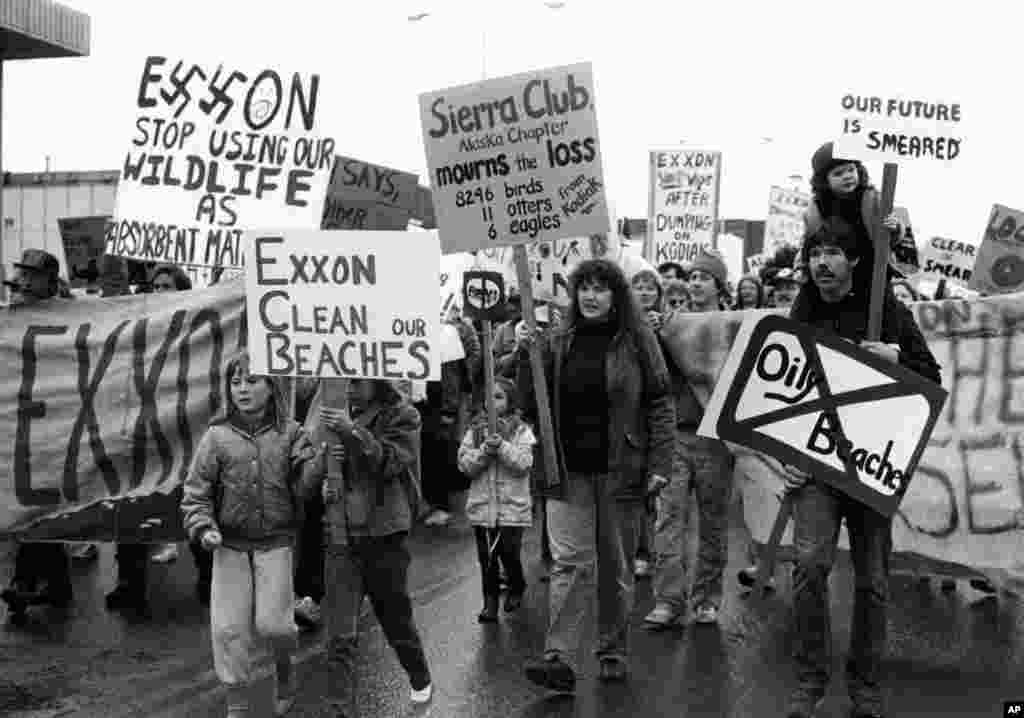
FILE - People in Kodiak carry signs to protest the Exxon oil spill in Anchorage, Alaska, May 27, 1989.
2/7 FILE - People in Kodiak carry signs to protest the Exxon oil spill in Anchorage, Alaska, May 27, 1989.
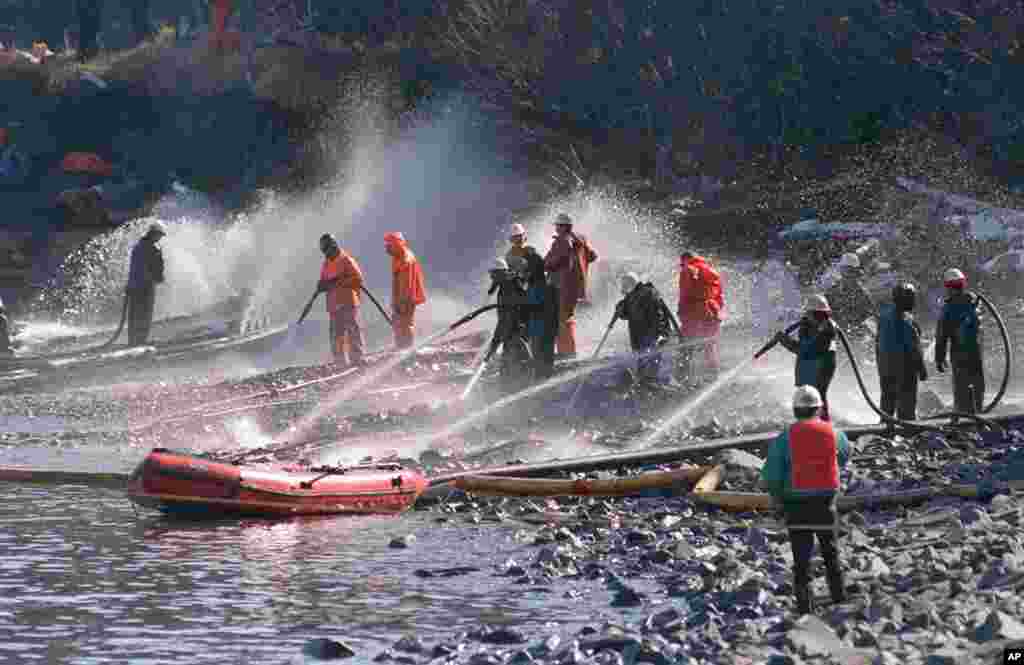
FILE - Crews use high-pressure hoses to blast the oil off rocks on this beach front on Naked Island, Alaska, April 21, 1989. This is one of two beaches that are being worked on, out of 58 beaches in the Prince William Sound.
3/7 FILE - Crews use high-pressure hoses to blast the oil off rocks on this beach front on Naked Island, Alaska, April 21, 1989. This is one of two beaches that are being worked on, out of 58 beaches in the Prince William Sound.
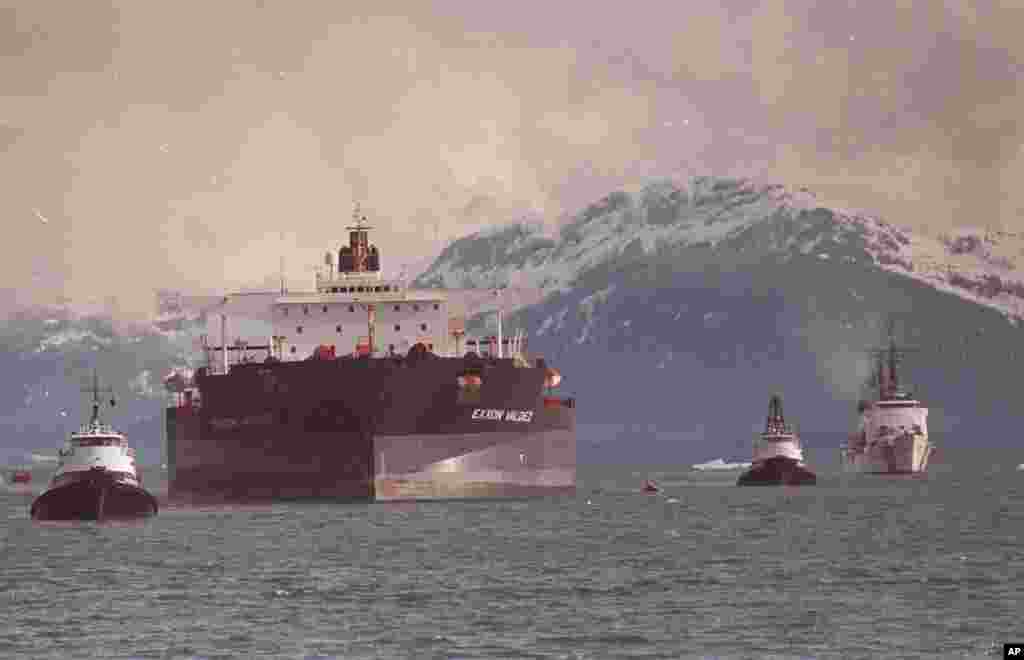
FILE - The Exxon Valdez is pictured being towed out of Prince William Sound in Alaska by a tug boat and a U.S. Coast Guard Cutter, June 23, 1989.
4/7 FILE - The Exxon Valdez is pictured being towed out of Prince William Sound in Alaska by a tug boat and a U.S. Coast Guard Cutter, June 23, 1989.
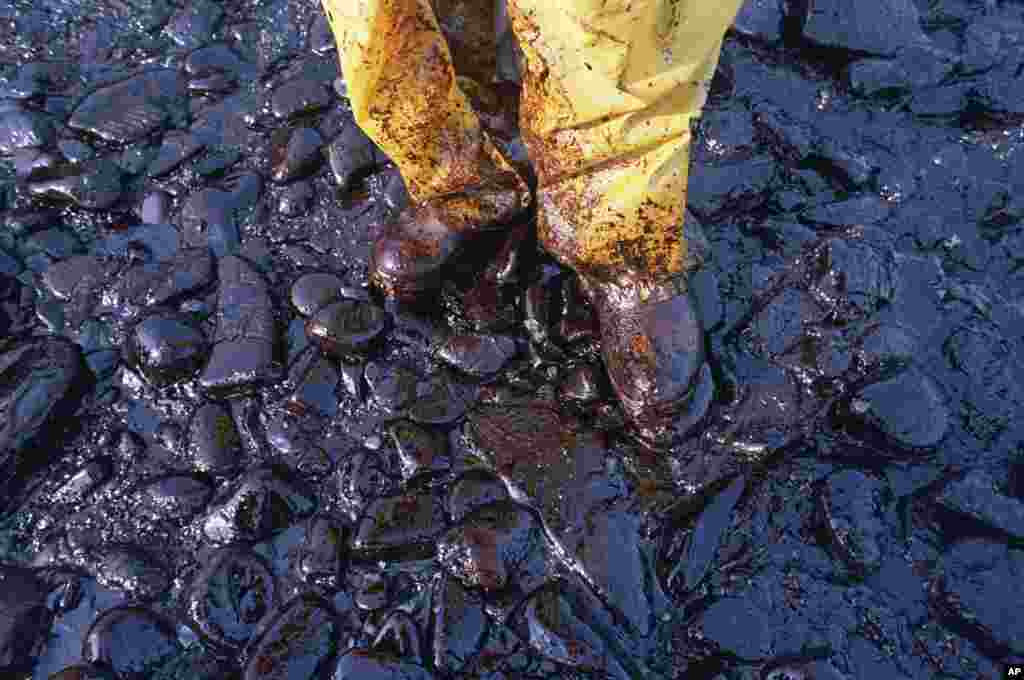
FILE - Thick crude oil washed up on the cobble beach of Evans Island sticks to the boots and pants of a local fisherman in Prince William Sound, Alaska, April 11, 1989.
5/7 FILE - Thick crude oil washed up on the cobble beach of Evans Island sticks to the boots and pants of a local fisherman in Prince William Sound, Alaska, April 11, 1989.
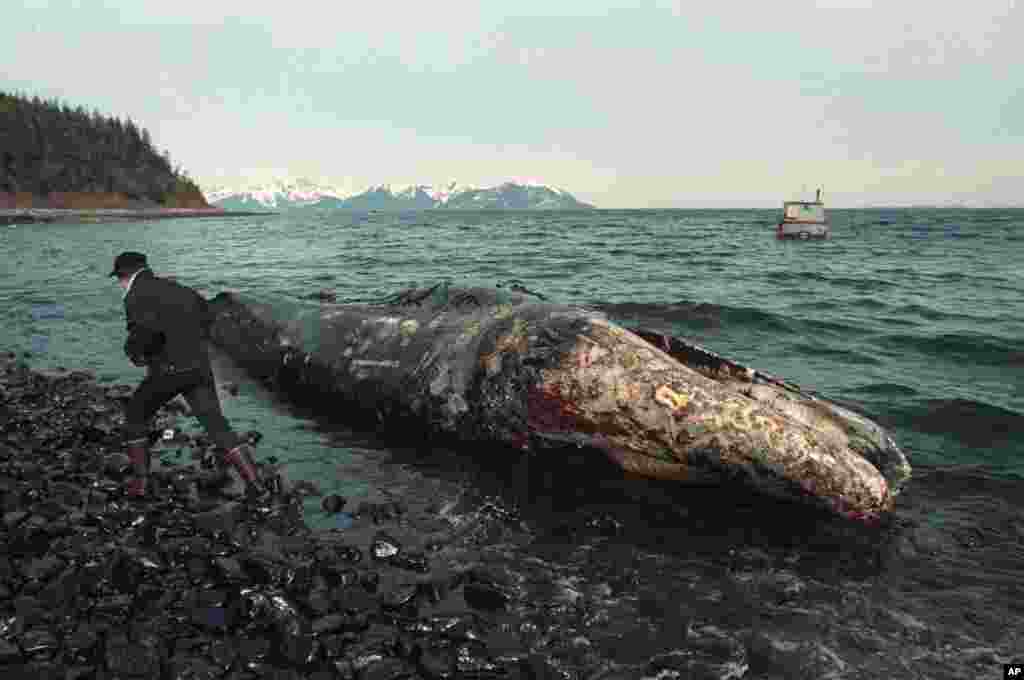
FILE - A local fisherman inspects a dead California gray whale on the northern shore of Latoucha Island, Alaska, April 9, 1989. Wildlife experts later determined that the whale died before the Exxon Valdez oil spill occurred on March 24.
6/7 FILE - A local fisherman inspects a dead California gray whale on the northern shore of Latoucha Island, Alaska, April 9, 1989. Wildlife experts later determined that the whale died before the Exxon Valdez oil spill occurred on March 24.
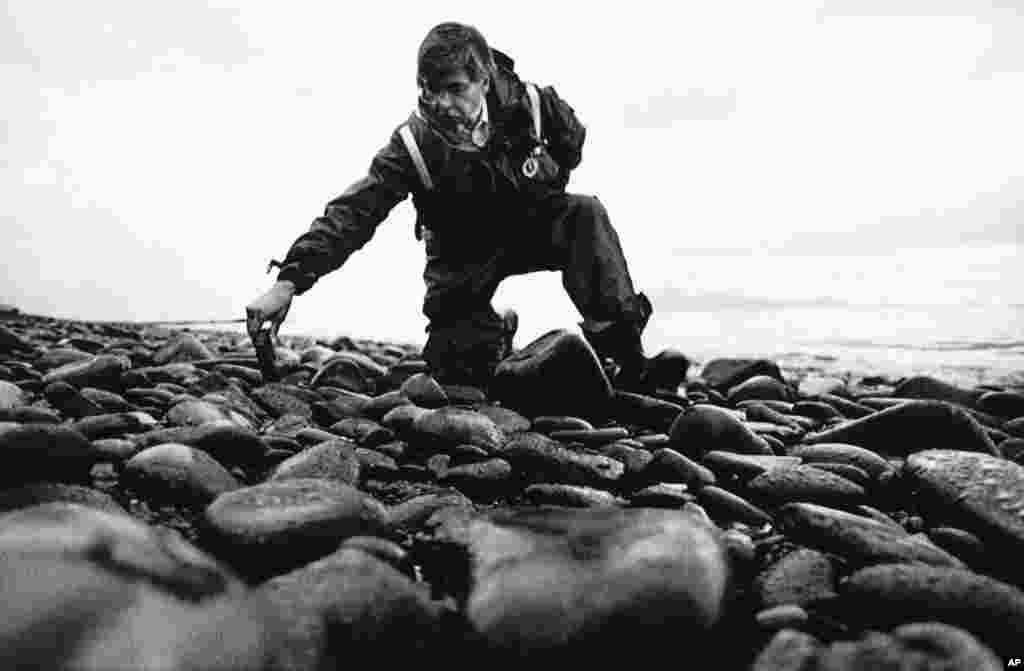
FILE - Steve Provant, Alaska's on-scene clean-up co-ordinator, examines oily rocks on Green Island, June 25, 1989, in Prince William Sound. The Coast Guard, which is overseeing Exxon's clean-up effort, declaring crews had "completed removal of gross contamination." But the oil came back.
7/7 FILE - Steve Provant, Alaska's on-scene clean-up co-ordinator, examines oily rocks on Green Island, June 25, 1989, in Prince William Sound. The Coast Guard, which is overseeing Exxon's clean-up effort, declaring crews had "completed removal of gross contamination." But the oil came back.
Previous slide
Next slide

It was just after midnight March 24, 1989, when an Exxon Shipping Co. tanker ran aground outside the town of Valdez, Alaska, spewing millions of gallons of thick, toxic crude oil into the pristine Prince William Sound.

The world watched the aftermath unfold: scores of herring, sea otters and birds soaked in oil, and hundreds of miles of shoreline polluted. Commercial fishermen in the area saw their careers hit bottom.

It’s been 30 years since the disaster, at the time the largest oil spill in U.S. history. Only the 2010 Deep Water Horizon disaster in the Gulf of Mexico has eclipsed it.

The 986-foot (300-meter) Exxon Valdez tanker was bound for California when it struck Alaska’s Bligh Reef at 12:04 a.m. It spilled 11 million gallons (42 million liters) of crude oil, which storms and currents smeared across 1,300 miles (2,092 million kilometers) of shoreline.

The oil also extensively fouled spawning habitat in Prince William Sound for herring and pink salmon, two of its most important commercial fish species.

Fishermen and others affected by the spill dealt with ruined livelihoods, broken marriages and suicides. Exxon compensation checks, minus what fishermen earned on spill work, arrived too late for many.

Most of the affected species have recovered, but the spill led to wide-scale changes in the oil industry. Today, North Slope oil must be transported in double-hull tankers, which must be escorted by two tugs. Radar monitors the vessel’s position as well as that of icebergs.

XS
SM
MD
LG