Accessibility links

Breaking News

NASA's Cassini Spacecraft Takes 'Death Dive' Into Saturn

update
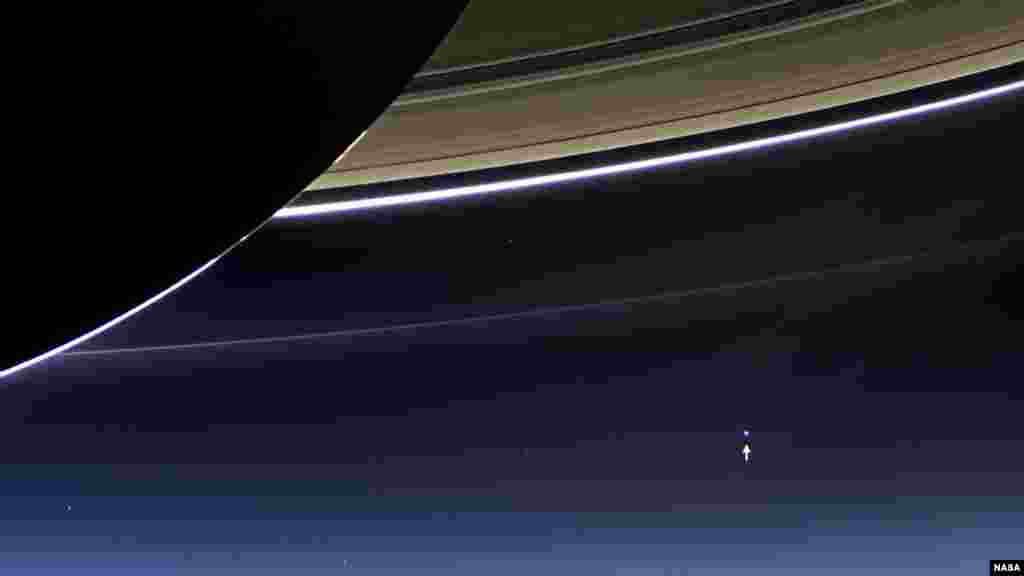
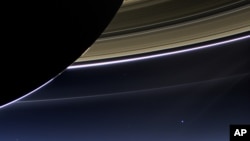
This July 19, 2013 image made available by NASA shows Saturn's rings and planet Earth, center right, as seen from the Cassini spacecraft.

After a 20-year mission, including two extensions, the Cassini spacecraft made its final "death dive" Friday into the planet Saturn.

Scientists and engineers at NASA's Jet Propulsion Laboratory received confirmation of the spacecraft's demise as expected at 7:55 a.m. EDT, when radio signals from Cassini came to an abrupt halt.

"This has been an incredible mission, an incredible spacecraft and you're all an incredible team," said NASA program manager Earl Maize.

More than 1,500 people, including former project team members, gathered at California's Jet Propulsion Laboratory for what NASA called This Grand Finale, described by some as both a vigil and a celebration. Others gathered at the nearby California Institute of Technology, which operates the laboratory for NASA.

NASA said it decided to end the life of the spacecraft with a final plunge into Saturn's atmosphere because of what was found during the mission: the ingredients for life on some of Saturn's moons.

"At the time of its design, we had no idea that ocean worlds existed in the outer solar system," said Morgan Cable, Cassini's assistant project science systems engineer.

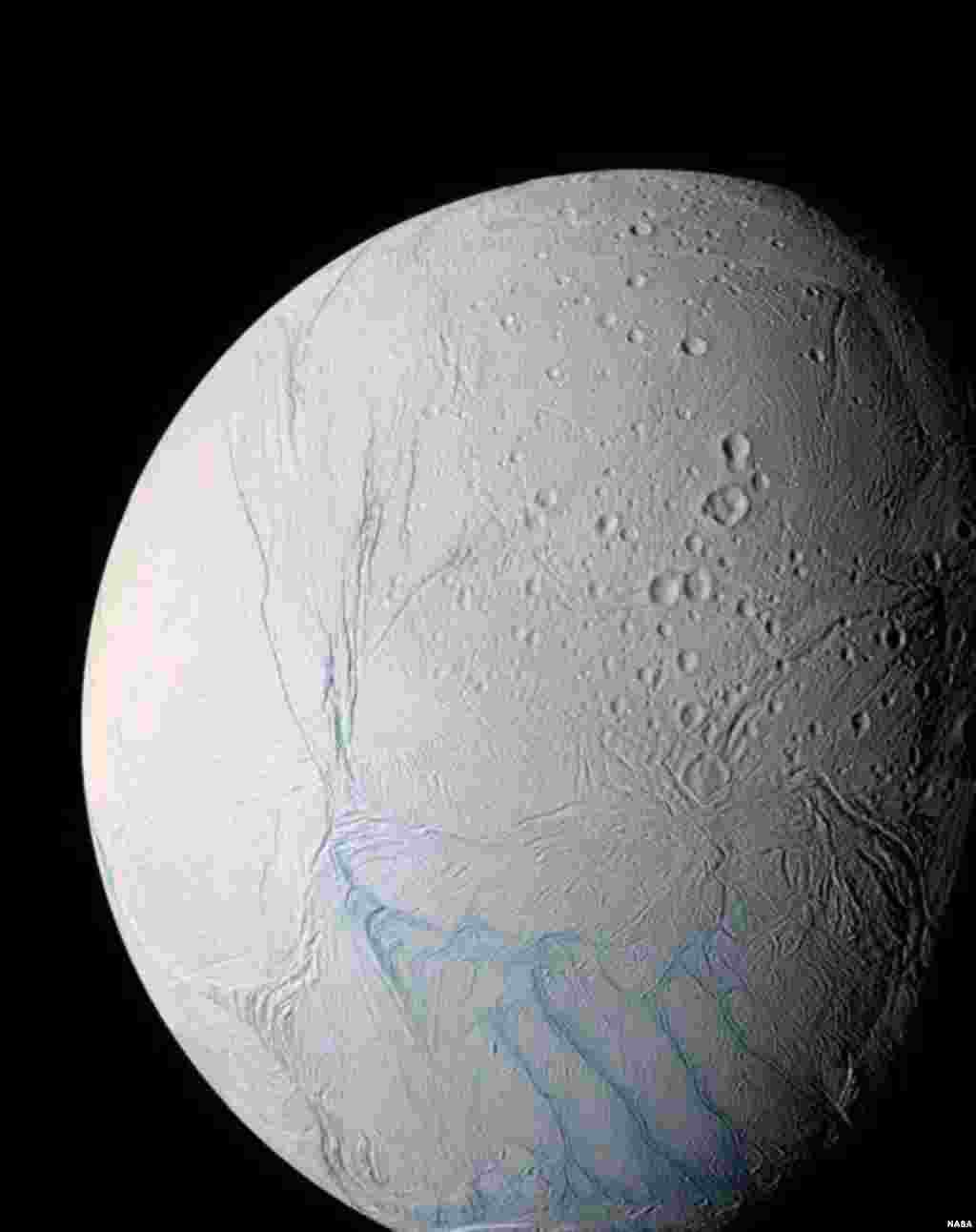
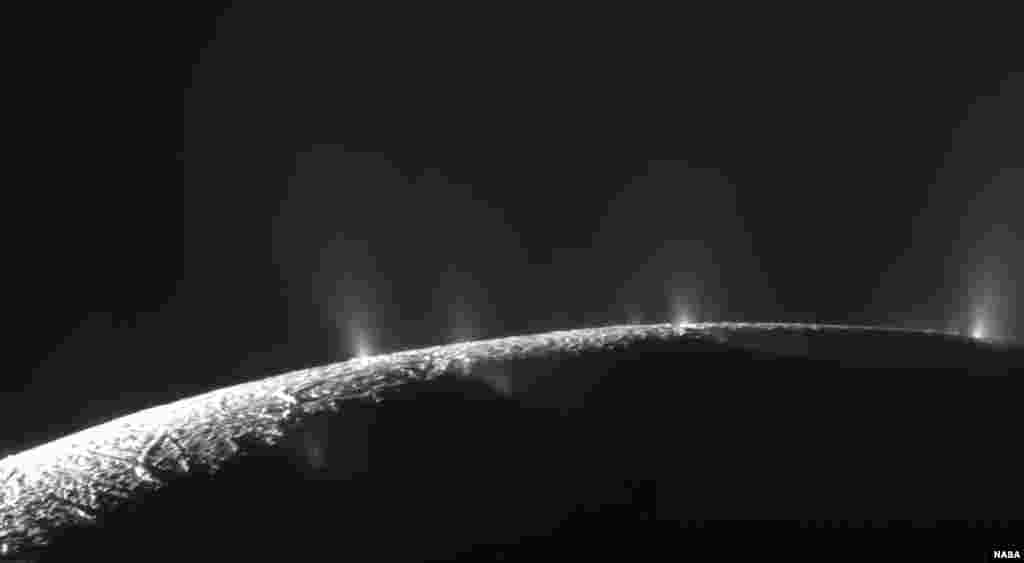
The discovery of ocean worlds on some of Saturn's moons could mean life. One unexpected discovery came from the south pole of Enceladus, a moon embedded in one of Saturn's rings.

"It has a liquid water ocean underneath and it shoots geysers and these cracks open up and these geysers shoot up," said Molly Bittner, Cassini spacecraft operations systems engineer.

Instruments on Cassini had been able to taste the grains and gas coming from that geyser plume.

"We know that there are salts. Now this is important for life because life needs certain minerals and salts to exist. We have very strong evidence that there are hydro-thermal vents down at that base of that ocean, the ocean flood. Now any time you find hydro-thermal vents here on Earth, you find rich communities of organisms," Cable said.

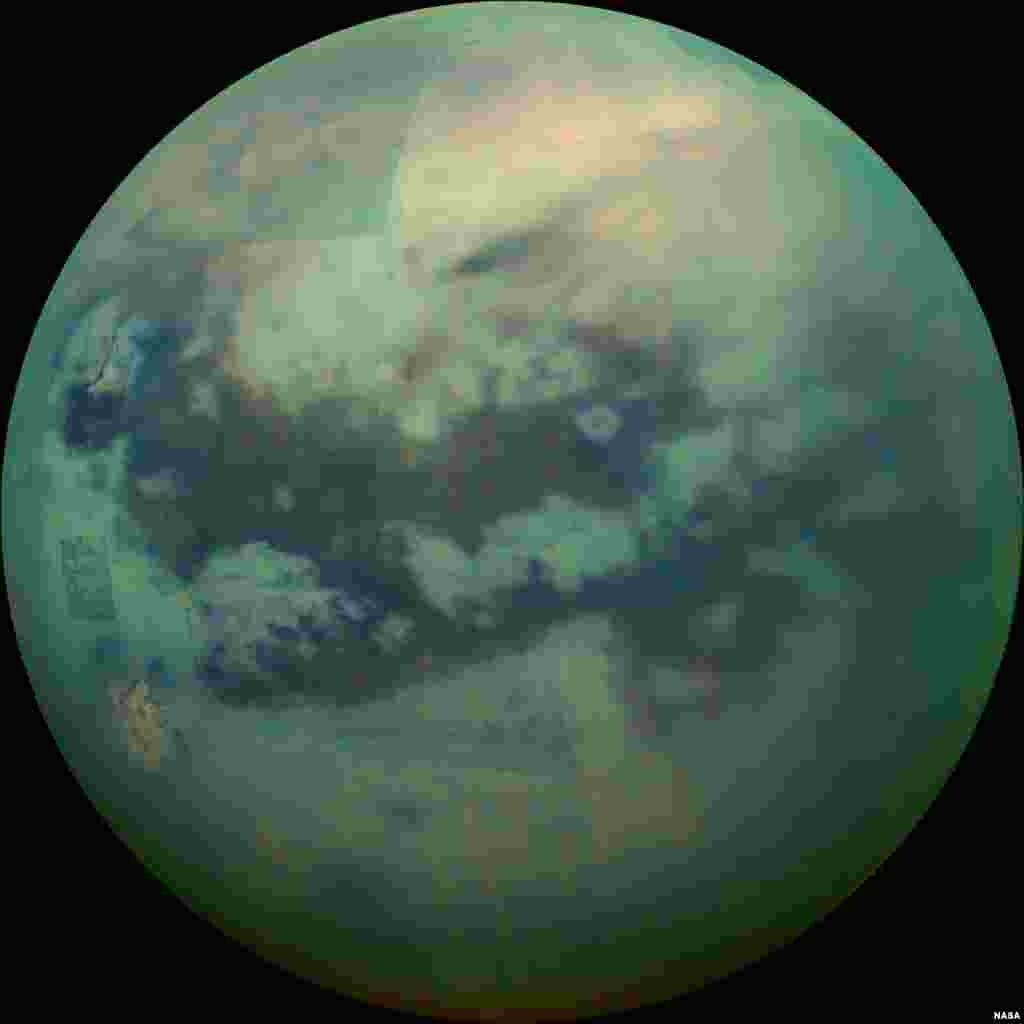
Cassini was also able to gather data from the Saturn's largest moon, Titan, which has lakes and seas of liquid methane and ethane instead of water. There is also evidence of a liquid ocean beneath the surface that probably contains ammonia and water. Scientists and engineers say the environment could still hold life.

"We're still open to trying to look for weird life in places like this and we found a strange place right here in our solar system," Cable said.

The discoveries helped Cassini's scientists and engineers decide what to do as it ran out of fuel. They did not want any earthly organisms that may be on Cassini to contaminate a moon that may have life.

"I want to find life elsewhere in a place like Enceladus, but I don't want to realize later on that we put it there," Cable said.

Scientists and engineers are already envisioning future missions back to Saturn and its moons such as Enceladus, to look deeper into the possibility of life.

"We really need to understand what's in that plume, and if there is evidence of life, and I think with today's instrumentation, things that we could put on a spacecraft right now, we could find that life with our instruments of today," Cable said.

As Cassini plunged into Saturn's atmosphere, it continued to send critical data to Earth until the very end. The data will be studied and analyzed by scientists long after the end of Cassini.


In Photos: Cassini & Saturn

Cassini's Amazing Photos of Saturn, Rings & Moons

This Jan. 28, 2016 image made available by NASA shows Saturn's rings, including the darker series of bands called the Cassini Division between the bright B ring, left, and dimmer A ring, right.
1/15 This Jan. 28, 2016 image made available by NASA shows Saturn's rings, including the darker series of bands called the Cassini Division between the bright B ring, left, and dimmer A ring, right.
This Aug. 12, 2009 composite image made available by NASA shows Saturn in equinox seen by the approaching Cassini spacecraft. Saturn's equinox occurs only once in about 15 Earth years.
2/15 This Aug. 12, 2009 composite image made available by NASA shows Saturn in equinox seen by the approaching Cassini spacecraft. Saturn's equinox occurs only once in about 15 Earth years.
This Dec. 3, 2015 image made available by NASA shows three of Saturn's moons - Tethys, above, Enceladus, second left, and Mimas, seen from the Cassini spacecraft.
3/15 This Dec. 3, 2015 image made available by NASA shows three of Saturn's moons - Tethys, above, Enceladus, second left, and Mimas, seen from the Cassini spacecraft.
This 2007 image made available by NASA shows a hydrocarbon sea named Ligeia Mare on Saturn's moon Titan, as seen by the Cassini spacecraft.
4/15 This 2007 image made available by NASA shows a hydrocarbon sea named Ligeia Mare on Saturn's moon Titan, as seen by the Cassini spacecraft.
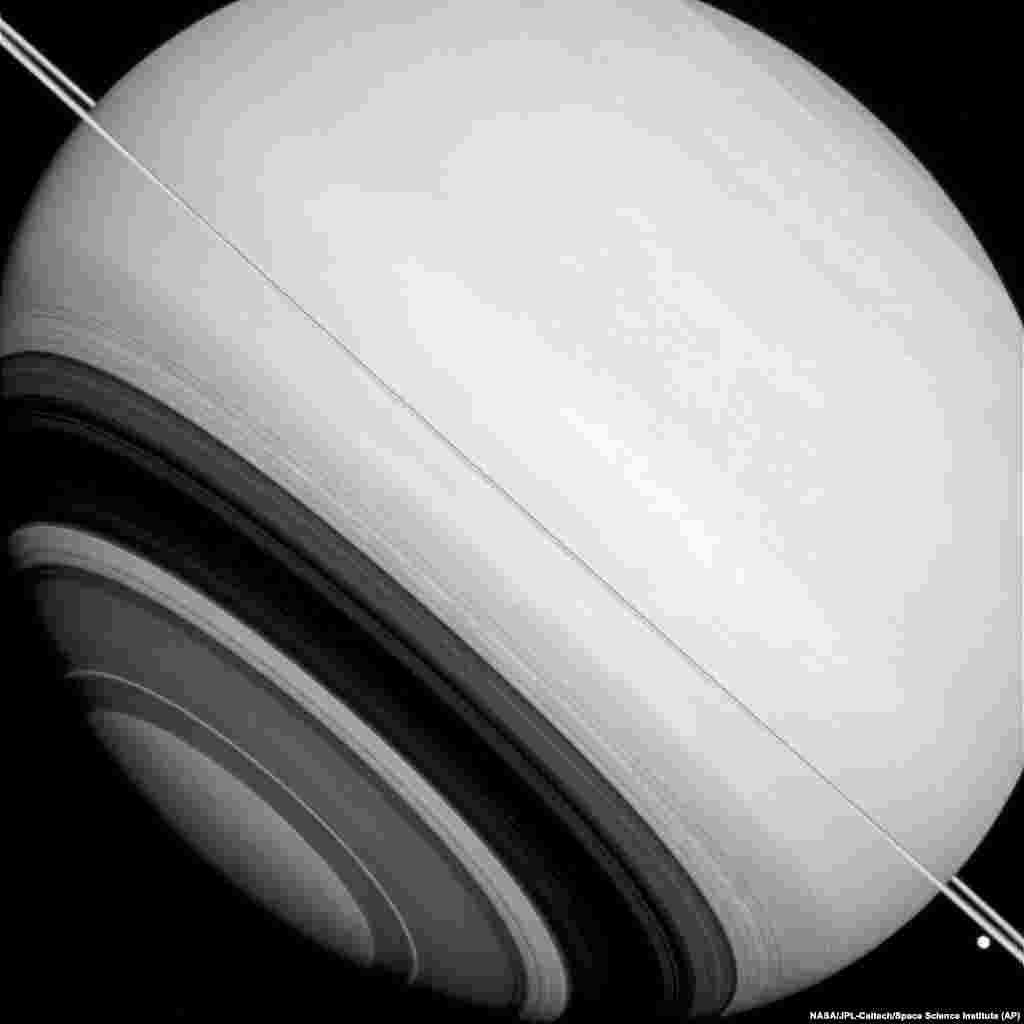
This Aug. 14, 2014 image made available by NASA shows shadows of Saturn's rings projected on the southern hemisphere of the gas giant.
5/15 This Aug. 14, 2014 image made available by NASA shows shadows of Saturn's rings projected on the southern hemisphere of the gas giant.
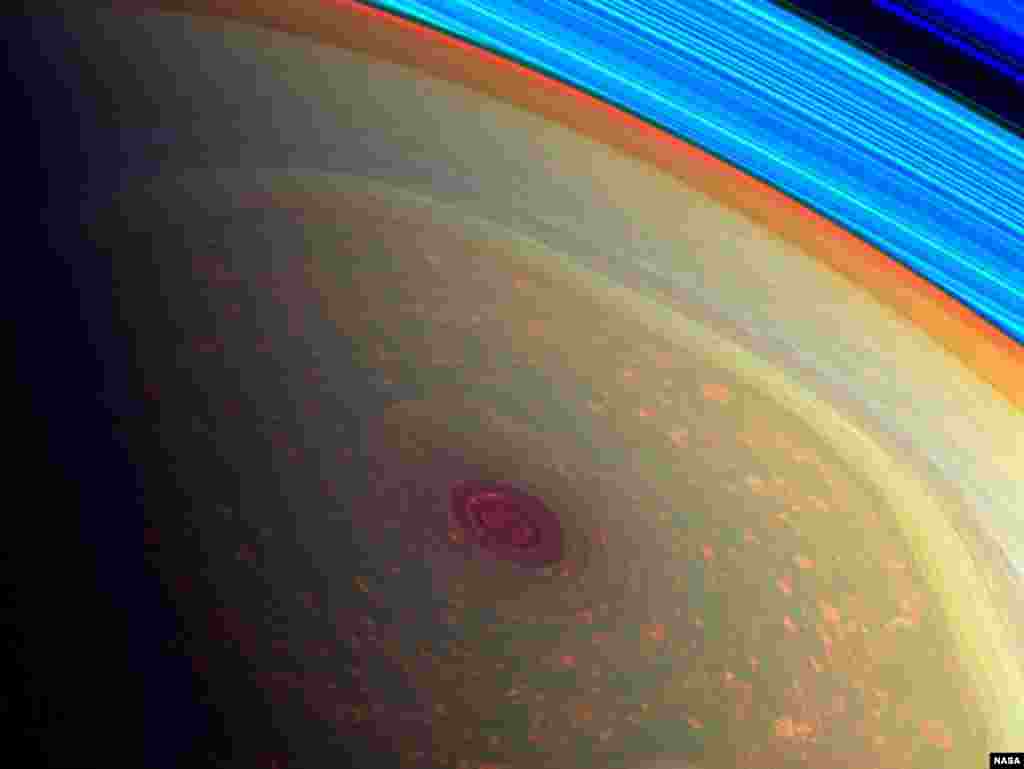
The Cassini spacecraft has captured the first detailed images of a giant hurricane on Saturn.
6/15 The Cassini spacecraft has captured the first detailed images of a giant hurricane on Saturn.
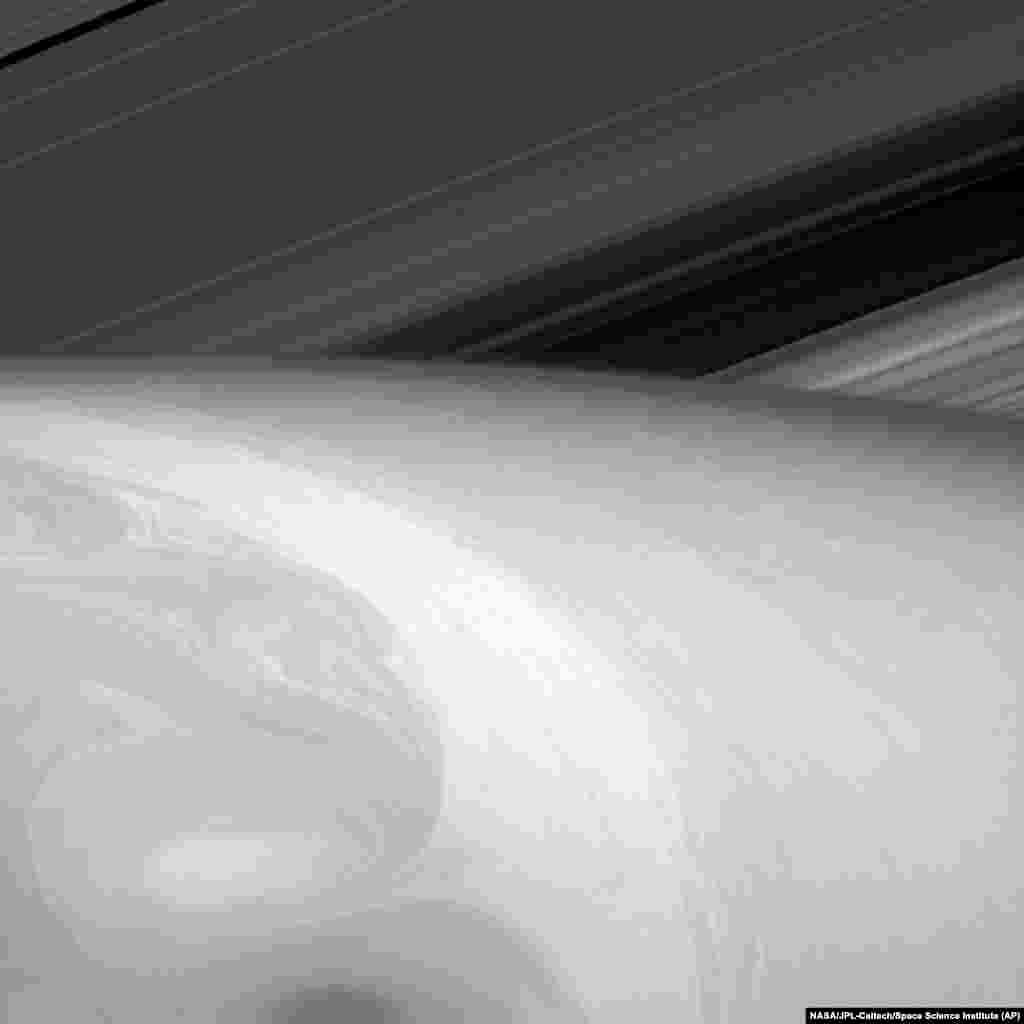
This Aug. 23, 2014 image made available by NASA shows the fluid dynamics in Saturn's uppermost cloud layers.
7/15 This Aug. 23, 2014 image made available by NASA shows the fluid dynamics in Saturn's uppermost cloud layers.
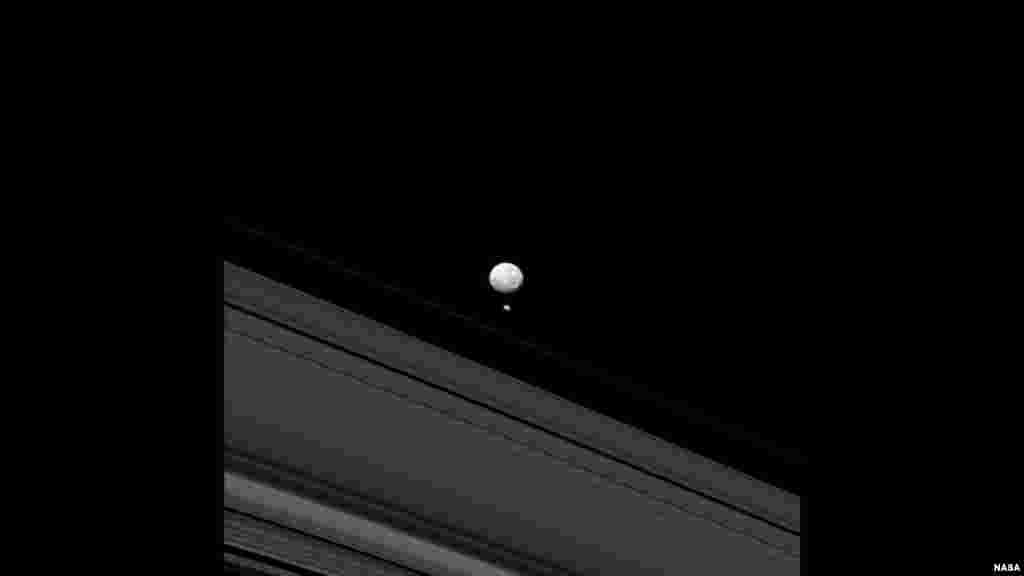
The Saturn moons Mimas and Pandora appear together in this image taken by NASA's Cassini spacecraft. Pandora's small size means that it lacks sufficient gravity to pull itself into a round shape like its larger sibling, Mimas. (NASA/JPL-Caltech/Space Science Institute)
8/15 The Saturn moons Mimas and Pandora appear together in this image taken by NASA's Cassini spacecraft. Pandora's small size means that it lacks sufficient gravity to pull itself into a round shape like its larger sibling, Mimas. (NASA/JPL-Caltech/Space Science Institute)
Enceladus, one of moons of Saturn, as seen by NASA's Cassini spacecraft. (NASA)
9/15 Enceladus, one of moons of Saturn, as seen by NASA's Cassini spacecraft. (NASA)
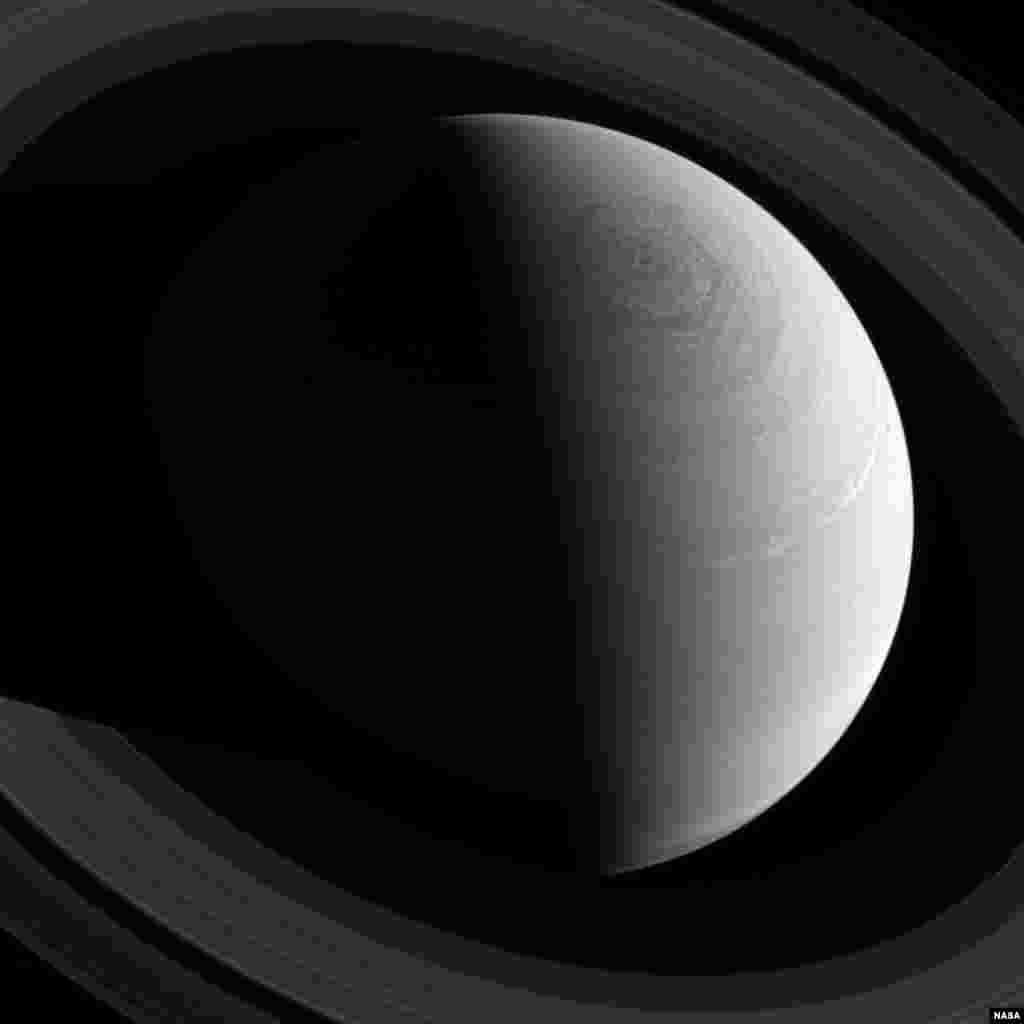
This image of Saturn taken with the Cassini spacecraft wide-angle camera on Nov. 23, 2013 and released on Feb. 3, 2014 was taken using a spectral filter that preferentially admits wavelengths of near-infrared light centered at 752 nanometers. (NASA/JPL-Cal Tech)
10/15 This image of Saturn taken with the Cassini spacecraft wide-angle camera on Nov. 23, 2013 and released on Feb. 3, 2014 was taken using a spectral filter that preferentially admits wavelengths of near-infrared light centered at 752 nanometers. (NASA/JPL-Cal Tech)
In this rare image taken on July 19, 2013, the wide-angle camera on NASA&#39;s Cassini spacecraft has captured Saturn&#39;s rings and our planet Earth and its moon in the same frame. (Credit: NASA/JPL-Caltech/Space Science Institute)<br />
<br />
&nbsp;
11/15 In this rare image taken on July 19, 2013, the wide-angle camera on NASA's Cassini spacecraft has captured Saturn's rings and our planet Earth and its moon in the same frame. (Credit: NASA/JPL-Caltech/Space Science Institute)

 
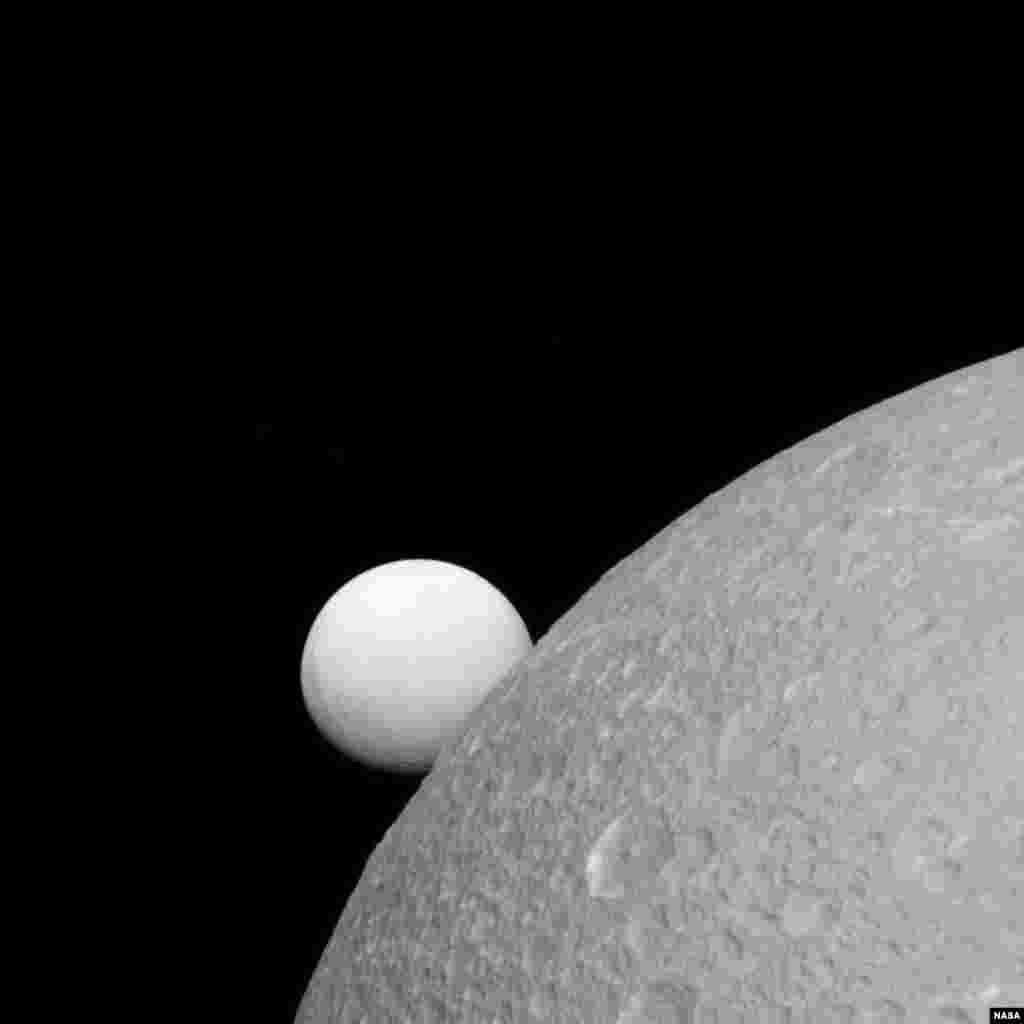
Dione with Enceladus in the background. This image was taken by the Cassini spacecraft, Sept. 8, 2015.
12/15 Dione with Enceladus in the background. This image was taken by the Cassini spacecraft, Sept. 8, 2015.
This Nov. 13, 2015 composite image made available by NASA shows an infrared view of Saturn&#39;s moon, Titan, as seen by the Cassini spacecraft. The near-infrared wavelengths in this image allow the cameras to penetrate the haze and reveal the moon&#39;s surface.
13/15 This Nov. 13, 2015 composite image made available by NASA shows an infrared view of Saturn's moon, Titan, as seen by the Cassini spacecraft. The near-infrared wavelengths in this image allow the cameras to penetrate the haze and reveal the moon's surface.
This Feb. 17, 2005 image made available by NASA shows plumes of water ice and vapor from the south polar region of Saturn&#39;s moon Enceladus. The activity is understood to originate from the moon&#39;s subsurface ocean of salty liquid water, which is venting into space.
14/15 This Feb. 17, 2005 image made available by NASA shows plumes of water ice and vapor from the south polar region of Saturn's moon Enceladus. The activity is understood to originate from the moon's subsurface ocean of salty liquid water, which is venting into space.
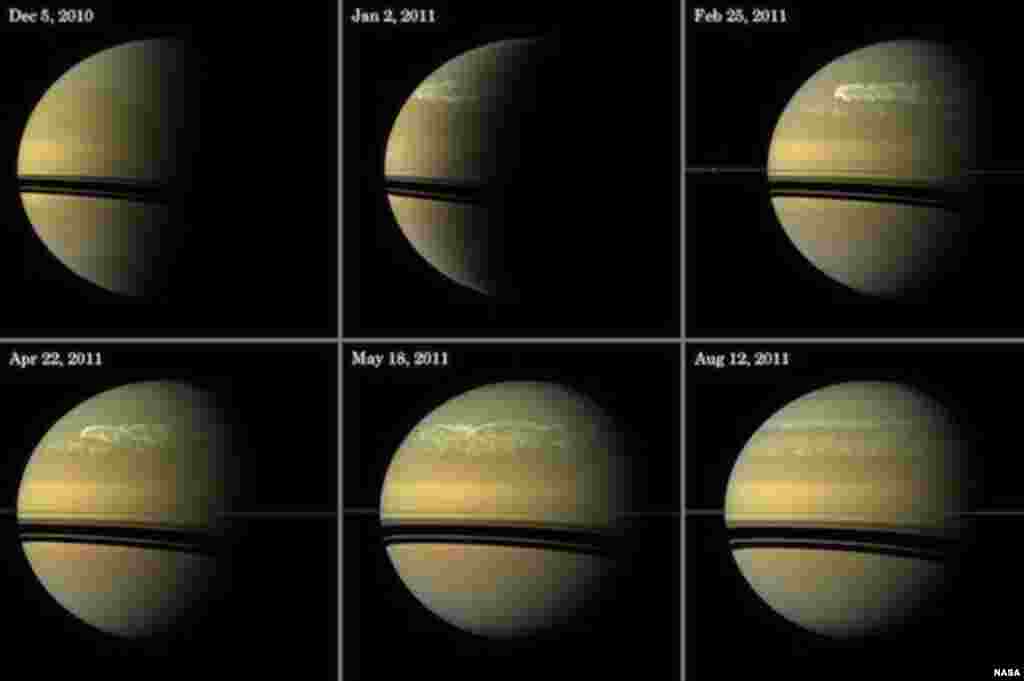
This series of images from NASA&rsquo;s Cassini spacecraft shows the development of the largest storm seen on the planet since 1990. These true-color and composite near-true-color views chronicle the storm from its start in late 2010 through mid-2011, showing how the distinct head of the storm quickly grew large but eventually became engulfed by the storm&rsquo;s tail.
15/15 This series of images from NASA’s Cassini spacecraft shows the development of the largest storm seen on the planet since 1990. These true-color and composite near-true-color views chronicle the storm from its start in late 2010 through mid-2011, showing how the distinct head of the storm quickly grew large but eventually became engulfed by the storm’s tail.
Previous slide
Next slide

  • 16x9 Image

    VOA News

    The Voice of America provides news and information in more than 40 languages to an estimated weekly audience of over 326 million people. Stories with the VOA News byline are the work of multiple VOA journalists and may contain information from wire service reports.

XS
SM
MD
LG