US Media, Historians Mark 40th Anniversary of Watergate Scandal
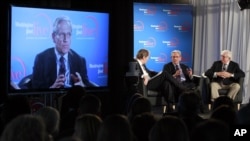
Former Washington Post reporter Bob Woodward, is seen on the monitor as moderator Charlie Rose, left, Woodward and Bernstein speak during an event to commemorate the 40th anniversary of Watergate, June 11, 2012.
WASHINGTON - Sunday, June 17, marks the 40th anniversary of the most consequential political scandal in U.S. history, the Watergate scandal. What began as a bungled break-in at Democratic Party headquarters at the Watergate complex in Washington D.C. eventually led to Richard Nixon’s resignation as president and continues to resonate today as a cautionary tale of political ambition, money and the abuse of power.
Start of a scandal
It began in the early morning hours of June 17, 1972. Five men working for President Richard Nixon’s re-election campaign were arrested trying to break in to Democratic Party headquarters at the Watergate complex.
Washington Post reporters Carl Bernstein and Bob Woodward covered the story and found that the Watergate break-in was only part of an elaborate program launched by the Nixon re-election campaign to undermine the president’s political opponents.
“We named people in specific acts of participation in a criminal conspiracy essentially to destroy the free electoral system we have in this country to spy and sabotage on the Democrats,” said Woodward.
40th Anniversary of the Watergate Scandal
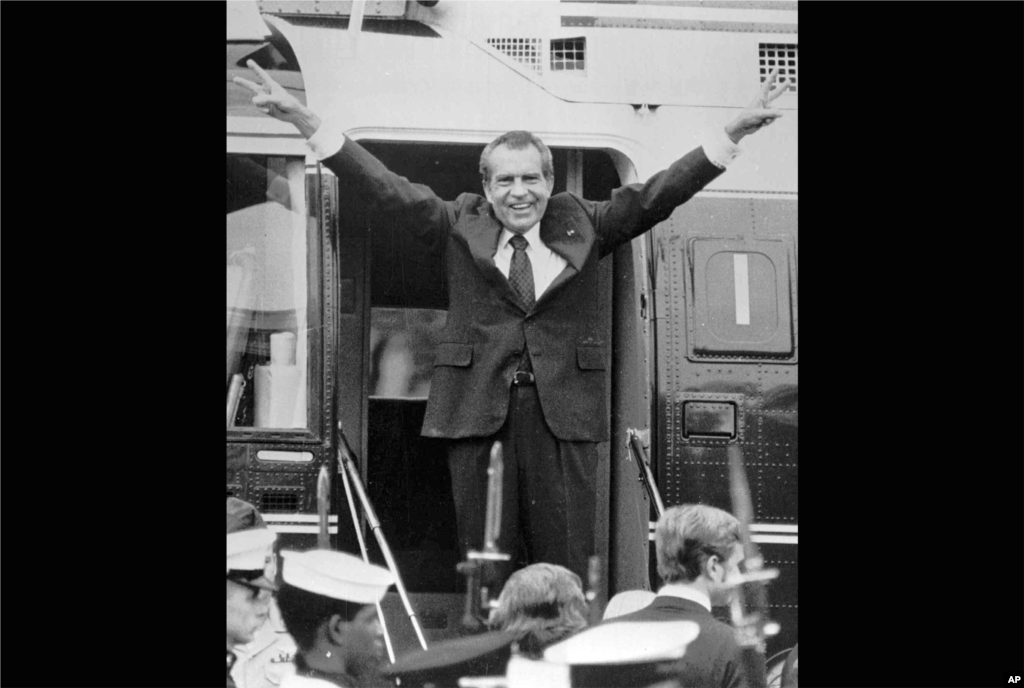
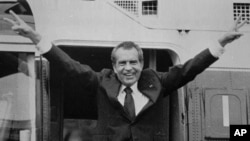
1/9Richard Nixon says goodbye to members of his staff outside the White House in Washington as he boards a helicopter for Andrews Air Force Base after resigning the presidency in Washington, D.C., August 9, 1974. (AP Photo)
This June 17, 2012 marks the 40th anniversary of the most consequential political scandal in U.S. history, the Watergate scandal.
Show moreShow less
2/9Reporters Bob Woodward, right, and Carl Bernstein, whose reporting of the Watergate case won them a Pulitzer Prize, sit in the newsroom of the Washington Post in Washington May 7, 1973. (AP Photo)
This June 17, 2012 marks the 40th anniversary of the most consequential political scandal in U.S. history, the Watergate scandal.
Show moreShow less
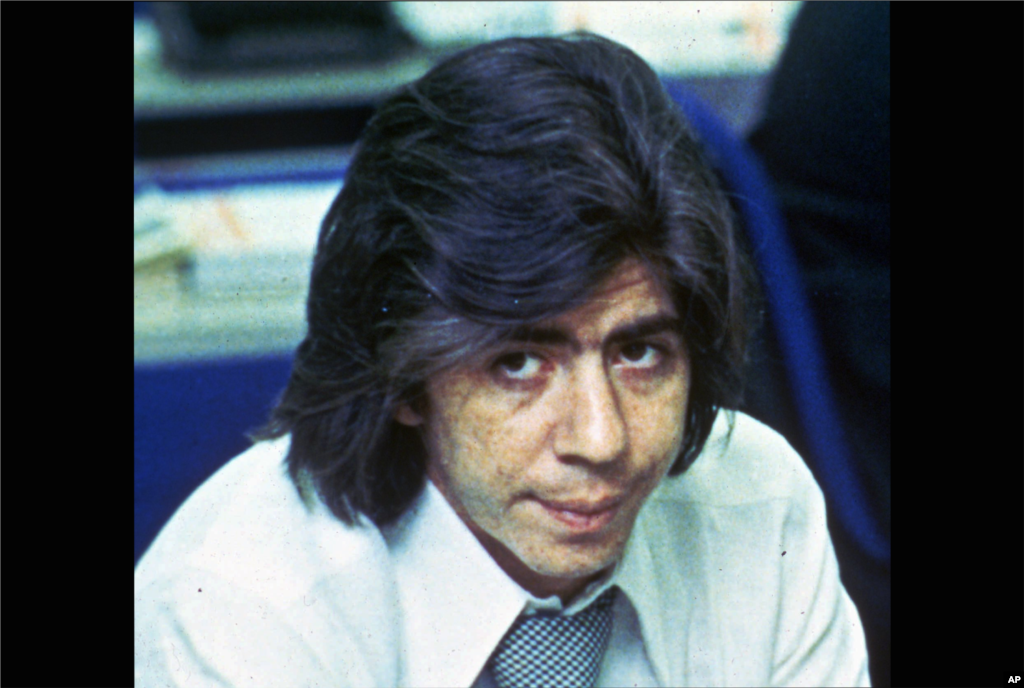
3/9Carl Bernstein, Washington Post reporter is shown in this photo dated May 7, 1973. (AP Photo)
This June 17, 2012 marks the 40th anniversary of the most consequential political scandal in U.S. history, the Watergate scandal.
Show moreShow less
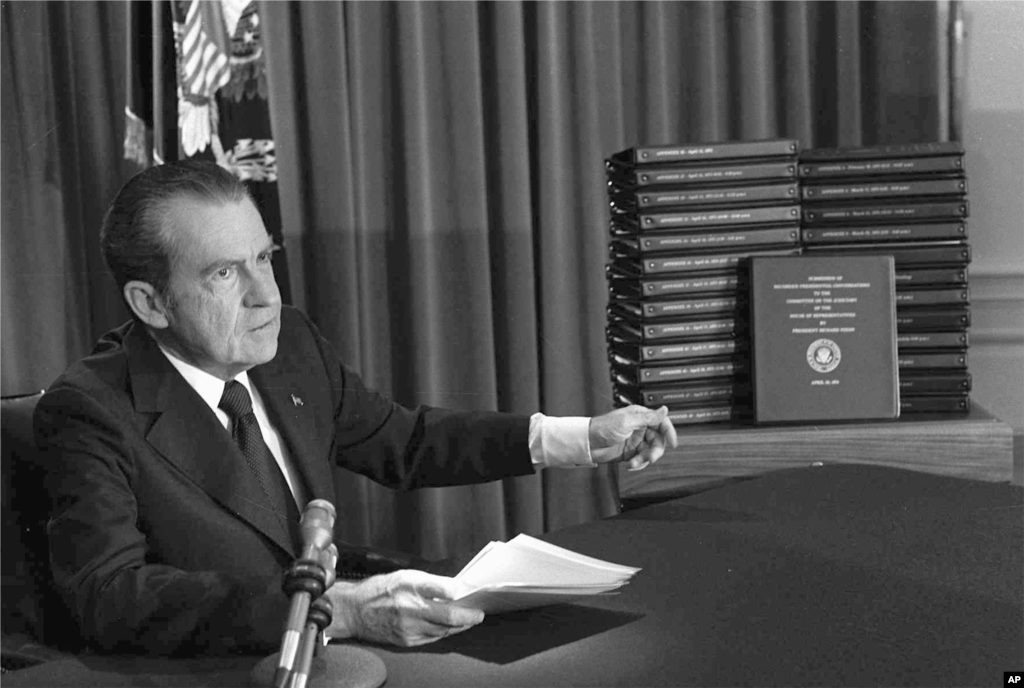
4/9President Richard M. Nixon is shown pointing to the transcripts of the White House tapes in this April 29, 1974, file photo, after he announced during a nationally-televised speech that he would turn over the transcripts to House impeachment investigators
This June 17, 2012 marks the 40th anniversary of the most consequential political scandal in U.S. history, the Watergate scandal.
Show moreShow less
5/9A general view of the Senate Watergate Committee hearings on August 3, 1973. (AP Photo)
This June 17, 2012 marks the 40th anniversary of the most consequential political scandal in U.S. history, the Watergate scandal.
Show moreShow less
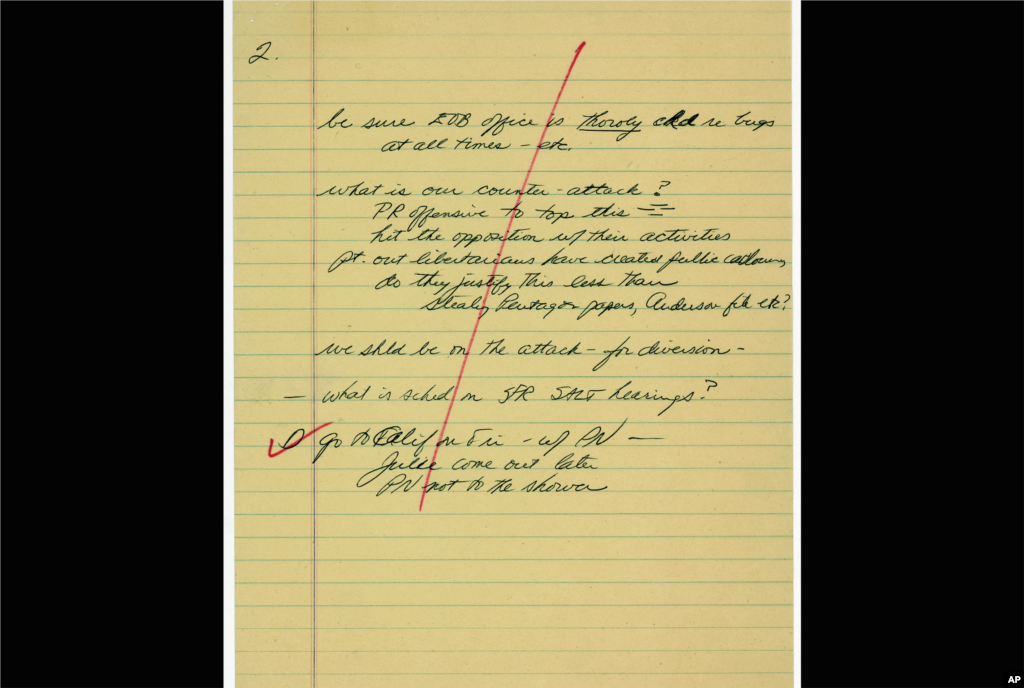
6/9Notes taken by White House chief of staff H.R. Haldeman during a June 20, 1972, meeting with President Richard M. Nixon reflect the president's fear that the office in the Executive Office Building might be bugged. (AP Photo)
This June 17, 2012 marks the 40th anniversary of the most consequential political scandal in U.S. history, the Watergate scandal.
Show moreShow less
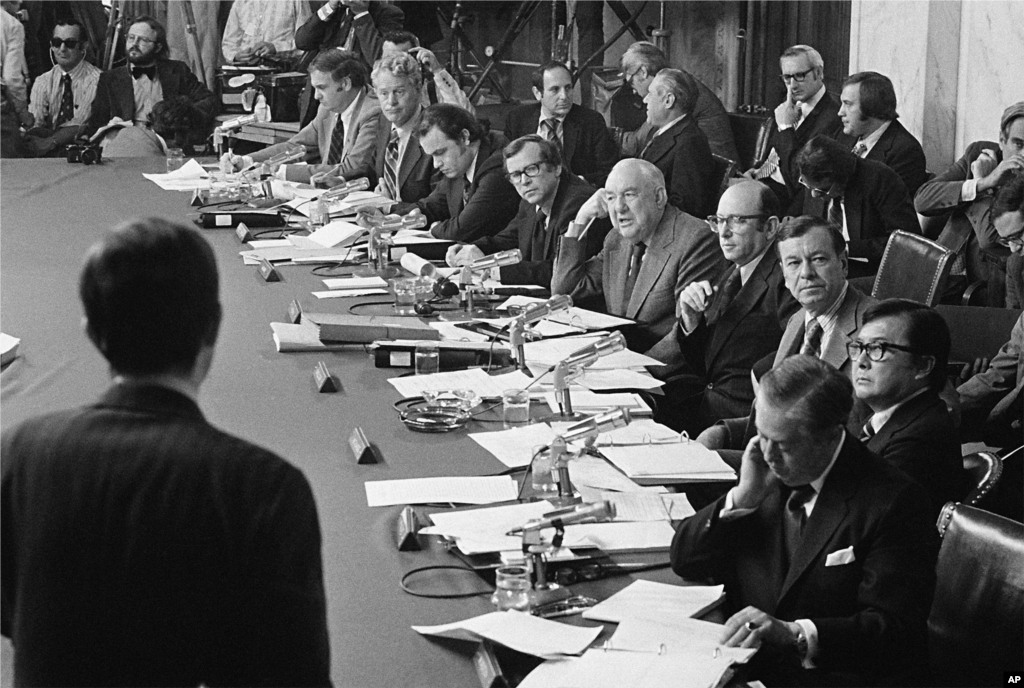
7/9Members of the Senate Watergate Investigating Committee are seen during a hearing on Capitol Hill in Washington as they listen to witness Robert Odle, foreground, in this May 17, 1973 photo. (AP Photo)
This June 17, 2012 marks the 40th anniversary of the most consequential political scandal in U.S. history, the Watergate scandal.
Show moreShow less
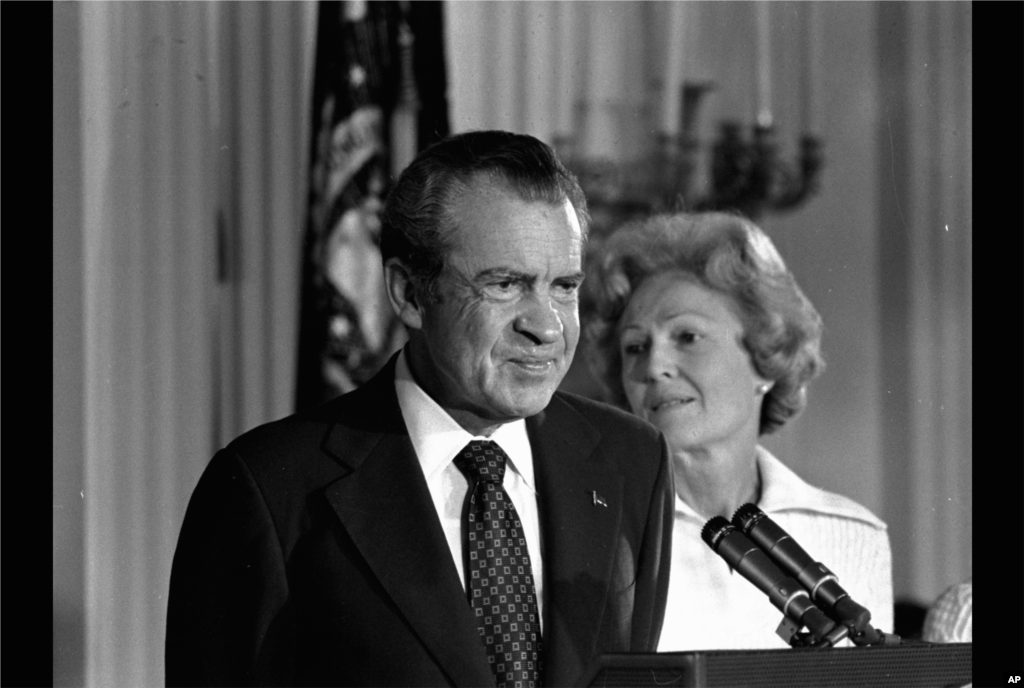
8/9President Richard M. Nixon and his wife Pat Nixon are shown standing together in the East Room of the White House in Washington August 9, 1974. (AP Photo)
This June 17, 2012 marks the 40th anniversary of the most consequential political scandal in U.S. history, the Watergate scandal.
Show moreShow less
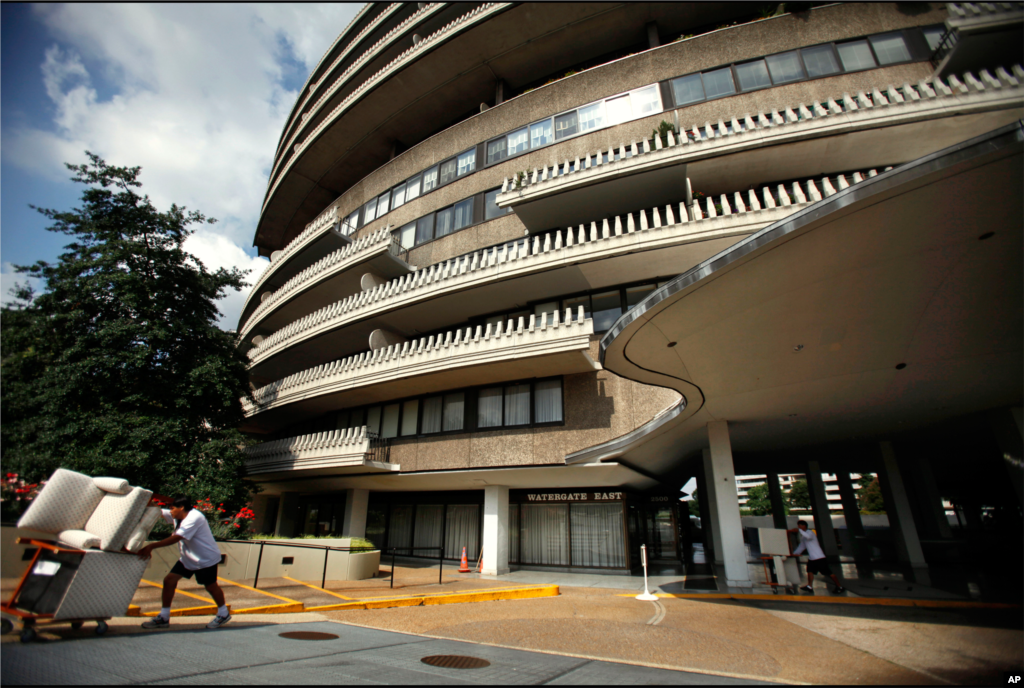
9/9Movers remove furniture from the Watergate Complex in Washington, on July 21, 2009. The Watergate Hotel that is part of the complex, was made famous by the Watergate scandal. (AP Photo)
This June 17, 2012 marks the 40th anniversary of the most consequential political scandal in U.S. history, the Watergate scandal.
Show moreShow less
Previous slide
Next slide
Criminal and congressional investigations followed the Post reporting and found a massive cover-up orchestrated by the Nixon campaign and the White House, right up to the president himself.
During Senate hearings in 1973, it came to light that Nixon recorded his conversations in the White House, and those tapes eventually helped to prove Nixon’s involvement in the cover-up.
The most dramatic thing
VOA’s David Dyar covered the Watergate scandal as a young reporter for United Press International, including President Nixon’s decision to order the firing of the Watergate special prosecutor in 1973.
“When I was hearing all this unfold in the White House briefing room, there was a sense among many there that something truly historic had happened and that the president was putting himself above the law and that the entire constitutional fabric of the justice system in the country was being challenged," said Dyar. "It was the most dramatic thing I have ever witnessed firsthand as a reporter.”
Once the White House tapes showed Nixon’s complicity in the cover-up, the president lost his base of Republican Party support in Congress and he announced his resignation in August of 1974.
“I have never been a quitter," said Nixon. "To leave office before my term is completely is abhorrent to every instinct in my body. But as president I must put the interests of America first.”
"Long national nightmare is over"
Nixon’s vice president, Gerald Ford, was sworn in after Nixon left and moved quickly to heal a divided country.
“My fellow Americans, our long national nightmare is over," said Ford. "Our Constitution works. Our great republic is a government of laws and not of men. Here, the people rule.”
American University historian Allan Lichtman says Watergate remains the most serious attempt by a president and his staff to undermine the democratic process.
Richard Nixon says goodbye to members of his staff outside the White House as he boards a helicopter for Andrews Air Force Base after resigning the Presidency, August 9, 1974.
“It was a widespread conspiracy," Lichtman said. "Several dozen people went to jail, including other very high officials of the [Nixon] campaign and of the Nixon administration. So a lot of people who should have known much better got sucked into this terrible scandal and it is a tragedy of Shakespearean proportions because in many ways Richard Nixon did a lot for the country.”
"Those who hate you don’t win unless you hate them"
Before he left the White House, Nixon gave an emotional speech to staffers and then concluded with what struck many as an ironic piece of advice.
“Always remember, others may hate you," he said. "But those who hate you don’t win unless you hate them. And then, you destroy yourself.”
Some 40 years later, the Watergate scandal is seen not only as a victory for the democratic process but also as a defining example of the importance of a free press in a democratic society.
Watergate - Washington's Biggest Scandal
Related report by Suzanne Presto:
Jim Malone has served as VOA’s National correspondent covering U.S. elections and politics since 1995. Prior to that he was a VOA congressional correspondent and served as VOA’s East Africa Correspondent from 1986 to 1990. Jim began his VOA career with the English to Africa Service in 1983.