Accessibility links

Breaking News

Cassini Disintegrates in Saturn's Atmosphere, Ending 20-year Journey

Project manager Earl Maize, center left, and flight director Julie Webster hug in mission control at NASA's Jet Propulsion Laboratory, Sept. 15, 2017, in Pasadena, Calif., after confirmation of Cassini's demise.

Tears, hugs and celebrations Friday marked the end of a 20-year mission to Saturn for the spacecraft Cassini.

In mission control at NASA's Jet Propulsion Laboratory in Pasadena, California, Cassini program manager Earl Maize's voice was heard loud and clear: "The signal from the spacecraft is gone, and within the next 45 seconds, so will be the spacecraft."

WATCH: Cassini Disintegrates in Saturn's Atmosphere Ending 20 Year Journey
Cassini Disintegrates in Saturn's Atmosphere Ending 20 Year Journey
please wait

No media source currently available

0:00 0:02:33 0:00

At a news conference afterward, Maize paid tribute to Cassini.

"This morning, a lone explorer, a machine made by humankind, finished its mission 900 million miles away. The nearest observer wouldn't even know until 84 minutes later that Cassini was gone. To the very end, the spacecraft did everything we asked," he said.

Launched in 1997, Cassini's trip to Saturn took seven years.

"When I look back at the Cassini mission, I see a mission that was running a 13-year marathon of scientific discovery, and this last orbit was just the last lap," Cassini project scientist Linda Spilker said.
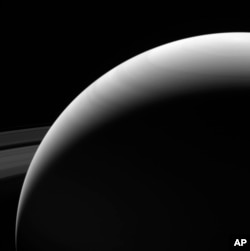
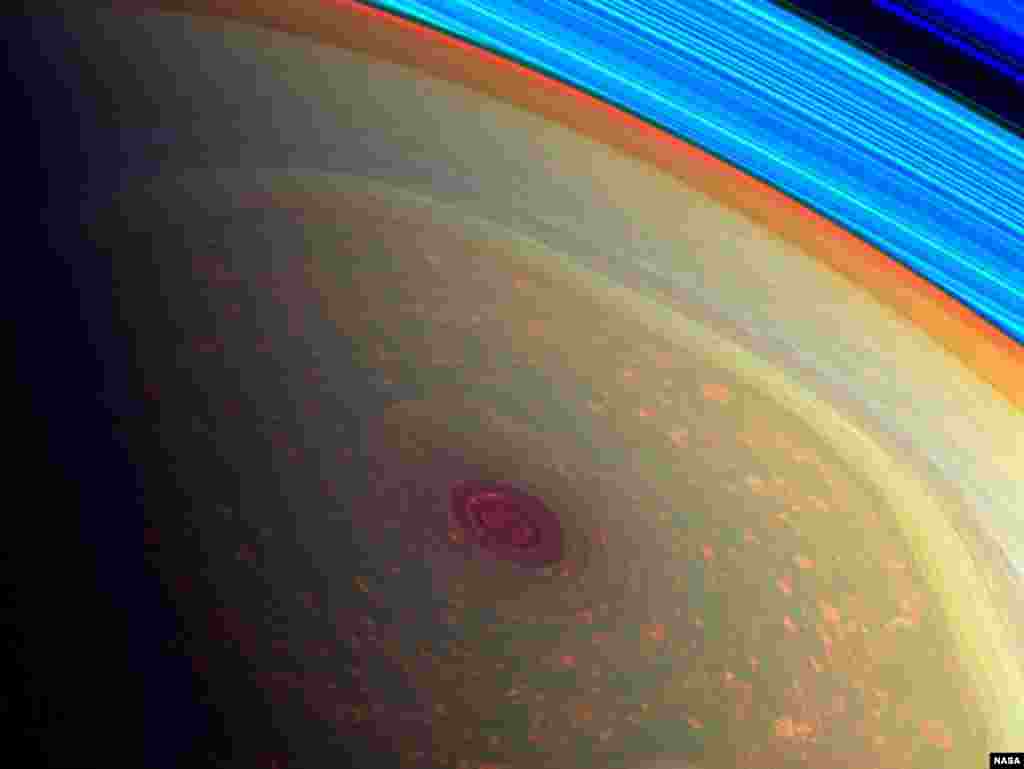
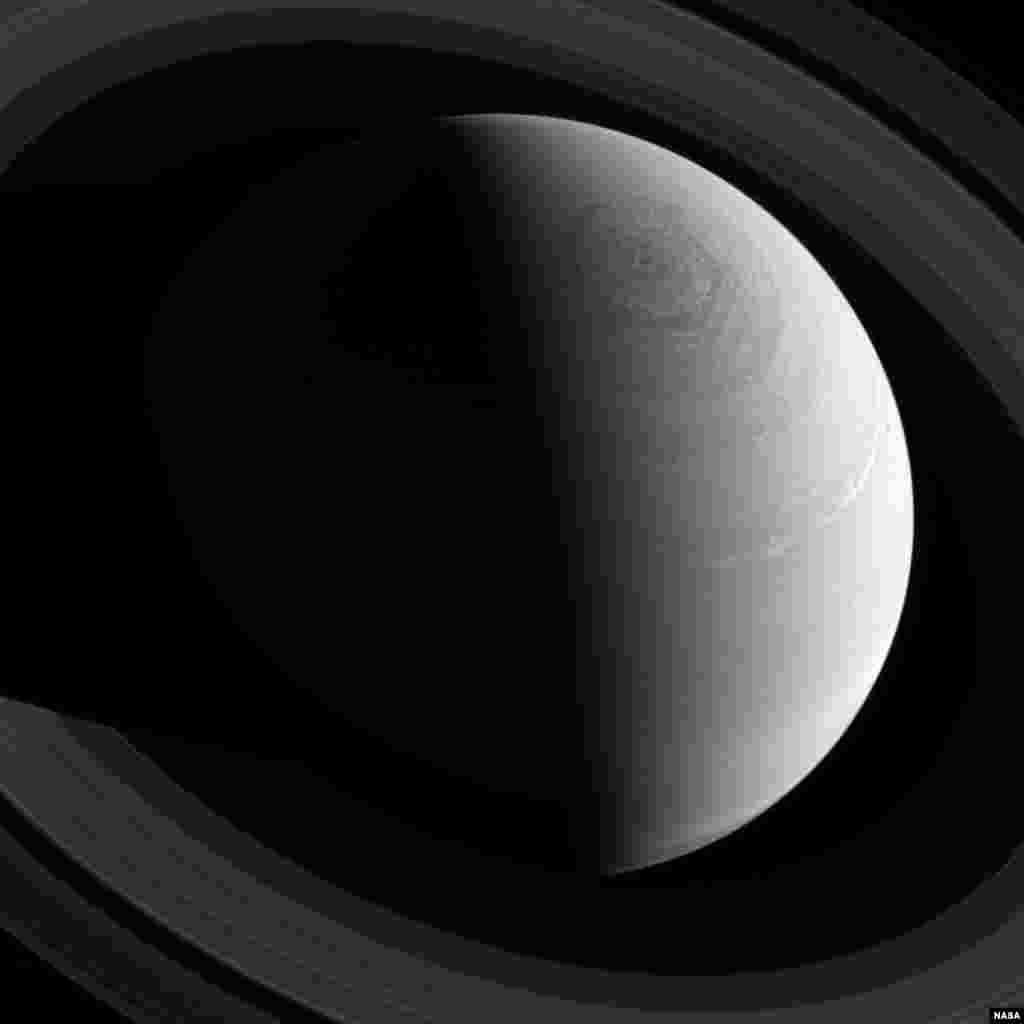
This Sept. 13, 2017, image made available by NASA on Sept. 15, 2017, shows the northern hemisphere of Saturn as seen from the Cassini spacecraft on its descent toward the planet.

Saturn and its moons

Cassini has been exploring Saturn and some of its moons, making discoveries along the way.

"The discoveries that Cassini has made over the last 13 years in orbit have rewritten the textbooks of Saturn, have discovered worlds that could be habitable and have guaranteed that we'll return to that ringed world," Jet Propulsion Laboratory Director Michael Watkins said.

Cassini discovered ocean worlds on the Saturn's moons Titan and Enceladus. It also detected strong evidence of hydrothermal vents at the base of Enceladus' ocean.

These discoveries prompted the decision to destroy Cassini as it ran out of fuel, so there would be no risk of contaminating these moons with bacteria from Earth.

In its last hours, Cassini took final images, including Enceladus setting behind Saturn; Saturn's rings; Titan's lakes and seas; and an infrared view of Saturn.

As Cassini plunged into Saturn, its sensors experienced the first taste of the planet's atmosphere, sending critical information to Earth until it disintegrated.

"It just really tells us about how Saturn formed and the processes going on and really how all the planetary bodies in our solar system have formed," said Nora Alonge, Cassini project science and system engineer.

Engineer Mar Vaquero monitors the status of NASA's Cassini spacecraft as it enters the atmosphere of Saturn, in mission control at NASA's Jet Propulsion Laboratory, Sept. 15, 2017, in Pasadena, Calif.

Bittersweet moments

The final moments of the spacecraft's journey were bittersweet for Alonge, who has been working on the Cassini mission for more than a decade.

"I'm feeling so many emotions. I'm very proud and I'm honored to be part of such an amazing mission, such a fruitful scientific mission, an engineering feat for a robust spacecraft that has lasted for so long, and of course I'm sad," she said. "I feel like I've lost a friend. We've been talking to Cassini for years. We check on the health and safety. It talks back to us and gives us data. That'll be missed. It'll be a big change for many of us."

"This, this has truly been beyond my wildest dreams," said Julie Webster, Cassini's spacecraft operations manager. She was with this mission from the time Cassini was built.

The members of the Cassini mission team said the end of the spacecraft was picture perfect.

"We found the best possible solution to get scientific data that would have been too risky to take at any other time by diving between the planet and the rings. We're going into a region we could have never explored before. Cassini is becoming now a part of Saturn, and it's the perfect ending point," Alonge said.

IN PHOTOS: Cassini's Amazing Pictures of Saturn, Rings & Moons

Cassini's Amazing Photos of Saturn, Rings & Moons

This Jan. 28, 2016 image made available by NASA shows Saturn's rings, including the darker series of bands called the Cassini Division between the bright B ring, left, and dimmer A ring, right.
1/15 This Jan. 28, 2016 image made available by NASA shows Saturn's rings, including the darker series of bands called the Cassini Division between the bright B ring, left, and dimmer A ring, right.
This Aug. 12, 2009 composite image made available by NASA shows Saturn in equinox seen by the approaching Cassini spacecraft. Saturn's equinox occurs only once in about 15 Earth years.
2/15 This Aug. 12, 2009 composite image made available by NASA shows Saturn in equinox seen by the approaching Cassini spacecraft. Saturn's equinox occurs only once in about 15 Earth years.
This Dec. 3, 2015 image made available by NASA shows three of Saturn's moons - Tethys, above, Enceladus, second left, and Mimas, seen from the Cassini spacecraft.
3/15 This Dec. 3, 2015 image made available by NASA shows three of Saturn's moons - Tethys, above, Enceladus, second left, and Mimas, seen from the Cassini spacecraft.
This 2007 image made available by NASA shows a hydrocarbon sea named Ligeia Mare on Saturn's moon Titan, as seen by the Cassini spacecraft.
4/15 This 2007 image made available by NASA shows a hydrocarbon sea named Ligeia Mare on Saturn's moon Titan, as seen by the Cassini spacecraft.
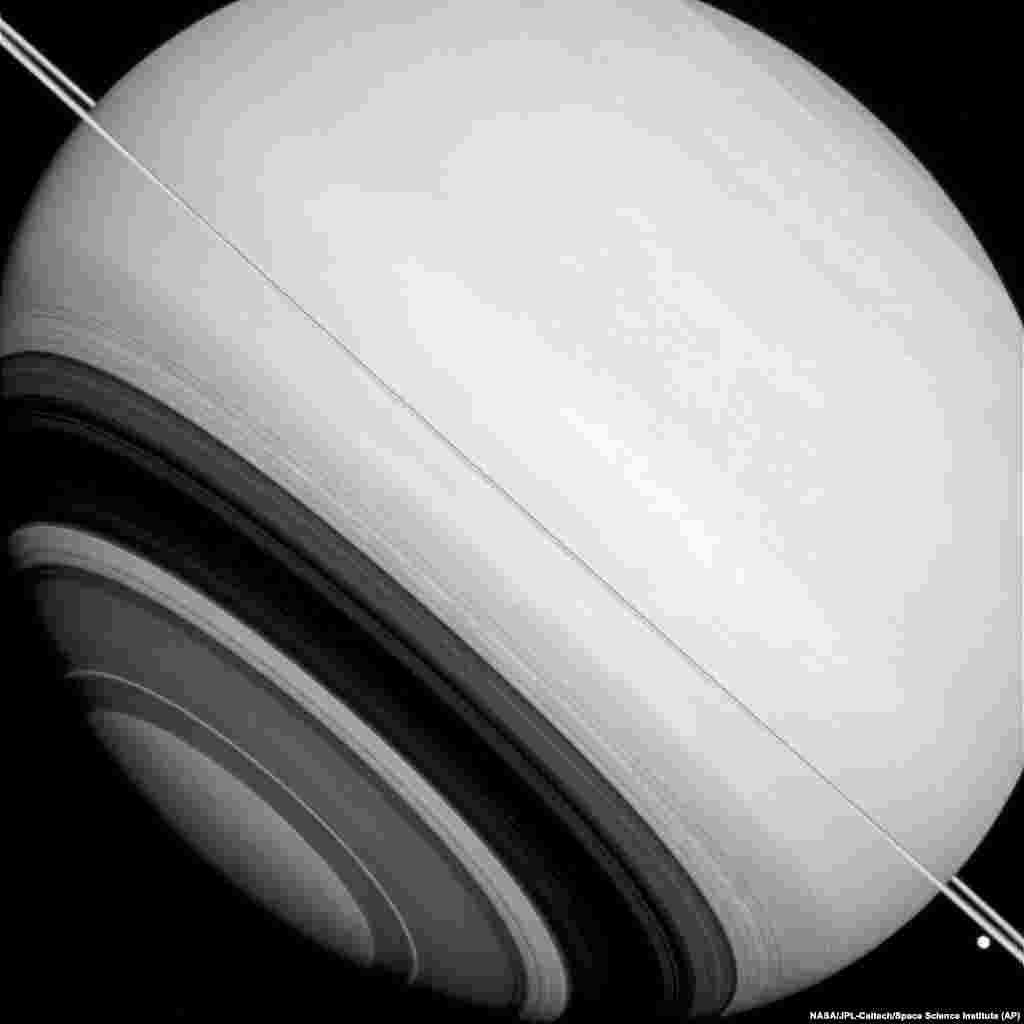
This Aug. 14, 2014 image made available by NASA shows shadows of Saturn's rings projected on the southern hemisphere of the gas giant.
5/15 This Aug. 14, 2014 image made available by NASA shows shadows of Saturn's rings projected on the southern hemisphere of the gas giant.
The Cassini spacecraft has captured the first detailed images of a giant hurricane on Saturn.
6/15 The Cassini spacecraft has captured the first detailed images of a giant hurricane on Saturn.
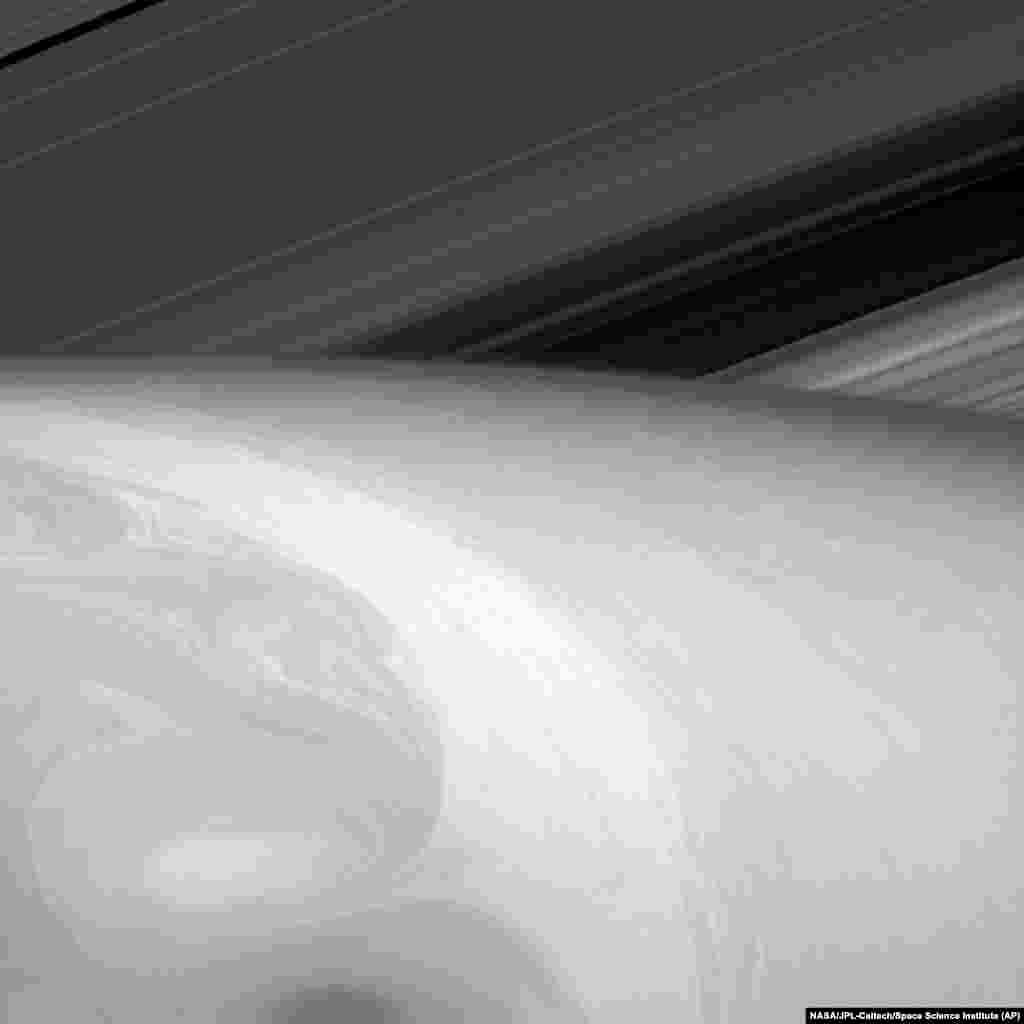
This Aug. 23, 2014 image made available by NASA shows the fluid dynamics in Saturn's uppermost cloud layers.
7/15 This Aug. 23, 2014 image made available by NASA shows the fluid dynamics in Saturn's uppermost cloud layers.
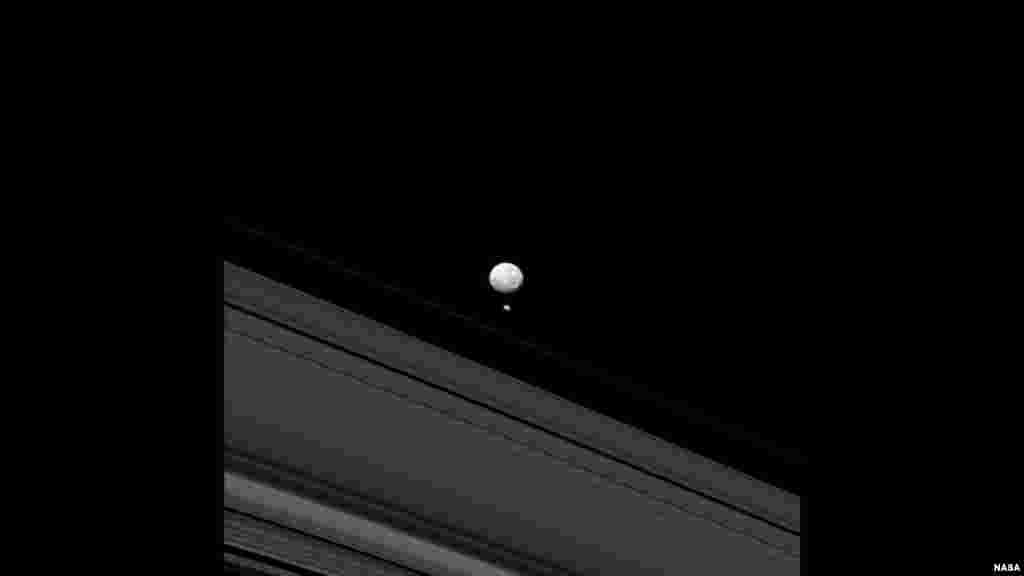
The Saturn moons Mimas and Pandora appear together in this image taken by NASA's Cassini spacecraft. Pandora's small size means that it lacks sufficient gravity to pull itself into a round shape like its larger sibling, Mimas. (NASA/JPL-Caltech/Space Science Institute)
8/15 The Saturn moons Mimas and Pandora appear together in this image taken by NASA's Cassini spacecraft. Pandora's small size means that it lacks sufficient gravity to pull itself into a round shape like its larger sibling, Mimas. (NASA/JPL-Caltech/Space Science Institute)
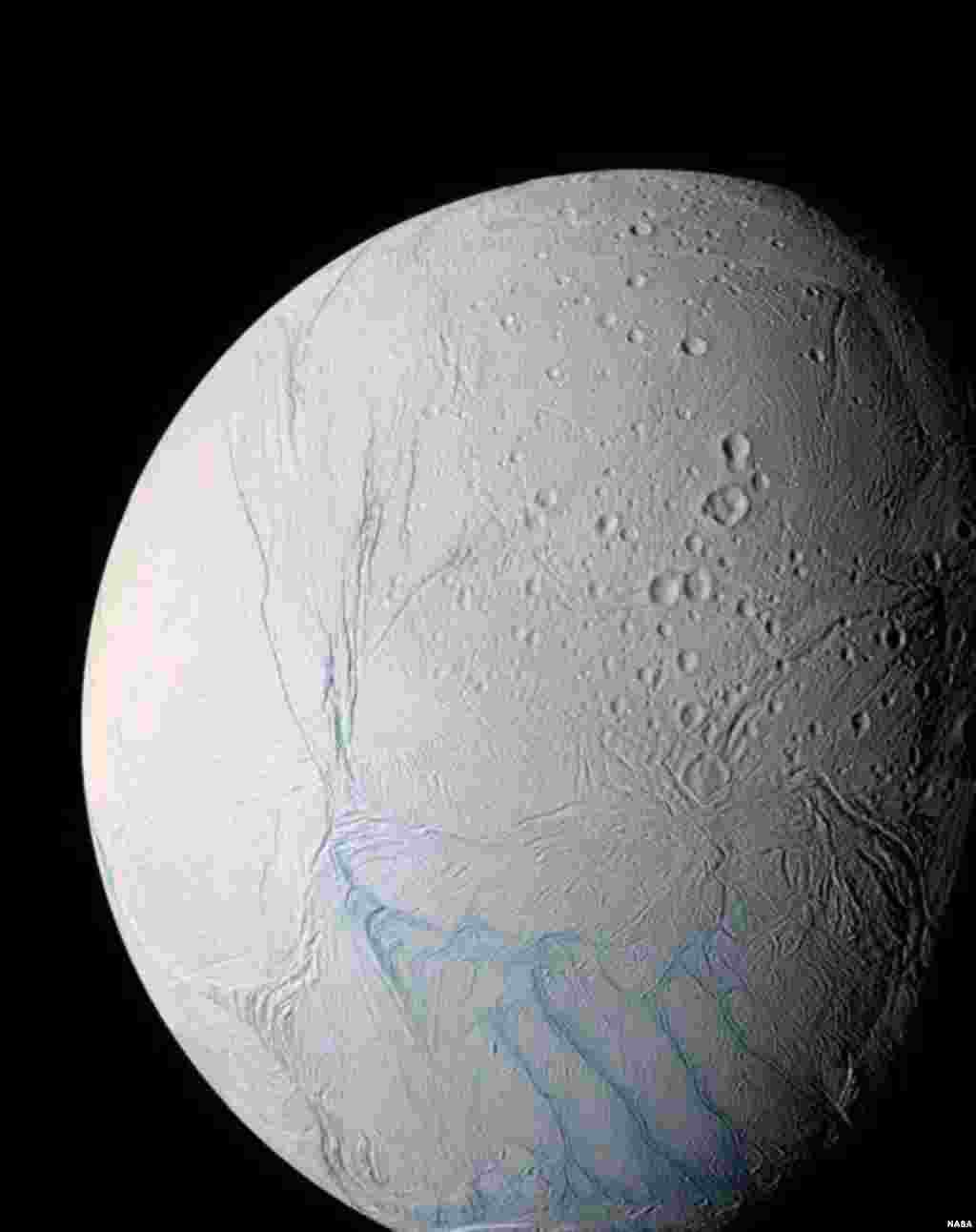
Enceladus, one of moons of Saturn, as seen by NASA's Cassini spacecraft. (NASA)
9/15 Enceladus, one of moons of Saturn, as seen by NASA's Cassini spacecraft. (NASA)
This image of Saturn taken with the Cassini spacecraft wide-angle camera on Nov. 23, 2013 and released on Feb. 3, 2014 was taken using a spectral filter that preferentially admits wavelengths of near-infrared light centered at 752 nanometers. (NASA/JPL-Cal Tech)
10/15 This image of Saturn taken with the Cassini spacecraft wide-angle camera on Nov. 23, 2013 and released on Feb. 3, 2014 was taken using a spectral filter that preferentially admits wavelengths of near-infrared light centered at 752 nanometers. (NASA/JPL-Cal Tech)
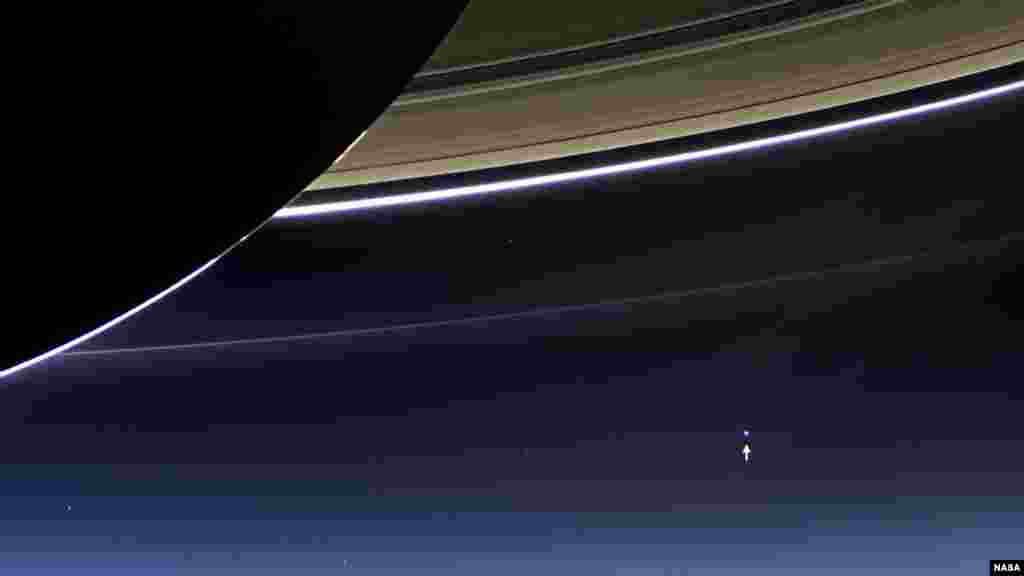
In this rare image taken on July 19, 2013, the wide-angle camera on NASA&#39;s Cassini spacecraft has captured Saturn&#39;s rings and our planet Earth and its moon in the same frame. (Credit: NASA/JPL-Caltech/Space Science Institute)<br />
<br />
&nbsp;
11/15 In this rare image taken on July 19, 2013, the wide-angle camera on NASA's Cassini spacecraft has captured Saturn's rings and our planet Earth and its moon in the same frame. (Credit: NASA/JPL-Caltech/Space Science Institute)

 
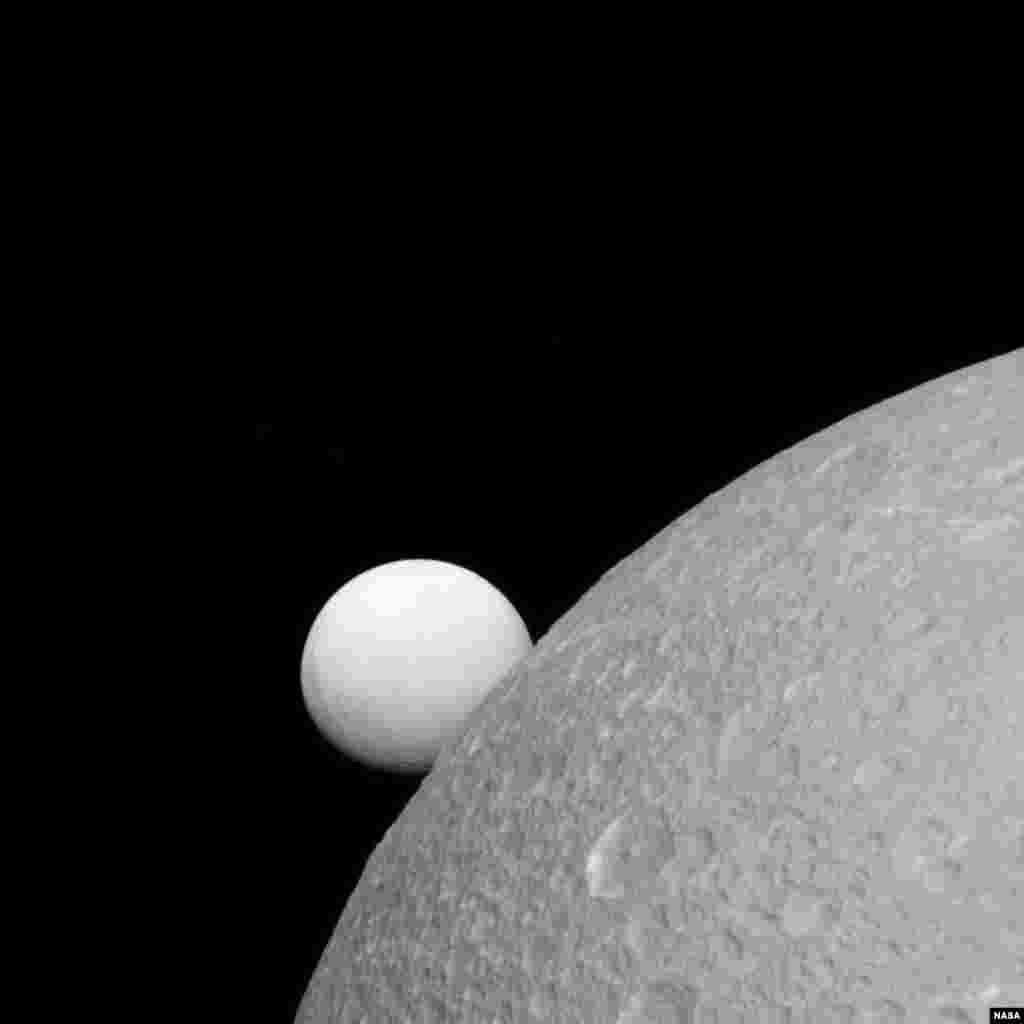
Dione with Enceladus in the background. This image was taken by the Cassini spacecraft, Sept. 8, 2015.
12/15 Dione with Enceladus in the background. This image was taken by the Cassini spacecraft, Sept. 8, 2015.
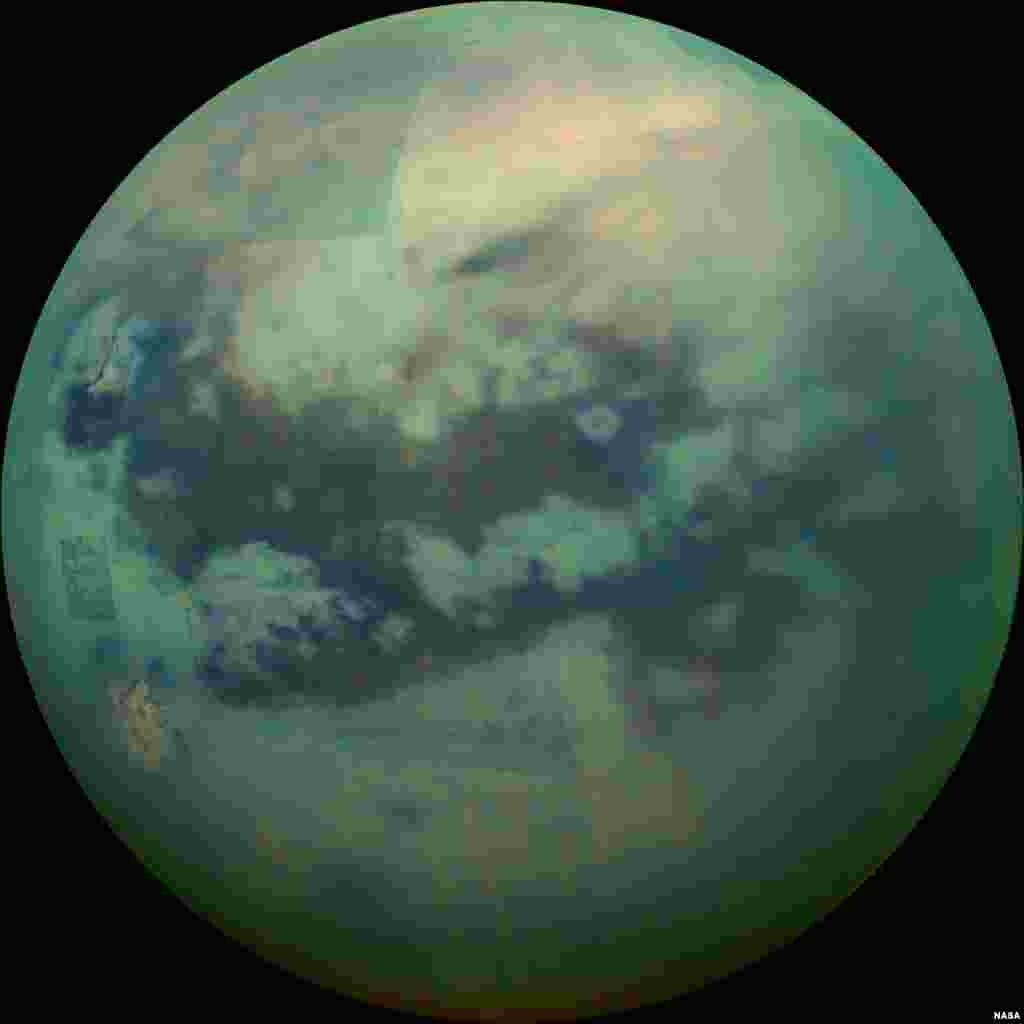
This Nov. 13, 2015 composite image made available by NASA shows an infrared view of Saturn&#39;s moon, Titan, as seen by the Cassini spacecraft. The near-infrared wavelengths in this image allow the cameras to penetrate the haze and reveal the moon&#39;s surface.
13/15 This Nov. 13, 2015 composite image made available by NASA shows an infrared view of Saturn's moon, Titan, as seen by the Cassini spacecraft. The near-infrared wavelengths in this image allow the cameras to penetrate the haze and reveal the moon's surface.
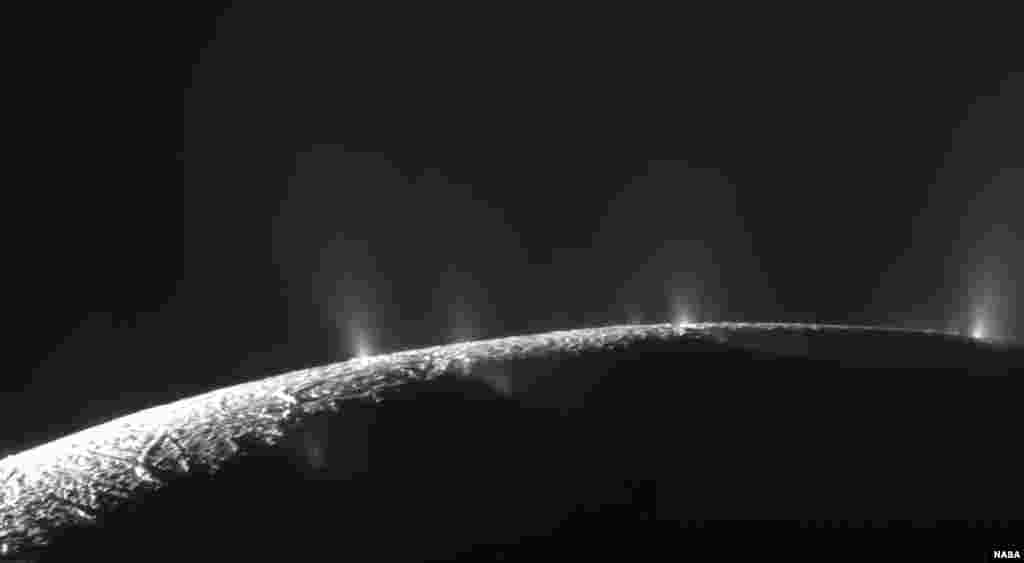
This Feb. 17, 2005 image made available by NASA shows plumes of water ice and vapor from the south polar region of Saturn&#39;s moon Enceladus. The activity is understood to originate from the moon&#39;s subsurface ocean of salty liquid water, which is venting into space.
14/15 This Feb. 17, 2005 image made available by NASA shows plumes of water ice and vapor from the south polar region of Saturn's moon Enceladus. The activity is understood to originate from the moon's subsurface ocean of salty liquid water, which is venting into space.
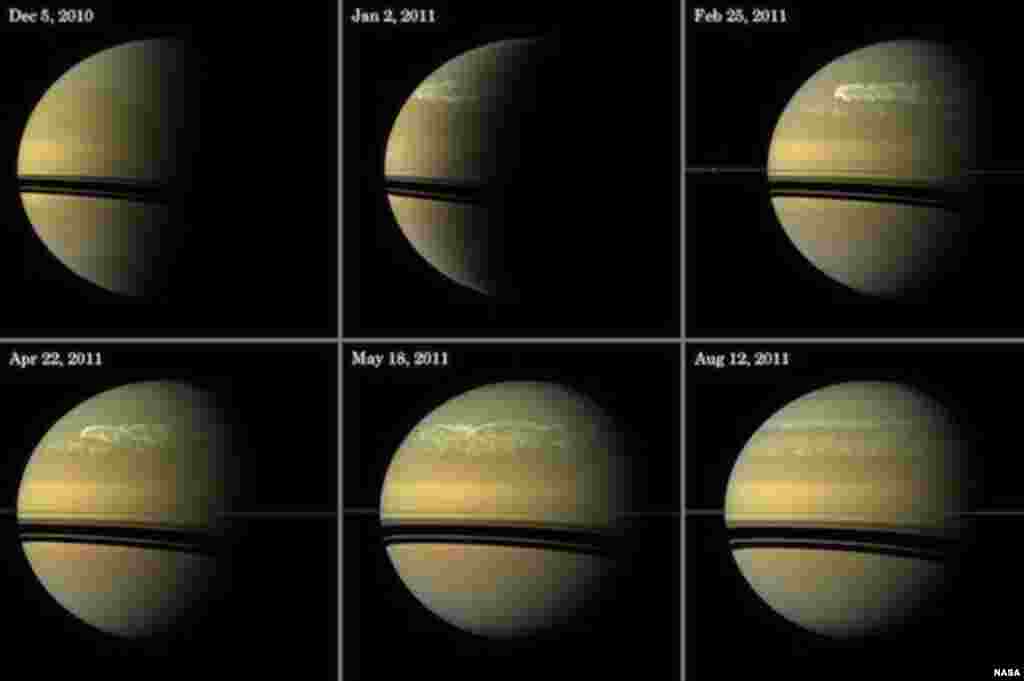
This series of images from NASA&rsquo;s Cassini spacecraft shows the development of the largest storm seen on the planet since 1990. These true-color and composite near-true-color views chronicle the storm from its start in late 2010 through mid-2011, showing how the distinct head of the storm quickly grew large but eventually became engulfed by the storm&rsquo;s tail.
15/15 This series of images from NASA’s Cassini spacecraft shows the development of the largest storm seen on the planet since 1990. These true-color and composite near-true-color views chronicle the storm from its start in late 2010 through mid-2011, showing how the distinct head of the storm quickly grew large but eventually became engulfed by the storm’s tail.
Previous slide
Next slide

Scientists said the end of Cassini also marked the beginning of other planetary explorations and more discoveries as scientists continue to analyze the unprecedented data on Saturn collected by Cassini.

This item is part of
XS
SM
MD
LG